

Telecom
ALTON Seeks Policies to Propel Industry Growth

Association of Licensed Telecom Operators of Nigeria (ALTON) has listed issues confronting the operators in the country and urged the federal government to intervene to propel the industry.
Gbenga Adebayo, president, ALTON spoke when Prof. Umar Garba Danbatta, executive vice chairman, Nigerian Communications Commission (NCC), led a delegation from his agency and ALTON, Dr. Isa Pantami, minister of Communications, to discuss critical industry issues affecting telecommunications operations in the country.
Adebayo, listed and extensively discussed a number of issues confronting the operators, which include: the problem of denial and exorbitant cost of Right of Way (RoW) by state governments, vandalism of telecoms infrastructure, poor and lack of access to public electricity to run telecoms operations, multiple taxation and regulations, the need for Executive Order to protect telecoms infrastructure, and the need for a national digital policy, among others.

Adebayo solicited the minister’s interventions, requesting him to use his good offices to address the issues in view of the significance of telecoms as a central and pivotal infrastructure shaping the economy.
Adebayo, who submitted a document detailing issues requiring immediate attention, specially acknowledged the exceptional leadership of Danbatta as the Executive Vice Chairman of NCC, stressing that the current upbeat status of the industry is largely traceable to the good regulatory regime instituted by the leadership of the Commission.
In his remarks, Danbatta said while the federal government, through the ministry and the NCC, was committed to deepening digital access, the RoW issue, among several others, remained the biggest challenge standing in the way of the accelerated telecoms infrastructure and by extension, broadband development.
“So ALTON is led to talk as a body about the challenges they are facing as operators in the industry. We also believe that achieving federal government’s target of 127,000 kilometers of fibre across the country, which is critical to our broadband and digital economy drive, depends on how these industry issues are addressed,” Danbatta said.
He further commended the minister ‘for the way and manner he had hit the ground running upon assumption of office, adding that the Commission facilitated the meeting in order for the operators to ventilate their views to the minister on various challenges in the industry and as a sequel to the report the Commission already presented to the minister upon assumption of office.
Responding to issues raised, the minister acknowledged that he was fully aware of 90 per cent of the challenges confronting the operators through the NCC and that the ministry had started making efforts to address the issues through engaging the president and other relevant government agencies.
Pantami disclosed that “the ministry is on the verge of developing a National Digital Economy Policy and Strategy, which will be ready shortly. He also stated that efforts were ongoing to address all the concerns raised by the operators.”
While assuring ALTON delegation of his unflinching support, Pantami said: “We are already working on some of the issues raised by ALTON. I have had continuous engagements with the President on some of the issues, we would study your submission and begin to address the various issues you have raised. Accordingly, we will also explore better alternatives besides and beyond what ALTON has recommended in its submission to us towards ensuring that the issues are dealt with in the interest of all Nigerians.”


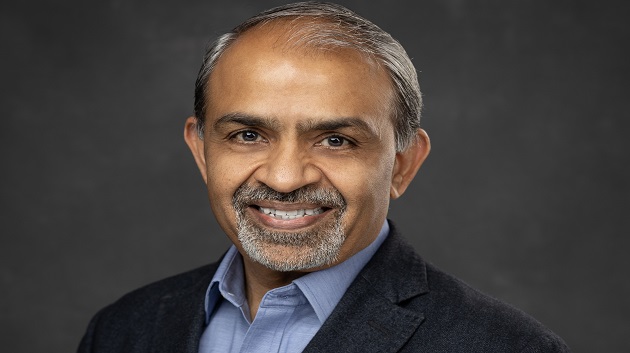
Airtel Africa’s CEO, Sunil Taldar, has announced the telco’s commitment to connecting 5,000 schools across its operating countries in Africa to the internet by 2027 through its philanthropic arm, Airtel Africa Foundation, in partnership with the United Nations Children’s Fund (UNICEF).

So far, the $57m partnership, which was launched in 2021, has cumulatively connected 3,296 schools and provided access to over 2 million learners and about 40,000 teachers. 64 digital learning platforms have been zero-rated thereby enabling more than 11m users to access educational content at no cost.
Speaking during a visit to St. Monica’s Girls School in Lusaka, which is one of the 300 schools already connected to the internet in Zambia, the Airtel Africa CEO stated that the initiative is having a profound impact on the quality of education by expanding access to digital learning resources for African children, in collaboration with governments.
Mr Taldar added: “Students are accessing best-in-class education from the curriculum developed by UNICEF in partnership with various Ministries of Education and provided through Airtel’s connectivity.
“We are also training teachers, so that they deliver digital education effectively. We aim to continue deepening meaningful connectivity in schools by providing free internet access, zero‑rated platforms and training teachers across the continent”.
Expressing her appreciation, the Headmistress of St. Monica’s Girls’ School, Sr Matilda Soloko said: “Being among the first schools connected in the initial stage, our learners have been able to study using the learning portal and their studies have been intensified. We remain grateful to Airtel and UNICEF.”
UNICEF’s Country Representative for Zambia, Dr Saja Farooq Abdullah said: “What this partnership has brought is really bridging the equality gap and the digital divide. It is making sure that every child learns wherever they are. It was exciting and interesting to see and hear from the girls how they can learn at their own pace, how they can review the materials, and how they do their homework with comfort.
The Director of Secondary Education in Zambia’s Ministry of Education, Yvonne Mwemba Chuulu lauded UNICEF and Airtel for the partnership saying: “At the Ministry of Education, we cannot do it alone, and we are grateful for the partnership that we have today.
“Our children are able to learn in a blended fashion, where we have a teacher who is also employing digital devices. We have also heard from the learners that they are able to access the portal when they are at home, which is a good thing because our learners continue to learn in the comfort of their homes”.
The School Connection programme is expanding digital learning to learners in 13 countries: Chad, Congo, Democratic Republic of Congo, Gabon, Kenya, Madagascar, Malawi, Niger, Nigeria, Rwanda, Tanzania, Uganda, and Zambia. By equipping these schools with internet connectivity and training teachers on using the digital tools, it is providing children, particularly in underserved and remote regions, with the digital tools and skills they need to thrive.
Airtel Africa Foundation is advancing inclusive development across four strategic pillars, Financial Inclusion, Education, Environmental Sustainability and Digital Inclusion.

MultiChoice has officially become a wholly owned subsidiary of French media company Canal+, marking the completion of one of the largest acquisitions in Africa’s media and entertainment industry.

The integration brings the South Africa-based pay television operator under the full ownership of Canal+, a global media group with operations in 70 countries.
Announcing the completion of the transaction on Thursday, Chief Executive Officer of Canal+ Africa and MultiChoice, David Mignot, described the development as the beginning of a new phase of growth for the broadcaster.
“MultiChoice is now a full subsidiary of a truly international media group operating in 70 countries.
“The group was founded in France, is listed in London and Johannesburg, and has a strong African presence with operations in more than 45 countries,” Mignot said.
The acquisition combines Canal+’s international operations with MultiChoice’s extensive footprint across sub-Saharan Africa, where it serves millions of households through its DStv and GOtv platforms, as well as the Showmax streaming service.
According to Canal+, the integration will strengthen MultiChoice’s competitive position by giving it access to broader financial resources, technology, content partnerships and operational expertise.
The company said the combined business would increase investment in local content production, sports broadcasting and streaming services as competition intensifies from global platforms such as Netflix, Amazon Prime Video and Disney+.
The transaction is also expected to provide MultiChoice with greater access to international markets at a time when traditional pay television operators are adapting to changing consumer viewing habits and the rapid growth of digital streaming platforms.
Canal+ has expanded steadily across Africa over the past decade and now assumes full control of a business operating in more than 45 African countries, further strengthening its position in the continent’s media and entertainment sector.
The acquisition followed Canal+’s gradual increase in its shareholding in MultiChoice, which began in 2024.
After exceeding the regulatory threshold, the company launched a mandatory offer in April 2024 to acquire the remaining shares of the Johannesburg-listed broadcaster.
Following regulatory approvals and shareholder acceptance, Canal+ secured control of MultiChoice in 2025 before completing the process that has now made the company a wholly owned subsidiary.
Industry observers describe the acquisition as one of the most significant media transactions involving an African company, reflecting a broader trend of consolidation as global entertainment firms seek greater scale to compete in the streaming era.

Nigeria has exactly 156,662 active fixed wired internet subscriptions as of mid-2026.

This is a tiny fraction compared to mobile GSM networks, which dominate the market with over 154 million subscribers.
The fixed wired market primarily consists of homes and offices using direct physical cables like fiber optics.
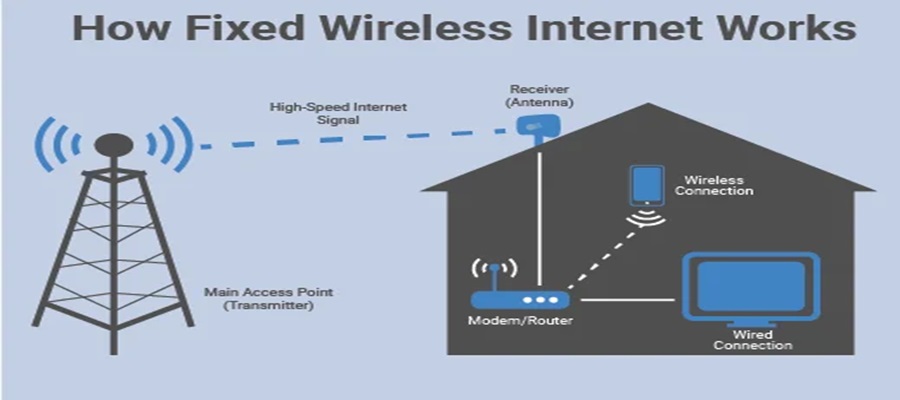
Fixed wired services use physical cables, like glass fiber or copper wire, to bring internet directly into a building.
It is like a dedicated, private water pipe for your home. It provides very fast speeds, unlimited data, and is reliable.
In contrast, mobile GSM uses radio waves transmitted from tall towers to phones, acting more like a sprinkler that sprays a signal across an entire neighborhood.
Because laying physical cables across cities is expensive and hard to do, these subscriptions are very rare.
However, the market has seen recent growth, driven largely by Fiber-to-the-Home (FTTH) services.
The top players are: MTN FibreX with 110,564 subscribers, which is roughly 88.7 per cent of the entire market.
SWIFTNG accounts for about 13,945 connections.
The others are ipNX and 21st Century Technologies which make up the number.

TeKnowledge, Equinix Partner to Advance Nigerian Digital Infrastructure

NSIB Faults Runway Identification, Reveals Cockpit Disagreement in Asaba Jet Incident

Airtel Africa to Connect 5,000 Schools to Free Internet by 2027

SEC Unveils Plans to Enforce Mandatory ESG Reporting for Large Firms Next Year

DStv, GOtv Owner MultiChoice Officially Joins Canal+ Group

NASENI Moves to Digitize CCB’s 5m Assets Declaration and Operations

Mobile Internet Gender Gap Widest in Africa – GSMA

Nigeria Launches FreeTV Nationwide

CANAL+ Partners Samsung to Pre-Load DStv Stream on New Samsung TVs In Nigeria, Other African Countries

Lebara Nigeria Launches Lebara Play, Africa’s First Telecom-Owned Micro-Drama Platform




 Telecom2 days ago
NCC Seeks Cost-Based Pricing Framework for Ducts

 E-Financial2 days ago
CBN Warns against Rejection of N100 Banknotes

 News2 days ago
Flutterwave Secures Circle Ventures Investment to Deepen USDC Payment

 Telecom2 days ago
Meta Introduces Muse Image With Advanced AI Image Editing Across WhatsApp and Instagram

 E-Financial2 days ago
BVN Enrollments Hit 69.55m- NIBSS

 Telecom1 day ago
Fixed Wired Internet Market Lags as Mobile Gains Ground

 News2 days ago
How EFCC Turned Recovered Loot Into School Supplies for Thousands of Nigerian Students

 News2 days ago
CJN Warns Judges: Reject Gifts or Risk Petitions and Ruined Careers