

Telecom
Softcom Supports Democratization of AI Knowledge for Socio-Economic Impact

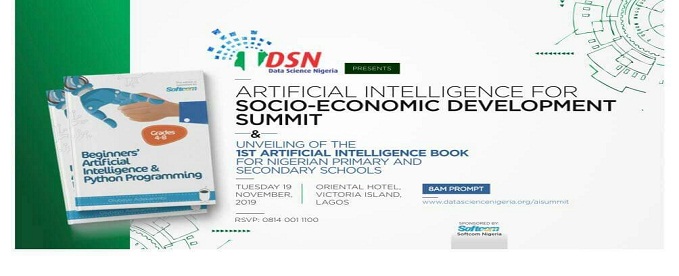
In furtherance of its vision to solve some of Africa’s biggest challenges in identity, education, payment and data for people and businesses, Softcom is supporting easy access to artificial intelligence (AI) learning in partnership with Data Science Nigeria with an AI for business leaders’ masterclass and the official release of the first AI book for Nigeria’s primary and secondary schools.
Softcom, an indigenous technology company, is a leader in deploying technological solutions to solve socio-economic development challenges on the continent.
The company is known for its people-centric innovations aimed at shaping inclusive growth, creating high-quality employment opportunities, and improving people and business operations in Africa.

According to Yomi Adedeji, ceo, Softcom, “We always strive to build solutions and technology that will positively impact the lives of people.
“We recognise that with artificial intelligence applications across all socio-economic sectors, we can catalyse a new wave of sustainable innovations, enabling all-round societal impact.
“At Softcom, we understand that artificial intelligence is critical for national competitiveness and local innovation, hence our drive towards making the knowledge available to everyone, from kids in primary schools to CEOs whose decisions shape the corporate future of our national business landscape”.
The one-day Artificial Intelligence Demystified masterclass for executives and business leaders aims to equip business decision-makers to understand the concept of artificial intelligence and its applications, imparting a clear understanding of how it can catalyse Nigeria’s businesses to have sustainable impacts through innovative solution development, cost reductions and improve operational efficiency.
The masterclass will be facilitated by some of world’s best including one of the fathers of artificial intelligence, Professor Thomas Dietterich, the US-based distinguished professor emeritus at Oregon State University and the founder of BigML.
Other speakers include the Director of Data Science at the world’s largest brick-and-mortar retailer, US-based Walmart, Dr Emmanuel Doro; Facebook’s Research Scientist, Dr. Eric Sodomka; Dr. Nnnana Orieke, Cloud Solution Architect, Data and AI, Microsoft; Margaryta Ostapchuk, Software Engineer, Microsoft Canada; Sabrina Smai, Software Engineer, Microsoft Canada; Nicholas Litombe, US-based Solution Data Scientist; and Olubayo Adekanmbi, the Convener of Data Science Nigeria and Chief Transformation Officer, MTN Nigeria, among others.

Tomi Amao, Softcom’s Chief Technology Officer, who will also be speaking at the event, said “At Softcom, we understand how access to AI knowledge can drive productivity, especially when technology is simplified to solve everyday problems in ways that improve how we live, learn and work in Africa”.
Fully supported by Softcom, the first-ever Nigerian Artificial Intelligence book for primary and secondary school will be distributed free in Nigerian schools.
The book will introduce Nigerian students to the basics of AI in order to stimulate innovative thinking and drive for global competitiveness.
The book titled, Beginners’ Artificial Intelligence and Python Programming is written by the convener of Data Science Nigeria, Olubayo Adekanmbi, an experienced hands-on data scientist, doctoral researcher and business leader with 20 years of experience.
Softcom is a leading Africa innovative company that is focused on addressing fundamental development issues tied to Identity, Payment, Data and Learning, and is respected for its AI-powered product innovations, including PassID, Koya, Eyowo and DataBeaver.


Dr Karl Toriola, chief executive officer, MTN Nigeria, has assured its subscribers that another telecom tariff increase is not imminent.

Dr Karl Toriola, chief executive officer, MTN Nigeria
He also clarified his recent comments on unlimited mobile data, saying they were taken out of context.
Toriola who spoke during an interview on TVC’s Beyond the Headlines, said his remarks at MTN’s Data on Trial public engagement were intended to explain the technical limitations of mobile networks rather than suggest that consumers could never access unlimited data.
According to him, excerpts of his comments circulated online did not reflect the full context of the discussion.
“People took snippets of the conversation, and the entirety of the conversation is available on YouTube. There’s nothing to be hidden there, and they took it slightly out of context,” he said.
Toriola explained that mobile networks are constrained by finite spectrum resources, making unrestricted data usage technically impossible without affecting the quality of service for other subscribers.
“Mobile wireless technology to offer data is limited by one factor—spectrum—and spectrum is a finite resource. You cannot put an excessive load of data traffic onto a mobile network without having a degradation of the quality of service for other people,” he said.
He added that while many telecom operators market data plans as unlimited, such packages are generally governed by fair usage policies, under which internet speeds are reduced after subscribers exceed specified usage thresholds.
Toriola said MTN is working towards introducing similar products but noted that they would also be subject to fair usage limits to protect network quality.
Addressing concerns over rapid data depletion, the MTN chief executive said operators do not deliberately consume customers’ data, attributing much of the usage to background activities such as automatic cloud backups on applications including WhatsApp, Google Cloud and iCloud.
“A significant amount of data that’s consumed on your handsets is done without your realisation,” he said.
He advised subscribers to review their device settings and configure cloud backups to run only over Wi-Fi or at less frequent intervals.
To illustrate the point, Toriola said an audit of the phone of one of MTN’s chief officers, who had complained about unusually high data usage, revealed that WhatsApp was automatically backing up about 120 gigabytes of data.
On telecom pricing, Toriola said another tariff increase is not expected in the near term, although future reviews would depend on prevailing economic conditions and the cost of sustaining network operations.
“The increment is not imminent. But over time, depending on economic conditions, there might be possible tariff increases,” he said.
He maintained that the tariff adjustment implemented in 2025 was necessary to ensure the sustainability of the telecommunications industry after more than a decade without a price review despite rising operating costs.
Toriola also disclosed that MTN invested ₦390 billion in capital expenditure during the first quarter of the year, exceeding its ₦359 billion profit after tax for the same period.
He identified fibre cuts, vandalism, unreliable electricity supply and restricted access to telecom infrastructure as major factors affecting service quality.
“We have more fibre cuts in a day than the whole Kingdom of Saudi Arabia has in a year,” he said.
Responding to calls for sanctions against MTN over recurring xenophobic incidents in South Africa, Toriola said MTN Nigeria is a Nigerian company in ownership and operations, noting that it is listed on the Nigerian Exchange, has only four expatriates in its workforce and has millions of Nigerian shareholders through direct investments and pension funds.
“We unequivocally condemn any form of xenophobia, any form of violence, any form of attacks against any community in the world,” he said.
Telecom
Airtel Africa Foundation Equips 200 Young Women with Digital Skills to Drive Nigeria’s Tech Economy

Airtel Africa Foundation, through Airtel Nigeria and in partnership with the Ishk Tolaram Foundation, Co-Creation Hub (CcHub), and SAIL Innovation Lab, has commenced the DigiLeap Women in Tech Programme, a transformative initiative designed to equip 200 young women from underserved communities in Ikorodu, Lagos, with industry-relevant digital skills and pathways into Nigeria’s rapidly expanding technology sector.

The programme, hosted by the SAIL Innovation Lab Ikorodu, comprises a 12-week immersive learning experience from June to September 2026, designed to prepare participants for careers in Product Design, Software Development, Digital Marketing, and Data Analytics.
Beyond technical training, beneficiaries will receive leadership development, structured mentorship from Airtel Nigeria professionals, and internship opportunities that provide practical workplace experience and exposure to industry best practices.
Commenting on the programme kick-off, Segun Ogunsanya, Chairman of the Airtel Africa Foundation, said empowering young women with digital skills represents one of the most sustainable investments in Africa’s future.
He also noted that the initiative reflects Airtel Africa Foundation’s continued commitment to expanding access to digital education while creating opportunities for young Africans to participate meaningfully in the continent’s digital transformation.
“We encourage every participant to approach this programme with purpose, discipline, and curiosity. The knowledge, networks, and mentorship you gain over the coming weeks have the potential to transform not only your own future but also the lives of your families, communities, and the next generation of girls who will look up to you. This is how lasting impact is created,” Ogunsanya said.
Also speaking on the initiative, Dinesh Balsingh, Chief Executive Officer of Airtel Nigeria, highlights that the initiative aligns with the company’s commitment to building an inclusive digital economy by ensuring more young Nigerians, particularly women, are equipped for the jobs of the future.
Balsingh said, “Nigeria’s digital economy presents enormous opportunities, but participation must be inclusive if we are to realise its full potential. Through the Airtel Africa Foundation, we are intentionally investing in young women because we recognise the immense value they bring to innovation, technology, and economic growth.
“DigiLeap is designed to equip participants with practical, industry-relevant skills that employers are looking for today while also giving them the confidence, mentorship, and professional exposure needed to build successful careers.”
According to the DigiLeap curriculum, participants will engage in intensive classroom instruction, hands-on projects, mentorship sessions, and internship placements designed to bridge the gap between learning and employment.
Airtel Nigeria professionals will serve as mentors, providing career guidance and sharing real-world industry insights to help participants transition successfully into the technology workforce.
The DigiLeap Women in Tech Programme spotlights the Airtel Africa Foundation’s growing investment in digital inclusion and youth empowerment across Africa. By creating pathways for more women to access technology careers, the Foundation continues to contribute to Nigeria’s digital transformation agenda while helping build a diverse pipeline of talent capable of driving innovation, creating businesses, and shaping the future of the country’s digital economy.
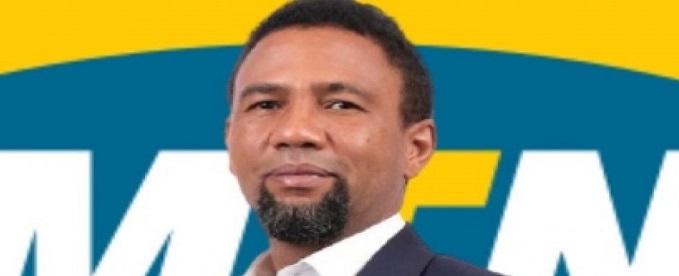
Karl Toriola, chief executive officer, MTN Nigeria, has stated that the telecom company is “a Nigerian company through and through,” emphasising that it belongs as much to Nigerians as to its global investors, with over 11 million Nigerians holding indirect stakes through pension funds.

Toriola also defended the federal government’s approval of telecom tariff adjustments, noting that the move helped prevent a financial crisis in the sector and enabled the company to ramp up capital expenditure to about N1 trillion in 2025 to improve network quality.
Speaking during an interview on Arise News, the MTN boss dismissed claims that the company is solely South African, despite its origins.
According to him, MTN Nigeria is incorporated locally, listed on the Nigerian Exchange, pays taxes in Nigeria, and is largely managed by Nigerians.
“We are labelled as a South African company because MTN Group was founded in South Africa. But the reality is that MTN Group has a very diverse global shareholding. Only about 50 percent of the shareholding is African, while the rest is held by investors from North America, Europe, the United Kingdom, the Middle East and Asia-Pacific,” he said.
Speaking further on MTN Nigeria’s identity, Toriola stressed the company’s deep roots in the Nigerian economy.
“MTN Nigeria is a Nigerian company through and through. We are domiciled in Nigeria. We are listed on the Nigerian Exchange. We pay all the taxes, duties and levies expected of us, and we are run by Nigerians.
“I am Nigerian. Apart from one executive, every member of our executive committee is Nigerian, while our entire expatriate workforce in Nigeria is just four people.
“We have over 201,000 retail investors, while about 11 million Nigerians own MTN shares indirectly through pension funds. We are very proud of our Nigerian identity,” he stated.
On the recent telecom tariff adjustment, Toriola said the increase was driven by necessity rather than profit motives, noting that operators were struggling to meet basic financial obligations before the review.
“People perceived the tariff increase as an aspiration for profitability, but the reality was that we were on our knees financially. We couldn’t even pay our month-to-month bills with the revenues we were generating. The tariff adjustment was an absolute necessity. It enabled us to stay alive,” he said.
He added that the improved revenue base has enabled MTN to scale up infrastructure investments to enhance service delivery.
“In the first quarter of this year alone, we spent N390 billion on capital expenditure, compared with a profit after tax of N359 billion. That shows our commitment to improving quality of service,” he said.
Addressing concerns over poor network quality, Toriola attributed the challenges to increasing demand, infrastructure gaps, vandalism, insecurity, and unreliable power supply.
“There are people who deliberately pour petrol into our manholes and set them on fire. A single incident can knock out services for millions of subscribers. We also face security challenges that prevent our engineers from quickly accessing some sites.
“In addition, we operate about 18,000 sites nationwide, each requiring generators, batteries, rectifiers and constant fuelling because of inadequate public electricity supply. All these affect quality of service,” he explained.
While acknowledging that service quality still needs improvement, he assured customers of continued investment.
“We are not perfect, but we are investing aggressively and continuously striving to do better,” he added.
On allegations that telecom operators deliberately deplete customers’ data, Toriola said findings often point to background data usage by smartphone applications.
“There is a perception that MTN goes and takes customers’ data, but our studies have shown repeatedly that background applications are consuming much of that data.
“I encourage customers to check their device settings. Daily automatic backups are unnecessary for many users. If possible, carry out backups over Wi-Fi instead of mobile data,” he advised.

SERAP Asks Akpabio, Abbas for Explain N1.3Bn Budgeted for ‘Fictitious’ Presidential Council

No Plans for Fresh Tariff Hike – MTN

FG Denies N8 Trillion ‘Shadow Budget’, Says IMF Quoted out of Context

Tokenization, Blockchain Technology will Transform Financial Institutions – IMF

Weebly Websites to Shut Down for Nigeria, 66 Other Countries from September

Mobile Internet Gender Gap Widest in Africa – GSMA

Nigeria Launches FreeTV Nationwide

NASENI Moves to Digitize CCB’s 5m Assets Declaration and Operations

UK, Nigeria Launch £15m Growth Programme to Accelerate Economic Transformation

Court Deals Fresh Blow to NBC, Throws Out Appeal over Broadcast Fines




 Broadcasting2 days ago
Why We’re Partnering With NIHOTOUR To Bring Nigerians In South Africa Home – Steve Babaeko

 News2 days ago
FG Clears N39Bn Pension Arrears for NITEL, PHCN, Other Retirees

 News2 days ago
How Fraudsters Emptied a Judge’s Account of N7.2 Million in Midnight Attack

 Telecom2 days ago
MTN Nigeria Celebrates Volunteers at Y’ello Care Impact Showcase

 E-Financial2 days ago
SEC Grants Approval to Luno, Other Crypto Firms under Regulatory Sandbox

 Telecom2 days ago
Xenophobia: MTN Nigeria Belongs to Nigerians, Not Only South Africans — Toriola

 Telecom2 days ago
Google Play launches $1m fund to support African game developers

 Telecom2 days ago
MTN Takes ‘The Gathering on 100’ Youth Empowerment Initiative to Kano