

E-Business
Senate Proposes 3-Year jail, N10m Fine for Social Media Offenders


A controversial Bill that prescribes a three-year jail term or fine of N10million for Social media offenders on Wednesday scaled second reading in Senate.
The Bill titled: “A Bill for an Act to make provisions for the protection from internet falsehood and manipulations and for related matters, 2019,” was sponsored by Senator Mohammed Sani Musa, representing Niger East.
In his lead debate, Senator Musa said it has become imperative to curb the excesses of those using social media to cause disaffection and assassination of character through fake news.
Musa said that the Bill is not an attempt to stifle free speech but rather an opportunity to address the growing threats which if left unchecked, can cause serious damage in the country polity and equally disrupt peaceful co-existence.
He noted that while the internet has democratised information, “the fact remains that it has also been a weapon in the process which is why governments across the world are trying to mitigate the risks associated with information transmission via the internet by monitoring abuse and deliberate misconducts.”
According to him, one of the disadvantages of the internet is the spread of falsehood and manipulation of unsuspecting users.
Musa said: “Today, motivated by geopolitical interests and identity politics, state and non- state actors use the internet to discredit government, misinform people and turn one group against the other.
“The hoax about the demise of President Muhammadu Buhari in London and his purported replacement by one Jibril of Sudan, among others, are things that threaten the peace, security and harmony of our people.
“Inauthentic online accounts run by human trolls have been used to rapidly spread falsehood. For media outets, publishing a story with false contents that attract users, benefits advertisers,” Musa said.
According to the Niger East Senator, the Bill has 36 clauses and provided for the prevention of hawkers of falsehoods and manipulated contents using the internet.
He said that the penalty for defaulters goes up to N300,000 for individuals and up to N10million for corporate organisations and imprisonment of up to three years or both.
The Bill, he said, also contained guidelines for internet intermediaries and providers of mass media services as well as sanctions for offenders.
Senators Ibrahim Gobir, Ishaku Clifford Elisha Abbo, Abba Moro and Bala Ibn Na’Allah supported the Bill.
However, Senator Chimaroke Nnamani (Enugu East), “strongly” opposed the Bill.
Nnamani said: “I not only oppose this bill, I condemn it in its entirety. Based on our Constitution, there is Freedom of Information and Freedom of Speech. There is a Cyber Crimes Act that deals with this issue. There are also laws that deal with false information, libel, slander and so on.
“Yes, fake news has done a lot in America and other countries, but they have not brought any law to deal with it. I therefore strongly oppose this bill.”
Nnamani while quoting a German Pastor, Martin Niemöller, added: “First they came for the socialists, and I did not speak out because I was not a socialist. Then they came for the trade unionists, and I did not speak out because I was not a trade unionist.
Then they came for the Jews, and I did not speak out because I was not a Jew.Then they came for me and there was no one left to speak for me.”
When the Bill was put to voice vote by Senate President Ahmad Lawan, Senators approved it for second reading.
Lawan referred the Bill to the Senate Committee on Judiciary, Human Rights and Legal Matters for further legislative work.



Lagos State government has disclosed that more than 6.4 million residents have so far been captured under the Lagos State Residents Registration Agency (LASRRA) exercise as part of efforts to strengthen governance, planning and service delivery across the state.

Tobosun Alake, commissioner for Innovation, Science and Technology, revealed this during the ongoing ministerial press briefing marking the second-term anniversary of Governor Babajide Sanwo-Olu.
According to Alake, a total of 6,465,667 residents have been enrolled in the residency database, comprising 4,058,333 adults and 2,407,224 children.
The commissioner described the Lagos Identity Card Project, popularly known as LAG ID, as a major component of the state government’s strategy to improve governance efficiency and public service delivery under the THEMES development agenda.
He explained that the initiative was designed to provide government with a reliable and comprehensive population database capable of supporting planning, policy implementation and effective allocation of resources.
Alake noted that the agency operates an open framework that allows government institutions and private sector partners to independently participate in the system while leveraging a centralised data-sharing infrastructure.
According to him, the arrangement creates opportunities for partnerships, improved information management and enhanced value for both residents and businesses operating within Lagos.
The commissioner added that the initiative would further expand opportunities linked to the Lagos Residents Card and deepen the state’s digital transformation drive.
Speaking on security and digital enforcement, Alake disclosed that the state’s Safe City initiative had significantly increased digital traffic enforcement across Lagos.
He revealed that about 86,000 traffic violations were tracked within a few months, bringing the cumulative figure to about 737,000 recorded cases.
On technology-driven governance, the commissioner highlighted the role of Art and Technology Lagos, an annual conference organised by the Eko Innovation Centre in collaboration with the Lagos State Government.
According to him, the conference brings together technology stakeholders, policymakers, innovators and government officials to drive conversations around the development of a smarter and digitally connected Lagos.
Alake also stated that Lagos currently leads the country in data protection compliance, revealing that the state now has 109 certified data protection officers responsible for ensuring compliance and safeguarding residents’ data.
He explained that the government’s digital platforms now generate robust analytics that help authorities understand public interaction with online services.
“With technology, the state government has been able to know that an average 250,000 visit monthly,” he said.
“When we see our daily visitors on our online platform we are able to tell how many people are visiting our platforms, what they are clicking on and what they are using.
“Some of the services they are related with so we have backend analytics to tell us the number of visitors. I think the back end analytics is very robust and we respond to questions very quickly,” Alake added.
The commissioner further disclosed that the state had completed about 3,000 kilometres of fibre optic duct infrastructure extending to areas such as Alimosho, Ikorodu and Ibeju-Lekki.
He added that the government was planning to expand the infrastructure to 5,000 kilometres through partnerships with private sector investors.
E-Business
Firm Shares Insights into Ransomware Trends and Tactics @ International Anti-Ransomware Day-2026

On International Anti-Ransomware Day, May 12, Kaspersky shares a report with an overview of ransomware trends that marked 2025 and insights into what the threat landscape holds in 2026.

According to Kaspersky Security Network, in 2025 Latin America had the highest share of organisations with ransomware attacks detected (8.13%), followed by the Asia-Pacific region (7.89%), Africa (7.62%), Middle East (7.27%), the Commonwealth of Independent States (CIS, 5.91%) and Europe (3.82%).
The report highlights the rise of “encryption-less” extortion attacks, the use of post-quantum cryptography by ransomware groups, and the persistent use of Telegram channels by cybercriminals to distribute compromised data sets and credentials.
Despite a slight decline in the overall share of organisations attacked by ransomware in 2025 compared to 2024, users remain at significant risk as attackers industrialise their operations, automate intrusion methods, and increasingly focus on stealing and leaking sensitive data rather than simply encrypting systems.
One of the trends in 2025 is the continued rise of endpoint detection and response (EDR) “killers” – tools specifically designed to disable endpoint security solutions before executing the malware itself. EDR killers have become a standard component of attacks, which means more deliberate and methodical intrusions.
Researchers also noted the emergence of ransomware families adopting post-quantum cryptography standards – this was predicted by Kaspersky previously. The development signals a concerning shift toward encryption methods that could resist future quantum computing decryption attempts.
The role of Initial Access Brokers (IABs) – cybercriminal intermediaries that sell pre-compromised corporate access through underground forums and messaging platforms – is growing. RDWeb portals (websites through which devices can be controlled remotely) are increasingly targeted as ransomware groups continue to industrialise attacks through “Access-as-a-Service” operations. As a result, the barrier to launching ransomware attacks declines.
Telegram channels and dark web forums continuously function as platforms for the distribution and for the sale of compromised data sets and accesses including those that were obtained as a result of ransomware attacks.
A major underground forum, RAMP, which also functioned as a platform through which threat actors advertised their ransomware services and published service‑related updates, got seized by authorities in January 2026.
Another underground forum, LeakBase, where malicious actors distributed exfiltrated and compromised data, was seized in March 2026. However, while law enforcement agencies are actively shutting down dark web platforms and ransomware data leak sites, similar portals may appear over time.
Active groups
Among the most active ransomware groups in 2025 based on data leak sites, Kaspersky identified Qilin as the dominant ransomware-as-a-service (RaaS) operator following RansomHub’s seizure of operations. Clop ranked as the second most active group, with Akira in the third place.
While several major ransomware groups stopped operation in 2025, new actors emerge. Looking at 2026, the Gentlemen is one of the most important new ransomware actors due to the group’s rapid growth, structured operations, and increasing focus on data-centric extortion. The group may include attackers formerly associated with other major ransomware operations.
The Gentlemen exemplify a broader shift in the ransomware ecosystem away from chaotic, high-noise campaigns toward scalable, business-like extortion models focused primarily on stealing sensitive data and leveraging reputational and regulatory pressure rather than relying solely on disruptive file encryption.
“Ransomware has evolved into a highly organised ecosystem focused on monetising stolen data, disabling defences, and scaling attacks with business-like efficiency. Threat actors are quickly adapting, weaponising legitimate tools, exploiting remote access infrastructure, and even adopting post-quantum cryptography years earlier than many expected.
“The purpose of Anti-Ransomware Day is to raise global awareness about the threats posed by ransomware and to promote best practices for prevention and response, and we urge all users to stay secure, set up layered defences, invest in backups and boost cyberliteracy levels to counter attacks,” comments Fabio Assolini, Lead Security Researcher at Kaspersky GReAT.
On Anti-Ransomware Day and beyond, Kaspersky encourages organisations to follow these best practices to safeguard from ransomware:
- Enable ransomware protection for all endpoints. There is a free Kaspersky Anti-Ransomware Tool for Business that shields computers and servers from ransomware and other types of malware, prevents exploits and is compatible with already installed security solutions.
- Always keep software updated on all the devices you use to prevent attackers from exploiting vulnerabilities and infiltrating your network.
- Focus your defence strategy on detecting lateral movements and data exfiltration to the Internet. Pay special attention to outgoing traffic to detect cybercriminals’ connections to your network. Set up offline backups that intruders cannot tamper with. Make sure you can access them quickly when needed or in an emergency.
- Companies from non-industrial sector can protect themselves by installing anti-APT and EDR solutions that enable capabilities for advanced threat discovery and detection, investigation and timely remediation of incidents. Organizations can also provide their SOC teams with access to the latest threat intelligence and regularly upskill them with professional training.
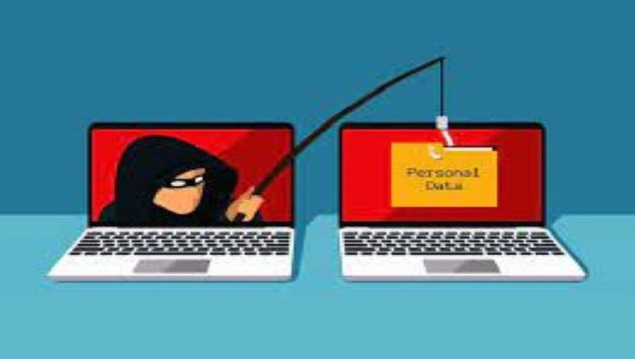
Kaspersky has detected phishing and business email compromise (BEC) attacks that are leveraging Amazon Simple Email Service (SES) – a cloud-based email service designed for businesses and developers to send and receive high-volume marketing, notification, and transactional emails (for instance, password resets).

Because these emails are sent via a trusted service, they originate from reputable IP addresses, frequently include legitimate “.amazonses.com” identifiers. This makes phishing messages nearly indistinguishable from legitimate correspondence at a technical level. Users should treat unexpected emails with extreme caution.
The attacks are driven by the theft and exposure of credentials from Amazon Web Services (AWS). The attackers are using leaked AWS Identity and Access Management Keys – often found in public repositories, misconfigured cloud storage, and exposed configuration files. With automated tools, threat actors can identify valid keys and abuse them to send large volumes of malicious emails through legitimate infrastructure operated by Amazon.
Attackers disguise malicious links behind trusted domains such as amazonaws.com using redirects and by creating highly convincing HTML email templates. In many cases, phishing pages are hosted on infrastructure that appears legitimate, further increasing the likelihood of credential theft from victims.
One of the campaigns observed by Kaspersky in early 2026 involved emails impersonating document-signing platforms like DocuSign. Victims were prompted to review and sign documents, only to be redirected to fraudulent login pages hosted on an Amazon Web Services page designed to capture credentials.
Researchers also identified business email compromise attacks carried out via Amazon SES in which attackers impersonated employees and fabricated entire email threads with suppliers. These messages, often sent to finance departments, requested urgent payments and included PDF attachments containing only banking details – with no malicious links – making detection challenging.
“We’ve seen attackers abuse trusted platforms before – like in cases with Google Tasks and Google Forms – where scammers rely on built-in notification mechanisms to deliver phishing links from legitimate domains like @google.com, effectively bypassing email filters and exploiting user trust.
“However, the abuse of Amazon SES represents a more advanced stage of this trend: instead of merely leveraging a platform’s notification features, attackers compromise cloud credentials and gain direct control over a trusted email-sending infrastructure. This allows them to scale attacks, fully customise messages, and deliver phishing emails that are hard to distinguish from legitimate business communications,” commented Roman Dedenok, Anti-Spam Expert at Kaspersky.

Gozi-Anyaokei, Bank MD Arraigned over Alleged N19m, $30,000 Fraud

NDIC Drags Wema Bank to Court over N125.38Bn Banana Island Assets

Chamber Raises Alarm over Increasing Telecoms Infrastructure Vandalism

UK Reaffirms Development Partnership with Kano, Jigawa States

The Nigeria Prize for Science & Innovation Records New Height as 2026 Edition Attracts 237 Entries

Vitel Wireless Partners Fintechs to Expand Access to Services

MTN, VDT, Zoracom, Digital Realty Back 2026 Girls in ICT Campaign

Kaspersky Discovers Vulnerability in Qualcomm Snapdragon Chips that can Lead to Data Loss & Device Compromise

MTN Suspends Data, Airtime Borrowing Service over New FCCPC Lending Rules

Bank Customers to Pay N1,500 for ATM Card Issuance, Replacement – CBN




 General News3 days ago
PalmPay, LASUBEB Deepen Efforts to Keep More Children in School

 News3 days ago
National Assembly to Review National Data Protection Act

 E-Financial3 days ago
CBN Warns Non-Interest Banks against Governance, Compliance Risks

 E-Business3 days ago
Firm Shares Insights into Ransomware Trends and Tactics @ International Anti-Ransomware Day-2026

 E-Financial3 days ago
FG Seeks Fresh $1.25Bn Loan from World Bank to Create Jobs, Others

 E-Financial3 days ago
Fidelity Bank Hits N1trn Milestone as Earnings Surge 45%

 E-Financial3 days ago
Ecobank Group Announces $3b Trade Finance Commitment to Boost Intra African Trade

 Telecom2 days ago
NCC Says Telecom Industry on Course to Improve Quality of Service