

News
Anambra can alter Nigeria’s destiny – Ekeh, Zinox boss

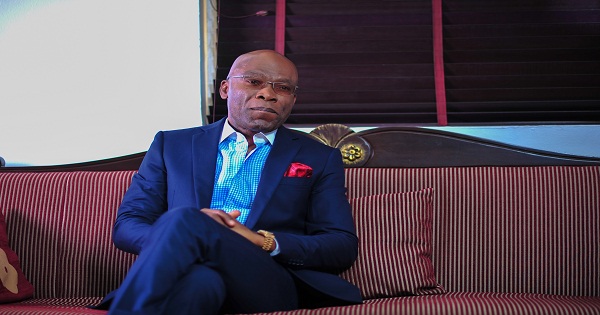
Chairman, Zinox Group, Leo Stan Ekeh has described Anambra as a state with global capacity to influence and positively alter Nigeria’s destiny.
Ekeh affirmed that the state has all it takes to make this a reality. Further, he noted that the wealth, energy and knowledge per square meter in Anambra does not exist in any other part of Africa.
Nevertheless, the Zinox boss urged the state government to open its eyes to the immense opportunities lying within the state with which it can re-configure the narrative for good.
Ekeh made this call at the 2019 Anambra Business and Investment Roundtable on Monday, November 25th, 2019. He spoke on the topic: Doing Business in the 21st Century.
The summit, with the theme – Beyond Infrastructure: Rethinking the Future – was held at the Anambra Governor’s Lodge, Amawbia, Awka.

In attendance at the event was the Anambra State Governor, Willie Obiano; the Deputy Governor, Nkem Okeke; Speaker of the Anambra State House of Assembly, Uche Okafor; the Obi of Onitsha, Nnayelugo Alfred Nnaemeka Achebe; former Governor of the Central Bank of Nigeria (CBN), Prof. Chukwuma Soludo and other members of the Anambra state political set-up. Also in attendance were corporate egg-heads and entrepreneurs drawn from various spheres of the economy.
‘I am an Igbo man from Imo State but here I am in Anambra and delighted to be here as well. Why? Anambra state has the global capacity to alter Nigeria’s destiny. You have it all in Anambra State but you have to certify it in the 21st century for it to be rewarding. You have credible human capital, brilliant minds and the right investment climate to make it happen,’ Ekeh noted.
Nevertheless, Ekeh who was the keynote speaker at the event, sounded a note of caution.
The serial digital entrepreneur warned that the state must wake up to the fast-evolving dynamics of the technology-mediated 21st Century.
Urging the Anambra State governor, Willie Obiano to invest in education and upgrade human capital in the state, Ekeh disclosed that this is the surest route to helping Anambra achieve its considerable potential.
‘I must commend the governor for what he is doing in the state. However, the 21st Century requires us to anticipate the future. If you look at the current Zinox Future Visions emblem of a man in deep thought, you will see it speaks to our mindset as a corporate with an eye on the future. This has been my story throughout the over 30 years I have spent in business.
‘You must invest in the next generation, especially the children of the poor because these are the ones with a mindset of disruption.
‘There is analogue knowledge and there is digital knowledge. Our generation relied on 80 per cent common sense and 20 per cent knowledge. But our children have global exposure and the benefit of better education, so they mainly use 80 per cent knowledge and 20 per cent common sense.’
Continuing, Ekeh noted that: ‘The Anambra state government must launch a Knowledge or Digital city in Awka with smart facilities and certified knowledge workers to re-train teachers across platforms and equip them to prepare our children for the digital age.
“In addition, the government should consider setting up and attaching a finishing school to the knowledge capital so that candidates are prepared as global citizens.
‘There is a fundamental problem with the quality of graduates we are currently churning out. Many of them are not fit for the 21st Century work-place. You must invest in these kids to make them relevant in the global marketplace and the multiplier effect will transform the fortunes of Anambra state for good.
‘You must build and equip many young graduates with skills in emerging technologies such as Artificial Intelligence, Robotics, Machine Learning, Cloud Computing and Big Data, among others.
‘I embarked on a similar intervention in Imo State after encountering the child of a widow who aced WAEC with straight A’s but regularly fell short in JAMB. It turned out that many of these students had never seen a computer in their lives but had to use a computer in sitting for the JAMB examinations. So, I spoke with the Commissioner of Technology in Imo State and set up a digital training centre where over 5,400 students are currently being exposed to computer appreciation and other digital skills. I am also paying these students to attend the classes. A week to the exam, there will also be a refresher session to ensure they are brought up to speed ahead of the examination.’
According to Ekeh, the second quarter of the 21st Century will delete many of the known names in business if they fail to rise up to the evolving era of change.
‘Our children will achieve within a few years what many of us struggled to build in 30 years. That is the age we are in. It is an era of miracle wealth. An age in which you do not need a Godfather to succeed. An E-commerce business like Konga, for instance, which is managed by my son and his colleagues has over 187,000 merchants trading on its platform. It can reach customers nationwide and deliver to them without stress. Even on Sundays when some of you are in church, business is on-going on the platform,’ he enthused.
Urging the Anambra state government to rally well-meaning sons and daughters of the state as well as the private sector to partner with it in its mission to transform the state, Ekeh counselled that this move is paramount in view of its long-reaching implications for the state.
‘The state government will never have enough money to handle everything alone. Therefore, you must reach out to Anambra indigenes and other investors to come to the aid of the state. If you invest N5bn in a digital centre, the returns will be massive.
‘But you must set a system to ensure it is properly managed. That way, investors such as myself will be encouraged to come in and invest and then reap some profit from their investment. However, politicians must not be allowed to hijack the system. Every beneficiary nominated must be screened and passed through the process to ensure they are selected on merit,’ he counselled.
Furthermore, Ekeh advised Anambra parents to leverage on their assets and empower their children. He disclosed that it is a reasonable risk to invest in one’s children while stating that human beings have been classified into three in this century – employers, employees and fools.
‘Don’t allow you kids to be rated as fools while you have billions siting in different asset classes,’ Ekeh warned.
Also speaking at the event, Gov. Obiano expressed delight and confidence that the summit will yield immense benefits for the state.
‘…The insights from today’s deliberations will set us firmly on the path to building a more socially prosperous state not only from the riches that lie beneath the soil, but essentially from the infinite possibilities that lie between our ears.’
The well-attended event featured panel sessions on Education and Health, ICT and the Creative Industry, Tourism and Hospitality as well as Housing and Infrastructure.



Ogba Ogbaga, an Abuja-based lawyer, has said that he has been instructed to institute legal proceedings against MTN Nigeria, Airtel Nigeria, Globacom, 9mobile and MultiChoice Nigeria, operators of DStv, over what he described as unfair consumer practices relating to expiring data bundles and television subscriptions.

In a statement posted on Facebook, Ogbaga said his law firm, GIMBG Legals, received instructions from its client, KAA, also known as KaaTruths, to challenge the companies’ subscription policies in court.
According to him, the proposed suit will question whether telecom operators and DStv’s subscription models comply with provisions of the Federal Competition and Consumer Protection Act (FCCPA) 2018 and other applicable laws.
Ogbaga alleged that telecom providers operate internet data services that are unfair to consumers, claiming subscribers sometimes do not receive the services they paid for but still lose their subscriptions once the validity period expires.
He also criticised DStv’s subscription model, arguing that consumers lose paid viewing time due to factors such as power outages, adverse weather conditions and service interruptions, while subscriptions continue to count down regardless.
“Our clients have complained that MTN data services are unduly one-sided,” Ogbaga said, adding that the legal action would also extend to other telecommunications providers and DStv.
He said the court action would seek judicial determination on whether the companies’ subscription practices comply with consumer protection laws.
The lawyer also invited interested legal practitioners to collaborate on the case, saying his firm would provide updates as the matter progresses.
In a separate Facebook post on Wednesday, Ogbaga said previous policy discussions, town hall meetings and debates at the National Assembly had failed to address the concerns raised by consumers.
He argued that telecom operators regularly carry out maintenance and network upgrades that temporarily disrupt services without extending customers’ subscription periods, while DStv subscribers also lose viewing time because of electricity outages and weather-related disruptions.

The National Insurance Commission (NAICOM) has commenced the issuance of new licence certificates to insurance companies that successfully met the industry’s new minimum capital requirements, marking the formal beginning of a new regulatory era aimed at strengthening the financial capacity, governance and global competitiveness of Nigeria’s insurance sector.

At a ceremony held at the Commission’s headquarters in Abuja, the Commissioner for Insurance, Olusegun Ayo Omosehin, presented the new licence certificates to compliant operators, describing the exercise as a major milestone in the industry’s recapitalisation programme.
According to the Commission, a total of 43 insurance companies declared compliant with the new capital requirements are expected to receive the new licence certificates in phases.
Omosehin congratulated the successful companies, saying the issuance of the new licences signals the beginning of a stronger regulatory framework anchored on improved capitalisation, sound corporate governance, innovation and sustainable growth.
He urged operators to leverage their enhanced capital base to develop innovative insurance products, improve operational efficiency and deepen insurance penetration across the country.
The Commissioner said the Commission expects the recapitalised companies to deliver stronger financial performance while maintaining high standards of professionalism and customer service.
He also announced that NAICOM’s next major regulatory initiative would be the implementation of the Risk-Based Capital (RBC) framework, under which insurers’ capital levels would be aligned with the risks inherent in their respective business portfolios.
According to him, the new framework will further strengthen the industry’s resilience by ensuring that insurers maintain capital commensurate with the risks they underwrite, thereby enhancing policyholder protection and boosting market confidence.
Omosehin reaffirmed the Commission’s commitment to removing regulatory impediments where necessary while maintaining effective oversight to safeguard policyholders and strengthen confidence in the insurance market.
The issuance of the new licence certificates marks the commencement of a phased transition to higher capital standards aimed at improving the financial capacity, solvency and claims-paying ability of insurance companies operating in Nigeria.

Management of Nigeria CommunicationsWeek Media has withdrawn its publication titled “Adefolarin Ogunsanya and the Allegations of Shareholder Interference and Self-Dealing at Pan African Towers,” which was published on its platform.

The decision to retract the story follows an editorial review to ensure that the platform maintains the highest standards of accuracy, fairness and responsible journalism in reporting matters that are the subject of ongoing judicial proceedings.
Nigeria CommunicationsWeek acknowledges that the issues raised in the publication remain before the courts and have not been finally determined.
Accordingly, the organisation has decided to remove the article from its platforms pending the conclusion of the legal processes or the availability of additional verified information.
The publication regrets any inconvenience or misunderstanding the report may have caused to readers or any individuals or organisations mentioned in the story.
Nigeria CommunicationsWeek remains committed to the principles of balanced, factual and ethical journalism and will continue to uphold professional standards in its coverage of judicial and corporate governance matters.

ITUC-Africa Faults FG’s Plans to Remove Electricity Subsidy

SEC Begins Full e-Registration for Capital Market Services

NAICOM Revokes Nigeria Reinsurance’s Licence over Failure to Meet MCR

Many Nigerian Airlines May Collapse within 30 Days – Onyema

Ogbaga, Abuja Lawyer to Sue Telcos, DStv over Alleged Unfair Practices

NRC, Ponzi Scheme Collapses Resulting Loss of Billions of Naira

From Scarcity to Scale: What Africa Can Learn from India’s Agricultural Transformation

EFCC Busts NIS Visa Overstay Racket, Uncovers N700m in an Account

BON Establishes Six Ad Hoc Committees to Modernize Broadcasting

How EFCC Turned Recovered Loot Into School Supplies for Thousands of Nigerian Students




 E-Business3 days ago
Kaspersky Identifies Cyberespionage as a Growing Threat Across Africa, Others

 Broadcasting3 days ago
NBC Files Fresh Appeal against Judgment Barring it from Imposing Fines on Broadcast Stations

 News3 days ago
INTERPOL Report Shows AI Powers 55% of Cybercrimes in Africa Amid $484m Losses

 E-Business2 days ago
Kaspersky Reveals a New Malicious Framework Targeting Cryptocurrency Users with the Use of OkoSpyware

 E-Financial3 days ago
Nigerians Lost N25.85Bn to Digital Payment Fraud in 2025 –CBN

 News3 days ago
Nigeria Expands Deep-tech Skills Pipeline

 Telecom3 days ago
Why Strong Institutions Remain Africa’s True Growth Engine

 E-Business2 days ago
CMS T&M Launches TMO Rides to Enable a Faster & Cashless Transport Experience for CMS – Ajah Passengers