

General News
GE Africa Bags African Infrastructure Investment Award for PPPs

General Electric Company (GE) has been awarded the coveted African infrastructure investment award for Public Private Partnership in recognition for GE’s work in Nigeria on Energy (power generation).
This is a clear demonstration of the company’s commitment to sustained investment in the continent, and promotion of local employment and development.
Commenting on the winners, Hubert Danso, CEO and vice chairman of Africa investor, said; “This year’s winners were true leaders in their fields. They are a testament to the strength of the projects being undertaken on the continent, and it is heartening to see the caliber of the companies and committed leaders working tirelessly to improve Africa’s infrastructure investment climate.”
GE scooped the prestigious award in the Public Private Partnership (PPP) Champion of the Year category, which was open to anyone involved in improving the environment for PPPs in Africa.
The company has a record of many successful partnerships across Africa and in particular has signed memorandums of agreement with the government of Nigeria.

GE signed an investment incentive MOU to provide infrastructure and services in the energy, healthcare and rail transportation sectors, and there are plans to invest $1 billion in a manufacturing and service facility in Calabar.
In fulfilment of this commitment, GE entered joint development agreements with Nigerian companies such as Transcorp, Honeywell, Oats Global, Geometric and Ibomto support the Ministry of Power.
According to president and chief executive officer of General Electric (GE) Nigeria, Dr. Lazarus Angbazo, “We are executing on our commitment to support development of 10,000MW of incremental power generation capacity, and this is being done in partnership with several project sponsors through the joint development agreements we recently signed. This is of course in addition to what the government and other private sector developers are doing to grow the electricity market.”
This commitment was recently acknowledged by President Goodluck Jonathan at the Power Reforms Transaction Signing Summit where GE and its partners wererecognized for theirworkon bringing incremental power to the grid.
Jay Ireland, president and CEO for GE Africa, emphasized that GE is in Africa for the long run and will continue working with various stakeholders in government and the private sector.
He said, “GE is committed to continue partnering with Africa by broadening the innovation play, localizing our technological solutions and also investing in skills development. The award therefore is a clear testament that GE’s partnership based strategy for Africa is adding value to our stakeholders.”
Some of GE’s key projects across Africa are MOU signings with the governments of Ghana and Kenya’s vision 2030 to develop infrastructure projects including sustainable energy solutions, rail transportation, quality healthcare, training and capacity building.
Receiving the award on behalf of GE Africa was Nils Tcheyan, director Government Affairs and Policy – GE Africa who said “Africa has a unique opportunity to build on the progress made over the last decade to deepen growth and economic transformation. GE’s capability and global expertise in healthcare, rail transportation, power generation, oil & gas industries and Sales & Project Finance allows us to play a significant role as a partner in the development of Africa,” .
The highly sought-after Africa investor (Ai) Infrastructure Investment Awards, now in their 6th year, formally recognize achievements across the main infrastructure sectors in Africa, and reward the institutions and personalities driving transactions and improving the continent’s infrastructure investment climate.


Nigerian Upstream Petroleum Regulatory Commission (NUPRC) has cautioned the public against fake recruitment offers and fraudulent employment letters circulating in the agency’s name.

Eniola Akinkuotu, head of Media and Corporate Communications of the Commission, stated that NUPRC has received reports of counterfeit and AI-generated appointment letters bearing names not known to the regulator.
The Commission also said fraudsters have been extorting money from jobseekers by promising placement within the agency.
NUPRC has reported the incidents to law enforcement and said investigations are underway.
The regulator reiterated that there is no ongoing recruitment exercise and warned members of the public not to make any payments for supposed job offers.
“Whenever the Commission decides to recruit, the process will be conducted strictly in accordance with extant laws and government regulations,” the statement said.
The Commission urged jobseekers to verify any purported offer and to rely only on official NUPRC communications for recruitment information.
The warning follows growing concerns about the misuse of digital tools, including artificial intelligence, to fabricate apparently authentic documents that can deceive the public.
General News
Africa50 Secures Fresh Capital, Strategic Partnerships to Accelerate African Infrastructure


Africa50, the pan-African infrastructure investment platform, has secured new investment commitments and strategic partnerships with international investors and Tanzanian institutions aimed at mobilising capital for infrastructure development across Africa.

The agreements, announced at the 2026 Infra for Africa Forum in Dar es Salaam, include a US$20 million commitment from British International Investment (BII) to Africa50’s Infrastructure Acceleration Fund (IAF), as well as partnerships covering natural gas, electricity transmission and healthcare infrastructure in Tanzania.
The latest commitments bring the IAF’s total capital commitments to approximately US$330 million.
Under one of the major agreements, Africa50, Tanzania Petroleum Development Corporation (TPDC) and TAQA Arabia will develop the first phase of a small-scale liquefied natural gas (LNG) project designed to distribute domestic natural gas to industrial and transportation customers across Tanzania.
Africa50 is partnering with TAQA Arabia and TPDC on the project, providing project development, investment and financial structuring expertise to develop a bankable model that could be replicated in Tanzania and other markets.
Mussa M. Makame, Managing Director of TPDC, said the partnership demonstrated Tanzania’s commitment to leveraging its natural gas resources to support national development.
“As a gas supplier to this project, TPDC will work with the project partners to broaden domestic access to cleaner, reliable energy and create greater value for the Tanzanian economy,” he said.
Pakinam Kafafi, CEO of TAQA Arabia subsidiary Rosetta Energy Solutions, said the LNG project would convert Tanzania’s gas resources into reliable energy for industry, communities and transportation.
“This project will turn Tanzania’s abundant gas resources into reliable energy for industry, communities and transport, strengthening energy security and accelerating industrialization,” she said.
Africa50 also signed a Memorandum of Understanding (MoU) with Tanzania Electricity Supply Company (TANESCO) to collaborate on electricity transmission Public-Private Partnerships (PPPs).
The partnership is expected to facilitate Tanzania’s first Independent Power Transmission (IPT) project, drawing on Africa50’s experience with its IPT project in Kenya.
Engineer Timoth Mgaya, Acting Managing Director of TANESCO, said the partnership would help Tanzania attract private capital and strengthen its transmission infrastructure.
“Partnering with Africa50 provides Tanzania with strategic project-development and financing expertise as we unlock private capital for Africa’s transmission infrastructure,” he said.
The agreement, he added, would contribute to the development of East Africa’s power market while supporting industrialisation, economic integration and inclusive growth.
In the healthcare sector, Africa50 and Tanzania’s Ministry of Health signed an MoU to expand access to renal care and dialysis services for patients suffering from kidney diseases.
The partnership is expected to provide healthcare infrastructure, reliable medical equipment, experienced operators and long-term investment to strengthen the country’s capacity to deliver life-saving renal services.
Meanwhile, BII’s US$20 million investment in the IAF makes the UK development finance institution the latest Limited Partner in the fund.
BII and Africa50 also signed an MoU to deepen cooperation and identify opportunities for co-investment and further mobilisation of capital into African infrastructure.
The IAF invests in equity and quasi-equity opportunities across power, transport and logistics, water and sanitation, digital infrastructure and social infrastructure.
The fund leverages Africa50’s relationships with African governments, corporates and project developers to deploy capital into infrastructure projects with strong commercial and development potential.
Leslie Maasdorp, Chief Executive Officer of BII, said the partnership would help mobilise additional capital into sustainable infrastructure across Africa.
“Africa’s infrastructure needs are significant, but so are the opportunities,” Maasdorp said. “By combining our expertise, networks and capital, we can help unlock investment that drives growth, creates jobs and improves lives.”
Alain Ebobissé, Group CEO of Africa50, said the new partnerships reflected the organisation’s evolution from a project development institution into a major infrastructure investment platform.
“Africa50 was created to develop bankable projects, mobilize finance for investments in Africa’s infrastructure and accelerate delivery,” he said.
According to Ebobissé, the organisation is now positioned to scale up infrastructure investment by translating the vision of African leaders into commercially viable projects capable of attracting capital from both African and international investors.
The agreements were announced as Africa50 marked its 10th anniversary under the theme, “A Decade of Economic Impact: From Vision to Delivery.”

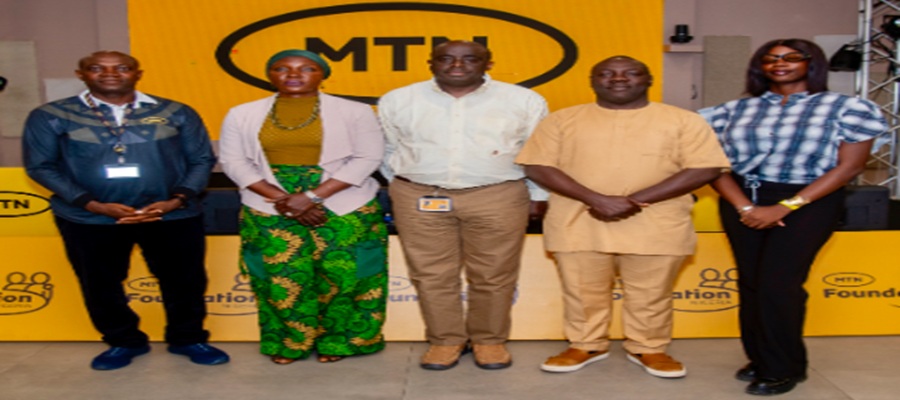
MTN Nigeria, leading technology company, recently hosted undergraduates from the University of Lagos (UNILAG) and Yaba College of Technology (YABATECH) for an immersive career engagement session, at the MTN Rooftop Plaza, Ikoyi, Lagos.

MTN
The event exposed students to career opportunities across cybersecurity, finance, internal audit and forensic investigations while providing practical insights into the skills required to succeed in today’s workplace.
The session was designed to bridge the gap between academia and industry by helping students better understand the diverse career paths available within the telecommunications and technology sector.
The engagement brought together students studying Economics, Banking and Finance, Cybersecurity and Accounting, providing an opportunity to interact directly with professionals from various business functions.
Through presentations and discussions, participants gained a deeper understanding of the competencies, experiences and continuous learning required to build successful careers in a rapidly evolving business environment.
The engagement comes at a time when technology-related roles, including cybersecurity specialists, are among the world’s fastest-growing occupations, according to the World Economic Forum’s Future of Jobs Report 2025.
During the visit, the students met with senior cybersecurity and forensic professionals who shared insights into their respective fields and discussed emerging trends shaping the future of work.
The sessions also highlighted the wide range of career opportunities available across different fields, demonstrating that success in the industry is not limited to any particular course of study.
Undergraduates were also introduced to the evolving nature of the audit profession, as data analytics, artificial intelligence and cybersecurity are becoming increasingly important areas of focus for internal auditors.
During a session on building a meaningful career in Internal Auditing, undergraduates were encouraged to approach their professional journeys with purpose, continuous learning and a commitment to personal growth.
The session emphasised that career success extends beyond securing employment and involves developing relevant skills, understanding one’s strengths and intentionally pursuing opportunities that align with personal values and long-term goals.
Speaking during the engagement, Chief Internal Audit and Forensic Services Officer, Ibe Kalu Etea, represented by the General Manager, Internal Audit and Forensics, Wasiu Ibrahim, encouraged the undergraduates to remain open to opportunities beyond their academic backgrounds and focus on developing transferable skills. “Students can take any career path they want to. You can upskill and transition into a different career, even if it is not what you studied in school.
“Do not let your course of study determine your career path. Focus on building relevant skills, staying curious and continuously learning because opportunities exist across many fields,” he said.
The Undergraduates also participated in an interactive question-and-answer session, where they sought guidance on career development, workplace expectations and professional growth.
The initiative reflects MTN Nigeria’s commitment to nurturing future talent by connecting young people with industry leaders and equipping them with the knowledge, exposure and confidence needed to navigate their career journeys.

NUPRC Warns of Counterfeit, AI-Generated Appointment Letters

KudiWave Asks for Clarification over N750m Transfer from PalmPay Account

NCC Reports over 5,000 Fibre Cuts in 6 Months

PalmPay Reinforces Commitment to Youth Empowerment on International Youth Day

ipNX Joins Calls for Innovation-Friendly Ecosystem and Stronger Local Opportunities at Regenesys AI Summit

EFCC Busts NIS Visa Overstay Racket, Uncovers N700m in an Account

Fact-Check: Elon Musk’s “Tesla Pi Phone” is Internet Rumor

NBC Tasks Broadcasting Stations over 2028 DSO Global Deadline

NBC Scraps Annual Digital Access Fee on DSO

Glo Sponsored African Voices to Feature Netflix’s “The Polygamist” Stars




 E-Business2 days ago
X Replaces Revenue Sharing wit New Creator Rewards Programme

 Telecom2 days ago
MTN Alerts Subscribers over Fake 25GB Anniversary MTN Data Giveaway

 E-Financial2 days ago
Interswitch, Temenos Commit to Advancing Nigeria’s Digital Banking Technology

 E-Financial2 days ago
FG Spent N3.1 Trillion on Domestic Debt Servicing in Q1- DMO

 General News2 days ago
Fake Agency: ICPC Indicts NITDA, Others over Inadequate Due Diligence

 General News2 days ago
UNESCO Taps Oguamanam,Nigerian Scholar to Advisory Body on Science, Tech Ethics

 General News2 days ago
Tax Reform Built on Taxing Prosperity, Not Poverty– Adedeji

 E-Business1 day ago
Microsoft to Unveil Next-generation AI Chip in September