

Telecom
MTN Launches Innovation Challenge to Drive Academic Research Development in Nigeria

MTN Nigeria has launched Academic Research Development & Innovation Challenge (ARDIC), a unique effort aimed at promoting educational research development in Nigeria.
ARDIC will enhance local innovation by leveraging on MTN’s assets to enable post-graduate students transform their ideas into high-impact solutions. The process began with a call for entry that saw hundreds of applications from post-graduate researchers in various universities across the country.
The shortlisted finalists presented their ideas to an independent body of judges, attendees and dignitaries in Abuja. After a rigorous evaluation process, six winners emerged. Each winner received one million naira prize for their research and will enjoy six months incubation support.
Speaking at the formal launch of ARDIC, Dr. Olubayo Adekanmbi, chief Transformation Officer, MTN Nigeria, stated “The solutions to many of the country’s problems can be sourced through qualitative research and innovation. However, lack of funds, dearth of enabling infrastructure and other variables have become encumbrances to young researchers in the country. At MTN Nigeria, we have not only sought ways to understand these issues, we have developed ARDIC to support in-depth research.”
Expressing her excitement, one of the winners, Zainab Ishaq Musa had this to say
‘ This would help me scale up and do more with my research and implement it. We got really good feedback from the judges and these feedback would help me do better. After this, I look forward to start as soon as possible’
MTN has been a leading promoter of science and technology in Nigeria. Its scholarship initiative has seen 8,811 grants worth N1.762 billion benefiting thousands of students across the country.


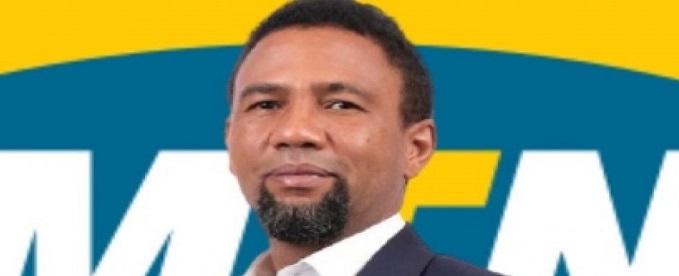
Karl Toriola, chief executive officer, MTN Nigeria, has stated that the telecom company is “a Nigerian company through and through,” emphasising that it belongs as much to Nigerians as to its global investors, with over 11 million Nigerians holding indirect stakes through pension funds.

Toriola also defended the federal government’s approval of telecom tariff adjustments, noting that the move helped prevent a financial crisis in the sector and enabled the company to ramp up capital expenditure to about N1 trillion in 2025 to improve network quality.
Speaking during an interview on Arise News, the MTN boss dismissed claims that the company is solely South African, despite its origins.
According to him, MTN Nigeria is incorporated locally, listed on the Nigerian Exchange, pays taxes in Nigeria, and is largely managed by Nigerians.
“We are labelled as a South African company because MTN Group was founded in South Africa. But the reality is that MTN Group has a very diverse global shareholding. Only about 50 percent of the shareholding is African, while the rest is held by investors from North America, Europe, the United Kingdom, the Middle East and Asia-Pacific,” he said.
Speaking further on MTN Nigeria’s identity, Toriola stressed the company’s deep roots in the Nigerian economy.
“MTN Nigeria is a Nigerian company through and through. We are domiciled in Nigeria. We are listed on the Nigerian Exchange. We pay all the taxes, duties and levies expected of us, and we are run by Nigerians.
“I am Nigerian. Apart from one executive, every member of our executive committee is Nigerian, while our entire expatriate workforce in Nigeria is just four people.
“We have over 201,000 retail investors, while about 11 million Nigerians own MTN shares indirectly through pension funds. We are very proud of our Nigerian identity,” he stated.
On the recent telecom tariff adjustment, Toriola said the increase was driven by necessity rather than profit motives, noting that operators were struggling to meet basic financial obligations before the review.
“People perceived the tariff increase as an aspiration for profitability, but the reality was that we were on our knees financially. We couldn’t even pay our month-to-month bills with the revenues we were generating. The tariff adjustment was an absolute necessity. It enabled us to stay alive,” he said.
He added that the improved revenue base has enabled MTN to scale up infrastructure investments to enhance service delivery.
“In the first quarter of this year alone, we spent N390 billion on capital expenditure, compared with a profit after tax of N359 billion. That shows our commitment to improving quality of service,” he said.
Addressing concerns over poor network quality, Toriola attributed the challenges to increasing demand, infrastructure gaps, vandalism, insecurity, and unreliable power supply.
“There are people who deliberately pour petrol into our manholes and set them on fire. A single incident can knock out services for millions of subscribers. We also face security challenges that prevent our engineers from quickly accessing some sites.
“In addition, we operate about 18,000 sites nationwide, each requiring generators, batteries, rectifiers and constant fuelling because of inadequate public electricity supply. All these affect quality of service,” he explained.
While acknowledging that service quality still needs improvement, he assured customers of continued investment.
“We are not perfect, but we are investing aggressively and continuously striving to do better,” he added.
On allegations that telecom operators deliberately deplete customers’ data, Toriola said findings often point to background data usage by smartphone applications.
“There is a perception that MTN goes and takes customers’ data, but our studies have shown repeatedly that background applications are consuming much of that data.
“I encourage customers to check their device settings. Daily automatic backups are unnecessary for many users. If possible, carry out backups over Wi-Fi instead of mobile data,” he advised.

MTN Nigeria celebrated its 2026 edition of the 25 Days of Y’ello Care employee volunteerism initiative with an impact showcase held at the MTN Rooftop, Ikoyi, on Wednesday, June 24, 2026.

MTN Nigeria
This year’s edition saw employees move beyond financial donations to invest their time, skills, and even their blood [donations] into underserved communities across the country.
The impact showcase served as a reflection point on weeks of intensive outreach, including the recent medical intervention at Badore Market in Ajah, where traders received free screenings for hypertension, diabetes, and other non-communicable diseases which schools benefit from and many more.
Hundreds of market women, artisans, and residents benefited from on-the-spot consultations, medications, and health education sessions led by MTN staff volunteers.
In Lagos, the initiative brought critical health and wellness resources directly to the youth at Kuramo Senior College. Volunteers led intensive health awareness campaigns and structured medical outreach programmes, equipping students with vital information on preventive care and personal well-being.
Simultaneously, the regional execution extended to the nation’s capital to support the busy transit community at Utako Motor Park in Jabi, Abuja.
This regional activation targeted transport workers and commuters with the “Know Your Numbers” campaign, providing accessible basic health screenings, general wellness education, and essential medical checkups designed to promote long-term preventive healthcare.
Setting the tone for the ceremony, Ayham Moussa, Chief Operating Officer, MTN Nigeria, praised the dedication of staff volunteers who consistently showed up across the campaign’s field activations. “From day one, we said we don’t just give money we sacrifice, we put in the effort, we go to the field, and we even give our blood.
“Not many companies are doing what we are doing today. We are one of the very few making this kind of big impact,” he said.
Building on that sentiment, Odunayo Sanya, Executive Director of the MTN Foundation, celebrated the cultural shift the initiative has triggered both inside and outside the organisation. “The greatest takeaway from Y’ello Care is that it confronts you with your privilege and helps you channel that privilege in the right direction.
“Someone told me today that she never knew MTN would do these kinds of things in the market. We are changing the narrative of what MTN means to communities,” she noted.
The impact showcase ultimately reinforced that Y’ello Care is a sustained movement embedded in MTN Nigeria’s corporate culture. With healthier markets, empowered communities, and inspired employees as visible proof of impact, the company signaled that its commitment to equitable health and social good will continue well beyond the 25 days shaping a future where business and purpose remain inseparable.

As teens spend more time online connecting, creating, and exploring their interests, safety needs to be built into their digital experiences.

To ensure safe, age-appropriate online experiences for teens, Meta has Teen Accounts to give parents more peace of mind and address their top concerns: making sure teens see age-appropriate content and don’t experience unwanted contact.
Here are 10 ways Teen Accounts are helping create safer and more positive online experiences for young people.
Teen Accounts Are Private by Default: Teen Accounts automatically come with private settings enabled. This means teens must approve new followers, and people who don’t follow them cannot view or interact with their content. And with Teen Accounts teens under 16 need a parent’s permission to change any settings to be less strict.
Stricter Messaging Controls Reduce Unwanted Contact: Teen Accounts are automatically placed in the strictest messaging settings, allowing messages only from people teens already follow or are connected to.
Sensitive Content Is Limited Automatically: Teens are automatically enrolled in Teen Accounts and defaulted into 13+ age appropriate content settings, These settings help create a more age-appropriate experience by limiting exposure to sensitive content such as violence, graphic imagery or content promoting cosmetic procedures. Teens also won’t be able to follow, message or see accounts that regularly share age-inappropriate content, or whose profile photo, name or bio suggests the account may not be suitable for younger users.
Protections Against Bullying Are Built In: Meta automatically enables its strongest anti-bullying protections for Teen Accounts. Hidden Words filters offensive language from comments and message requests, helping create a more positive experience.
Tagging and Mentions Are More Controlled: To reduce unwanted interactions, teens can only be tagged or mentioned by people they already follow.
Screen Time Reminders Encourage Healthier Habits: After 60 minutes of daily usage, teens receive reminders encouraging them to take a break from the app and spend time offline.
Sleep Mode Supports Better Digital Wellbeing: Teen Accounts automatically switch to Sleep Mode between 10 PM and 7 AM, muting notifications and sending automatic replies to direct messages overnight.
Parents Can See Who Their Teens Are Chatting With: While parents cannot read their teen’s messages, supervision tools allow them to view who their teen has messaged over the previous seven days, creating greater transparency while respecting privacy.
Parents Can Set Time Limits and Usage Schedules: Parents can establish daily Instagram usage limits and block access during specific times, such as school hours, study periods, or overnight.
Family Center Gives Parents Resources and Support: Meta’s Family Center brings all parental tools across Instagram, Facebook, and Messenger into one hub, so parents can manage and supervise their teen’s experiences more easily. Parents can also see the topics their teen has chosen to explore, and access expert-backed resources to help them have meaningful conversations about being online.
Building Safer Digital Experiences Together
Teen Accounts are designed to help parents feel more confident about their teens’ online experiences while empowering young people to connect, create, and discover content in age-appropriate ways. Combined with parental supervision tools, Family Center resources, and digital literacy initiatives, Teen Accounts represent Meta’s ongoing commitment to creating safer online spaces for young people and their families.

World Bank Okays New $1.25Bn Loan for Nigeria

Xenophobia: MTN Nigeria Belongs to Nigerians, Not Only South Africans — Toriola

SEC Grants Approval to Luno, Other Crypto Firms under Regulatory Sandbox

MTN Nigeria Celebrates Volunteers at Y’ello Care Impact Showcase

Listicle: 10 Essential Meta Safety Tools Every Parent and Teen Should Know

Mobile Internet Gender Gap Widest in Africa – GSMA

London Strengthens Global Investment Ties with Africa @ First Ever London-Africa Business Summit

FG Targets Alleged N3tn Capital Flight, Opens Airtime Credit Market to Nigerian Fintechs

Nigeria Launches FreeTV Nationwide

NASENI Trains 50 Women in Kano on Renewable Energy Technologies Under She-Powers Initiative



 Telecom2 days ago
MTN Foundation, Microsoft Empower Nigerian Educators with AI Integration Skills

 E-Financial3 days ago
UBA Surprises Thousands of Customers with Over ₦400 Million Cash Bonus

 Telecom2 days ago
NCC Raises Alarm as Nigeria Lags in Fibre Internet, Pushes for Urgent Expansion

 Broadcasting2 days ago
Spotify partners Afro Nation Portugal to expand African music experience

 Telecom2 days ago
Airtel Nigeria CEO Urges Adoption of Intelligent Technology Platforms to Accelerate National Growth

 E-Financial2 days ago
CBN Cracks Down, Revokes Licences of 46 Microfinance Banks

 E-Business2 days ago
Report Reveals More than Half of Users Encountered Fraud or Scams Online

 Telecom2 days ago
Google Rolls Out Fresh AI Projects Across Africa, Opens New Innovation Hub