

News
Sophos Unveils new cyber threat detection & response offering powered by machine learning


Sophos has announced the availability of Sophos Managed Threat Response (MTR), a fully managed threat hunting, detection and response service.
The re-sellable service provides organizations with a dedicated 24/7 security team to neutralize the most sophisticated and complex threats.
These types of threats include active attackers leveraging fileless attacks and administrator tools such as PowerShell to escalate privileges, exfiltrate data and spread laterally, as explained in the SophosLabs Uncut article on Lemon_Duck PowerShell malware.
Attacks like these are difficult to detect since they involve an active adversary using legitimate tools for nefarious purposes, and Sophos MTR helps eliminate this threat.
“Cybercriminals are adapting their methods and increasingly launching hybrid attacks that combine automation with interactive human ingenuity to more effectively evade detection.

“Once they gain a foothold, they’ll employ ‘living off the land’ techniques and other deceptive methods requiring human interaction to discover and disrupt their attacks,” said Joe Levy, chief technology officer at Sophos.
“For the most part, other MDR services simply notify customers of potential threats and then leave it up to them to manage things from there.
“Sophos MTR not only augments internal teams with additional threat intelligence, unparalleled product expertise, and around-the-clock coverage, but also gives customers the option of having a highly trained team of response experts take targeted actions on their behalf to neutralize even the most sophisticated threats.”

Built on Intercept X Advanced with endpoint detection and response (EDR), Sophos MTR fuses machine learning with expert analysis for improved threat hunting and detection, deeper investigation of alerts, and targeted actions to eliminate threats.
These innovative capabilities are based on Sophos’ acquisitions of Rook Security and DarkBytes technology, and include:
- Expert-led threat hunting: Sophos MTR anticipates attacker behavior and identifies new indicators of attack and compromise. Sophos threat hunters proactively hunt for and validate potential threats and incidents, and investigate casual and adjacent events to discover new threats that previously couldn’t be detected
- Advanced adversarial detection: Sophos MTR uses proven investigation techniques to differentiate legitimate behavior from the tactics, techniques and procedures (TTPs) used by attackers. Coupled with enhanced telemetry from Sophos Central, which provides a detailed, full picture of adversary activities as part of the service, the scope and severity of threats can be determined for rapid response
- Machine-accelerated human response: A highly trained team of world-class experts generates and applies threat intelligence to confirm threats, and takes action to remotely disrupt, contain and neutralize threats with speed and precision
- Asset discovery and prescriptive security health guidance: Sophos MTR provides valuable insights into managed and unmanaged assets, vulnerabilities for better informed impact assessments and threat hunts. Prescriptive and actionable guidance for addressing configuration and architecture weaknesses enables organizations to proactively improve their security posture with hardened defenses
Sophos MTR is customizable with different service tiers and response modes to meet the unique and evolving needs of organizations of all sizes and maturity levels.
Unlike many MDR services that focus on monitoring and threat notification, Sophos MTR rapidly escalates and takes action against threats based on an organization’s preferences.
Sophos MTR is now available from registered Sophos Partners worldwide. Read more on Sophos News, and visit Sophos.com for additional information.

What our partners and industry analysts say:
“Enterprises are facing sophisticated attacks from every direction, and it’s absolutely critical that they can not only detect threats, but also respond to them quickly,” said Aaron Sherrill, information security senior analyst at 451 Research.
“Many vendors claim to offer response capabilities, but in reality, few take the actions needed to eliminate threats as part of their core managed detection and response (MDR) offerings.
“Sophos MTR combines Sophos’ consistently top-rated endpoint protection with human expertise and troves of threat intelligence collected from SophosLabs to create an entirely new offering that meets a mounting market need.”
“The only way to protect against today’s advanced threats is to combine the best tools with the brightest human minds,” said Jeremy Weiss, cybersecurity practice lead at CDW.
“Sophos Managed Threat Response is a game changer, combining machine learning with human analysis for an evolved approach to proactive security protection.
“The customizable offering strengthens our existing threat hunting capabilities and helps us better protect our customers.”
“Cybercrime doesn’t sleep – it’s always ‘on’ – and organizations need around-the-clock protection,” said Ken Hamilton, president and CEO at Total Tech International Inc.
“With Sophos Managed Threat Response, Total Tech customers can rest assured that they’re covered even during the second and third shifts that are notoriously difficult to staff.
“Security health recommendations deliver additional tremendous value, empowering us to take immediate action on improving security defenses.”


The Chartered Institute of Bankers (CIBN) and the Association of Corporate Communication and Marketing Professionals in Banks (ACAMB) have enjoined banks to further deepen and prioritize financial inclusion, women’s empowerment and sustained growth through strategic mandates and frameworks, aimed at closing the financial gap and empowering more small, and medium enterprise (MSME) owners.

Both organisations made this call during a courtesy visit to the newly invested 24th President and Chairman of Council of the Chartered Institute of Bankers of Nigeria (CIBN), Dr. Dele Alabi, Ph.D, FCIB, as part of plans to congratulate him on his investiture as well as seek a stronger alliance between both bodies.
The visit followed Alabi’s investiture where he unveiled his “IMPACT” Vision, themed “Consolidating Our Local Impact, Enhancing Our Global Relevance.”
The vision rests on six pillars: Inclusion across geographic, gender, and generational lines; Membership growth and quality; Professionalism and ethics; Accountability; Competencies and skills development; Technology, automation, and innovation. Other areas of shared interest, include women empowerment, financial inclusion and literacy, as well as MSME clinics, all of which are top on his agenda.
Alabi explained that under him, the institute will be prioritising financial inclusion and women empowerment, because of its realisation that women are often the primary financial managers and caregivers in families. Access to savings, micro-credit, and insurance acts as a safety net during crisis and allows them to significantly improve living conditions.
He added that CIBN would be happy to drive joint knowledge sharing and exchange sessions with CBN and ACAMB across various platforms. “Educating the public through public awareness programmes, with ACAMB as the rallying point, is central to what we do,” he noted.
ACAMB President, Jide Sipe, who led the delegation, spoke in unison with the CIBN president, as he noted that, closing the inbalances in financial access help economies grow faster, reduces inequality, and encourages greater civic participation by all.

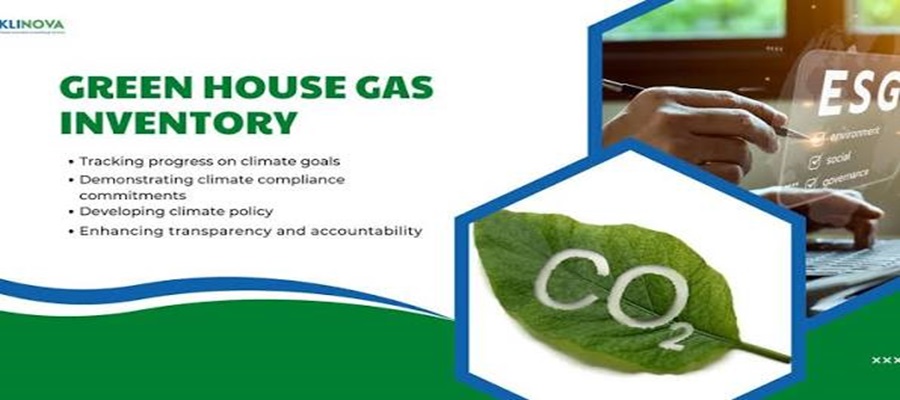
Lagos State has become the first sub-national government in Nigeria to establish a comprehensive Greenhouse Gas Registry, a move aimed at strengthening climate governance, improving emissions accountability and accelerating the state’s transition to a low-carbon economy.

The Lagos State Greenhouse Gas Registry (LGHGR) was unveiled at the Central Business District, Alausa, Ikeja, at a ceremony attended by Prof. Akin Abayomi, commissioner for Health, members of the State Executive Council, representatives of the Federal Ministry of Environment, development partners, TPHG Technologies, the diplomatic and business communities, academics, civil society organisations and the media.
Describing the initiative as a landmark achievement in the state’s environmental sustainability drive, Dr. Babatunde Ajayi, general manager of the Lagos State Environmental Protection Agency (LASEPA), said the Registry marks a defining moment in Lagos’ climate action journey and reflects Governor Babajide Sanwo-Olu’s commitment to building a resilient, climate-smart and environmentally sustainable economy.
According to Ajayi, the digital platform will enable the state to accurately measure, monitor, report and verify greenhouse gas emissions across key sectors, providing credible data to guide environmental policies and climate interventions.
He said the Registry would strengthen evidence-based decision-making, improve transparency and accountability, support national and international climate reporting obligations, unlock carbon market opportunities and boost investor confidence in Lagos’ environmental initiatives.
Ajayi also commended TPHG Technologies for providing the technical expertise that made the pioneering project possible.
Delivering the keynote address, Prof. Abayomi described the Registry as a major milestone that positions Lagos at the forefront of climate governance and emissions accountability in both Nigeria and Africa.
He noted that climate change has evolved into a significant public health and governance challenge, stressing that access to reliable emissions data would enable the state to formulate evidence-based policies, attract climate financing, strengthen resilience and accelerate its transition to a low-carbon economy.
Providing insights into the technical framework of the project, Dr. Mofoluso Fagbeja, lead consultant and chief executive officer, TPHG Technologies, explained that the Registry was developed from the greenhouse gas inventory jointly undertaken by LASEPA and TPHG Technologies in 2022, using 2019 as the baseline year for emissions assessment.
He said the platform is designed to close critical emissions data gaps, particularly within the industrial sector, while supporting effective climate policy implementation, emissions management and sustainable development.
Fagbeja also disclosed that the greenhouse gas inventory estimated that poor air quality contributes to about 35,000 premature deaths annually in Lagos, underscoring the urgent need for stronger emissions control measures and cleaner environmental practices.
In a goodwill message, Balarabe Abbas Lawal, minister of Environment, represented by Mrs. Adenaike Olunimpe Oludunni, federal controller of Environment in Lagos, commended Lagos State for pioneering the initiative, describing it as a significant contribution to Nigeria’s climate commitments.
He said the Registry aligns with the country’s Nationally Determined Contributions (NDCs) under the Paris Agreement and supports the Federal Government’s Energy Transition Plan, while reaffirming the ministry’s commitment to deeper collaboration with Lagos State on climate governance and environmental sustainability.

A recently released Henley Passport Index 2026, showed that Nigerian citizens can travel to at least 20 destinations outside the African continent where entry is allowed either visa-free, with a visa on arrival (VOA) at no extra cost, or via an e-visa.

This expanded access opens doors for Nigerian travellers to experience countries in the Caribbean, Asia, and beyond with greater ease.
Below is a comprehensive guide to countries outside Africa which Nigerian passport holders can visit without a traditional visa.
Visa-Free Countries outside Africa for Nigerian Passport Holders:
Barbados
Cambodia – Visa on arrival
Comoros Islands – Visa on arrival
Cook Islands
Dominica
Fiji
Haiti
Iran – Visa on arrival
Kiribati
Lebanon
Maldives – Visa on arrival
Micronesia
Montserrat
Niue – Visa on arrival
Palau Islands – Visa on arrival
Samoa – Visa on arrival
St. Kitts and Nevis
Timor-Leste – Visa on arrival
Tuvalu
Vanuatuul

Fact-Check: Elon Musk’s “Tesla Pi Phone” is Internet Rumor

Dangote Plans to Donate One-Third of Wealth to Charity as Legacy

NDPC Directs DCPMIs to Register with Agency or Face Legal Consequences

Malpass, Ex World Bank Chief Raises Alarm over Nigeria’s Secretive Debt Structures

How and Why Apps Deplete Data – ALTON

NRC, Ponzi Scheme Collapses Resulting Loss of Billions of Naira

EFCC Busts NIS Visa Overstay Racket, Uncovers N700m in an Account

Tokenization, Blockchain Technology will Transform Financial Institutions – IMF

From Scarcity to Scale: What Africa Can Learn from India’s Agricultural Transformation

BON Establishes Six Ad Hoc Committees to Modernize Broadcasting




 News3 days ago
See Verified 20 Countries Nigerian Passport Holders Can Travel Visa-Free

 E-Business3 days ago
Report Says Cybercriminals Deploy Malware to Hijack Crypto Wallets, Monitor Browsers Telegram

 Telecom3 days ago
NCC, REA Partner to Cut Telecom Costs with Renewable Energy

 Telecom3 days ago
Subscribers, Telcos Warn FCCPC over Airtime Lending Enforcement

 E-Business3 days ago
NPC Opens 131 Births, Deaths Registration Centres in Anambra

 General News3 days ago
AfDB, Nigeria Urge African Control of Mineral Resources

 News2 days ago
History as Lagos Becomes First Nigerian State to Launch Greenhouse Gas Registry

 Telecom2 days ago
AI Investment Gap Threatens Africa’s Future Growth