

News
Internet Activities in Nigeria: Ethics and Best Practice

The Internet is those set of networks or machines that uses the Transmission Control Protocol/Internet Protocol suite (TCP/IP), connected through gateways and sharing a common name and address (RFC 1244). The Internet with the capital letter ‘I’ should be carefully distinguished from the internet with small letter ‘i’. The later might not necessarily be built on a TCP/IP protocol and could be a multiple small networks in a campus network (internetwork of networks, shortened for internet)
The Internet was an improvement over the early 1970s ARPANET which had a lot of flaws. Two engineers in the U.S department of defense started working on this modern Internet. Surprisingly, they never knew that what they were working on is going to support the global business, education and totally replicates the entire activities of mankind into bits and bytes.
When the idea of the global network (Internet) that could stand even a nuclear war started germinating in the U.S DoD, people dismisses it as just science fiction. But now the Internet has come to stay. It has come to break every international boundary on earth. A mouse click you are in China, the other in Russia and the other Zanzibar that sort of thing. The Internet has made the world flat, flat in the sense that it has created a favourable environment for people to compete globally irrespective of their locations, race and technological advancement. Whether you are a Russian astronaut aloft in a spacecraft, a Bedouin tribesman in the desert with PDA/cell phone, or a Canadian work –at-home mother with her office in a spear bedroom, you will be able to connect with nearly anything or anybody anywhere. You will be able to participate in telephony, teleconferencing, telecommuting, teleshoping, telemedicine, tele-education, televoting and even telepsychotherapy not to mention a few. I am a practicing network engineer in Nigeria and belong to different networking fora online. A times when I make contributions on these fora, engineers from advance countries clap and even make references to my contributions. Often times, I make contributions on network securities that is even beyond the comprehension of some of these engineers born and practicing in the US. Thank god for the Internet.
For fifteen years and counting, Nigeria has been battling with positioning itself on the Internet. while the developed world have fully integrated into the Internet , from virtual Internet banking, online degree programs, online medical surgery to online home businesses; Nigeria is still lingering with epileptic, expensive and insecure Internet service. Most internet service providers in Nigeria had ran out of business relying on old Vsat technology, and living the meager Internet user in a misery. The sadder story is that the government is not truthfully helping matters.
Two realities stand out from the rest in Nigeria’s IT milieu. Firstly, more than 90 percent of Nigerians are computer illiterate. Secondly, the remaining percentage lacks the awareness to tap the resources on the Internet. Sadly, these percentages are not exclusive of the academic environment. I have met senior professor who cannot open an email address or print a document from the Internet. How then can they learn? what kinds of graduates are these educators going to produce , because a graduate with computer education is ten times more productive than a graduate without a computer education. The people in charge of our society are scared of the computer keyboard; they fear that computer will not let them be in charge. But this reality they most embrace, and it’s the path to changing our society.
I had a time in Onitsha , Asaba, lagos and Benin in southern Nigeria, and I had encountered hundreds of Internet fraudster between the ages 18-20yrs sending scam mails in hundreds of thousands. This is the lifestyle some Internet users in Nigeria have chosen for themselves. Not minding the fact that the western media is blowing this threat out of proportion, this is not good for confidence in e-commerce with Nigeria. For instance, the amount of credit card scam that is going on in China alone is more than that of the whole Africa. China and Russia is harboring some of the most dangerous criminal hackers in the world, they spent time developing criminal software that will enable them hack into your switches to steal money because of their poor economy, though the software developers in Moscow and St.Petersburg get higher payment paralleling those in the UK and the US. But a BBC reporter will be more interested in reporting a scam mail sent by a Yahoo Boy in Nigeria inviting an American business man to deposit some money in an account to help make away with some stolen wealth from a Nigerian government coffer. Foreign entrepreneurs that agree to such offers are also of doubtful characters.
I started working as a server administrator with an Internet café in a university town. I opted for the job because I needed a round the clock access to the Internet. While my co-workers were busy chatting in yahoo messenger looking for romance online, I was busy studying with free simulated online tutorials ranging from networking to e-commerce. After a while, I was making extra money from downloading free software repackaging them and selling them to my clients: collecting viruses, extracting there source codes and mailing them to a network security consultant in Bombay. And also making extra money from downloading and reselling e-books with free resale right. That extra money was seven times my monthly salary.
The activities of Nigerian based scammers (a.k.a yahoo boys) can be stratified based on the type of yahoo boy in question. There are three species of yahoo boys which I call:
Type A, Type B, and Type C
Type A
These types of scammers are moderately determined and given an alternate source of income will rather not engage in such criminal activities.
Type B
These types of scammers are also moderately determined and mostly scam for fun, having to do stuffs like that online fascinates them. They are mostly teenagers from well to do homes.
Type C
These scammers are the most dangerous types; they are criminally minded and have chosen to be bad people even before they had contact with the Internet. The Internet just enable they conduct a stay-at-home-theft and are mostly within the ages of 25-35yrs. These scammers can conveniently speak with more than five international English accents – as an Arab, Indian, Chinese that sort of thing.
70 percent of the scammers in Nigeria falls into the type A group. To them it is just business which they make a living out of. They use this means to send monies to their folks at home as such the some folks sometimes encourage them to sustain the returns. Type B and C are lavish spenders mostly hanging out in rather raucous parties spending on cute women. After expending their take for a couple of months, they go broke and return to their drawing boards (laptops) to restrategise.
Type A scammers being moderately determined average 8-10hrs on a daily basis preying for victims, while the more determine type C average 15-18hrs preying for victims online. The impact of the activities of this scammers on the local economy is minimal as most local entrepreneurs are computer illiterate and don’t agree with online transactions. In fact this has gone a long way in reducing local crime rate on the streets since the crimes now are transportable through the Internet to the advance world which is less risky for scammers.
Their attack methodology
These scammers execute their attacks in phases:
Phase one – Scouting and foot printing
In this stage, they go in search for online chat fora like Myspace, yahoo, facebook etc, romantic forum is a gold mine because they get people dying to get romance online. The age group of their target victims is very important to them. They aim at women between the ages of 35-45 and men within the ages of 45-55 that will be easily carried away by cute looking faces they don’t have courage to approach offline.



The World Bank Group has announced the 31-month debarments of United Aviation Services Limited (UNASEL), a transportation services company based in Nigeria, and Air Vice Marshal Alkali Mamu, its owner and president, “in connection with fraudulent practices under the Enhancing Niger Northeastern Connectivity Project,” according to a press release issued by the multilateral development bank.

The statement said that the project aims to enhance connectivity and road safety along the Zinder-Agadez Road section and improve access to basic socioeconomic infrastructure for selected communities in that road section.
However, according to the statement: “UNASEL and Mr. Mamu presented false experience documents in a prequalification application to qualify for a contract under the project. This was a fraudulent practice under the World Bank’s sanctions framework.”
“The debarments make UNASEL and Mr. Mamu ineligible to participate in projects and operations financed by Bank Group institutions. The debarments are part of two settlement agreements under which UNASEL and Mr. Mamu admit culpability for the underlying sanctionable practices,” it added.
The statement further said: “Per the Bank Group Sanctioning Guidelines, the settlement agreements provide for a reduced period of debarment in light of UNASEL and Mr. Mamu’s cooperation.

As a condition for release from sanction under the terms of the settlement agreements, UNASEL and Mr. Mamu commit to developing and implementing integrity compliance measures that reflect the relevant principles set out in the Bank Group Integrity Compliance Guidelines, and Mr. Mamu further agrees to complete corporate ethics training.
UNASEL and Mr. Mamu also commit to continue to fully cooperate with the Bank Group’s Integrity Vice Presidency.
“The debarments of UNA SEL and Mr. Mamu qualify for cross-debarment by other multilateral development banks under the Agreement for Mutual Enforcement of Debarment Decisions that was signed on April 9, 2010.”

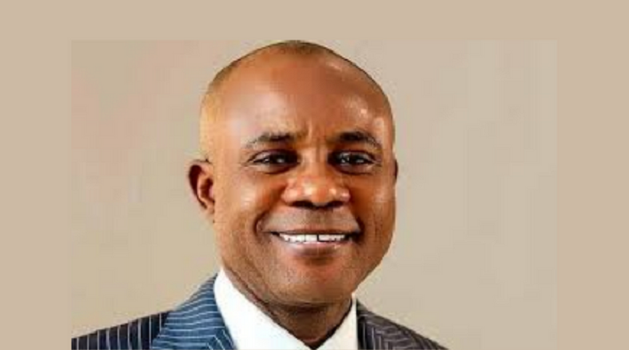
Governor Peter Mbah of Enugu State, has approved the allocation of a parcel of land in Enugu, the state capital, for the establishment of a state-of-the-art Digital Fabrication Centre by the Industrial Training Fund.

Mbah announced this while receiving a delegation from the Industrial Training Fund on a courtesy visit to the Government House, Enugu.
The ITF disclosed this on Friday in a statement signed by its Director of Press and Public Relations, Thomas Ngor.
According to the statement, Mbah described the proposed project as timely and aligned with his administration’s vision of transforming Enugu into a leading destination for investment, innovation and technology-driven industrial development.
He noted that the future of economic prosperity lies in deliberate investments in human capital and emerging technologies, adding that the state has continued to create an enabling environment for innovation, enterprise and sustainable growth.
The governor explained that his administration has made technical education compulsory in the state’s basic education system, with emphasis on digital literacy, robotics and mechatronics to prepare learners for the future of work.
According to him, many traditional trades are now driven by digital technologies, making it imperative to equip young people with relevant technical competencies that will enable them to compete globally and contribute meaningfully to economic development.
Governor Mbah further disclosed that his administration has built smart schools across the state, equipped with robotics centres, mechatronics laboratories and other modern learning facilities, to prepare youths for the evolving global economy.
He noted that artificial intelligence is expected to contribute about $20tn to the global economy in the coming years.
He therefore stressed that the state must be intentional about upskilling its citizens, adding that the establishment of the ITF Digital Fabrication Centre will significantly strengthen the state’s drive to build a knowledge-based economy, foster innovation, promote local manufacturing and create employment opportunities for its growing youthful population.
Earlier, Afiz Ogun, the Director-General of the ITF, who led the delegation, said that upon his appointment by President Bola Tinubu, he was mandated to upskill Nigerian artisans to international standards.
He explained that the Fund subsequently repositioned its technical and vocational skills development efforts through strategic initiatives, including the Skill-Up Artisans Programme, which is designed to train, certify and license Nigerian artisans to international standards.
Ogun disclosed that the Fund had already established a Digital Fabrication Centre in Ikeja, Lagos, with the capacity to produce more than 400 different products. He therefore requested the allocation of land in Enugu State to establish a similar centre with the same production capacity.
According to him, the initiative is aimed at promoting industrialisation, reducing dependence on imports and preparing Nigerians for opportunities in the Fourth Industrial Revolution.
He also reaffirmed the Fund’s readiness to enter into public-private partnerships that will transform Nigeria’s artisanal ecosystem.
Ogun further noted that digital technologies, including artificial intelligence, robotics and computer-aided manufacturing, are rapidly transforming the global economy, making it imperative for Nigeria to deliberately invest in upskilling its workforce to remain globally competitive.
The ITF delegation was later conducted on a guided tour of facilities at one of the smart schools established by the Enugu State Government.

Glovo, a multi-category tech company, has announced its integration into the generative AI ecosystem with the launch of its “Shopping Assistant” for ChatGPT and Claude. Users can now discover retail products, compare prices, and seamlessly order any item using natural conversational language with the AI systems.

The Glovo experience inside such platforms introduces a conversational commerce model that shifts from a search-based web to an intent-based web. Rather than navigating traditional app menus and filters, users can express needs, such as asking for a “last-minute gift for a coffee lover under ₦50,000”, and the assistant handles semantic search, location validation, and product curation.
A Seamless, Concierge-Like Experience
Once both platforms have been connected through either ChatGPT or Claude apps, the user will be able to have a multi-turn dialogue where the assistant remembers context and constraints, such as budget caps. Users receive a visual carousel of up to five highly customised product options available at local stores. Each product displays its image, name, store details and ratings, and price. While the search and discovery experience takes place directly on the Generative AI platforms, selecting a product via the “view on Glovo” button takes the user to the Glovo mobile or web app, where the payment and final purchase are exclusively completed.
Strategic Focus on Retail and Growth
Glovo is prioritising the retail and grocery sectors for this initial launch, capturing the established habit of using AI for product research. Generative AI has driven a significant jump in retail traffic globally, so this first-mover advantage aims to meet customers where they are meeting Gen AI daily, and ensure it captures high-intent organic traffic as search behaviours evolve.
“We’re always looking for ways to meet our customers where they already are. Being available on Claude and ChatGPT means people can discover what Glovo has to offer as part of a natural conversation, with no friction. Glovo has always been about being the everyday app that provides choice and convenience, and this is another step in that direction”, said Shiro Theuri, Chief Technology Officer at Glovo.
How to look for products in the Glovo app through ChatGPT or Claude
- The user must sync ChatGPT or Claude with the Glovo app with the plug-in.
- Once synced, the user must type in @glovo followed by their request.
- The AI platform displays a carousel with 5 available options for the user.
- If the user wants to purchase any of the products or continue searching within the Glovo app, they must click “View on Glovo”, which will redirect the user to the Glovo app or website.
- After the order is confirmed, the store will prepare the item(s) and the courier will head up to the pick-up location. The user will receive the order in minutes.

World Bank Debars United Aviation Services, Owner over Fraudulent Activities

NITDA Introduces Cloud Certification Boost Data Localisation Compliance

Enugu State Approves Land for ITF’s Digital Fabrication Centre

BOI Opens N250Bn Bond Offer to Fund Businesses

Guinness Rewards Consumers with ₦17 Million in First Week of ‘Open for More’ Promo Draw

From Scarcity to Scale: What Africa Can Learn from India’s Agricultural Transformation

EFCC Busts NIS Visa Overstay Racket, Uncovers N700m in an Account

Fact-Check: Elon Musk’s “Tesla Pi Phone” is Internet Rumor

NBC Tasks Broadcasting Stations over 2028 DSO Global Deadline

Police Busts Syndicate Who Allegedly Stole N3Bn from Financial Institution




 News2 days ago
Fleeing Southeast Asia Scam Syndicates Find New Homes in Nigeria, Kenya- Report
 General News1 day ago
Guinness Rewards Consumers with ₦17 Million in First Week of ‘Open for More’ Promo Draw

 News2 days ago
Glovo Pioneers AI Quick-Commerce

 Telecom2 days ago
MTN Paid 600Bn in Taxes in H1 2026 – Kadri, MTN CFO

 Telecom2 days ago
NCC Asks Telcos to Make Budgetary Provisions for Cybersecurity

 News2 days ago
DSS Arraigns Eze for Allegedly Hacking, Stealing N800m from SunTrust Bank

 Telecom2 days ago
Glo Leads Internet Growth Figures in Nigeria for May

 News2 days ago
Liquid Intelligent Uses Light Beam Technology to Bridge Lagos Fibre Gaps