

Telecom
Airtel Partners Police in Lagos, Promises Better QoS

Airtel Nigeria, has partnered with the Lagos State Police Command to beef up the security of lives and property across the State, in line with its corporate vision of becoming the most loved brand in the daily lives of Nigerians, leading telecommunications services provider.
The telecoms operator, Wednesday joined the Lagos State Police Command to commission an ultra-modern Police Post in Lekki, Eti-Osa council area of Lagos.
Aside renovating the police post, Airtel also donated a 20KVA Generator and a brand new Patrol Sports Utility Vehicle as empowerment tools to aid effective policing in the area.
Umar Abubakar Manko, commissioner of Police, who was represented at the event by Felix G. Ogundeji, deputy commissioner of Police (Administration), unveiled the plaque with support from Segun Ogunsanya, managing director and chief executive officer, Airtel Nigeria, top officers of the Lagos Police Command and Residents Association of Lekki.
Ogunsanya, speaking at the occasion, noted that the initiative is in keeping with the company’s tradition of impacting positively the communities where it operates its business.
He said “As a telecommunications company, we play a key role in building and sustaining relationships. We connect people to their loved ones just as we make business deals happen. We also understand that humans can only share love and close business deals in a peaceful and orderly environment
The CEO also reiterated the company’s commitment to strengthening the partnership with the Nigerian Police Force. According to him, Airtel Nigeria “has in the past done quite a lot to support the Nigerian Police. At present, we also have quite a few projects with the Nigerian Police. And since policing is an on-going concern, we will continue to partner with the Nigerian Police to protect lives and property in Lagos and the entire country.”
Ogunsanya also spoke on the commitment of the network to providing Nigerians best telecoms experience with innovative value offerings and products at pocket-friendly tariffs as has been characteristic of the company since it entered the Nigerian telecoms industry three years ago.
In his response, the Commissioner of Police commended Airtel Nigeria for its support to the Lagos Police Command, assuring that the renovated police post, brand new patrol truck and 20 KVA generator will be used optimally. “I commend Airtel for this fine gesture and I want to assure you that the Police Post Facility and other items donated will be put to good use,” said Manko.
Wole Akala, chairman, Lekki Residents Association, also speaking at the occasion, thanked Airtel for extending its Corporate Social Responsibility programme to Lekki residents.
“On behalf of the 70,000 permanent residents of Lekki Phase 1, I appreciate the kind gesture of foremost telecommunications services provider, Airtel Nigeria,” he said.
The event was attended by Adebayo Osinowo, Regional Operations director of Airtel Nigeria; CSP Johnson, DPO of Maroko Police Division, and Mrs. Olubunmi Obagun, secretary Lekki Residents Association, among others
It would be recalled Airtel Nigeria only recently commissioned a block of classrooms and staff offices at St. John’s Primary School, Oke-Agbo, Ijebu-Igbo in Ogun State, being the first phase of the reconstruction work in the school which it adopted mid 2012.
The company has also completed some other multi-million naira school projects in some states in other parts of the country under its Adopt-A-School Corporate Social Responsibility initiative.



Vitel Wireless has entered into partnership with OPay Limited and Moniepoint Limited, to expand access to airtime and data services, particularly in Nigeria’s underserved and rural communities.

The collaboration enables millions of customers on both fintech platforms to seamlessly purchase Vitel Wireless airtime and data directly from their bank accounts and digital wallets, a move designed to simplify access and improve connectivity nationwide.
Chudi Nwabueze, chief operating officer, Vitel Wireless, said the initiative highlighted the growing convergence between financial services and telecommunications in Nigeria.
He noted that by leveraging the expansive reach and infrastructure of fintech platforms, the company is removing long-standing barriers to mobile access.
Nwabueze added that the move builds on Vitel’s existing partnerships with traditional financial institutions such as Fidelity Bank and Zenith Bank, extending its footprint into the rapidly growing fintech ecosystem.
“This integration allows users to conveniently top up airtime and purchase data bundles through familiar banking and wallet platforms, improving accessibility and overall user experience,” he said.
Also speaking, Odera Ben-Chiobi, product marketing manager, Vitel Wireless, said the partnership aligns with the company’s mission to democratize access to mobile connectivity across Nigeria.
According to her, the collaboration will bring telecom services closer to millions of Nigerians, especially in areas where access has historically been limited.
She added that combining telecom services with digital financial platforms will also support broader financial inclusion efforts.
Vitel Wireless currently operates nationwide through a network-sharing agreement with MTN Nigeria, leveraging MTN’s infrastructure to deliver its services across the country.
The company noted that the partnership reflects a shared commitment to inclusive growth, with the potential to accelerate both financial inclusion and digital connectivity across Nigeria.

House of Representatives on Wednesday claimed that Nigerian Communications Commission’s (NCC) weak regulatory oversight, was responsible for the country’s ongoing poor telecom service quality.

The lawmakers accused the NCC of failing to enforce standards that would compel operators to provide reliable connectivity.
They warned that persistent issues like dropped calls, slow data speeds, and network failures pose serious risks to lives and property, particularly during emergencies.
The resolution followed the adoption of a motion of urgent public importance moved by Ahmadu Jaha, representing Chibok/Damboa/Gwoza Federal Constituency in Borno State.
Speaking on the motion, Jaha emphasised the critical role of telecommunications in Nigeria’s economy and daily life, while lamenting the widening gap between subscriber expectations and actual service delivery.
“Telecommunication has become a vital part of everyday life in Nigeria. It connects families, supports businesses, enhances education, and drives economic growth. However, despite its importance, the quality of service provided by many telecom companies remains unsatisfactory,” he said.
Jaha highlighted recurring problems such as dropped calls, poor internet speeds, and failed message deliveries as signs of deeper systemic failures in the sector.“The House is concerned that poor network connectivity is a major issue.
Subscribers frequently experience dropped calls, slow internet speeds, and difficulty sending messages. This affects both personal communication and business operations, leading to frustration and financial losses,” he added.
Lawmakers also expressed dissatisfaction with the high cost of services relative to the quality received.
Jaha noted that Nigerians pay substantial amounts for data bundles that are quickly depleted due to unstable connections and frequent interruptions.
He further pointed to inadequate customer service, where complaints often go unresolved for long periods, hindering emergency communications during fire outbreaks, medical emergencies, or accidents.
The lawmaker attributed part of the problem to insufficient infrastructure expansion, especially in growing urban centres and underserved rural areas.
“Network congestion during peak hours and in densely populated areas shows that infrastructure development has not kept pace with the growing number of users,” he said.
Supporting the motion, George Ozodinobi, deputy minority whip, accused telecom operators of prioritising profits over service quality while faulting the NCC for regulatory complacency.
“It is like these companies have made enough profits in billions, and so, they don’t care about improving the network anymore. The NCC, the regulator, has become complacent,” Ozodinobi stated.
Despite the sector’s rapid growth from under one million lines in the early 2000s to over 200 million active subscriptions today challenges such as insufficient base stations, unreliable power supply, multiple taxation, and infrastructure vandalism continue to hamper service quality.
In its resolution, the House urged telecom companies to invest in modern infrastructure, expand coverage especially in rural communities, improve customer service, and adopt fairer pricing that reflects actual service quality.
The lawmakers also directed the NCC to enforce stricter quality-of-service standards and hold operators accountable.
They further resolved to set up an ad-hoc committee to investigate the root causes of poor service delivery and recommend appropriate legislative measures.

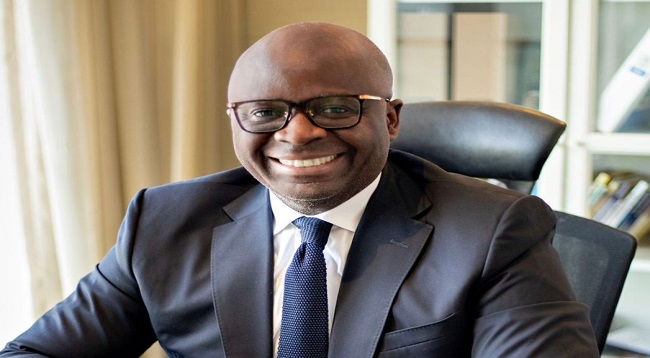
Mr. Daddy Mukadi, the Chief Regulatory Officer of Airtel Africa and Chair of GSMA Africa’s Policy Group, has called on African governments to recognise telecommunications as a core economic pillar and to implement two specific tax reforms that could dramatically accelerate digital inclusion across the continent.

Speaking at the first edition of the États Généraux du Secteur des Postes et Télécommunications in Kinshasa, DRC – an event convened to support the development of a strategic roadmap for the country’s digital and telecommunications sector and attended by H.E. President Félix Tshisekedi – Mukadi, who’s also a member of the GSMA Global Policy Group, urged government and industry stakeholders to rethink the role of telecommunications in national development.
He argued that it should be framed not as a sector specific concern, but as a continent-wide imperative.
“The telecoms sector can no longer be considered merely as a support sector,” Mukadi said. “It is now a core sector. Both are vital, and every other sector, from security and finance to transport and health, depends on digital technology for growth.”
His remarks come at a critical moment for Africa’s digital economy. According to the GSMA’s Mobile Economy Africa 2025 report, the mobile sector contributed US$220 billion to the continent’s economy in 2024. This is equivalent to 7.7% of GDP and is projected to reach US$270 billion by 2030.
Yet despite mobile networks now covering 95% of Africa’s population, nearly 75% of people across the continent remain offline.
The GSMA identifies this gap as Africa’s greatest connectivity challenge, driven above all by the unaffordability of devices.
Mr. Mukadi, therefore, called for strategic adjustments to public policy, as well as legal and regulatory frameworks, to support wider access to digital services.
He asserted that the telecommunications sector should be treated as a foundational pillar of economic development, with stakeholders working together to accelerate investment, expand coverage and close the usage gap across the continent.
The Chief Regulatory Officer of Airtel Africa also highlighted key barriers to digital inclusion, including the affordability of smartphones and the impact of import duties on telecommunications infrastructure.
He proposed a two-to-three-year exemption on import duties and taxes for entry-level smartphones priced between US$40 and US$150 to help bridge the usage gap. He also called for the removal of entry duties on telecommunications equipment for at least three years to support the expansion of network coverage.
According to him, “these measures would help deliver inclusive and sustainable digital technology for economic and social progress,” Mukadi said. “They would also support faster connectivity, improved access and the ability to connect more people, businesses and communities to the digital economy.”
He added that government and the private sector must work closely to create a regulatory environment that encourages innovation, protects consumer interests and supports long-term investment.

Police Arrest Members of N713m Bank Fraud Syndicate, Chinese Suspect at Large

CRMI Warns of Risks, Sees Gains in UAE Exit from OPEC

Reps Claim NCC’s Weak Regulatory Oversight Responsible for Poor Telecom Services

Vitel Wireless Partners Fintechs to Expand Access to Services

Kaspersky Identifies Ongoing Supply Chain Attack on Official Daemon Tools Website Distributing Backdoor Malware

Kaspersky Discovers Vulnerability in Qualcomm Snapdragon Chips that can Lead to Data Loss & Device Compromise

FG to Gift Nigerians over 100 Free TV Channels from May 15

MTN Suspends Data, Airtime Borrowing Service over New FCCPC Lending Rules

What Adekunle Gold’s Support Means for ‘The Gathering on 100

Bank Customers to Pay N1,500 for ATM Card Issuance, Replacement – CBN




 General News3 days ago
Why 9 African Countries Are Looking to Nigeria for Data Protection Lessons

 E-Business3 days ago
Firm Spots Rising Scam Activity Around the 2026 World Cup, from Bogus Tickets to $500,000 “grant” Emails

 E-Financial3 days ago
CBN to Raise N700Bn in First Treasury Bills Auction this May

 Telecom3 days ago
Telcos Recover N2 Trillion following Crackdown on Indebted Subscribers

 Telecom3 days ago
Organized Criminals Plunder Telecom Infrastructure across Nigeria, Cause Service Disruptions

 Telecom3 days ago
MTN Nigeria Remits N878.7Bn Taxes, Levies in 2025

 E-Financial3 days ago
Why African Crypto Brands must Communicate like Banks, Not Startups

 E-Business2 days ago
Kled AI, US Data Firm Blocks Nigeria over High ‘Fraudulent Activity’