

News
NGO Advocates for Emergency Healthcare Practices in Nigeria

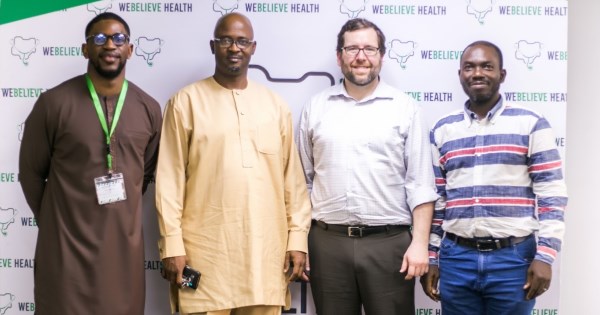
WeBelieve Health, a non-profit organization, in partnership with the Society of Emergency Medicine Practitioners of Nigeria (SEMPON) held a half day symposium at the Lagos University Teaching Hospital, Lagos to introduce World Health Organization (WHO) tools for the practice of emergency medicine in resource-constrained settings in Nigeria.
The inaugural event themed “Emergency Medicine in Nigeria- Where are We Now” was hosted by a team of international medical professionals and relevant stakeholders. It highlighted possible ways to provide and improve existing health care delivery techniques in Nigeria, particularly in emergency situations.
In attendance was Dr. Michelle Niescierenko, the Director of global health at Boston Children’s Hospital, and an Assistant Professor at Harvard Medical School; Dr. Sean Kivlehan, the International Emergency Med Fellowship Director at Brigham & Women’s Hospital, and faculty of Harvard Medical School; and Dr. Babatunde Akodu, the head of the Family medicine department at Lagos University Teaching Hospital, Lagos.
The Permanent Secretary of the Lagos Ministry of Health, Dr. Olusegun Ogboye, was also on ground and provided updates on the implementation of Lagos State Ambulance Service.
WeBelieve Health, through the symposium, explored the history and achievements within the healthcare sector thus far with emergency response, and provided physicians and nurses with up to date information on the standards for the practice of emergency care.
The event also explored qualitative descriptions of barriers and facilitators to optimal care for emergency patients via a series of focus group discussions.
According to the founder of WeBelieve Health, and emergency Physician at Harvard Medical Faculty Physicians, Dr. Ayobami Olufadeji, “It has become increasingly important in Nigeria that we are equipped with tools, resources and information that will enable us act effectively during health emergencies.
“We are thrilled to pioneer this timely medical symposium that will enable stakeholders be more proactive when faced with medical emergencies.
“WeBelieve Health is committed to promoting the advancement of healthcare delivery in Nigeria, as our organization continues to think through innovate ways to work through the challenges that Nigerians face with accessing medical care”.
Speaking at the event, Head of Trauma at the National Hospital Abuja, Dr. Oyediaka Okoye, discussed some of the innovative approaches they have employed to ensure that the emergency department has trauma surgery coverage at all times.
Dr. Ola Brown, Founder of Flying Doctors Nigeria also emphasized the important of ensuring that all physicians become stronger advocates of improving emergency care and the health care system as a whole.
Since its incorporation, WeBelieve Health has supported a number of healthcare projects including building sick bays and sponsoring programs at different schools for children.
WeBelieve has also participated in other research projects to obtain the public perceptions of the state of healthcare delivery in Nigeria.
The half day symposium was an opportunity for WeBelieve Health to engage emergency medicine providers on how to develop connections for research opportunities and career advancement within and outside Nigeria.



On International Day of Families observed on May 15th, a global Kaspersky study* reveals that while 47% of respondents talk about online safety, only 33% secure all their family devices – highlighting the need for proactivity from Family Digital Managers.

As online threats develop and every generation joins the online space, cybersecurity habits have become an essential part of life for every family. Typically, in every family, one or two people become so-called Family Digital Managers, responsible for managing subscriptions, setting up new devices, or thinking about cyber protection. Kaspersky has conducted a survey to find out what measures modern families take to stay safe online.
According to Kaspersky’s data, a significant portion of respondents adopt an educational approach to cybersecurity within their families:
47% regularly coach elderly relatives and children on safe online practices
45% advise family members to adopt password manager solutions
42% encourage the use of multi-factor authentication (MFA)
An equal 42% actively review and adjust privacy settings on both family devices and critical online accounts
Although a growing awareness of the importance of proactive, family-focused digital protection can be observed, when it comes to the implementation of security solutions, the trend is slightly different. 10% of respondents take no measures at all to protect their loved ones online, rising to 21% among those aged 55+.
As for the parental control apps, 67% of families with children under 18 years use this tool to monitor and secure their kids’ online activity. Parental control, such as the Kaspersky Safe Kids solution, can help restrict children’s access to inappropriate content and also gently manage their online habits by limiting access to certain websites and apps, controlling their screen time, and even enhancing their physical security by tracking their geolocation.
The most worrying number is that only 33% of respondents – just 1 in 3 – install security solutions on all family members’ devices. Kaspersky experts highlight that the current threat landscape shows that mobile devices and tablets as well as PCs all require comprehensive cyber protection, as they are often targeted by cybercriminals.
According to the survey, only 30% of respondents set up new devices for their families. Setting up a new device is not often regarded as a step that contributes to cyber safety; however, some actions performed before the device is put into use can significantly enhance its security.
For instance, experts recommend installing a security solution first, to scan the device for hidden threats and make web browsing safe from the first queries. What’s more, reviewing privacy settings on a new device allows you not to share data that you would like to keep private with some applications and services.
The research also shows that the older generation (55+) is generally less included in family security habits. Around 1 in 5 (21%) of this age group globally do not take any measures to protect their family online and only a quarter (24%) install security solutions for family members. The most popular security measure among them turns out to be a password manager, as 40% of this age group recommend their family members to use it.
“We are now using a lot of gadgets and digital services, and with every new device and every additional hour spent online, the potential entry points for cybercriminals continue to grow, exposing us to a wider range of cyber threats. At the same time, not every generation adapts to these rapid changes with the same ease.
“That’s why having someone in the family take on the role of a ‘Family Digital Manager’ can be so valuable, especially when it comes to protecting kids and elder people from digital cyberthreats, give advice and help with the use of trusted security solutions,” comments Brandon Muller, Technical Expert at Kaspersky.
News
The Nigeria Prize for Science & Innovation Records New Height as 2026 Edition Attracts 237 Entries
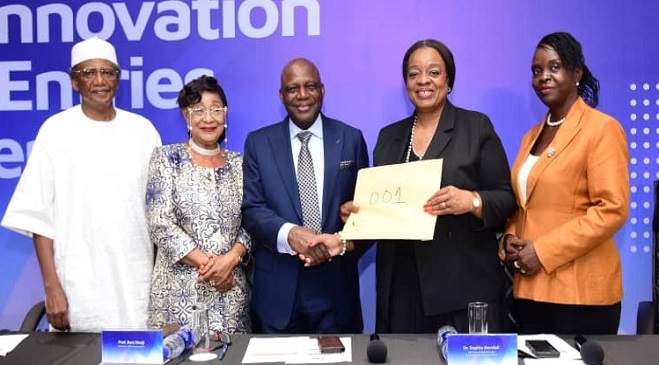
For the first time since it was established in 2004, the 2026 edition of The Nigeria Prize for Science and Innovation has recorded an historic milestone, attracting a record-breaking 237 entries.

The submissions were formally handed over to the Prize’s Advisory Board at a press conference in Lagos on Thursday, marking the start of the adjudication process.
The handover marks the beginning of the search for Nigeria’s most innovative scientific mind, under the theme “Innovations in ICT, Artificial Intelligence (AI), and Digital Technologies for Development.” The theme was a deliberate retention from the 2025 edition, which concluded without a winner after no entry met the required standard for selection.
Speaking at the press conference, Sophia Horsfall, NLNG’s General Manager, External Relations and Sustainable Development, said the continued focus on digital technologies reflects both global trends and Nigeria’s development priorities. She noted that the Prize remains a platform for identifying solutions with real-world relevance.
“In this fourth revolution, digital infrastructure is as foundational to our survival as electricity or water. For Nigeria, our economic sustainability depends on our ability to move beyond promising research and into undeniable innovation that delivers,” she said.
She added that global recognition for Nigerian innovation must be earned through stringent standards. “We believe that if a Nigerian discovery is to command global respect, it must withstand the highest levels of scrutiny. It is this conviction that guided the difficult decision seven months ago”.
While acknowledging the level of interest the theme continues to attract, Horsfall maintained that expectations remain uncompromising, noting that only solutions demonstrating real impact and scalability will be considered. She added that the decision not to award a winner in 2025 reflects this commitment and sets the benchmark for the current adjudication process.
Receiving the entries, Chairman of the Advisory Board, Barth Nnaji, described the handover as a decisive stage in the Prize’s selection process, emphasising that its credibility is anchored on strict standards of excellence. He reaffirmed that the Prize remains focused on identifying innovations that translate scientific insight into tangible socio-economic outcomes.
“Our refusal to award the prize in 2025 was not a dismissal of the hard work of Nigerian innovators; rather, it reinforces that The Nigeria Prize for Science and Innovation holds a gold standard of excellence,” he stated.
He further clarified that the outcome of the 2025 edition, in which no winner was declared, should be viewed within the context of the Prize’s rigorous evaluation framework, which demands novelty, depth, relevance, and demonstrable impact. He emphasized that all entries will continue to be subjected to the same high level of intellectual and technical scrutiny.
Professor Nnaji added that the Prize seeks solutions that directly address Nigeria’s real-world challenges. “Our broader objective is to identify work that brings tangible impact to the challenges Nigeria faces, whether through digital health technologies that serve rural populations or the use of AI in preserving our cultural heritage and languages.”
Other members of the Board are Chief Dr. Nike Akande, a two-time former Minister of Industry, and Professor Baba Yusuf Abubakar, a professor of quantitative genetics and animal breeding.
The Nigeria Prize for Science and Innovation, now in its 22nd year, is valued at $100,000 and remains arguably Africa’s most prestigious science award. The winning entry for the 2026 edition will be unveiled at a world press conference scheduled for September.


Federal government, in partnership with the World Bank, has launched a fresh $65 million funding phase of the Sustainable Procurement, Environmental and Social Standards Enhancement (SPESSE) project aimed at benefiting more than 24,000 Nigerians through professional training and institutional capacity development.

The initiative, coordinated by the National Universities Commission (NUC), is designed to strengthen procurement systems, environmental management and social standards across public and private institutions, while promoting transparency, accountability and sustainable development practices nationwide.
Abdullahi Ribadu, executive secretary of the Commission, disclosed this in Abuja during the signing of performance contracts for the additional SPESSE financing. He explained that the intervention builds on the gains of the initial $80 million SPESSE project, which became effective in 2021.
According to Ribadu, the programme has significantly improved institutional frameworks and developed professional expertise in key governance sectors. He noted that the initiative was introduced to address the shortage of qualified professionals in procurement, environmental management and social standards within both public and private institutions.
He said: “With the support of the World Bank and under the coordination of the NUC, six centres of excellence were established across the six geopolitical zones to provide sustainable capacity building in these critical sectors”.
Ribadu stated that the participating universities were selected through a transparent and competitive process based on institutional readiness, quality assurance and sustainability.
He added that the institutions have continued to produce skilled manpower capable of advancing transparency, environmental responsibility and inclusive national development.
He described the contract signing ceremony as a renewed commitment to accountability, sustainability and institutional excellence, noting that the centres have recorded major achievements, including the introduction of specialised academic programmes ranging from short courses to undergraduate and postgraduate degrees.
The NUC boss further disclosed that three of the six centres have already commenced PhD programmes, while the remaining centres are expected to begin by July 2026.
He added that under the new funding phase, the Commission targets at least 60 PhD graduates, enrolment of 60 foreign students, staff internships and expanded student exchange programmes with international institutions.
Also speaking, Adebowale Adedokun, director-general, Bureau of Public Procurement (BPP), said the project has so far trained more than 2,700 officers from both the public and private sectors to improve procurement competence nationwide.
He said the next phase would support the rollout of Nigeria’s electronic procurement system and expand online capacity-building programmes for policymakers and small and medium-scale enterprises involved in managing public funds.
On his part, Ishtiak Siddique, World Bank Task Team Leader for SPESSE, revealed that more than 40,000 participants had benefited from training under the original project, with over 4,000 certified in procurement, environmental and social standards.
Siddique said the additional funding would focus on strengthening the capacity of federal, state and local government agencies to improve development outcomes and service delivery, stressing that sustainability remained central to ensuring continuity beyond donor support.
For her part, Prof. Folasade Ogunsola, Vice-Chancellor, University of Lagos, reaffirmed the institution’s commitment to advancing professional capacity development under the SPESSE framework through postgraduate training, institutional ownership and international collaborations.

World Bank Blocks Social Media Comments from Nigerians over Loan Backlash

Nigerians Lose N12.5bBn to Telecom-Related Financial Crimes – PwC

Jumia Nigeria Records Strong Q1 2026 Growth as Technology-Led Strategy Drives Market Expansion

Lagos Plans New Cybersecurity Centre

LG Electronics Strengthens Household Energy Efficiency in Nigeria with Advanced Inverter Refrigerator Solutions

MTN, VDT, Zoracom, Digital Realty Back 2026 Girls in ICT Campaign

Vitel Wireless Partners Fintechs to Expand Access to Services

Kaspersky Discovers Vulnerability in Qualcomm Snapdragon Chips that can Lead to Data Loss & Device Compromise

Bank Customers to Pay N1,500 for ATM Card Issuance, Replacement – CBN

FCCPC Licenses 5 Firms for Airtime, Data Lending as Telcos Step Aside




 News2 days ago
The Nigeria Prize for Science & Innovation Records New Height as 2026 Edition Attracts 237 Entries

 General News2 days ago
Cross-Border Payments Startup Chimoney Closes Shop After 4 Years

 Telecom2 days ago
Firm Shares 5-step Safety Action Plan on What to Do When You Discover Your Phone is Missing

 Telecom2 days ago
Chamber Raises Alarm over Increasing Telecoms Infrastructure Vandalism

 General News2 days ago
Tribest Corporate Support Group Appoints Fadebi as Group Executive Director

 E-Financial2 days ago
NDIC Drags Wema Bank to Court over N125.38Bn Banana Island Assets

 General News2 days ago
FCMB, REA Others Launch $188M Fund to Finance 191mw Solar Capacity

 General News2 days ago
Gozi-Anyaokei, Bank MD Arraigned over Alleged N19m, $30,000 Fraud