

E-Business
Elegbe, Interswitch Boss Charges Entrepreneurs on Clear Business Model

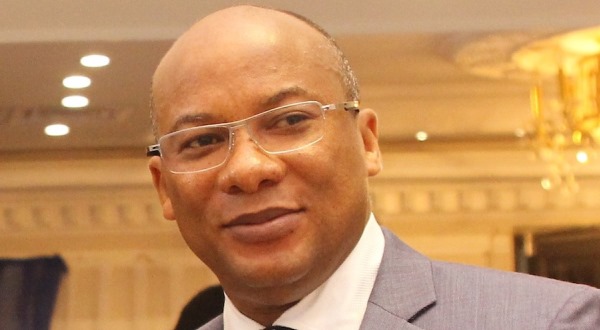
Mitchell Elegbe, Interswitch GMD, has advised entrepreneurs to have a clear business model before seeking start-up capital.

The Interswitch boss made this remark during a two-hour Webinar Startup Insight series themed ‘Why startup capital is necessary, but not sufficient’. The online session was attended by different entrepreneurs.
Elegbe stated that when looking for capital for business, entrepreneurs should bear in mind the problem they intend to solve. He said it is important to know the appropriate business model required.
He also advised entrepreneurs to critically think about their business models, stating: “The bigger the problem you want to solve, the more coherent your business model should be.”
Narrating his experience prior to the emergence of Interswitch, Mitchell said he recognized Nigeria had payment problems but he had very little knowledge of the banking industry having cut his teeth career-wise in the telecommunications and oil & gas sectors.
However, because he understood the problem he was trying to solve, he went for different pitches and scaled through.
Elegbe also spoke about the concept of Greiner growth curve in business which posits that businesses will go through six stages of evolving growth and five revolutions of crisis stages.
He explained that the ability to move from one stage to the other is what will make a business. He advised entrepreneurs to consider partnerships later in business, noting that at that time a name would have been made for the brand.
He concluded by encouraging business owners to recognize their times and seasons. According to him, if a business is run successfully for two years, then the most dangerous part has been overcome. The next challenge will be how to scale the business.
“Business owners should not do the same thing for a long time. They should be dynamic in their line of thought. Business owners should see difficult times as a golden opportunity to make their brands better. May you see your golden opportunity”, he added.
The programme which is in its second edition is a 12-week Accelerator programme organized by Asset & Resource Management Holding Company Limited (ARM) in partnership with the Ventures Platform. It is designed to fund and support compelling Fintech startups solving key problems in the financial services industry.
It was also initiated to unlock verticals and new markets, thereby changing how users access and consume financial services in Africa through the Ecosystem Dialogue, and Startup Insight Series.
The Ecosystem Dialogue Series (EDS) is a platform for conversations between policymakers, advocators and members of the startup community, to discuss policies and innovations that startups can leverage; while Startup Insights is a mentorship series that brings experienced entrepreneurs, investors, and corporate professionals (with prominent success stories) together with startup founders, to explore deep industry and entrepreneurship insights.
Other speakers at the Ecosystem Dialogue series included Aituaz Kola-Oladejo, Executive Director, Financial Services Innovators and Henrietta Bankole-Olusina, Managing Director, ARM Financial Advisers.



Galaxy Backbone (GBB) Limited has mapped out strategies to strengthen Nigeria’s digital infrastructure in order to make the country globally competitive in the face of Artificial intelligence, blockchain, cloud computing and other emerging technologies aimed at securing the digital future of the country.

Prof Ibrahim Adeyanju, managing director and CEO of GBB, made this known during a press conference to unveil a flurry of activities to celebrate the 20th anniversary of GBB in Abuja on Monday, stressing that Galaxy Backbone has evolved from a connectivity provider into one of Nigeria’s most strategic digital infrastructure institutions.
Galaxy Backbone is a public enterprise of the Federal Government of Nigeria incorporated in 2006 with the primary mandate of setting up and operating a unified Information and Communication Technology (ICT) infrastructure platform that addresses the connectivity, transversal and other technology imperatives for Ministries, Departments and Agencies (MDAs) of the federal government and private entities.
He said in the last 20 years, the agency has invested in world-class data centre infrastructure, including uptime certified Tier III and Tier IV facilities that provide secure, resilient and reliable environments for hosting missions critical to systems and applications.
He noted that these facilities strengthen data sovereignty, ensure business continuity and help keep Nigeria’s most critical digital assets secure.
“Through our cloud infrastructure and the 1Government Cloud platform, government institutions can access scalable digital services without the burden of building costly infrastructure independently. This shared-services model improves efficiency, reduces costs and accelerates innovation.
“We have delivered platforms such as GovMail (the homegrown Official government email), collaboration tools, hosting services, connectivity solutions and shared applications that support thousands of public servants and hundreds of institutions every day,” he said.
He emphasized that the true value of Galaxy Backbone is not measured by kilometres of fibre, data centres or technology alone but by impact.
He explained that the GBB fibre infrastructure today spans almost 30 states of the federation, connecting government institutions and creating the foundation for digital government even as he pledged that the remaining states and local areas will all be captured in due course.
On cyber security, the GBB boss noted that the agency has strengthened cybersecurity capabilities and continues to invest in protecting government systems and critical national digital assets, against cyber-attacks.
“We have the digital infrastructure and we are collaborating with partners to use these emerging technologies. We also have a top tier cyber security operation center and they are multilayered such that even when there is a spike in cyber-attacks none of them have been successful so far.
He added that the GBB is collaborating with other government agencies like the National Security Adviser, The Nigeria Police, and Nigerian Communications Commission (NCC) National Information Technology Development Agency (NITDA) National Identity Management Commission (NIMC) to ensure that government information is protected.
Ibrahim Sani Mohammed, executive director Finance and Corporate Services of the GBB, while fielding questions noted that the agency has created enormous value and has contributed immensely in the digital ecosystem of Nigeria helping to support small and medium enterprises (SMEs).
Olusegun Olulade, executive director Customer Centrality and Marketing of the GBB, said that customers have remained the formidable partners in the GBB journey of 20 years, adding that the agency has developed the mechanism to ensure customer satisfaction as it intensifies efforts to build trust.
Nigerian banks are increasingly embracing artificial intelligence (AI) to improve customer service, strengthen fraud detection, and streamline operations.

Pic credit….gdprlocal.com
However, the same technology driving innovation could also expose the country’s financial system to unprecedented cyber risks, according to a recent warning from the International Monetary Fund (IMF).
The IMF has cautioned that advanced AI tools are rapidly enhancing the capabilities of cybercriminals, making it easier and faster to identify and exploit vulnerabilities in banking systems, payment infrastructure, and digital platforms.
For Nigeria, where digital banking transactions have surged in recent years and financial institutions are becoming more interconnected, the implications could be significant.
The warning comes at a time when Nigerian banks are investing heavily in digital transformation.
From AI-powered customer support systems to automated fraud monitoring tools and digital lending platforms, financial institutions are relying more than ever on technology to drive growth and improve efficiency.
Yet experts warn that this digital expansion is also widening the attack surface for cybercriminals.
The IMF noted that advanced AI models can dramatically reduce the time and expertise required to discover software vulnerabilities.
This means attackers can launch more sophisticated and coordinated cyberattacks against multiple institutions simultaneously.
For Nigeria’s banking sector, which depends on common payment rails, cloud infrastructure, telecommunications networks, and shared service providers, a major cyber incident could quickly spread across the financial ecosystem.
Nigeria’s financial sector has undergone a remarkable digital revolution over the past decade.
Data from the Central Bank of Nigeria (CBN) show that electronic payments now account for trillions of naira in monthly transactions, driven by mobile banking, instant payments, fintech innovation, and the growing adoption of digital channels.
The success of platforms such as the Nigeria Inter-Bank Settlement System (NIBSS) Instant Payments network has made banking more accessible and efficient.
However, it has also increased dependence on interconnected digital infrastructure.
According to the IMF, this interconnectedness creates systemic vulnerabilities.
A cyberattack targeting a critical service provider, cloud platform, telecommunications network, or payment gateway could disrupt services across multiple banks at the same time.
Unlike traditional bank robberies or isolated cyber incidents, AI-enabled attacks have the potential to trigger widespread operational disruptions, affecting payment processing, customer access to funds, and confidence in the banking system.
The IMF warns that extreme cyber incidents could evolve from operational challenges into broader financial stability concerns.
If multiple banks are simultaneously affected by a cyberattack, customers may experience service outages, delayed transactions, or restricted access to deposits.
Such disruptions could undermine public confidence and create liquidity pressures, especially if panic withdrawals or transaction bottlenecks occur.
The concern is not merely theoretical.
Over the past few years, Nigerian financial institutions have experienced increasing levels of cyber fraud, phishing attacks, identity theft, and ransomware threats.
Although regulators and banks have improved cybersecurity frameworks, AI-driven attacks could significantly raise the sophistication and scale of these threats.
The IMF believes that the growing concentration of technology services could further amplify the risks.
Many Nigerian banks rely on a relatively small number of software vendors, cloud providers, telecommunications operators, and payment infrastructure providers. A successful attack on one critical provider could have cascading effects across the entire banking system.
This concentration risk is becoming more pronounced as financial institutions increasingly adopt AI solutions from a limited number of global technology companies.
Despite the risks, AI is also emerging as one of the most powerful tools available to banks in defending against cyber threats.

A coalition of civil society organisations has warned that Nigerians’ personal information remains vulnerable to abuse despite existing data protection laws.

In a statement titled “Protected From the State, Not By It: Nigeria’s Data Protection Crisis Is a Crisis of Implementation,” the group said Nigeria developed one of Africa’s largest digital identity databases but failed to adequately protect the information it collects.
The coalition, comprising Media Rights Agenda (MRA), Paradigm Initiative (PIN), Digital Rights Lawyers Initiative (DRLI), Accountability Lab Nigeria, PROMAD Foundation, DigiCivic Initiative and others, noted that the National Identity Management Commission (NIMC) had enrolled more than 121 million Nigerians as of June 2025, while the country also operates under the Nigeria Data Protection Act (NDPA) 2023 and a dedicated Nigeria Data Protection Commission (NDPC).
However, the organisations argued that these safeguards failed to translate into meaningful protection for citizens.
According to the group, recent incidents involving alleged unauthorised access to sensitive government databases have exposed weaknesses in oversight and accountability mechanisms.
They cited reports surrounding the disclosure of voter registration information from the Independent National Electoral Commission (INEC) database and investigations that uncovered the online sale of sensitive identity records, including National Identification Numbers (NINs), for as little as ₦100.
“When the regulator’s own data is not safe, no citizen’s data is. A government that cannot protect its citizens’ data should, at minimum, be cautious about how aggressively it collects and deploys it. Nigeria has done the opposite. Under the NDPA, data controllers are required to undergo compliance audits filed with the NDPC, an obligation enforced against private entities even as public institutions, the largest holders of citizens’ data, face no comparable scrutiny,” the coalition stated.
The organisations also expressed concern about the expansion of state surveillance programmes, arguing that Nigeria lacked a comprehensive legal framework governing public surveillance systems.
They said existing laws did not clearly define the limits of surveillance, provide independent oversight, or require human rights impact assessments before such systems are deployed.
The coalition further criticised the continued use of provisions of the Cybercrimes Act against journalists, bloggers and social media users, despite a 2022 judgment by the ECOWAS Court of Justice declaring aspects of Section 24 of the law arbitrary and repressive.
According to the group, Nigeria’s data governance system currently places citizens in a vulnerable position where personal information is aggressively collected but inadequately protected.
“This is the asymmetry at the heart of the crisis: citizens are under-protected from data abuse and over-exposed to state monitoring and punishment,” the CSOs said.
They called on the Federal Government to strengthen enforcement of the Nigeria Data Protection Act, ensure public institutions are subjected to the same compliance requirements as private organisations, and publish the findings of investigations into alleged breaches involving government databases.
The coalition also urged authorities to establish an independent oversight framework for surveillance systems, amend Section 24 of the Cybercrimes Act, in line with the ECOWAS Court ruling, and strengthen accountability mechanisms across public institutions handling citizens’ data.
It warned that public trust in digital governance would continue to erode unless citizens are assured that their personal data is protected from misuse, unauthorised access and unlawful surveillance.

Galaxy Backbone @ 20, Pledges Nationwide Connectivity, Data Sovereignty

KidsCook Showdown 2.0 Set to Empower Public School Pupils with Culinary, Life Skills

CBN Orders Banks, Fintechs to Host Payment Data Locally

PalmPay Joins Industry Leaders @ Digital Pay Expo 2026

UK Bans TikTok, Instagram, Facebook for Under-16s in Landmark Crackdown

CBN Extends PoS Geo-Fencing Enforcement Deadline to August 2026

NCC Drafts New Rules for Virtual Mobile Operators

TD Africa, HPE Drive Conversations on the Future of Intelligent Networking

London Strengthens Global Investment Ties with Africa @ First Ever London-Africa Business Summit

Easybuy Partners WAWUAfrica to Upskill 10 Million Youths and Women, Boosting Nigeria’s Economic and Financial Inclusion




 E-Business2 days ago
AI-Powered Cyber Threats Put Nigerian Banks on Alert

 E-Business2 days ago
CSOs Raise Alarm over Nigeria’s Data Protection Crisis

 General News2 days ago
₦5m up for Grabs as 10 Startups Clash at the Gathering on 100 Pitchathon Aba

 E-Financial2 days ago
CBN to Expand eNaira for Salaries, Pensions and Welfare Payments

 General News2 days ago
CBN Moves to Stop Banks From Using Customers’ Money for Fintech Subsidiaries

 E-Financial2 days ago
CBN to Bar HoldCos from Influencing Banks’ Lending Decisions

 Telecom2 days ago
NITDA Reveals Why AI Could Be Nigeria’s Biggest Wealth Creator, Not Oil

 Telecom2 days ago
NASENI Unveils Ambitious Plan to Produce 600 Million Diagnostic Kits Annually