

E-Business
DHL Express Cements Strategic Investment in Link Commerce


DHL acquires a stake in their strategic partner company, Link Commerce, in support of growing e-commerce in Sub-Saharan Africa and other global emerging e-commerce markets; Africa’s online retail market predicted to reach an 11-digit dollar value in 2020.

DHL Express announced its minority stake acquisition in Link Commerce, the UK-based e-commerce firm that helped the logistics company develop its hugely successful DHL Africa eShop platform.
Hennie Heymans, CEO of DHL Express sub-Saharan Africa, says that the acquisition demonstrates the company’s commitment to growing e-commerce on the continent. “Acquiring a stake in Link Commerce – the company behind the MallforAfrica.com platform – shows our tremendous support of e-commerce in Africa. It also positions us to realize our ambitions of growing the eShop offering globally, and work on the scalability of the platform when the opportunity arises.”
”DHL’s investment in Link Commerce is a perfect fit. With the DHL investment we are now able to grow faster by leveraging the amazing shipping network DHL has built globally. This will help us expand our white-label turnkey B2B eCommerce platform and provide online shoppers with the ability to shop more and get more at great shipping rates fast.” said Chris Folayan Founder and CEO of Link Commerce and Mall for Africa.
Just over one year on from its initial launch, the DHL Africa eShop (www.Africa-eShop.dhl) continues to see massive growth in sub-Saharan Africa. Heymans notes that the DHL Africa eShop has consistently outperformed expectations since its launch.

“The platform was developed in partnership with Link Commerce and initially launched in 11 African countries in April 2019. It was an immediate success, gaining around 5,000 subscribers within the first six weeks. Today, DHL Africa eShop is live in 34 countries across Sub-Saharan Africa with tens of thousands of users across the continent.”
The DHL Africa eShop offers African consumers unprecedented access to international retailers via an easy-to-use platform, with great convenience, speed and reliability.
“DHL Africa eShop enables African customers to shop directly from over 200 US- and UK-based online retailers, with purchases delivered directly to their door, by DHL Express.”
Heymans adds: “Online buying behaviours and product mixes have evolved quite significantly since the onset of COVID-19. Some of the most popular items on the platform now include productivity and communications devices to support remote working, home and kitchen appliances, entertainment gadgets and health related products, in addition to the historic orders of fashion and beauty products.
“Consumer interests have shifted towards goods that are harder to source locally. With brick-and-mortar retailers in many regions operating at reduced capacity, consumers have turned to online shopping to acquire the goods they need.
“It’s been great to see eShop providing vital online shopping access during this time, with impressive growth coming from countries like Nigeria, Ghana, Rwanda, Angola, Uganda and Kenya during the various stages of lockdowns, and with South Africa back on board to access e-commerce, we are thrilled for our users to be able to use service offering once more.
Assurance for delivery has become a top priority for consumers,” says Heymans. “ Basket sizes have also increased, as shoppers seek to get all of what they need immediately, rather than to space out their orders. Online shopping supports the ultimate level of social distancing – connecting consumers to everything they need at a click of a button.
Heymans explains that while the e-commerce market in Sub-Saharan Africa has been largely overlooked by international retailers in the past, it currently offers some of the biggest opportunities for rapid growth in the world.
E-commerce is proving to be one of the most important and fastest-growing market sectors in Africa. A report published by Rapid B2C forecasts that Africa’s online retail market will reach an 11-digit dollar value in 2020, while another report by the McKinsey Global Institute estimates that this value could potentially reach $75 billion by 2025.
“These growth predictions, coupled with the incredible demand and quick uptake of the DHL Africa eShop offering, confirm that this acquisition is the right move to ensure DHL Express is geared for continued growth,” adds Heymans.
As part of the acquisition, Heymans has been made a board member of London-based Link Commerce Ltd.
“We have no doubt that deepening our partnership with Link Commerce in this way will take both companies, as well as e-commerce on the continent and new markets across the globe, to new heights. I am honoured to take on this new role as part of DHL’s growth strategy.”
“At Link Commerce our strategy is to help businesses grow and provide shoppers globally with access to US and UK online retailers like never before. DHL’s investment in the company gives us that edge we need to expand rapidly globally and access to products like never before,” said Chris Folayan, Founder and CEO of Link Commerce Ltd.
With operations across 51 markets in Sub-Saharan Africa, servicing customers, efficient delivery is an important factor for DHL Express.
“Our strategic investments in innovative technology and connectivity across the region, are all aimed at promoting global trade and ensuring that businesses and individuals across the continent can leverage global opportunities,” Heymans concludes.


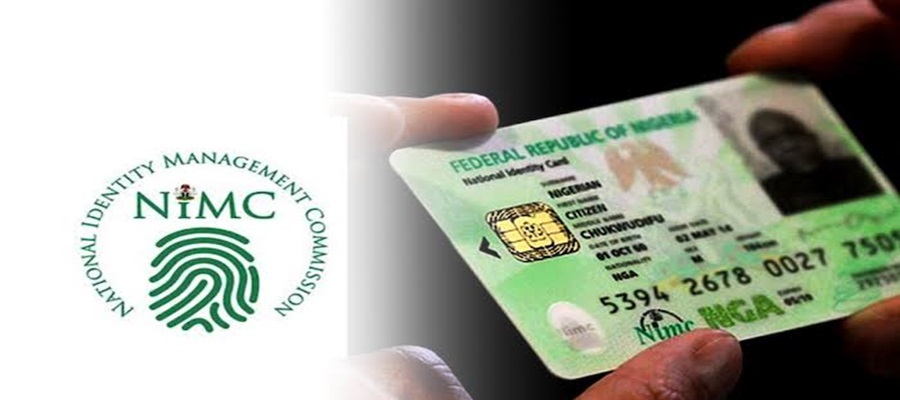
President Bola Tinubu has directed the National Identity Management Commission (NIMC) to ensure that every Nigerian is enrolled in the national identity database before the end of 2026, according to Abisoye Coker-Odusote, director general and chief executive officer of the agency.

Abisoye Coker-Odusote, director general and chief executive officer, NIMC
Coker-Odusote, who appeared on Channels Television, said the directive forms part of the federal government’s efforts to establish a comprehensive national identity system capable of supporting effective governance, planning, and service delivery.
“The President has given us till the end of this year to make sure that we capture every single Nigerian,” she said.
According to her, NIMC is working with partners under the World Bank-supported Identification for Development (ID4D) project to accelerate nationwide enrolment.
“What we have done is we have partnered through the World Bank ID4D project with front-end partners. They are part of the digital identity ecosystem. These are private citizens that we’ve enabled and given jobs to enrol citizens on our behalf,” she explained.
She stressed that the National Identification Number (NIN) remains a unique identifier, ensuring that every individual is registered only once.
“That’s why it’s called a unique identifier, so that you’re only enrolled once,” the NIMC DG added.
Coker-Odusote said Nigeria’s actual population remains uncertain, with estimates ranging from 200 million to 250 million, making a comprehensive identity database essential for national planning.
“It is estimated that we’re 200 million. When we’re done enrolling, we will then know the actual numbers that we have. Some estimates say 230 million, while a few people say 250 million.
“Your identity is basically the foundation for effective governance and service delivery. How can you plan if you don’t know the total number of persons that you have? We have been mandated by Mr President to go down to the community levels to enrol every single Nigerian”, she said.
Responding to concerns about whether an individual could obtain multiple identities by registering in different locations or under different names, the NIMC boss said the commission’s biometric verification system prevents such occurrences.
She explained that while the previous system could accept duplicate enrolments before detecting them later, the current process automatically identifies and invalidates multiple registrations.
“The legacy system had no way of verifying at the front end whether you had already been captured. Once the record comes into the system, it flags it as a duplicate or that the person already exists in the database.
“You would only have one identity generated for you. The other record goes into a deduplication bucket where it is invalidated,” she said.
The NIMC DG added that biometric verification, including fingerprints and facial recognition, makes it virtually impossible for one person to maintain multiple identities.
“Absolutely. One of the things that this Act has done is to cement our role in capturing biometrics. Private and public sector organisations will no longer capture biometrics independently. They will validate identities through API integration with NIMC.
“The telcos are already doing that with us. If you need a SIM card, they capture your facial biometrics, which are matched against our database in real time to confirm that you are who you claim to be. We’re using biometric validation to tighten security around identity confirmation,” she said.
The remarks come weeks after Tinubu signed the National Identity Management Commission (NIMC) Act 2026 into law on June 26, repealing the 2007 legislation.
The new law reinforces the “One Person, One Identity” policy by making the NIN the country’s foundational identity credential for accessing government and essential private services, including banking, passport applications, tax administration, pensions, land transactions, and consumer credit.
It also introduces stiffer penalties for identity theft, multiple registrations and unauthorised access to personal identity data, while strengthening data privacy protections and granting NIMC wider powers to investigate identity-related offences.

Cybersecurity and privacy experts are raising concerns around the growing trend of sports fans using generative AI to create World Cup-related images, mock-ups, predictions and social media content.

Whilst offering new ways for supporters to engage with major sporting events, these tools also introduce risks that many users may underestimate. In light of this, Kaspersky has shared the key risks fans should keep in mind when using generative AI tools, so they can continue enjoying the championship with peace of mind.
When fan AI goes rogue. A growing number of AI tools are being used to create World Cup-themed visuals, avatars, memes and other fan content. While these services may seem creative and harmless, not all of them come from trusted providers.
Many are launched quickly to capitalise on interest around major events, increasing the likelihood that users will interact with platforms that offer limited transparency around data handling, lack adequate privacy and security measures, or might even be designed with malicious intent.
Personal data at stake. To create customised World Cup content, users are often asked to upload selfies, sign up with an email address, connect social media accounts or share other personal information. In doing so, they may reveal more information than necessary without fully understanding how that data will be stored, used, or potentially exposed.
“AI-driven fan content may seem harmless, but one of the key privacy risks is that users are often encouraged to share far more personal information than necessary. A simple request to generate a themed avatar can involve the collection of photos, contact details, account data and behavioural insights – information that may later be insufficiently protected.
“Because major global events often create an ideal environment for opportunistic actors, fans should take a closer look at how these tools manage personal data before engaging with them,” says Anna Larkina, web content analysis and privacy expert at Kaspersky.
When fan content becomes a scam. AI-generated World Cup content in some cases can also be used to support fraud. Cybercriminals may use convincing mock-ups, fake giveaways, or official-looking fan pages to attract attention and build trust. Once users engage, they may be redirected to phishing sites, fake stores, fraudulent offers, or betting-related scams. Generative AI makes these campaigns easier to produce, more persuasive and far easier to scale.
The myth of AI predictions. Another area that deserves caution is AI-powered match prediction. However advanced or data-driven these tools may appear, AI cannot reliably predict inherently uncertain sporting outcomes. When used to promote betting, paid subscriptions or “insider communities”, such services can create a false sense of confidence and encourage risky decisions.

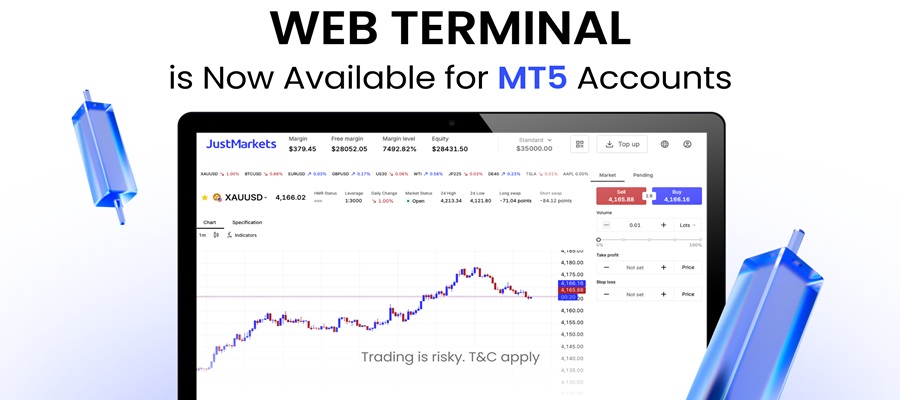
Multi-asset global broker JustMarkets has launched its Web Terminal, an advanced browser-based trading terminal now available to all clients in any country supported by the broker.

JustMarkets
The company said the new platform forms part of its ongoing effort to expand and strengthen its trading ecosystem. Before the official launch, the Web Terminal went through a preparation phase during which the team fine-tuned its technical performance and gathered user feedback.
“At JustMarkets, we never stop evolving,” a JustMarkets representative said. “With the Web Terminal, we wanted to remove every barrier between traders and the markets. Now every client can trade directly from their browser, with all the professional tools they need at their fingertips.”
The Web Terminal is fully available for MT5 accounts, allowing traders to access a professional trading environment without downloading or installing any software. The broker said the platform runs entirely in the browser, enabling clients to start trading instantly from any device.
To access the terminal, users are required to choose a trading account, press the “Trade” button, and then select “JustMarkets Terminal” from the window that appears.
The broker said the platform includes advanced charts with technical indicators and graphical tools, flexible volume settings that allow trade volume to be set in lots or in units of the asset, detailed asset descriptions, a market sentiment tool that provides real-time trading sentiment, timely updates on trading schedules and margin changes, and tools for managing multiple trading positions and pending orders.
According to the company, the launch follows the introduction of the JustMarkets mobile app for trading on the go and represents another step in its broader innovation strategy.
JustMarkets said it remains committed to growth and has additional features, tools, and improvements already in development.

Tinubu Orders NIMC to Enrol Every Nigerian by End of this Year – DG

Nigerians Accumulate $59Bn in Cryptocurrency Assets —FDC

Nearpays, Nigerian Fintech Becomes First African Startup to Win UN’s AI for Good Innovation Factory

Nokia’s 14 Years of Mobile-Phone Supremacy Ended in an Afternoon

MTN Nigeria Slashes Cost of Broadband Internet Router, Unwraps New Data Bundles for Low-Budget Users

NRC, Ponzi Scheme Collapses Resulting Loss of Billions of Naira

Nigeria Launches FreeTV Nationwide

NASENI Moves to Digitize CCB’s 5m Assets Declaration and Operations

Lebara Nigeria Launches Lebara Play, Africa’s First Telecom-Owned Micro-Drama Platform

CANAL+ Partners Samsung to Pre-Load DStv Stream on New Samsung TVs In Nigeria, Other African Countries




 News1 day ago
Xora Finance, Fintech Firm Refuses to Hire Nigerians over Alleged Dishonesty

 Telecom1 day ago
NCC Advances Dig Once Policy, Engages Stakeholders on Cost-Based Framework for Duct Sharing

 General News1 day ago
FG Secures Fresh $208.3m World Bank Loan for Cash Transfer

 Telecom1 day ago
NCC to Keynote Telecom Sector Sustainability Forum 7.0
 News1 day ago
How Ponzi Scheme Victims can Seek Legal Remedies — Lawyers

 News1 day ago
PalmPay Nigeria Appoints Samuel Oluyemi as Chief Operating Officer

 General News1 day ago
SERAP Sues INEC over Alleged N800Bn 2027 Tinubu Campaign Fund

 E-Business1 day ago
Kaigama,Catholic Archbishop of Abuja Warns against Misuse of AI