

E-Financial
Heritage Bank-Dukia Gold to Boost Nigeria’s 200mn Ounces of Gold Potential Reserves- FG

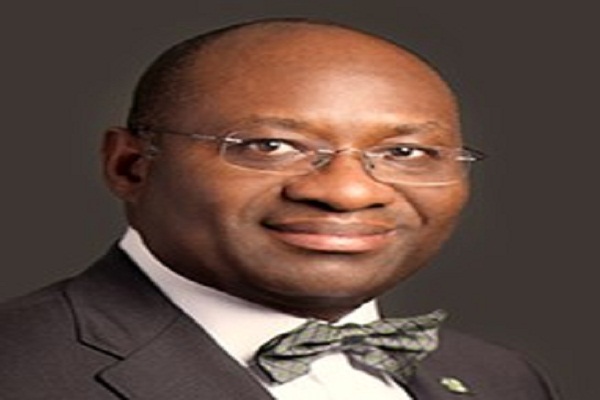
The Federal Government of Nigeria has commended Heritage Bank for being part of a valuable private sector collaboration with Dukia Gold & Precious Metals Refining Co. Ltd, saying such partnership stands to create new opportunities for Nigeria to grow its potential reserves of 200 million ounces of gold.
The Vice President, Yemi Osinbajo, disclosed this during a Zoom- meet & chat session, a virtual platform at the launch of nationwide Dukia-Heritage Bank Gold & Precious Metals Buying Centres held yesterday
He affirmed that the launch of this expansive project between Heritage Bank and Dukia Gold would enable Nigeria to mine reserves properly, trade responsibly, refine locally and boost the nation’s foreign reserves.
He stated, “What we are looking at here is an extremely valuable new source of trade, jobs and foreign exchange.
“This project will create primary employment for local artisanal miners and mining cooperatives, and across the solid minerals value chain.

“Off-take agreements between Dukia Gold and local mining communities and owners of recyclable gold will be a useful provider of jobs in our post-covid economy.
“The positive multiplier is expected to extend even further than this as the Dukia Gold project will also encourage the emergence of smaller-scale mining companies who, for the first time, will now have a transparent and welcoming market for their mined gold and precious metals. This is set to create jobs and unleash the economic potential of mining communities.”
Osinbajo further counted the enormous benefits of the project, “This provides a sustainable way for Nigerians to exchange their gold jewellery and other precious items for cash.
“This system of exchange not only helps encourage a culture of recycling, but will also serve as a complementary source for the raw materials needed for the Dukia Gold & Precious Metals Refining Company.
“These buying centres will also enable the responsible management of some of electronic waste.”
Meanwhile, the project would further drive the diversification of the nation’s economy, Heritage Bank Plc, Dukia Gold which have given birth to a new gold and precious metal market that will grow the mining industry’s contribution to gross domestic products to over 10% by 2026.
Records have shown that the growth of mining production at the end of 2019 in Nigeria was 0.1% and the sector still contributes less than 0.5% of GDP compared to other African economies who are strong in mining like Botswana (38%), Democratic Republic of Congo (25%), South Africa (18%), Zambia (18%), Guinea (12%) and Ghana (7%).
Ifie Sekibo, managing director/ceo, Heritage Bank Plc, stated that the partnership that would boost the mining industry production have given birth to a new market, a platform that will contribute immensely to the transformation of Nigeria’s economy.
According to him, the operationalization of this initiative aligns with the overall Economic Transformation Agenda of the Federal Government of Nigeria especially as it relates to the full stream diversification of the Nigerian economy, job and wealth creation, development of the solid mineral space amongst others.
Sekibo affirmed, “It is our believe that as the economy of Nigeria is being recalibrated, given the impact of the global pandemic, the government’s committed aspiration to build a robust and resilient economy will be further enhanced through the operationalization of this initiative working with all stakeholders across States and Government Parastatals, the Central Bank, Private Sector and other international actors towards the development of the solid minerals sector and its appendages.”
He explained that this would enhance a regulated market that would see precious metals and other commodities take centre stage in endeavour to ensuring irreversible economic growth and development in alliance with a modernized Exchange for commodities trading in Nigeria.


David Malpass, former World Bank President, has warned that Nigeria’s increasing reliance on collateral-backed and complex borrowing arrangements could make any future debt restructuring more difficult and discourage investors if the country’s debt position becomes unsustainable.

David Malpass, former World Bank President
Malpass, who was 13th president of the World Bank Group, from April 9, 2019 – June 1, 2023, raised the concern in a World Bank Policy Research Working Paper titled Public Debt and Central Banks, which was based on the Stanley Fischer Memorial Lecture delivered at the World Bank Group’s Annual Bank Conference on Development Economics.
He said increasingly sophisticated collateralised transactions in developing economies, including Nigeria, Angola and Senegal, were creating what he described as “a new race toward seniority in the capital structure.”
In sovereign lending, collateralised creditors may gain priority over other lenders by tying repayment to specific assets, revenues or financial instruments. Malpass warned that the expansion of such arrangements could leave fewer resources available for unsecured creditors and make negotiations more contentious during a debt crisis.
He also questioned the growing use of guarantee products provided by multilateral development banks, arguing that their effectiveness had not been adequately tested during sovereign debt restructurings.
According to him, private lending to distressed or high-risk governments has become less transparent, with some commercial agreements containing non-disclosure clauses that prevent citizens, investors and other creditors from understanding their full implications.
Malpass said debt reconciliation efforts were already being hindered by limited access to sovereign loan contracts, particularly agreements linked to Chinese lending programmes.
The former World Bank chief also criticised the international debt restructuring system, arguing that existing mechanisms had failed to provide timely and meaningful relief to heavily indebted countries.
Beyond debt transparency, Malpass identified exchange rate stability as an important requirement for Nigeria’s economic growth.
He grouped Nigeria with Ethiopia and Egypt among countries where multiple exchange rates and poorly managed currency systems had transferred wealth from low-income earners to politically or economically privileged groups.
He estimated Nigeria’s per capita income at about $1,500, or roughly $4 a day, while noting that median income was likely to be considerably lower because wealth remained concentrated among a small proportion of the population.
Malpass argued that the benefits of credible currency reform could be substantial, pointing to the significantly higher earnings of Nigerians working abroad as evidence of the country’s unrealised productive potential.
He disclosed that, while serving as World Bank president, he held several meetings with Nigeria’s previous administration, cabinet officials and the bank’s Nigeria team to identify reforms capable of accelerating economic growth.
Those discussions highlighted currency stabilisation, exchange rate unification, oil sector reforms, tax changes and agricultural liberalisation, particularly in rice production, as priorities.
Malpass said the reforms could transform Nigeria’s economy in a manner comparable to the policy changes that helped launch China’s sustained period of rapid growth in the 1990s.
Malpass’ warning comes amid continuing scrutiny of Nigeria’s use of unconventional financing to refinance expensive obligations and cover budget deficits.
The International Monetary Fund and Fitch Ratings had earlier raised concerns about the Federal Government’s proposed $5 billion Total Return Swap with First Abu Dhabi Bank, warning that derivatives-based sovereign borrowing could obscure the country’s true debt exposure and complicate future restructuring.
Despite those concerns, Nigeria reportedly accessed an initial tranche of about $1.5 billion from the arrangement.
The controversy follows years of debate over the transparency of Nigeria’s borrowing, including loans linked to crude oil revenues, infrastructure assets and bilateral agreements whose full terms were not always publicly disclosed. With debt-service costs consuming a substantial share of government revenue, the latest warning reinforces concerns that short-term financing relief could create more difficult obligations for future administrations.

Ecobank Nigeria has launched Scaling Up!!!, its flagship business storytelling podcast designed to inspire, educate and empower entrepreneurs, founders, business leaders and the next generation of African innovators through authentic conversations with some of the continent’s most accomplished business personalities.

The podcast, which will be available on Ecobank Nigeria’s official YouTube channel and other major digital streaming platforms, reinforces the bank’s commitment to supporting businesses beyond banking by creating a platform where entrepreneurs can learn from the experiences of successful founders, creatives and industry leaders who have built thriving enterprises across diverse sectors.
Featuring compelling conversations on entrepreneurship, leadership, innovation, resilience and business growth, Scaling Up!!! offers practical lessons and real-life insights that aspiring and established entrepreneurs can apply in building sustainable businesses.
The inaugural season features an impressive lineup of distinguished guests, including beauty entrepreneur and Founder/CEO of Beauty by AD, Adeola Adeyemi (Diiadem); renowned filmmaker and Founder of Golden Effects Pictures, Kunle Afolayan; veteran music producer and Founder of Coded Tunes, ID Cabasa; luxury fashion entrepreneur, Ejiro Amos Tafiri; celebrated commercial photographer, Emmanuel Oyeleke; Co-founder and Lead Interior Designer of Siriano Limited, Adewunmi Adegbola; and Founder of Windsor Gallery and Nahous Creative Hub, Richard Vedelago.
Each episode explores the guests’ entrepreneurial journeys, highlighting the opportunities they embraced, the challenges they overcame and the strategies that enabled them to build enduring brands and successful businesses.
Speaking on the launch, Austen Osokpor, Head, Marketing & Corporate Communications, Ecobank Nigeria, said: “Scaling Up!!! reflects Ecobank’s belief that empowering entrepreneurs goes beyond providing financial solutions.
“Through authentic storytelling and insightful conversations, we are creating a platform where business owners can learn directly from people who have successfully navigated the realities of building sustainable enterprises. It is another way we are reinforcing our commitment to driving entrepreneurship, innovation and economic growth across Africa.”
Also speaking, Head, SMEs, Partnerships & Collaborations, Ecobank Nigeria, Omoboye Odu, said: “Entrepreneurs learn best from the experiences of those who have walked the journey before them. Scaling Up!!! provides practical insights, inspiration and valuable lessons that will help founders make better business decisions, overcome challenges and unlock new opportunities for growth.
“The podcast further strengthens Ecobank’s role as a trusted partner supporting SMEs at every stage of their entrepreneurial journey.”
Sharing the creative vision behind the initiative, the Producer of Scaling Up!!!, Jemimah Ugiagbe, said: “Our goal was to create more than just another business podcast. We wanted honest, engaging and relatable conversations that reveal the realities behind success, the setbacks, the resilience, the bold decisions, and the lessons that every entrepreneur can learn from.
“Every episode is designed to leave listeners informed, inspired and motivated to build businesses that create lasting impact.”
The podcast further strengthens Ecobank Nigeria’s position as a trusted partner for entrepreneurs by providing a knowledge-sharing platform that extends beyond traditional banking services. GeographicReference
Through meaningful conversations with accomplished founders and innovators, the bank continues to demonstrate its commitment to fostering enterprise development, encouraging innovation and promoting sustainable economic growth across Africa.
Scaling Up!!! is targeted at SMEs, entrepreneurs, founders, startups, business executives, creatives, students and young professionals seeking practical business insights from some of Africa’s most respected industry leaders.
New episodes will be released regularly across Ecobank Nigeria’s YouTube channel and other major podcast streaming platforms, offering audiences thought-provoking conversations on entrepreneurship, leadership, innovation and business growth.
Ecobank Nigeria is a member of the Ecobank Group, the leading pan-African banking institution with operations in 33 African countries and international offices in London, Paris, Beijing, and Dubai.
With over 220 branches, more than 36,000 agency banking locations, and robust digital platforms, Ecobank delivers accessible, affordable, and instant banking services. The bank is strategically positioned to support pan-African trade, particularly under the African Continental Free Trade Area (AfCFTA).
S&P Global has agreed to acquire a majority stake in Agusto & Co., one of Africa’s oldest and largest domestic credit rating agencies, in a move that signals growing international interest in the continent’s capital markets and credit ecosystem.

According to a joint statement by the rating agencies. The transaction, which is subject to regulatory approvals, will give the global ratings giant a stronger foothold in Africa through Agusto & Co.’s operations in Nigeria, Kenya, Ghana, and Rwanda. Financial terms of the deal were not disclosed.
The acquisition marks one of the most significant investments by a global ratings agency in Africa’s domestic credit ratings market in recent years and comes as governments and companies across the continent increasingly rely on local debt markets to finance infrastructure, corporate expansion, and fiscal deficits.
Yann Le Pallec, president of S&P Global Ratings, said the investment reflects the company’s long-term commitment to Africa’s financial markets.
“We are delighted to partner with Agusto & Co. to strengthen our domestic ratings presence across Africa,” Le Pallec said. “This transaction underscores our commitment to supporting growth and transparency in local credit markets throughout the continent.”
He added that combining S&P Global’s international analytical capabilities with Agusto & Co.’s local market knowledge would help improve credit transparency and support investor confidence across African markets.
Founded more than three decades ago, Agusto & Co. has built a reputation as one of Africa’s leading domestic rating agencies, providing credit ratings on banks, corporates, and other institutions. The company has expanded beyond Nigeria into several African markets and has played a key role in the development of domestic bond markets.
For Agusto & Co., the transaction represents a major milestone in its growth strategy and fulfills a long-held ambition to align with a global ratings institution.
“This partnership is a transformational milestone for Agusto & Co. and African capital markets, fulfilling our late founder’s vision of affiliating with a leading global rating agency,” said Yinka Adelekan, managing director of Agusto & Co.
According to Adelekan, the combination of Agusto’s regional expertise with S&P Global’s international resources and analytical network is expected to create broader opportunities for issuers and investors while supporting more transparent and resilient credit markets across Africa.
Despite the ownership change, Agusto & Co. said it will continue operating as an independent domestic ratings agency, maintaining its own rating methodologies and issuing ratings under applicable regulatory frameworks.
That structure is expected to preserve the agency’s regulatory standing in the jurisdictions where it operates while enabling it to benefit from S&P Global’s technology, research capabilities, and global market expertise.
The acquisition also reflects increasing global interest in Africa’s capital markets, where governments are pursuing domestic borrowing strategies and private companies are seeking alternative sources of long-term financing amid tighter global liquidity conditions.
The transaction is expected to close in the second half of 2026, subject to regulatory approvals and other customary closing conditions. S&P Global said the acquisition is not expected to have a material impact on its financial results.

Fact-Check: Elon Musk’s “Tesla Pi Phone” is Internet Rumor

Dangote Plans to Donate One-Third of Wealth to Charity as Legacy

NDPC Directs DCPMIs to Register with Agency or Face Legal Consequences

Malpass, Ex World Bank Chief Raises Alarm over Nigeria’s Secretive Debt Structures

How and Why Apps Deplete Data – ALTON

NRC, Ponzi Scheme Collapses Resulting Loss of Billions of Naira

EFCC Busts NIS Visa Overstay Racket, Uncovers N700m in an Account

Tokenization, Blockchain Technology will Transform Financial Institutions – IMF

From Scarcity to Scale: What Africa Can Learn from India’s Agricultural Transformation

BON Establishes Six Ad Hoc Committees to Modernize Broadcasting




 News3 days ago
See Verified 20 Countries Nigerian Passport Holders Can Travel Visa-Free

 E-Business3 days ago
Report Says Cybercriminals Deploy Malware to Hijack Crypto Wallets, Monitor Browsers Telegram

 Telecom3 days ago
NCC, REA Partner to Cut Telecom Costs with Renewable Energy

 Telecom3 days ago
Subscribers, Telcos Warn FCCPC over Airtime Lending Enforcement

 E-Business3 days ago
NPC Opens 131 Births, Deaths Registration Centres in Anambra

 General News3 days ago
AfDB, Nigeria Urge African Control of Mineral Resources

 News2 days ago
History as Lagos Becomes First Nigerian State to Launch Greenhouse Gas Registry

 Telecom2 days ago
AI Investment Gap Threatens Africa’s Future Growth