

News
Cybersecurity And Risk Mitigation

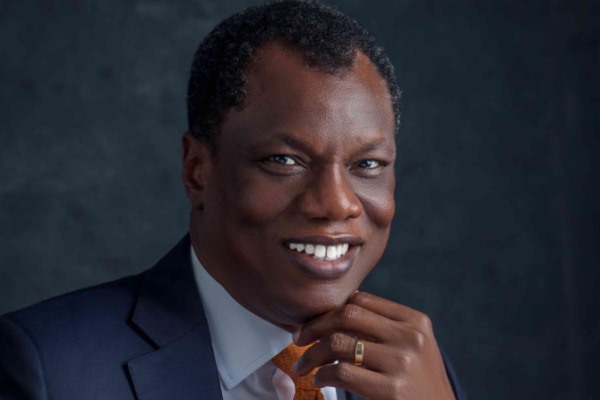
By Austin Okere
“Twitter hack: 130 accounts targeted in attack” was the screaming headline on the BBC’s website on July 17, 2020.
Two days earlier, the social media site had admitted a major cyber-attack of celebrity accounts. The security breach saw accounts including those of Barack Obama, Elon Musk, Kanye West and Bill Gates tweet a Bitcoin scam to millions of followers.

Several Bitcoin-related accounts began tweeting what appeared to be a simple Bitcoin scam, promising to “give back” to the community by doubling any Bitcoin sent to their address. Then, the apparent scam spread to mainstream celebrity accounts such as Kim Kardashian West and former vice-president Joe Biden, and those of corporations Apple and Uber.
Twitter is not the only high-profile company that has been hit. Just about every other company you can think about has suffered similar fate. The roll call of victims includes Rupert Murdock’s News Corp, Sony PlayStation Network, Government of turkey, Britain’s Serious Organized Crime Agency, and the CIA amongst others.

The story of hacking will not be complete without Anonymous; a sophisticated group of politically motivated hackers who have emerged since 2011. Anonymous are demonstrating how vulnerable companies that are charged with protecting our data are.
Anonymous hacked 485 Chinese government websites, some more than once, to protest the treatment of their citizens. Among their major successful hacks are Visa, MasterCard, Amazon, PayPal, PostFinance, Bank of America, and Sony Computer Entertainment. We are at the beginning of the mighty struggle for the internet with the aged old dilemma that pits the demands of security with the desires for freedom.
Cybercrime has now become so prevalent globally that there is hardly any organization that is yet to be hacked, and Nigeria is no exception. In fact, it is said that there two types of organizations, those that know they have been hacked and those that don’t. If in doubt, ask your customers, and they will have a bucketful of useful feedback for you.
The increasing trends in cyber security breaches are due to the following factors; the rise of Artificial Intelligence (AI), adoption of Internet of Things (IoT) – with over 25b devices forecasted to be connected by 2025, globalisation of cybercrime, the cybersecurity skills gap that continues to grow, Increased skill levels of attackers, increased use of the Public Cloud, increasing reliance on technology and digitisation – (now fuelled by the pandemic and working from home) and attackers risk/reward imbalance amongst others.
Polls at a recent cybersecurity webinar that I facilitated was very revealing:
- 54% of respondents said they had been hacked
- 31% said their company had been hacked
- 67% considered PEOPLE the weakest link in cybersecurity – way over Process, and Technology.
And yet we spend significantly more money on products and technology, with little emphasis on mass education.
Hiring the most accomplished CISA, however, will not do very much good if there is not a deliberate policy of self-awareness of all staff, especially during this period where there is an explosion in people working from home and connecting to enterprise servers through personal systems that could more easily be compromised.
Neither is buying the most expensive antivirus the magic wand. It is like having the best pizza toppings without the base bread. Or like having the best machine leaning algorithm without the Big Data that the system will use for pattern detections.
Cyber-attacks can have significant business impact including; loss of funds, theft of intellectual property, serious disruption to business, damage to reputation, loss of customer trust, huge regulatory fines, litigation costs and possible bankruptcy.
Risk mitigation against cybersecurity is most effective in its Dynamic Collaborative Form. Dynamic because it requires a shared Body of Knowledge that is consistently updated and available to all parties. Risk mitigation cannot be a competitive strategy for any organization; this notion could be quite illusory because the nature of cybercrime can be likened to an elephant. People at the side may think it is a wall, people at the trunk may think it is a snake. People at the tail may think in it is a monkey, and people at the leg may think it is a tree trunk.
As in the case of the elephant, it is only when you have curated the complete and accurate picture through which the breach can manifest that you can effectively deal with it or contain it.
This is why there is a need for constant collaboration and open and transparent reporting, similar to the way that the COVID Pandemic is being collectively monitored and reported globally. This is what helped to curb the chain email fraud also known as “419” and many malicious computer viruses unleashed to take over users’ systems.
Governments and private establishments can improve protection of critical infrastructure from cyber-attacks by following the following basis principles:
- First rule is not to assume anything is secure.
- Second is not to assume you will not be targeted.
- Third is to realize that modern systems have so many moving parts that you can’t really use a strategy of owning all of it, partnerships are essential.
- Nations have to build extreme levels of expertise across a wide threat surface. It’s no use protecting the databases while the CCTVs in the President’s office and residence have been compromised.
- Nations have to build cyber armies and cyber police to tackle external aggression, protect national assets and protect her citizens.
The most dangerous intruders are not the ones with guns but the ones with laptops. The terrorist killing people with bullets is “small fish” compared to the one that can make planes fall from sky or trains crash, or provoke a riot or influence an election without leaving any trace.
Cyber-attack is the new normal. Organizations and Technology Providers can mitigate these attacks by Perpetual state of vigilance. Every internet connected or smart device is a potential back door. From the internet connected TV to your webcam or printer. Even if nothing is stolen from you, your resources can be hijacked to attack others. Don’t assume you have enough expertise to be in constant state of vigilance all by yourself. Cyber products and cyber companies are also at risk.
If you are a transaction-oriented company then you have to be using Artificial Intelligence to watch out for fraudulent transactions. If you are a data company then you need to think of encrypting data at rest and in transit. Two factor authentications are a must for all sensitive access. Walling off all critical systems from the net as a last means of firewall is simply not a practical solution.
Are organizations and private establishments in Nigeria doing enough to collaborate on threats? I believe that we could do more.
There should be a national Security Operations Center (SOC) and threat Database where all incidents are reported. This center should also disseminate threats and analyze incidents to help others prevent similar infiltrations.
Many firms, especially banks, think it will impact their brand if they disclose vulnerabilities and attacks. The under reporting or cover up of breaches portends a vicious cycle of repeated unanticipated hacks, because you are inadvertently empowering the hackers to cause more damage to you by not reporting and exposing them and their future hacking plans.
Working in silos is not an option, because even when you believe you have secured your fortress; how do you guard against third parties connecting to your system through Application Programing Interfaces (APIs)? Take for instance the case of the N11b breach involving a major Nigerian Bank and a Fintech company, E-Transact.
According to a report by TechNext.com, this came to light following a petition that the company developed a solution which helped Smart micro Systems to defraud the bank. Have we thoroughly investigated and comprehensively documented the nature of the beach and the vulnerabilities exploited?
The demography and architype of the perpetrators? Any possible internal collaboration or any systems bugs? Answers to these question to the right quarters is invaluable in foiling future attacks. While this may not be the only major successful breach, the system is so opaque that you will struggle to find a database of cases to learn from and anticipate future attacks.
The major reasons why organizations generally do not report breaches are fear of litigation or regulatory action and loss of reputation. In tackling cybercrime, we all have to be on the same team!
According to iafrican.com, Nigeria is set to establish a Cyber Security Research Centre (CSRC) to combat cybercrime. This is in a bid to build capacity and co-ordinate incident management and contribute to knowledge generation in cyber security. According to reports, Nigeria is already working with Cyber Security Malaysia and the Canadian Cyber Incident Response Centre (CCIRC) on establishing the CSRC.
While these are useful initiatives, there is a need for organizations to come together to collaborate on researching past breaches and documenting them and comprehensively reporting current breaches to learn from them in order to prevent future attacks.
Private organizations such as the Risk Management Association of Nigeria (RIMAN) and the Bank Directors Association of Nigeria (BDAN) could be hardened and work closely with Government Agencies such as the National Information Technology Development Agency (NITDA) on existing and new initiatives towards combating Cybercrime.
Cybercrime and cybersecurity are real, but they are not rocket science and they are certainly no scarier than COVOD or EBOLA. If we could contain Ebola, Aids and 419 through collaboration, then surely, we can also contain cybercrime through Collaboration too; but we must be willing to take the painful steps that are necessary to safeguard ourselves and our organizations. Only then can we build the requisite trust in the system to continue to enjoy the fruits of digital transformation.
Austin Okere is the Founder of CWG Plc, the largest ICT Company on the Nigerian Stock Exchange & Entrepreneur in Residence at CBS, New York. Austin also serves on the Advisory Board of the Global Business School Network, and on the World Economic Forum Global Agenda Council on Innovation and Intrapreneurship. Austin now runs the Ausso Leadership Academy focused on Business and Entrepreneurial Mentorship.



The World Bank Group has announced the 31-month debarments of United Aviation Services Limited (UNASEL), a transportation services company based in Nigeria, and Air Vice Marshal Alkali Mamu, its owner and president, “in connection with fraudulent practices under the Enhancing Niger Northeastern Connectivity Project,” according to a press release issued by the multilateral development bank.

The statement said that the project aims to enhance connectivity and road safety along the Zinder-Agadez Road section and improve access to basic socioeconomic infrastructure for selected communities in that road section.
However, according to the statement: “UNASEL and Mr. Mamu presented false experience documents in a prequalification application to qualify for a contract under the project. This was a fraudulent practice under the World Bank’s sanctions framework.”
“The debarments make UNASEL and Mr. Mamu ineligible to participate in projects and operations financed by Bank Group institutions. The debarments are part of two settlement agreements under which UNASEL and Mr. Mamu admit culpability for the underlying sanctionable practices,” it added.
The statement further said: “Per the Bank Group Sanctioning Guidelines, the settlement agreements provide for a reduced period of debarment in light of UNASEL and Mr. Mamu’s cooperation.
As a condition for release from sanction under the terms of the settlement agreements, UNASEL and Mr. Mamu commit to developing and implementing integrity compliance measures that reflect the relevant principles set out in the Bank Group Integrity Compliance Guidelines, and Mr. Mamu further agrees to complete corporate ethics training.
UNASEL and Mr. Mamu also commit to continue to fully cooperate with the Bank Group’s Integrity Vice Presidency.
“The debarments of UNA SEL and Mr. Mamu qualify for cross-debarment by other multilateral development banks under the Agreement for Mutual Enforcement of Debarment Decisions that was signed on April 9, 2010.”

Governor Peter Mbah of Enugu State, has approved the allocation of a parcel of land in Enugu, the state capital, for the establishment of a state-of-the-art Digital Fabrication Centre by the Industrial Training Fund.

Mbah announced this while receiving a delegation from the Industrial Training Fund on a courtesy visit to the Government House, Enugu.
The ITF disclosed this on Friday in a statement signed by its Director of Press and Public Relations, Thomas Ngor.
According to the statement, Mbah described the proposed project as timely and aligned with his administration’s vision of transforming Enugu into a leading destination for investment, innovation and technology-driven industrial development.
He noted that the future of economic prosperity lies in deliberate investments in human capital and emerging technologies, adding that the state has continued to create an enabling environment for innovation, enterprise and sustainable growth.
The governor explained that his administration has made technical education compulsory in the state’s basic education system, with emphasis on digital literacy, robotics and mechatronics to prepare learners for the future of work.
According to him, many traditional trades are now driven by digital technologies, making it imperative to equip young people with relevant technical competencies that will enable them to compete globally and contribute meaningfully to economic development.
Governor Mbah further disclosed that his administration has built smart schools across the state, equipped with robotics centres, mechatronics laboratories and other modern learning facilities, to prepare youths for the evolving global economy.
He noted that artificial intelligence is expected to contribute about $20tn to the global economy in the coming years.
He therefore stressed that the state must be intentional about upskilling its citizens, adding that the establishment of the ITF Digital Fabrication Centre will significantly strengthen the state’s drive to build a knowledge-based economy, foster innovation, promote local manufacturing and create employment opportunities for its growing youthful population.
Earlier, Afiz Ogun, the Director-General of the ITF, who led the delegation, said that upon his appointment by President Bola Tinubu, he was mandated to upskill Nigerian artisans to international standards.
He explained that the Fund subsequently repositioned its technical and vocational skills development efforts through strategic initiatives, including the Skill-Up Artisans Programme, which is designed to train, certify and license Nigerian artisans to international standards.
Ogun disclosed that the Fund had already established a Digital Fabrication Centre in Ikeja, Lagos, with the capacity to produce more than 400 different products. He therefore requested the allocation of land in Enugu State to establish a similar centre with the same production capacity.
According to him, the initiative is aimed at promoting industrialisation, reducing dependence on imports and preparing Nigerians for opportunities in the Fourth Industrial Revolution.
He also reaffirmed the Fund’s readiness to enter into public-private partnerships that will transform Nigeria’s artisanal ecosystem.
Ogun further noted that digital technologies, including artificial intelligence, robotics and computer-aided manufacturing, are rapidly transforming the global economy, making it imperative for Nigeria to deliberately invest in upskilling its workforce to remain globally competitive.
The ITF delegation was later conducted on a guided tour of facilities at one of the smart schools established by the Enugu State Government.

Glovo, a multi-category tech company, has announced its integration into the generative AI ecosystem with the launch of its “Shopping Assistant” for ChatGPT and Claude. Users can now discover retail products, compare prices, and seamlessly order any item using natural conversational language with the AI systems.

The Glovo experience inside such platforms introduces a conversational commerce model that shifts from a search-based web to an intent-based web. Rather than navigating traditional app menus and filters, users can express needs, such as asking for a “last-minute gift for a coffee lover under ₦50,000”, and the assistant handles semantic search, location validation, and product curation.
A Seamless, Concierge-Like Experience
Once both platforms have been connected through either ChatGPT or Claude apps, the user will be able to have a multi-turn dialogue where the assistant remembers context and constraints, such as budget caps. Users receive a visual carousel of up to five highly customised product options available at local stores. Each product displays its image, name, store details and ratings, and price. While the search and discovery experience takes place directly on the Generative AI platforms, selecting a product via the “view on Glovo” button takes the user to the Glovo mobile or web app, where the payment and final purchase are exclusively completed.
Strategic Focus on Retail and Growth
Glovo is prioritising the retail and grocery sectors for this initial launch, capturing the established habit of using AI for product research. Generative AI has driven a significant jump in retail traffic globally, so this first-mover advantage aims to meet customers where they are meeting Gen AI daily, and ensure it captures high-intent organic traffic as search behaviours evolve.
“We’re always looking for ways to meet our customers where they already are. Being available on Claude and ChatGPT means people can discover what Glovo has to offer as part of a natural conversation, with no friction. Glovo has always been about being the everyday app that provides choice and convenience, and this is another step in that direction”, said Shiro Theuri, Chief Technology Officer at Glovo.
How to look for products in the Glovo app through ChatGPT or Claude
- The user must sync ChatGPT or Claude with the Glovo app with the plug-in.
- Once synced, the user must type in @glovo followed by their request.
- The AI platform displays a carousel with 5 available options for the user.
- If the user wants to purchase any of the products or continue searching within the Glovo app, they must click “View on Glovo”, which will redirect the user to the Glovo app or website.
- After the order is confirmed, the store will prepare the item(s) and the courier will head up to the pick-up location. The user will receive the order in minutes.

World Bank Debars United Aviation Services, Owner over Fraudulent Activities

NITDA Introduces Cloud Certification Boost Data Localisation Compliance

Enugu State Approves Land for ITF’s Digital Fabrication Centre

BOI Opens N250Bn Bond Offer to Fund Businesses

Guinness Rewards Consumers with ₦17 Million in First Week of ‘Open for More’ Promo Draw

From Scarcity to Scale: What Africa Can Learn from India’s Agricultural Transformation

EFCC Busts NIS Visa Overstay Racket, Uncovers N700m in an Account

Fact-Check: Elon Musk’s “Tesla Pi Phone” is Internet Rumor

NBC Tasks Broadcasting Stations over 2028 DSO Global Deadline

Police Busts Syndicate Who Allegedly Stole N3Bn from Financial Institution



 General News2 days ago
Guinness Rewards Consumers with ₦17 Million in First Week of ‘Open for More’ Promo Draw

 News2 days ago
Glovo Pioneers AI Quick-Commerce

 News3 days ago
Fleeing Southeast Asia Scam Syndicates Find New Homes in Nigeria, Kenya- Report

 Telecom3 days ago
MTN Paid 600Bn in Taxes in H1 2026 – Kadri, MTN CFO

 Telecom3 days ago
NCC Asks Telcos to Make Budgetary Provisions for Cybersecurity

 News3 days ago
DSS Arraigns Eze for Allegedly Hacking, Stealing N800m from SunTrust Bank

 Telecom3 days ago
Glo Leads Internet Growth Figures in Nigeria for May

 News3 days ago
Liquid Intelligent Uses Light Beam Technology to Bridge Lagos Fibre Gaps