

Telecom
Digital Encode Becomes a Licensed CMMI Institute Partner


Digital Encode Limited, Nigeria’s leading consulting and integration firm has become a Capability Maturity Model Integration (CMMI) licensee.
Digital Encode specializes in the design, management, and security of business-critical networks, telecommunications environments and other Information Technology (IT) infrastructures.
On the other hand, CMMI is a proven set of global best practices that drives business performance through building and benchmarking key capabilities.
As a CMMI Institute Partner licensee, Digital Encode is expected to help organizations elevate and benchmark performance across a range of critical business capabilities, including service excellence, data management and cybersecurity.
Speaking on this development, Dr. Peter Adewale Obadare, co-founder and chief operating officer of Digital Encode, said that Digital Encode will not rest on its oars to assist individuals and businesses protect and manage their information assets.

“As Partners, Digital Encode is one of the qualified organization within a global CMMI Network that are licensed by the Institute to help other organizations and individuals to adopt and utilize their products such as the Capability Maturity Model Integration (CMMI) or the Data Management Model (DMM)”.
Dr. Obadare who doubles as the Director of Governance, Risk and Compliance said that as a Pan-African cybersecurity company, Digital Encode will use CMMI model to assist organizations in Nigeria to improve their cybersecurity success and resilience.
Also, Dr. Seyi Akindeinde, chief technical of digital Encode, said the license is a testament to Digital Encode’s unique methodology rooted in depth of expertise and professionalism.
Dr. Akindeinde who is also the Chief Research Officer and Director of Security Assurance at Digital Encode, said that while assisting companies to achieve the cybersecurity assurance goals, Digital Encode will continue to translate strategic business objectives into sound, achievable secured technology solutions.


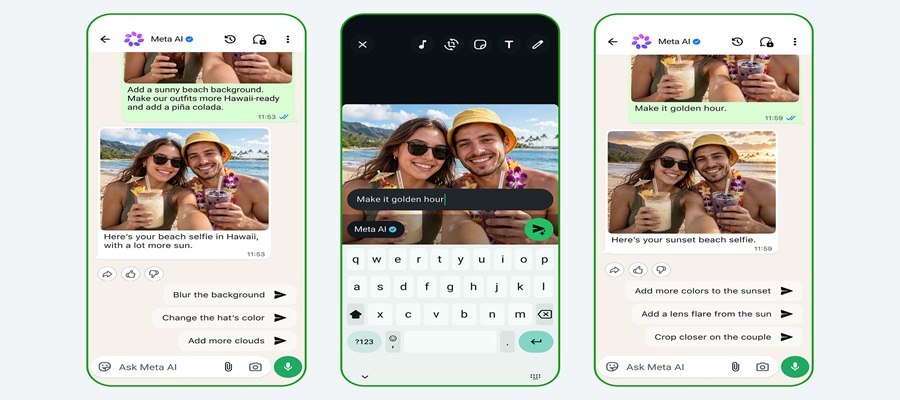
Meta is rolling out Muse Image, the companyʼs first image generation model from Meta Superintelligence Labs, now available in Meta AI . Muse Spark made Meta AI a smarter assistant; now, Muse Image acts as the creative partner that knows your world, making it easy to turn your ideas into high-quality visuals that you can download and share anywhere, including directly to your feed, story, or chat.

The model also powers new creative tools across Metaʼs apps. You can use more than 30 new AI-powered effects for Instagram Stories and generate images in your direct chats with Meta AI on WhatsApp — starting in limited countries with more locations on the way.
Simple Prompts, High-Quality Outputs
Whether you’re starting from scratch or working with an existing photo, you can describe what you want in simple, conversational language, and Meta AI handles the rest thanks to Muse Image. Ask it to mock up an image of you in front of a historical landmark, cleanly erase a photobomber from the background of a shot, or write a custom prompt to build a functional QR code. It will also render text cleanly inside your visuals, meaning you can ask for a how-to guide or a detailed infographic on a specific subject, and the text comes out legible and styled to match.
Suggested Presets to Help You Get Started
Sometimes the hardest part of creating is getting started. Meta AI now includes a presets panel with suggested prompts to help inspire you. One tap restores an old family photo, lets you see yourself with trending hairstyles, or reimagines you as a claymation character or a 16-bit video game hero. Whatever you create, itʼs easy to share with friends across Metaʼs apps so they can try the same preset on their own photos.
Shop Your Room Redesigns
You can also snap a photo of your room and ask Meta AI to redesign it with real products from the web or Facebook Marketplace. Suggest a style you love or ask Meta AI to pull from whatʼs trending to see what your space looks like with a full makeover.
An Intelligent Creative Partner
Muse Image doesn’t just build an image; it thinks through your prompt first. By pairing up with Muse Spark, the model takes multiple steps behind the scenes — planning its layout, looking up real-time web context, and intelligently blending multiple visual references at once. Whether you want to place your pet in a famous painting or combine a selfie with a vacation photo to create a custom postcard, Meta AI handles the complex reasoning for you so the final visual matches your vision perfectly.
Rooted in Your World
You can also @-mention Instagram accounts in the Meta AI app to bring specific Instagram profiles right into your images. Whether you want to design a custom event invitation, mock up a collaborative creative concept, or generate a personalized graphic, tagging a username lets Meta AI use public photos to build a visual thatʼs ready to post. You have control over how your content can be tagged for AI creation with an easy setting to turn this feature off at any time.
Edit Directly on the Photo
To make a change, just tap the markup icon on your creation to circle, sketch, or annotate edits right on top of the photo. Since Meta AI remembers the full context of your conversation, you can keep refining by swapping styles, adding elements, or tweaking details — all without starting from scratch.
Whatʼs Next
Soon, Meta will bring Muse Image to more countries and the places where people use Meta AI, including Facebook and Messenger, and additional surfaces on Instagram and WhatsApp. In the coming weeks, advertisers and agencies will be able to tap into Muse Image through Advantage+ creative.
Using Meta AI with Muse Image is free for everyday creation. For people who want to create even more, itʼs available as part of Metaʼs subscription plans.
Images are just the beginning. With Muse Video already in development, Meta is building entirely new ways for you to bring your ideas to life, getting one step closer to personal superintelligence.
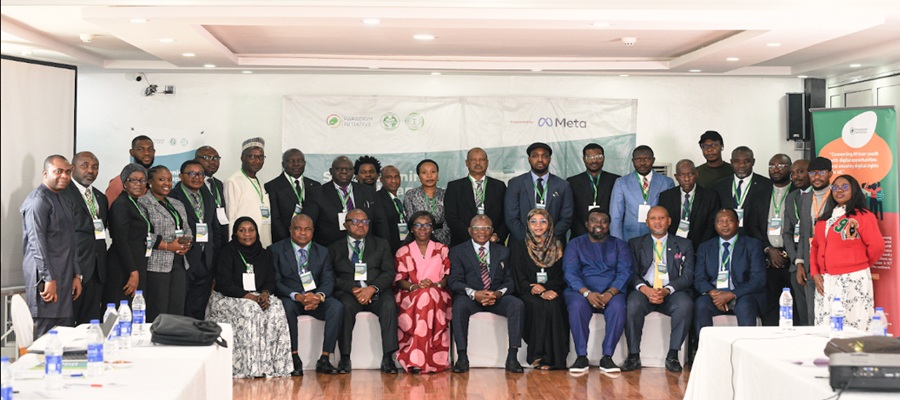
Paradigm Initiative (PIN), a pan-African digital rights and inclusion organisation, says it has engaged more than 1,300 stakeholders across 11 African countries through a series of forums, training sessions and policy dialogues aimed at strengthening digital rights, inclusion and online civic participation.

The organisation disclosed this in a statement, saying the engagements were carried out during the second quarter of the year through 26 programmes focused on election monitoring, judicial capacity building, digital literacy and policy development.
According to PIN, the initiative brought together policymakers, judges, lawyers, journalists, civil society organisations and community groups to promote a safer, more inclusive digital ecosystem across the continent.
The organisation said the programmes focused on safeguarding electoral integrity in Zambia, The Gambia and Ethiopia, while also strengthening the capacity of Nigeria’s judiciary on issues relating to Artificial Intelligence (AI), data privacy and digital evidence.
In partnership with Meta, PIN trained 35 judges in Lagos across two cohorts on privacy, data protection, AI and digital evidence.
It described the initiative as a significant step towards equipping Nigeria’s judicial officers to effectively handle legal disputes arising from an increasingly digital society.
The organisation also expanded its Digital Rights and Elections in Africa Meetings (DREAM) to Ethiopia, The Gambia and Zambia.
According to the statement, the programme equipped 110 civil society organisations, media professionals and election management bodies with skills to monitor digital rights violations and protect online civic spaces during election periods.
PIN further said its Digital Rights Academy (DRA) trained more than 100 lawyers, law students and digital rights advocates from Cameroon, the Republic of Congo, Ghana, Nigeria, Tanzania and Zimbabwe.
The academy focused on strengthening participants’ capacity in strategic litigation and promoting accountability for digital rights violations.
The organisation also hosted a Digital Policy Engagement Roundtable, bringing together 34 stakeholders, including organisations representing persons with disabilities, to discuss accessibility and inclusion in digital policy development.
It said Afrocities roundtables held in Nigeria and Tanzania attracted 80 participants who explored ways of improving informal workers’ access to digital social protection and financial services.
According to the statement, a ministerial roundtable in Zambia also aligned the country’s digital priorities with the World Summit on the Information Society (WSIS+20) review process.
PIN said it also implemented the Digital Rights and Inclusion Board Learning Experience (DRIBLE) Ambassadors Training in Cameroon, Nigeria and Senegal.
The programme reached 315 participants and strengthened their capacity to deliver digital rights education through experiential learning approaches.
The organisation said the training improved participants’ understanding of digital rights and increased interest in practical digital rights education across communities.
PIN also highlighted the successful hosting of the Digital Rights and Inclusion Forum 2026 (DRIF26) in Abidjan, Côte d’Ivoire.
The forum, themed “Building Inclusive and Resilient Digital Futures”, attracted 415 participants from more than 39 countries.
According to the organisation, the event brought together policymakers, civil society organisations, media professionals, academics, legal experts, technologists, human rights defenders and development partners to promote dialogue, partnerships and knowledge sharing on Africa’s digital future.
PIN said the engagements underscored the growing importance of collaborative efforts in advancing digital rights, promoting inclusion and strengthening digital governance across the continent

Federal Government has suspended the implementation and enforcement of newly introduced regulations affecting internet platforms, online intermediaries and other cross-cutting issues in the digital economy pending the development of a harmonised national policy framework.

Bosun Tijani
The Minister of Communications, Innovation and Digital Economy, Bosun Tijani, issued the directive following a strategic meeting with the leadership of the Nigerian Communications Commission, National Information Technology Development Agency and the Nigeria Data Protection Commission.
According to a statement issued on Tuesday, the three agencies have been directed to maintain the existing regulatory framework while efforts to harmonise policies are underway.
The statement said the implementation or enforcement of recently introduced regulations, guidelines, codes, directives and administrative requirements relating to internet platforms and other digital economy issues would be deferred where they are part of the ongoing review.
It, however, clarified that the directive does not affect the statutory responsibilities of the agencies.
According to the ministry, existing regulations that fall within the legal mandates of the respective agencies will remain in force, provided they are consistent with the ministry’s policy direction.
Tijani said the rapid convergence of telecommunications, digital platforms, artificial intelligence, online safety and data governance had created overlapping regulatory responsibilities, making closer collaboration among regulators imperative.
He said a harmonised regulatory framework would provide greater legal certainty for businesses, encourage investment, promote innovation, strengthen consumer confidence and enhance Nigeria’s competitiveness as Africa’s leading digital economy.
“As part of the harmonisation process, a joint technical coordination committee comprising representatives of the NCC, NITDA and NDPC has been established.
“The committee will coordinate stakeholder consultations and develop recommendations for a unified national policy and governance framework,” the statement said.
It added that the proposed framework would seek to clearly define the responsibilities of each regulator, reduce compliance uncertainty for businesses and improve regulatory coordination across the digital ecosystem.
The ministry stressed that the harmonisation exercise was aimed at improving collaboration among the agencies and was not intended to diminish their statutory powers.
The development comes less than 24 hours after President Bola Tinubu directed the Federal Competition and Consumer Protection Commission to investigate major technology companies and generative artificial intelligence platforms over allegations of anti-competitive practices and the exploitation of Nigerian media content.

Flutterwave Secures Circle Ventures Investment to Deepen USDC Payment

GCR Upgrades FCMB Asset Mgt Rating on Disciplined Liquidity, Consistent Earnings

86% of Those who Use AI for Travel Planning have Data Security Concerns, Kaspersky Survey Shows

CJN Warns Judges: Reject Gifts or Risk Petitions and Ruined Careers

Meta Introduces Muse Image With Advanced AI Image Editing Across WhatsApp and Instagram

NASENI Moves to Digitize CCB’s 5m Assets Declaration and Operations

Mobile Internet Gender Gap Widest in Africa – GSMA

Nigeria Launches FreeTV Nationwide

CANAL+ Partners Samsung to Pre-Load DStv Stream on New Samsung TVs In Nigeria, Other African Countries

CredibleVoteNG Opens Free Access to all Polling Units in Nigeria after INEC Demanded N1.Bn for Register




 E-Financial3 days ago
Tokenization, Blockchain Technology will Transform Financial Institutions – IMF

 General News3 days ago
NIS Deploys Advanced Surveillance Masts, other Critical Infrastructure to Boost Border Security

 General News2 days ago
IHS Nigeria, FCT-HSES Concludes Clean Cooking Energy Campaign “Project Breathe Clean Air” in Abuja

 Broadcasting3 days ago
Obi, NDC Presidential Candidate Faces N50Bn Defamation Claim over Alleged Podcast Remark

 E-Business3 days ago
Weebly Websites to Shut Down for Nigeria, 66 Other Countries from September

 E-Financial3 days ago
FG Denies N8 Trillion ‘Shadow Budget’, Says IMF Quoted out of Context

 Telecom3 days ago
No Plans for Fresh Tariff Hike – MTN

 News24 hours ago
NRC, Ponzi Scheme Collapses Resulting Loss of Billions of Naira