

Telecom
NCC Rallying Stakeholders to Formulate 5G Policies- Danbatta

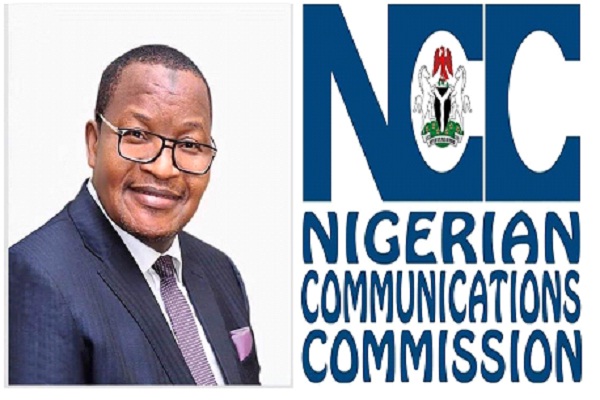
Nigerian Communication Commission (NCC) is working vigorously with multi-sector stakeholders to formulate policies for the 5th generation (5G) mobile network, according to Prof. Umaru Danbatta, executive vice chairman of the commission.

Prof Umar Danbatta, EVC, NCC
Danbatta, who made this known during a virtual innovative tech forum organised by Nigeria Information Technology Reporters Association (NITRA), said that the stakeholders included the Federal Ministry of Communications and Digital Economy, Nigerian Society of Engineers (NSE) and Office of the National Security Adviser (ONSA).
The theme of the event was ‘Multi-Stakeholders Approach to National Recovery Post-Pandemic’.
Dambatta said other bodies working with the Commission to establish the 5G policy were Nigerian Medical Association (NMA), the Academia, Association of Licensed Telecommunications Operators of Nigeria (ALTON) and Association of Telecommunications Companies of Nigeria (ATCON), among others.
“Our goal is that when the Federal Government is able to establish a policy that will drive 5G, all the benefits of 5G will be properly harnessed by Nigerians.
“The Commission is also working to ensure the safety of 5G networks in Nigeria by having multi-stakeholder approach in environmental impact analysis on the use of 5G and the Electromagnetic Fields (EMF) impact on humans in Nigeria.
“Once this is done, Nigerians can safely utilize 5G and reap all the economic, human and material benefits of 5G,” he said.
Danbatta said that the economic benefits of 5G to Nigeria post coronavirus pandemic would be huge, especially as almost all businesses and activities of government are migrating and offering their services online.
He noted that 5G would enable a new kind of network for Nigerians, adding that it is designed to connect virtually everyone and everything together including machines, objects and devices.
Danbatta said it would usher in the era of Internet of Things and faster innovation in Artificial Intelligence applications.
“Nigeria’s vibrant youth population stands to benefit immensely from the deployment of 5G as it will offer technopreneurs, technology enthusiasts, SMEs and Tech-startups the platform to expand and network with other global players on a scale that has never been witnessed before.
“With high speeds, superior reliability and negligible latency, 5G will expand the mobile ecosystem into new realms.
“5G promises to impact every industry, creating safer transporting systems, improving access to healthcare for our rural populace, increasing output from the agriculture sector, and digitized logistics among others,”he said.
Danbatta said that according to a landmark economy study conducted by QUALCOMM, 5G would affect the global economy and drive growth exponentially.
He noted that its full economic effect would likely be realised across the globe by 2035, adding that it would be supporting a wide range of industries and potentially enabling up to 13.2 trillion dollars worth of goods and services.
“We are all aware of the controversies surrounding COVID-19 and 5G technology. It is normal for the emergence of new technologies to be followed by such disagreements and the debate is mostly useful.
“We at the Commission, however, are inevitably committed to examining the pros and cons.



Association of Licensed Telecoms Operators of Nigeria (ALTON), has decried persistent challenges such as vandalism, high operating costs, and regulatory bottlenecks threatening service delivery despite recent improvements in investment inflows.

Gbenga Adebayo, chairman, ALTON, warned that the continuous attack are putting strains on Nigeria’s telecom sector which serve as the backbone of the country’s economic and digital systems,
Adebayo, speaking in an interview on ARISE News, described telecommunications as the critical foundation supporting all sectors of the economy.
“Telecom operators are the infrastructure of infrastructures that supports all other sectors,” he said, stressing that the industry remains central to power, transport, security, and financial services.
Adebayo noted that the recent 50% tariff adjustment has helped restore investor confidence in the sector after years of underinvestment.
“It has restored confidence in the sector… we are seeing investment, we are seeing now the impact of that investment,” he said, adding that the sector is now beginning to recover gradually.
But, he warned that improvements in service quality remain constrained by multiple external challenges, including vandalism, insecurity, and regulatory bottlenecks.
“Things can be better… but there are also other external factors… vandalism, behavior of public actors, behavior of non-state actors,” he explained.
Adebayo highlighted the scale of infrastructure damage, particularly on fibre networks, noting a major disparity between international and domestic connectivity routes.
“The fiber optic in the Atlantic… has witnessed probably one outage in two years… the one running from Lagos to Kano, we record an average of about 40 cuts a day,” he said.
He explained that such disruptions significantly increase operating costs and affect service quality across the country.
Beyond vandalism, he pointed to theft of telecom equipment such as batteries and generators, as well as security challenges that prevent timely restoration of services in some regions.
“Issue of security… people are stealing batteries, they’re stealing generators,” he said, noting that some areas remain inaccessible during outages until security conditions improve.
Adebayo also called for urgent reforms in right-of-way charges and taxation policies, arguing that telecom infrastructure should be treated as essential national infrastructure.
“Right of way should become free of charge across the country… issue of multiple taxation… it has to be a thing of the past,” he stated.
On rising energy costs, he said operators are gradually adopting hybrid and renewable energy solutions, although the transition is slow and still exposed to vandalism risks.
“We are doing a lot on renewable energy and providing hybrid solution… but that takes time,” he said.
Adebayo concluded that while policy support and investment inflows are improving the outlook of the sector, sustainable progress will depend on stronger protection of telecom infrastructure and coordinated action among government, regulators, and communities to address vandalism, insecurity, and regulatory inefficiencies.


Ride-hailing company Uber has introduced a new feature that allows users to book hotel rooms directly through its app, as part of its strategy to evolve into a broader lifestyle and services platform.

Uber announced that the hotel booking service is being launched in partnership with Expedia Group, giving users access to more than 700,000 hotel properties worldwide.
The company said the collaboration is also expected to expand in future to include short-term rental listings from Vrbo.
According to Uber, the hotel booking tool offers features similar to traditional online travel platforms, including destination search, maps, and filters based on pricing, amenities and guest ratings.
Users can also complete bookings using payment information already saved on the app.
Speaking during a presentation in New York City, Uber Chief Executive Officer, Dara Khosrowshahi, said the company was broadening its offerings beyond transportation and food delivery.
“We’re no longer just an app for rides, or even a family of apps for rides and eats. Uber is now an app for everything,” he said.
Chief Executive Officer of Expedia, Ariane Gorin, said the partnership was aimed at simplifying travel planning for users.
“Together, we can reduce the number of steps, save people time and money,” she said.
Uber’s latest move builds on its expansion strategy which began with the launch of Uber Eats in 2014.
Initially focused on food delivery, Uber Eats has since expanded into retail services, allowing customers to order products such as cosmetics, groceries and electronics.
Industry analysts say the development reflects the growing global trend toward “super apps” — digital platforms that combine multiple everyday services within one ecosystem.
This model is already widely adopted in markets such as China, where platforms like WeChat and Alipay integrate messaging, payments, travel bookings and e-commerce services.
Competitors are also broadening their offerings.
For instance, Airbnb has expanded beyond accommodation to include bookable local experiences, wellness services and mobility options.
Uber also disclosed plans to integrate more artificial intelligence-powered tools into its platform.
The company said upcoming features would enable users to plan meals, generate shopping lists and arrange deliveries through conversational prompts, while a voice assistant is also in development to support hands-free navigation within the app.

National Economic Council (NEC) of Nigeria has officially approved 112 as the unified, toll-free national emergency number to streamline responses to security, medical, fire, and natural disasters.

It is part of measures to strengthen Nigeria’s emergency lifeline and build a unified and coordinated national response to emergencies.
NEC also approved the establishment of a multi-agency implementation committee and programme coordination led by the Office of the Vice President and the National Communications Commission (NCC).
The approval was part of decisions taken at the 157th meeting of the NEC held virtually and chaired by Vice President Kashim Shettima.
Shettima said the 112 emergency lifeline had become necessary to prevent delay caused by bureaucratic bottlenecks, noting that what the citizens seek urgently when confronted by a natural disaster or insecurity is an urgent response and not bureaucracy.
“This is not only a technical reform. It is a test of the state’s humanity. In moments of fire, accident, robbery, medical emergency, flood, violence, or panic, citizens do not need bureaucracy.
“They need a response. They need to know one number to call, one system to trust, and one coordinated chain of action that moves quickly enough to save lives,” he stated.
He explained that while Nigeria is not beginning from zero, as the emergency number had been in existence, what is required at the moment “is coordination, adoption, standard operating procedures, public awareness, institutional ownership, and trust”.
The vice president described NEC as the nation’s economic engine room, where the federal government and the states must convert the Renewed Hope Agenda of President Bola Tinubu into practical outcomes.

US to Deny Applicants Saying they Fear Persecution @ Home Visas

ALTON Rues Vandalism, Others as Critical Infrastructures Suffer Attacks

Opay Plans IPO in US, Targets $4Bn in Valuation

Meet Top Five Tech-Driven Banks and Their Overseers

FG Owes World Bank $2.08Bn in 2025 – Report

FG to Gift Nigerians over 100 Free TV Channels from May 15

UBA Beefs Up Mobile App Security to Stop Fraudulent Debits, Withdrawals

What Adekunle Gold’s Support Means for ‘The Gathering on 100

NRS Takes Over Mineral Royalties Collection Under New Tax Laws

MTN Suspends Data, Airtime Borrowing Service over New FCCPC Lending Rules




 Special Reports3 days ago
IFC, Standard Chartered Partner on Supply Chain Finance to Support African Businesses

 News3 days ago
World Health Summit Regional Meeting Opens in Nairobi, Focuses on Stronger African Health Systems

 E-Financial3 days ago
Fidelity Bank “Basking in Approval” under Onyeali-Ikpe, CEO

 E-Financial2 days ago
New CBN’s BVN Rules Starts Today

 Telecom2 days ago
FG Okays 112 as Toll-Free National Emergency Response Number

 Telecom3 days ago
EU Warns Meta Could Face Huge Fine Over Underage Facebook, Instagram Users

 E-Business3 days ago
Firm Reveals a 37% Increase in Malicious Packages Compromising Software Supply Chains

 General News2 days ago
Nigeria’s CardForté Turns Five, Showcasing Impact on Domestic Payment Infrastructure