

News
IoT Growth Expected to See more than 50bn Connected Devices in Next Decade

By Willie Oosthuysen
IOT is expected to drive the proliferation of connected devices from about a billion plus today to over 50 billion in the next decade.

While the Internet of Things (IoT) may still be an emerging technology, it is difficult to dispute that it has become deeply entrenched in people’s lives and its proliferation is likely to accelerate even further in the next few years.
The First Industrial Revolution, which saw the development of machine tools and the rise of the mechanised factory system, had an unprecedented effect on the way people worked and lived, leading to a massive rise in the rate of population growth.
Similarly, the Fourth Industrial revolution is expected to have an equally profound and irreversible impact on all aspects of society, as it gathers momentum.
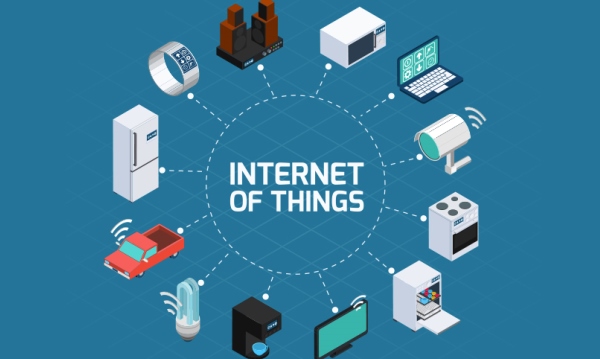
According to industry experts, IoT is rapidly driving the adoption of connected devices, from about a billion-plus today to over 50 billion in the next decade. This includes devices such as smartphones, vehicles, electronic appliances, as well as smart sensors that are connected to a wireless network.
South Africa is a clear leader in some use cases of the IoT space with applications such as stolen vehicle recovery, security and cash-in-transit management systems. However, the areas where we are playing catch-up are autonomous vehicles and clean energy generation and distribution, among others.
There are at least four areas of IoT that have so far affected people’s lives most significantly:
- Connected homes
This is where we started feeling the effects of IoT most directly. Connected homes contain Intelligent systems, such as remote controlled and accessed cameras, fire detection systems, smart lighting systems and other security features, which are connected to the internet.
In the past, homeowners who had video cameras installed would have to be at home in front of a screen to monitor them. These days, you can monitor your cameras via your phone, or even perform other functions, such as unlocking the door or switching on the lights or pool pump remotely.
A lot of home automation and entertainment systems are now connected to the internet and leverage connectivity for people to be able to use them effectively.
- Connected vehicles
Vehicle recovery systems have evolved into telematics and logistics management, which helps with routing and scheduling and other functions of fleet logistics designed to optimize the delivery of cargo.
Connected vehicles applications are very specific and are either built into cars or smartphones, which shows that mobility has added a lot to the utilisation and adoption of IoT technologies.
Car manufacturers are also increasingly able to monitor how cars are driven and whether they need any specific type of maintenance, before anything goes wrong. They can also pre-order the requisite parts, which improves the speed and efficiency of services or repairs. Other connected car applications deal with safety and navigation, among others.
- Wearables
These include wearable devices that can monitor your heart rate, measure exercise and sleep, and even monitor your health in general.
This form of IoT technologies is far more personal and adoption is still quite low. However, the applications are numerous, especially in the healthcare and fitness space.
In addition, wearable devices can also be used for children tracking, as well as other kinds of applications that are related to safety and well-being. It is in the applications and the data that the real value of IOT exists, not in the sensors or the networks that transport the signals.
- The Industrial internet
The industrial internet, which used to be known as machine automation or machine-to-machine communication, is the oldest form of IoT, and is by far the biggest market in IOT in South Africa.
Essentially, the industrial internet refers to the integration and linking of big data, analytical tools and wireless networks with physical and industrial equipment, such as the use of robotics in manufacturing or process control automation in petro-chemical plants.
The industrial internet has been having a significant impact on our lives for many years now through the automation of industrial functions. However, as consumers, we haven’t really felt this impact directly.
Proliferation of IoT
The rate of innovation, ingenuity and scope that has been driven by IoT has been nothing short of remarkable and businesses are continually developing more and more ways to connect us. Within the next few years, it is predicted that the proliferation of sensors is likely to see them permeate every aspect of our lives.
In terms of South Africa’s adoption of IoT technologies, there are areas in which we are significantly ahead of the rest of the world and others where we are behind, but we cannot afford to fall behind.
The potential of IoT is simply limitless and holds great promise for improving our quality of life and bringing about profound changes in the way we work.
Willie Oosthuysen, is Chief Strategic Business Officer at Liquid Telecom



Ola Olukoyede, chairman of the Economic and Financial Crimes Commission (EFCC), has disclosed that the commission recovered more than N7.2 million stolen from the bank account of a serving judge by suspected internet fraudsters in a midnight cyberattack.

Ola Olukoyede, Chairman of the Economic and Financial Crimes Commission (EFCC).
Olukoyede made the disclosure at the public presentation of two books authored by retired High Court judge, Justice Alaba Omolaye-Ajileye.
He said the serving judge, who is from a South-South state, contacted him around 1:00 a.m. after receiving multiple debit alerts indicating that funds had been withdrawn from her account.
According to him, the stolen money represented savings the judge had accumulated over six years to finance her child’s education.
Olukoyede said the EFCC immediately swung into action and successfully recovered the entire sum before 6:00 p.m. on the same day.
He said the incident underscored the increasing sophistication of cybercriminals and the urgent need for stronger collaboration among law enforcement agencies, the judiciary and members of the public in tackling financial crimes.
The EFCC chairman also called for amendments to Nigeria’s legal framework to accommodate the use of artificial intelligence (AI) in criminal investigations and prosecutions.
According to him, existing evidence laws should be reviewed to recognise AI-generated evidence as technology continues to reshape crime detection and investigation.
Also speaking at the event, former Attorney-General of the Federation and Minister of Justice, Chief Kanu Agabi (SAN), urged anti-corruption agencies to intensify efforts to trace and recover public funds allegedly stolen and stashed in foreign countries.
Agabi stressed the need for sustained collaboration among relevant institutions to strengthen Nigeria’s anti-corruption efforts and improve accountability in public service.
In his remarks, a former President of the Nigerian Bar Association (NBA), Chief Wole Olanipekun (SAN), called for stricter enforcement of the country’s cybercrime laws to curb the growing menace of internet fraud.
Olanipekun said effective implementation of existing laws, alongside stronger institutional cooperation, would help address the increasing threat posed by cybercriminals to individuals and the nation’s financial system.

Federal Government has cleared nearly N39 billion in outstanding pension liabilities owed to retirees under the Defined Benefit Scheme (DBS), including former employees of the defunct Nigerian Telecommunications Limited (NITEL), Mobile Telecommunications Limited (MTEL), the Power Holding Company of Nigeria (PHCN) and other federal government agencies.

The Pension Transitional Arrangement Directorate (PTAD) disclosed this in a statement, saying the payments were in line with President Bola Tinubu’s Renewed Hope Agenda, which prioritises the settlement of inherited pension liabilities and improved welfare for retired public servants.
According to the directorate, the largest component of the payment, amounting to N25 billion, covered about 35 months of outstanding pension arrears owed to nearly 10,000 eligible retirees of the defunct NITEL and MTEL.
PTAD also said it disbursed about N9.5 billion as the first tranche of Back End Computation (BEC) arrears to eligible pensioners of the defunct Power Holding Company of Nigeria.
The Executive Secretary of PTAD, Mrs Tolulope Odunaiya, described the payments as a significant milestone in the Federal Government’s efforts to clear inherited pension obligations and strengthen confidence in the Defined Benefit Scheme.
Odunaiya said the settlement was made possible following presidential approval granted in 2025 and funding provided under the 2026 Appropriation Act.
She noted that the intervention had enabled the directorate to resolve long-standing pension liabilities affecting thousands of retirees.
“The successful settlement reflects the Federal Government’s commitment to sustaining pension reforms and ensuring that retirees receive their entitlements promptly in line with the objectives of the Renewed Hope Agenda,” she said.
Odunaiya thanked the affected pensioners for their patience while the liabilities remained outstanding and reaffirmed PTAD’s commitment to transparent, efficient and pensioner-focused service delivery.
She added that the directorate would continue to work towards improving pension administration and ensuring timely payment of retirees’ benefits.


A Federal High Court, Lagos has declared Mrs. Ebele Okpala, a female banker with Keystone Bank, wanted over alleged N35 million fraud.

Apart from declaring the banker who is said to be outside the country wanted, Justice deinde Dipeolu, trial judge in the matter, also directed the Department of State Security (DSS), Nigerian Immigration Service (NIS), and Nigeria Customs Service (NCS), to arrest her upon arriving the country.
Justice Dipeolu made the above order while granting a motion ex-parte marked FHC/L/530C/2024, filed and moved by M. Bello, on behalf of the Nigeria Police.
In the motion, Ebele Okpala and one Perpetual Onyeto, also a banker were listed as first and second defendants/respondents in the suit, while DSS, NIS and NCS were listed as cited parties/respondents.
In urging the court to make the above orders, Bello, informed the court that the application was pursuant to several sections of the Administration of Criminal Justice Act (ACJA) 2015, and under the court’s inherent jurisdiction. Adding that the application was supported by an affidavit deposed to by Inspector Tope Akerele of the Force Criminal Investigation Department (FCID), Special Fraud Unit (SFU), Ikoyi, Lagos.
In granting the application, Justice Dipeolu held, “After considering the application and the supporting affidavit, the request had merit and granted all the reliefs sought by the prosecution.
“That an order is hereby made that the 1st defendant/despondent be declared wanted and placed on the wanted list of the Nigeria Police Special Fraud Unit, 13, Milverton Road, Ikoyi, Lagos until she is arrested.
“That an order is hereby made compelling cited parties/respondents to assist in apprehending 1st defendant/Respondent once he enters into the country.
“That an order is hereby made permitting the Publication of the name of the 1st defendant/despondent in the National Daily Newspapers and Social Media handles by the Nigeria Police Special Fraud Unity Ikoyi, Lagos for the purpose of fulfilling the requirement of the Order 1 above.”
Recall that both the wanted banker and the second defendant/respondent were previously arraigned before the court by the operatives of the police Special Fraud Unit, PSFU.
Specifically, the two bankers were arraigned before the court sometimes in September 2024, on alleged conspiracy, theft, money laundering, fraudulent lift of lien placed on bank’s customer’s account and obtaining the sum of N35 million by false presence.

World Bank Okays New $1.25Bn Loan for Nigeria

Xenophobia: MTN Nigeria Belongs to Nigerians, Not Only South Africans — Toriola

SEC Grants Approval to Luno, Other Crypto Firms under Regulatory Sandbox

MTN Nigeria Celebrates Volunteers at Y’ello Care Impact Showcase

Listicle: 10 Essential Meta Safety Tools Every Parent and Teen Should Know

Mobile Internet Gender Gap Widest in Africa – GSMA

London Strengthens Global Investment Ties with Africa @ First Ever London-Africa Business Summit

FG Targets Alleged N3tn Capital Flight, Opens Airtime Credit Market to Nigerian Fintechs

Nigeria Launches FreeTV Nationwide

NASENI Trains 50 Women in Kano on Renewable Energy Technologies Under She-Powers Initiative



 Telecom2 days ago
MTN Foundation, Microsoft Empower Nigerian Educators with AI Integration Skills

 E-Financial3 days ago
UBA Surprises Thousands of Customers with Over ₦400 Million Cash Bonus

 Broadcasting2 days ago
Spotify partners Afro Nation Portugal to expand African music experience

 Telecom2 days ago
NCC Raises Alarm as Nigeria Lags in Fibre Internet, Pushes for Urgent Expansion

 Telecom2 days ago
Airtel Nigeria CEO Urges Adoption of Intelligent Technology Platforms to Accelerate National Growth

 E-Financial2 days ago
CBN Cracks Down, Revokes Licences of 46 Microfinance Banks

 E-Business2 days ago
Report Reveals More than Half of Users Encountered Fraud or Scams Online

 Telecom2 days ago
WhatsApp Usernames Spark Privacy Fears