

E-Financial
CBN Rejects Bid to Remove Arabic Inscription from Naira Notes


Central Bank of Nigeria (CBN) has opposed a suit before the Federal High Court in Lagos praying that the Arabic inscriptions on naira notes be removed.

Chief Malcolm Omirhobo, Lagos-based lawyer, who filed the suit before Justice Mohammed Liman, contended that having Arabic inscriptions on the naira notes portrays Nigeria as an Islamic state, contrary to the country’s constitutional status of a secular state.
Omirhobo, who said he does not know what the Arabic inscriptions mean, is praying the court to order the CBN to replace the Arabic inscriptions with either English language, which is the country’s official language, or any of Nigeria’s three main indigenous languages – Hausa, Yoruba or Igbo.
According to the lawyer, with the Arabic inscriptions on the naira note, the CBN has been violating sections 10 and 55 of the Nigerian Constitution, which make the country a secular state.
He wants the court to restrain the CBN from “further approving, printing and issuing naira notes with Arabic inscriptions, bearing in mind that Nigeria is a secular state.”
But the CBN has filed a counter-affidavit in opposition to the suit.
In the counter-affidavit deposed to by one Abiola Lawal, the CBN maintained that contrary to Omirhobo’s claim “the Ajami inscriptions on some of the country’s currencies do not connote any religious statements or Arabian alignment.”
The CBN also tackled the lawyer on the claim that the Arabic inscriptions were a threat to Nigeria’s secular status.
“The inscriptions on the country’s currencies do not and at no time have they threatened the secular statehood of the nation nor have they violated the Constitution of Nigeria, as every design and inscription was finalised with the approval of the relevant government bodies,” the apex bank said.
The CBN explained that the “Ajami inscriptions” on the naira notes dated back to the colonial era “and they do not imply that Arabic is an official language in Nigeria.”
The apex bank said, “The naira notes retained the inscriptions with Ajami since 1973 when the name of the Nigerian currency was changed to naira from pounds.
“The Ajami was inscribed on the country’s currency by the colonialists to aid those without Western education in certain parts of the country, who, back then, constituted a larger part of the populace.
“The Ajami is not a symbol or mark of Islam but an inscription to aid the populace uneducated in Western education in ease of trade.”
While urging the court to reject Omirhobo’s suit, the CBN pleaded that removing the Arabi inscriptions from the naira notes “would cost the tax-paying Nigerians and the Federal Government colossal sum of money to discard the existing naira notes and print new ones in satisfaction of the plaintiff.”
Hearing in the suit comes up on Tuesday (today) before Justice Liman.
The judge will also be hearing a similar suit filed by Omirhobo against the Nigerian Army, seeking the removal of Arabic inscriptions from the logo of the Nigerian Army.
Like the CBN, the Army has also opposed Omirhobo’s suit and urged the court to throw it out.


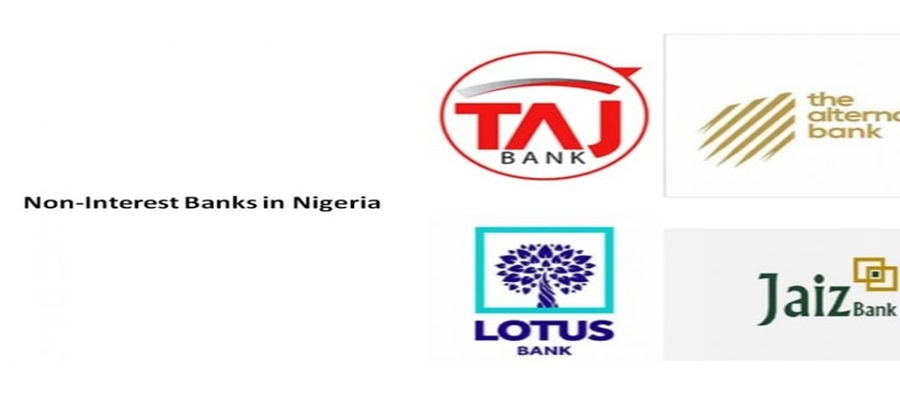
Central Bank of Nigeria (CBN) has warned non-interest financial institutions against governance and compliance risks capable of undermining public confidence and financial stability in the country’s growing Islamic finance sector.

Interest-free banks, often known as non-interest or Islamic banks, operate without charging or paying traditional interest (Riba).
The warning was contained in a press statement issued by the apex bank following the 2nd Annual Interactive Session between the CBN Financial Regulation Advisory Council of Experts and the Advisory Committees of Experts of Non-Interest Financial Institutions held at the CBN Auditorium in Abuja.
Speaking through Dr Rita Sike, director of the Financial Policy and Regulation Department, Philip Ikeazor, deputy governor, Financial System Stability, said the rapid expansion of the industry had increased exposure to operational and regulatory vulnerabilities.
The statement read, “The Deputy Governor, however, observed that as the industry grows in size, sophistication, and interconnectedness, it faces unique risks, particularly non-compliance risk, governance challenges, operational vulnerabilities, and emerging technological risks.
“He warned that such risks, if not properly managed, could undermine public confidence, financial stability, and the overall credibility of the non-interest finance ecosystem.”
According to the CBN, the engagement was part of ongoing efforts to strengthen Shariah governance, improve regulatory clarity, and reinforce risk management standards within the non-interest financial services industry.
The apex bank noted that non-interest financial institutions continued to play an increasingly important role in Nigeria’s financial system by providing ethical and Shariah-compliant alternatives to conventional banking.
It stated that the institutions were also contributing to financial inclusion, real sector financing, micro, small, and medium enterprises development, and shared prosperity.
The CBN further explained that the establishment of FRACE and the mandatory constitution of ACEs across all non-interest financial institutions were designed to institutionalise a harmonised governance framework for the sector.
According to the statement, sustained interaction between FRACE and ACEs remained critical to ensuring that regulatory expectations were properly understood and consistently implemented across the industry.
“The objectives of today’s session include fostering the institutionalisation and effective operation of a robust Shariah governance system within Non-Interest Financial Institutions, and providing a structured platform for dialogue, knowledge-sharing, and collaboration,” Ikeazor was quoted in the statement.
In his remarks, Prof Bashir Umar, deputy chairman of FRACE, said the interactive session was aimed at strengthening governance within the non-interest finance sub-sector and promoting constructive engagement between regulators and industry advisory committees.
He also commended the management of the CBN for reviving the session, which was first introduced in 2014.
Earlier in her welcome remarks, Sike reaffirmed the apex bank’s commitment to building a strong and well-governed non-interest financial services industry.
She noted that the growing diversity of products and delivery channels, particularly the emergence of Islamic fintech, had increased the need for stronger regulatory oversight and continuous engagement among industry stakeholders.
“The growing diversity of products, institutions, and delivery channels, particularly with the emergence of Islamic fintech, underscores the need for continuous dialogue, sound regulatory oversight, and robust advisory input from scholars and practitioners,” she said.
The session featured technical presentations on Shariah non-compliance risks in non-interest banks and the role of Islamic fintech in driving financial inclusion.
Participants at the event included members of FRACE, chairmen and members of various ACEs, managing directors of non-interest banks, senior CBN officials, and representatives of the Bank of Industry and the Securities and Exchange Commission.

Federal government is in discussions with the World Bank over a proposed $1.25 billion loan facility aimed at supporting economic reforms, job creation, and competitiveness programmes across Nigeria.

A World Bank document titled Nigeria Actions for Investment and Jobs Acceleration showed the facility has moved beyond the concept and appraisal stages and is now scheduled for a decision meeting ahead of a planned Board presentation on June 26, 2026.
If approved, the loan would become Nigeria’s second-largest World Bank financing package after the $1.5 billion Reforms for Economic Stabilisation to Enable Transformation Development Policy Financing approved in June 2024.
The document listed the Federal Republic of Nigeria as the borrower, while the Federal Ministry of Finance will serve as the implementing agency.
It explained that the project is currently at the decision-meeting stage of the World Bank’s project cycle, where final appraisal documents undergo internal review before submission to the Board of Executive Directors for approval.
At this stage, the institution confirms policy actions, financing terms, and reform commitments already agreed in principle between Nigeria and World Bank teams.
It also said the proposed facility will support government efforts to expand access to finance, digital services, and electricity, while strengthening competitiveness through reforms in taxation, trade, and agriculture.
World Bank says loan will support finance, digital access, and electricity reforms
Between June 2023 and May 2026, the World Bank approved about $9.35 billion in loans and credits for Nigeria across key sectors including power, education, healthcare, agriculture, renewable energy, social protection, and MSME financing.
Major approvals during the period include the $2.25 billion RESET and ARMOR reform financing in June 2024, $1.57 billion for HOPE and SPIN programmes in September 2024, and $1.08 billion for education and resilience projects approved in March 2025.


Ecobank Group, a pan-African banking group yesterday announced a landmark $3 billion trade finance commitment over the next 3 years to accelerate intra-African global trade.

The announcement was made during the Africa-Forward Summit in Nairobi, within the framework of the bank’s active engagement in the Africa-France Impact Coalition (AFIC) led under the patronage of H.E. President Macron of France and H.E. President Ruto of Kenya.
This ambitious commitment, specifically designed to build integrated value chains and foster shared economic sovereignty reinforces the group’s unique position as the premier financial gateway connecting Africa and the world.
Building on a proven track record across 34 African markets, Ecobank Group will partner with Development Finance Institutions (DFIs), including Proparco, to deploy this $3 billion commitment.
By expanding access to competitive trade finance, the funds will directly fuel the core engines of Africa’s real economy: agribusiness, manufacturing, and general commerce.
This strategic deployment is designed to accelerate the structural transformation of the continent, anchoring future growth in sustainable industrialization, resilient infrastructure, and human capital.
By strengthening liquidity, providing guarantees, and deploying specialized trade instruments, Ecobank will help African businesses secure essential inputs, access new markets, and build resilience within increasingly complex global supply chains.
Chief Executive Officer 9f Ecobank Group, Jeremy Awori said: “The Africa-France Impact Coalition marks a fundamental shift toward shared sovereignty and integrated supply chains, and we are proud to drive this vision.
“Africa is rising and trading. By leveraging our Paris banking hub and partnerships with DFIs like Proparco, we are connecting African opportunities with global capital. This initiative is more than a financial commitment, it is a catalyst for trade, investment and talent – the pillars of Africa’s next decade”.
This $3 billion commitment signals strong confidence in Africa’s capacity to industrialize, scale production, and participate as a highly competitive partner in global trade, strongly aligning with the moment of intra-Africa trade acceleration.
Strategy gateway through Paris & expected outcomes
Central to this pledge is EBISA, Ecobank’s Paris-based hub, which serves as the critical gateway connecting African enterprises with international markets. EBISA will anchor the cross-border flows that drive both investment and trade, facilitating the “Made in Africa” and “Co-Made in Africa and France” ecosystems.
By focusing not just on capital, but on the entrepreneurs, small business owners, youth innovators, and women-led enterprises that drive the continent forward, Ecobank will deliver measurable impact across five priority dimensions:
Support sustainable development across Ecobank’s expansive footprint; Enhance market access for SMEs and large corporate entities;Deepen integration into regional and global value chains; Empower women and youth-led businesses; Strengthen economic resilience and long-term value creation.
Through strategic collaborations spanning trade, investment and talent, Ecobank Group and its partners in the AFIC are moving the continent forward with confidence, purpose, and impact.

ATCON Says Telecom Network Under Threat, Urges Stronger Efforts to Protect Infrastructure

CBN Warns Non-Interest Banks against Governance, Compliance Risks

FG Seeks Fresh $1.25Bn Loan from World Bank to Create Jobs, Others

National Assembly to Review National Data Protection Act

Firm Shares Insights into Ransomware Trends and Tactics @ International Anti-Ransomware Day-2026

Kaspersky Discovers Vulnerability in Qualcomm Snapdragon Chips that can Lead to Data Loss & Device Compromise

Vitel Wireless Partners Fintechs to Expand Access to Services

MTN Suspends Data, Airtime Borrowing Service over New FCCPC Lending Rules

MTN, VDT, Zoracom, Digital Realty Back 2026 Girls in ICT Campaign

Bank Customers to Pay N1,500 for ATM Card Issuance, Replacement – CBN




 E-Financial3 days ago
Transcorp Excites Shareholders with ₦20.3 Billion Dividend @20th AGM

 Telecom2 days ago
MTN, Airtel, Glo Under Pressure as FG Demands Better Service Delivery

 E-Financial3 days ago
Africa Prudential Launches Sabivest to Boost Digital Investment Access

 E-Financial2 days ago
Mastercard, BMONI Launch Multi-Currency Payment Cards in Nigeria

 Telecom3 days ago
PAFON 3.0: Agency Banking Key to Reaching Millions of Unbanked Nigerians – AMMBAN

 E-Business2 days ago
Firm Warns of Phishing Attacks via Compromised Amazon Simple Email Service Accounts

 General News3 days ago
PIN Records 3.07Bn Media Reach, Expands Digital Rights Impact Across Africa in 2025

 General News3 days ago
Interswitch Inducts 3rd Interns into Its Developer Academy