

News
Tony Elumelu Foundation Partners EU for Economic Empowerment Transformation of African Women


The Tony Elumelu Foundation (TEF), Africa’s leading philanthropy committed to empowering young African entrepreneurs, has announced a partnership with the European Union to identify, train, mentor and fund 2,500 young African women entrepreneurs in 2021.

Tony Elumelu
The partnership will disburse €20 million in financial and technical support for women-owned businesses, across all 54 African countries, in addition to providing increased access to market linkages, supply chains and venture capital investments.
The joint initiative will significantly strengthen and deepen the EU-Africa partnership, builds on the platform and experience of the US$100m TEF Entrepreneurship Programme, and forms part of the EU External Investment Plan to support women economic empowerment within the EU Gender Action Plan (GAP III).
Commenting on the landmark partnership, Tony Elumelu, founder of the Tony Elumelu Foundation said “We are delighted to partner with the European Union, sharing our unique ability to identify, train, mentor and fund young entrepreneurs across Africa. This joint effort will prioritise and provide economic opportunities for African women, whom for too long have endured systemic obstacles to starting, growing and sustaining their businesses. Our partnership will alleviate the funding, knowledge and market constraints threatening the livelihoods of women entrepreneurs on the continent, to create more income, jobs, growth and scale for women-owned businesses.”
Jutta Urpilainen, EU Commissioner for International Partnerships, said “This partnership with the Tony Elumelu Foundation will help women participants in economic development, realise their full potential and accelerate economic inclusion. Empowering women entrepreneurs is a key driver for sustainable jobs and growth, especially in the context of the COVID-19 pandemic and in line with the objectives of our African Strategy. Women and girls represent half of the world’s population and they deserve equal opportunities.”
The Tony Elumelu Foundation, which marks ten years of impact this year, is empowering a new generation of African entrepreneurs, catalysing economic growth, driving poverty eradication and ensuring job creation across all 54 African countries.
The Foundation has trained, mentored and funded nearly 10,000 young African entrepreneurs from 54 African countries, and continues to provide capacity-building support, advisory and market linkages to over 1 million Africans through its digital networking platform, TEFConnect.
TEF’s female success stories include Joyce Awojoodu, from Nigeria, who launched a luxury botanically based product line and spa clinic in Lagos, in 2015.
The brand ORÍKÌ, caters to both men and women, and strictly uses raw materials and natural ingredients from Africa.
Awojoodu’s favourite element of the TEF Entrepreneurship Programme was the mentorship, which she described as “phenomenal”’ and “invaluable” for ORÍKÌ.
In her own words, “each Tef Entrepreneur was assigned a mentor and I could not have asked for a better one. TEF connected us. Now the mentorship continues, and I know I will always have an ear to share my thoughts about the business with a person who can also offer advice”.
Mavis Mduchwa, an agribusiness entrepreneur from Botswana, founded Chabana Farms, a poultry farm providing training and work for unemployed young people. Even though agriculture accounts for 32% of Africa’s gross domestic product, landownership and access to land remains a significant challenge for many farmers, especially women.
According to Mduchwa, “in Botswana, about 80% of people survive on agriculture, and many of them are women. But, if as a women you want to turn it into a business, you have a challenge of finding land.” Mduchwa has used the seed capital and training from TEF to significantly expand her operations.
The Tony Elumelu Foundation and the European Commission are proud to partner to unlock the dynamic potential of African women entrepreneurs, directly catalysing African’s economic growth and contributing to Africa’s prosperity and social development.
The programme co-funded by the European Union, the Organisation of African, Caribbean, and Pacific State (OACPS), and the German Federal Ministry for Economic Cooperation and Development (BMZ), will further scale the Foundation’s efforts in directly addressing some of the most endemic challenges to African start-ups – skills and capacity gaps, financial constraints and lack of access to mentoring, networks and market linkages.
Following completion of the programme, the entrepreneurs will stay connected to partners and to each other through their lifetime membership on TEFConnect.
TEF has set up Country Chapters in 54 African countries to support the entrepreneurs as they grow and expand their businesses.



The UK Government has announced the appointment of Mr Peter Vowles as the next British High Commissioner to the Federal Republic of Nigeria.

Mr Vowles succeeds Dr Richard Montgomery CMG and is expected to take up his post in Abuja in September 2026. Dr Montgomery remains in post until that time.
Mr Vowles brings extensive diplomatic and development experience to the role, having served as His Majesty’s Ambassador to Zimbabwe from 2023 to 2026 and previously as Ambassador to Myanmar from 2021 to 2022.
He has held senior leadership positions across the FCDO and its predecessor department DFID, including as Transformation Director and Director for Asia, Caribbean and Overseas Territories.
Earlier in his career, Mr Vowles worked in international development across South Asia, Central Africa and East Africa, including postings in Bangladesh, India, the Democratic Republic of Congo and Kenya. He began his career in Zimbabwe, where he worked in education and development.
Peter Vowles said: “I am honoured to be appointed as British High Commissioner to Nigeria. Nigeria is a country of immense importance to the United Kingdom, and I look forward to working closely with Nigerian partners to strengthen our relationship across trade, development and security.”

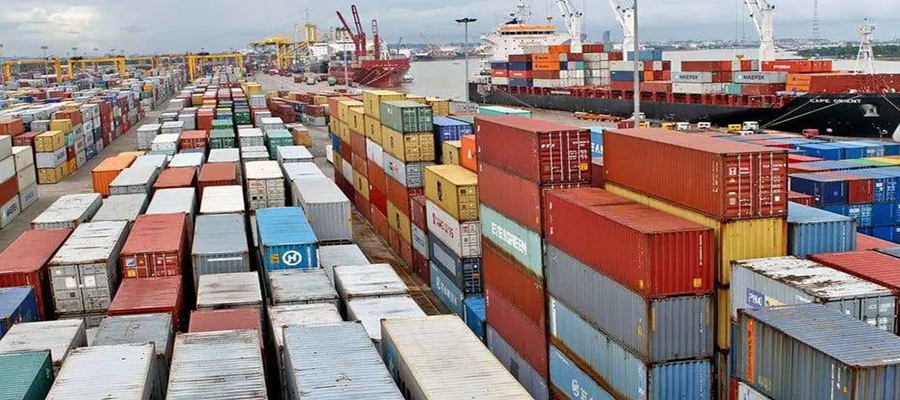
World Bank has ranked the Apapa and Tin Can Island Port complexes in Lagos among the world’s 20 most improved ports in its 2025 Container Port Performance Index (CPPI), released in June 2026.

The ranking places both ports in the “Top 20 Port Improvement Since 2020” category, reflecting significant gains in operational efficiency and vessel turnaround time.
The CPPI is a global benchmark used to assess the efficiency of container ports based on factors such as cargo handling speed, ship turnaround time and overall logistics performance.
According to the report, the improvement highlights ongoing reforms and modernization efforts within Nigeria’s maritime sector.
The Managing Director of the Nigerian Ports Authority (NPA), Mr Abubakar Dantsoho, attributed the recognition to ongoing policy reforms and infrastructure upgrades in the sector.
He said the development reflects the impact of economic policies of President Bola Tinubu and the support of the Minister of Marine and Blue Economy, Mr Adegboyega Oyetola.
“With the investor-friendly policies of President Bola Ahmed Tinubu providing the impetus for increased investment to drive our port infrastructure and equipment modernisation programme, coupled with the unflinching support of the Honourable Minister of Marine and Blue Economy, Adegboyega Oyetola, we have all it takes to further enhance trade facilitation, improve competitiveness and boost the national economy,” he said.
The NPA said the recognition is expected to strengthen investor confidence in Nigeria’s maritime sector and enhance the country’s position as a regional trade and logistics hub.
It noted that improvements in port operations are already contributing to increased efficiency in cargo movement and reduced delays at key terminals.
The authority also pointed to ongoing efforts to modernise port infrastructure and expand digital systems aimed at improving service delivery.
Earlier in February 2026, the NPA said the federal government had intensified efforts to position Nigeria as a leading maritime destination through port rehabilitation and modernization projects.
It also highlighted public-private partnership initiatives, including developments at the Lekki Deep Sea Port, as part of broader reforms aimed at improving efficiency and attracting investment.
The CPPI ranking is expected to further boost Nigeria’s maritime profile and encourage additional investment in the sector.
As digital payment adoption continues to grow across Nigeria and emerging markets, the next phase will depend not just on innovation, but on the strength, reliability, and trustworthiness of the infrastructure behind it.

While the ecosystem has made clear progress in recent years, trust remains a critical issue for users, businesses, and operators alike. Questions around resilience, security, interoperability and transaction reliability continue to shape how the market evolves and how confidently digital payments can scale.
These issues will be central to the deliberations at Digital Pay Expo 2026, where fintech leaders, payment operators, and other ecosystem stakeholders will gather under the theme, “Seamless Digital: Fostering Pan-African Market Expansion in the Era of AI.”
PalmPay’s participation reflects its continued commitment to building trusted and scalable payment infrastructure, while contributing to the broader industry efforts to strengthen systems, standards, and partnerships needed to support long-term ecosystem growth.
Speaking ahead of the event, Olorunfemi Hanson, Head of Marketing and Communications at PalmPay Nigeria, said: “As the financial services ecosystem continues to grow, trust and reliability become even more important.
“The industry’s next phase will be shaped not only by innovation, but by the strength of the infrastructure supporting it. Digital Pay Expo provides an important platform to address the resilience, interoperability, and trust issues that will shape the future of digital payments growth across Africa.”
The event, scheduled to be held from the 17th to the 18th of June, 2026, will feature Chika Nwosu, Managing Director of PalmPay Nigeria, alongside other distinguished guests, including the Director-General, Payment System Management Department (PSMD), Central Bank of Nigeria. The event will examine how the industry can balance innovation, regulation, and scalability while strengthening trust across the digital payments value chain.
For PalmPay, this event reinforces its role in supporting a more resilient, secure and scalable payments ecosystem for Nigeria and emerging markets more broadly.

Nigeria Launches FreeTV Nationwide

NIPOST Plans Digital Postcodes for Every Building in Nigeria

Enugu to Host The Gathering on 100 as MTN-Backed Youth Movement Expands Across Nigeria

Prof. Dzidonu Urges Universities to Produce Deep Thinkers for AI Age

FG Debunks Claims of Plans to Introduce Telecoms, Fuel Taxes

CBN Extends PoS Geo-Fencing Enforcement Deadline to August 2026

NCC Drafts New Rules for Virtual Mobile Operators

London Strengthens Global Investment Ties with Africa @ First Ever London-Africa Business Summit

FG Targets Alleged N3tn Capital Flight, Opens Airtime Credit Market to Nigerian Fintechs

Easybuy Partners WAWUAfrica to Upskill 10 Million Youths and Women, Boosting Nigeria’s Economic and Financial Inclusion




 E-Financial3 days ago
CBN Orders Banks, Fintechs to Host Payment Data Locally

 E-Business2 days ago
Galaxy Backbone @ 20, Pledges Nationwide Connectivity, Data Sovereignty

 Telecom1 day ago
MTN Foundation Commits N32Bn in Projects across Nigeria

 E-Financial3 days ago
Analysts Warn of Growing “Crowded Trade” in Foreign Exchange Markets

 Telecom3 days ago
Nigeria Innovation Summit 2026 Set to Convene West Africa’s Brightest Minds to Shape the Future of Innovation

 E-Financial3 days ago
ACAMB Kicks-off 30th Anniversary Celebration With Tree Planting Initiative

 News3 days ago
PalmPay Joins Industry Leaders @ Digital Pay Expo 2026

 Telecom3 days ago
UK Bans TikTok, Instagram, Facebook for Under-16s in Landmark Crackdown