

Telecom
Digital inclusion: What Equal Access to Education Mean in the Digital Age


By Zohra Yermeche
The COVID-19 crisis, and the impact which it has had on learning across the world, has highlighted many of the digital disparities which exist in today’s world. At a time when many of the world’s students shifted from physical to digital, we were also faced with the hard truth that today there are still 3.6 billion people in the world who are unconnected.

For students in the connected half of the world, the story is much different. While 1.2 billion children were affected by school closures across much of the world, our recent Consumer COVID-19 report found that students were able to substitute physical learning by spending 230 percent more time on digital learning tools such as Google Class, Epic! and Seesaw Class.
This of course is a significant rise, but it is also an acceleration of a trend which we have steadily been tracking since our first Connect To Learn program exactly ten years ago.
The State of Broadband 2020 report estimates that there are twice as many people today who use the Internet compared to 2010. This rise in digital literacy, together with the imminent period of rapid digitalization of the economy, means that ensuring fair and equal access to both education and future job markets will rest on the extent of digital inclusion within our societies.
What is digital inclusion and why is it so important today?
Today, technology plays a much bigger role in the quality and scope of how we learn, such as new digital learning platforms which are estimated to reach 350 billion USD by 2025; what we learn, with a growing emphasis on programming, robotics, AI and automation; and how we can use it in the job market, with digital skillsets increasingly becoming a prerequisite of tomorrow’s workforce.
The changes which are happening today show the disparity between the developed and undeveloped world. If you are not connected, that shows you the leap which you have to make between the connectivity aspect, access to education and benefits which are derived from that.
Closing this digital divide, with those who are not connected or not considered to be digitally literate, is imperative to ensuring a fair distribution of digital opportunities across countries, locations, gender, socioeconomic status, and age.
Access to education in the digital age
In 2010, we co-founded the Connect To Learn initiative with the Earth Institute at Columbia University and Millennium Promise, with a focus on delivering connectivity and ICT tools to enhance teaching and learning in unconnected, underprivileged and largely unrepresented communities.
Since our first projects in the Millennium Villages, we’ve helped to connect and increase the digital inclusion of more than 200,000 students worldwide. As the program has evolved, we have increased our efforts to close the digital divide not just in terms of connectivity, but from a content, syllabus and platform side which is fundamental.
As a technology company, we quickly discovered that we can offer so much more than connectivity, but furthermore can help improve learning processes and methodologies so learning can become more impactful. For example, through partnerships with like-minded organizations, we have helped to digitalize and disseminate content through digital learning tools such as mobile apps.
One of the biggest differences from ten years ago is also that the nature of technology in an educational context, both as a medium and a means to enter the job market was still relatively immature as the landscape has evolved, we’ve come to understand the need to personalize and individualize learning so that we can improve learning outcomes in a meaningful way.
Giving people access to the right type of content is one aspect, another equally critical aspect is the human element. On top of the digital layer, students will still always need the engagement, inspiration and activation that comes from teachers and trainers who know about the topic. I believe that, even in the digital age, technology will never be able to replace this interaction, but rather can serve as an increasingly innovative medium for those critical learner-instructor interactions, such as through the Internet of Skills.
Digital inclusion through public-private partnerships
Today, there is a significant need for digital skills courses. Key technology areas such as AI, robotics and app development are advancing at such a rapid pace, which can make it difficult to ensure an effective transfer of competence to emerging workforces.
Such is the pace of change for topics such as these; public academic institutions will invariably struggle to take learning beyond a basic theoretical level. Public-private partnerships will therefore be key to addressing this, by developing advanced curriculums and delivering the necessary quality and scale of access.
As a sustainability pioneer in the private sector, we’ve understood the power of partnership, which is why we’re investing heavily in building out those partnerships with like-minded entities to create sustainable solutions in order to address the issues which the education sector faces today.
A good example of this is the Ericsson Digital Lab program which is now live in several countries in partnership with local schools and community learning centers. The aim here is to share those competences that we have in-house on a much broader scale, addressing those critical skillset demands which are needed in tomorrow’s workforce.
This year, in response to the impact which COVID-19 has had on learning, we continuing these efforts by joining the UNESCO-led Global Education Coalition, launching Ericsson Educate and partnering with UNICEF to map school connectivity as part of the Giga project.
Through digital methodologies, and with a focus on improving digital skills for students across all communities, our commitment is to ensure that future generations continue to have the skills and knowledge to find opportunity in a changing digital world. This was what we set out to do when we launched Connect To Learn ten years ago, and this will continue to be our priority in this next critical decade of action.
Zohra Yermeche is Program Director for Connect To Learn at Ericsson



Nigerian Communications Commission (NCC) has said that it was strengthening collaboration with state governments and industry players to develop a transparent, cost-based pricing framework for sharing telecom ducts as part of efforts to speed up broadband expansion across Nigeria.

Ayuba Shuaibu, director of Policy, Competition and Economic Analysis, NCC, disclosed this at the Stakeholders’ Forum in Abuja.
Shuaibu said the initiative was designed to build consensus among all parties.
“The primary purpose of this forum is to ensure seamless synergy between the Commission and all stakeholders,” he said.
The director said the consultation was prompted by longstanding complaints over permits, levies and other charges imposed by different levels of government.
He said bringing together state commissioners, telecom operators, tower companies and representatives of the Nigeria Governors’ Forum had helped improve understanding of the issues.
“This engagement is a work in progress. We expect more input from stakeholders before presenting the outcome to the Nigeria Governors’ Forum,” he added.
Dr Helen Adeneye, commissioner for Innovation, Science and Technology, Kogi State. welcomed the consultation, saying Nigeria needs a harmonised policy that clearly defines the responsibilities of both the federal and state governments.
“We need a harmonised policy that allows states to collaborate better with telecom operators and creates a more business-friendly environment,” she said.
Dr Adeneye added that adopting the Dig-Once policy would establish a uniform pricing system and help resolve disputes over charges for telecom infrastructure deployment.
Chidi Ajuzie, chief executive officer, WTES Projects Limited, whose firm is conducting the consultancy study, said the proposed framework would introduce a common cost structure for duct sharing to support broadband investment and economic growth.
“The study is designed to create a uniform pricing model that will drive broadband growth, economic development and wider adoption across the country,” he said.
Ajuzie explained that the consultants had developed preliminary floor and ceiling prices to guide operators while allowing flexibility within the approved range.
He added that the recommendations remain open to industry input before the NCC finalises the framework.
The Dig-Once Policy is designed to reduce the cost and disruption of deploying broadband infrastructure by requiring fibre ducts to be installed whenever roads are constructed or rehabilitated.
The NCC is developing a cost-based pricing framework for sharing these ducts to promote fair pricing, reduce duplication of infrastructure and encourage investment.
The proposed model is expected to support the Federal Government’s broadband expansion targets while improving collaboration between telecom operators and state governments.

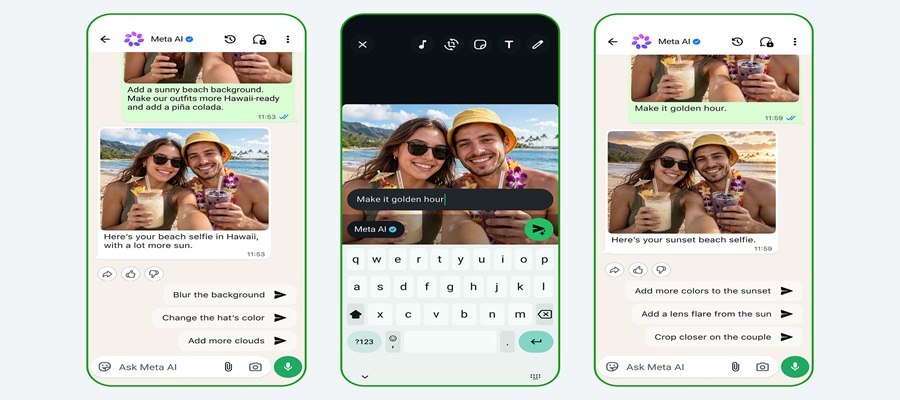
Meta is rolling out Muse Image, the companyʼs first image generation model from Meta Superintelligence Labs, now available in Meta AI . Muse Spark made Meta AI a smarter assistant; now, Muse Image acts as the creative partner that knows your world, making it easy to turn your ideas into high-quality visuals that you can download and share anywhere, including directly to your feed, story, or chat.

The model also powers new creative tools across Metaʼs apps. You can use more than 30 new AI-powered effects for Instagram Stories and generate images in your direct chats with Meta AI on WhatsApp — starting in limited countries with more locations on the way.
Simple Prompts, High-Quality Outputs
Whether you’re starting from scratch or working with an existing photo, you can describe what you want in simple, conversational language, and Meta AI handles the rest thanks to Muse Image. Ask it to mock up an image of you in front of a historical landmark, cleanly erase a photobomber from the background of a shot, or write a custom prompt to build a functional QR code. It will also render text cleanly inside your visuals, meaning you can ask for a how-to guide or a detailed infographic on a specific subject, and the text comes out legible and styled to match.
Suggested Presets to Help You Get Started
Sometimes the hardest part of creating is getting started. Meta AI now includes a presets panel with suggested prompts to help inspire you. One tap restores an old family photo, lets you see yourself with trending hairstyles, or reimagines you as a claymation character or a 16-bit video game hero. Whatever you create, itʼs easy to share with friends across Metaʼs apps so they can try the same preset on their own photos.
Shop Your Room Redesigns
You can also snap a photo of your room and ask Meta AI to redesign it with real products from the web or Facebook Marketplace. Suggest a style you love or ask Meta AI to pull from whatʼs trending to see what your space looks like with a full makeover.
An Intelligent Creative Partner
Muse Image doesn’t just build an image; it thinks through your prompt first. By pairing up with Muse Spark, the model takes multiple steps behind the scenes — planning its layout, looking up real-time web context, and intelligently blending multiple visual references at once. Whether you want to place your pet in a famous painting or combine a selfie with a vacation photo to create a custom postcard, Meta AI handles the complex reasoning for you so the final visual matches your vision perfectly.
Rooted in Your World
You can also @-mention Instagram accounts in the Meta AI app to bring specific Instagram profiles right into your images. Whether you want to design a custom event invitation, mock up a collaborative creative concept, or generate a personalized graphic, tagging a username lets Meta AI use public photos to build a visual thatʼs ready to post. You have control over how your content can be tagged for AI creation with an easy setting to turn this feature off at any time.
Edit Directly on the Photo
To make a change, just tap the markup icon on your creation to circle, sketch, or annotate edits right on top of the photo. Since Meta AI remembers the full context of your conversation, you can keep refining by swapping styles, adding elements, or tweaking details — all without starting from scratch.
Whatʼs Next
Soon, Meta will bring Muse Image to more countries and the places where people use Meta AI, including Facebook and Messenger, and additional surfaces on Instagram and WhatsApp. In the coming weeks, advertisers and agencies will be able to tap into Muse Image through Advantage+ creative.
Using Meta AI with Muse Image is free for everyday creation. For people who want to create even more, itʼs available as part of Metaʼs subscription plans.
Images are just the beginning. With Muse Video already in development, Meta is building entirely new ways for you to bring your ideas to life, getting one step closer to personal superintelligence.
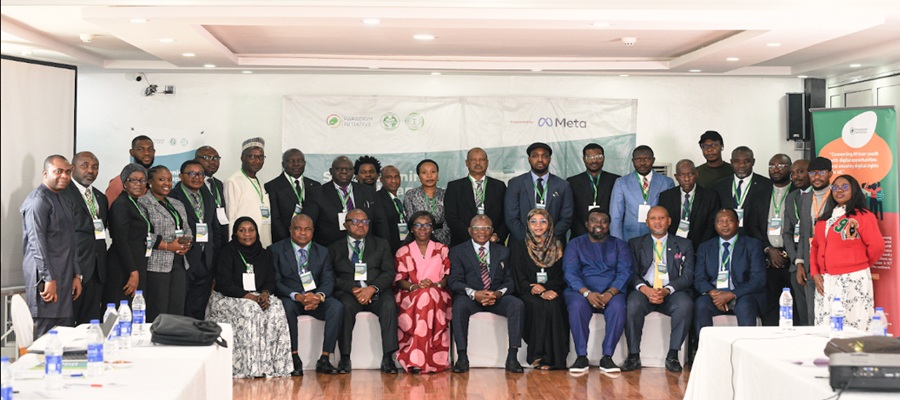
Paradigm Initiative (PIN), a pan-African digital rights and inclusion organisation, says it has engaged more than 1,300 stakeholders across 11 African countries through a series of forums, training sessions and policy dialogues aimed at strengthening digital rights, inclusion and online civic participation.

The organisation disclosed this in a statement, saying the engagements were carried out during the second quarter of the year through 26 programmes focused on election monitoring, judicial capacity building, digital literacy and policy development.
According to PIN, the initiative brought together policymakers, judges, lawyers, journalists, civil society organisations and community groups to promote a safer, more inclusive digital ecosystem across the continent.
The organisation said the programmes focused on safeguarding electoral integrity in Zambia, The Gambia and Ethiopia, while also strengthening the capacity of Nigeria’s judiciary on issues relating to Artificial Intelligence (AI), data privacy and digital evidence.
In partnership with Meta, PIN trained 35 judges in Lagos across two cohorts on privacy, data protection, AI and digital evidence.
It described the initiative as a significant step towards equipping Nigeria’s judicial officers to effectively handle legal disputes arising from an increasingly digital society.
The organisation also expanded its Digital Rights and Elections in Africa Meetings (DREAM) to Ethiopia, The Gambia and Zambia.
According to the statement, the programme equipped 110 civil society organisations, media professionals and election management bodies with skills to monitor digital rights violations and protect online civic spaces during election periods.
PIN further said its Digital Rights Academy (DRA) trained more than 100 lawyers, law students and digital rights advocates from Cameroon, the Republic of Congo, Ghana, Nigeria, Tanzania and Zimbabwe.
The academy focused on strengthening participants’ capacity in strategic litigation and promoting accountability for digital rights violations.
The organisation also hosted a Digital Policy Engagement Roundtable, bringing together 34 stakeholders, including organisations representing persons with disabilities, to discuss accessibility and inclusion in digital policy development.
It said Afrocities roundtables held in Nigeria and Tanzania attracted 80 participants who explored ways of improving informal workers’ access to digital social protection and financial services.
According to the statement, a ministerial roundtable in Zambia also aligned the country’s digital priorities with the World Summit on the Information Society (WSIS+20) review process.
PIN said it also implemented the Digital Rights and Inclusion Board Learning Experience (DRIBLE) Ambassadors Training in Cameroon, Nigeria and Senegal.
The programme reached 315 participants and strengthened their capacity to deliver digital rights education through experiential learning approaches.
The organisation said the training improved participants’ understanding of digital rights and increased interest in practical digital rights education across communities.
PIN also highlighted the successful hosting of the Digital Rights and Inclusion Forum 2026 (DRIF26) in Abidjan, Côte d’Ivoire.
The forum, themed “Building Inclusive and Resilient Digital Futures”, attracted 415 participants from more than 39 countries.
According to the organisation, the event brought together policymakers, civil society organisations, media professionals, academics, legal experts, technologists, human rights defenders and development partners to promote dialogue, partnerships and knowledge sharing on Africa’s digital future.
PIN said the engagements underscored the growing importance of collaborative efforts in advancing digital rights, promoting inclusion and strengthening digital governance across the continent

CAC to Sanction Companies with Incomplete Business Letters From August 1

BVN Enrollments Hit 69.55m- NIBSS

CBN Warns against Rejection of N100 Banknotes

Data Protection Industry Hits N16.3Bn in 3 Years- NDPC

NCC Seeks Cost-Based Pricing Framework for Ducts

NASENI Moves to Digitize CCB’s 5m Assets Declaration and Operations

Mobile Internet Gender Gap Widest in Africa – GSMA

Nigeria Launches FreeTV Nationwide

CANAL+ Partners Samsung to Pre-Load DStv Stream on New Samsung TVs In Nigeria, Other African Countries

CredibleVoteNG Opens Free Access to all Polling Units in Nigeria after INEC Demanded N1.Bn for Register




 General News2 days ago
IHS Nigeria, FCT-HSES Concludes Clean Cooking Energy Campaign “Project Breathe Clean Air” in Abuja

 News1 day ago
NRC, Ponzi Scheme Collapses Resulting Loss of Billions of Naira

 E-Business2 days ago
Kaspersky Transforms Threat Intelligence Reporting into an Interactive Content Hub

 News2 days ago
Microsoft to Lay Off 4,800 Workers

 Telecom2 days ago
Airtel Africa Cuts Diesel Dependence by 9.1m Litres

 Telecom2 days ago
A New Blueprint – How Strategic Collaboration is Rewriting the Narrative on Youth Drug Abuse

 Broadcasting2 days ago
NELFUND Investigates 34 Universities Over Students’ Missing Tuition Refunds

 News2 days ago
Access Bank, Fifth Chukker and UNICEF Renew Commitment to Expanding Educational Opportunities for Nigeria’s Most Vulnerable Children