

News
FG Floats N1trn Infra-Co to Tackle Infrastructure Deficit

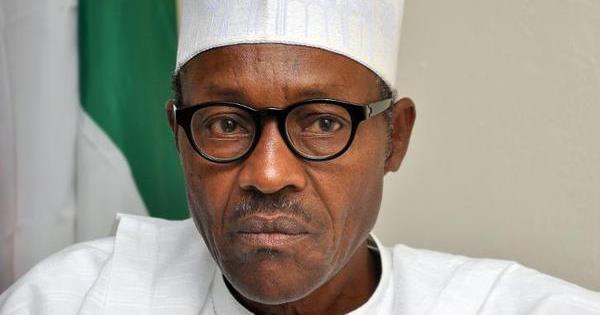
President Muhammadu Buhari has approved the establishment of a Public Private Partnership (PPP), styled Infrastructure company named Infra-Co with an initial seed capital of one trillion naira.

President Muhammadu Buhari
Mr Buhari has also asked Vice President Yemi Osinbajo to chair a Steering Committee tasked with setting up the company.
Laolu Akande, Mr Osinbajo’s spokesman, in a statement on Friday in Abuja, said it was envisaged that over time, the entity would grow up to N15 trillion in assets and capital.
Infra-Co will be one of the premier infrastructure finance entities in Africa and will be wholly dedicated to Nigeria’s infrastructure development.
The entity has been developed with concept designs from the National Economic Council (NEC) and the Central Bank of Nigeria (CBN).
The initial seed capital for the entity will come from the CBN, the Nigerian Sovereign Investment Authority (NSIA), and the Africa Finance Corporation.
The board of Infra-Co will be chaired by the Central Bank Governor and include the Managing Director of NSIA, and President of the Africa Finance Corporation.
Others in the board are representatives of the Nigerian Governors Forum, and the Ministry of Finance, Budget and National Planning.
The Board will also have three independent directors from the private sector.
To address infrastructure deficit, the Federal Government continues to explore innovative options, including through financing initiatives such as the Presidential Infrastructure Development Fund (PIDF) designed to cater for the 2nd Niger Bridge, the Abuja-Kaduna-Zaria-Kano Expressway, among others.
There is also the Road Infrastructure Development and Refurbishment Investment Tax Credit Scheme which is being used for the funding of the Bodo-Bonny Bridges and Road (with the Nigeria Liquefied Natural Gas, NLNG).
The scheme is also used for funding of the Apapa-Oshodi-Oworonshoki Expressway (with Dangote Group), among others.
Infra-Co will finance public asset development, rehabilitation and reconstruction as well as invest in cutting edge infrastructure projects for roads, rail, power and other key sectors.


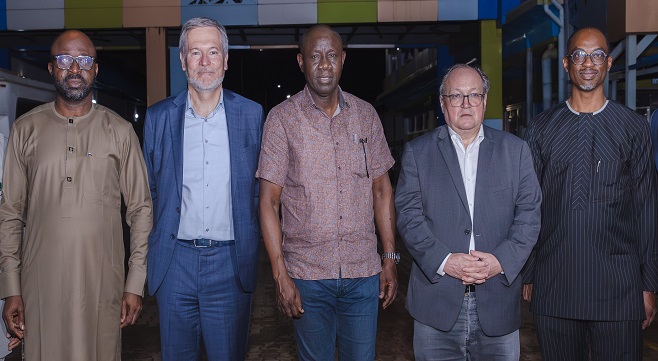
Fidson Healthcare Plc has commended the Bank of Industry (BoI) for its pivotal role in facilitating concessionary financing that is accelerating the growth of Nigeria’s pharmaceutical manufacturing sector, following a high-level visit by delegations from the European Investment Bank (EIB) and BoI to the company’s state-of-the-art manufacturing facility in Sango-Ota, Ogun State.

The visit formed part of the implementation of the recently signed €50 million healthcare financing partnership between EIB Global and BoI, designed to strengthen local production of medicines, vaccines, diagnostics, and other critical healthcare products in Nigeria.
As Nigeria’s leading development finance institution, BoI has championed efforts to unlock long-term capital for strategic sectors, including healthcare manufacturing, in line with national industrialisation and health security objectives.
Speaking on behalf of the Managing Director/Chief Executive Officer of the Bank of Industry, Dr. Olasupo Olusi, Rotimi Akinde, Executive Director, Corporate Finance, Sustainability and Investments, highlighted the Bank’s longstanding support for Fidson and the strategic importance of the healthcare sector.
“Fidson Healthcare Plc is one of Nigeria’s foremost pharmaceutical companies and has maintained a robust relationship with BoI since 2010. Over the years, we have provided concessionary financing to support its expansion plans, and the company has grown significantly as a result of that partnership,” he said.
Akinde noted that healthcare manufacturing remains a key pillar of BoI’s corporate strategy and aligns strongly with Nigeria’s economic development priorities.
The EIB-backed facility is part of broader efforts under the European Union’s Global Gateway initiative to strengthen healthcare manufacturing ecosystems across Africa and reduce dependence on imported medical products.
Speaking on the significance of the intervention, Ambroise Fayolle, Vice-President of the European Investment Bank, described Fidson as one of the first beneficiaries of the EIB-BoI healthcare financing programme.
“A few months after signing the €50 million health financing agreement with the Bank of Industry, I am pleased to visit one of the first beneficiaries of this credit line, Fidson Healthcare, one of the leading pharmaceutical manufacturers in Nigeria,” Fayolle said.
He noted that the partnership reflects EIB’s commitment to supporting local production capacity, strengthening healthcare resilience and expanding access to affordable, high-quality medicines across the continent.
For Fidson Healthcare, the financing represents another milestone in a growth journey that has been closely supported by BoI over the last decade and a half.
According to Biola Adebayo, Managing Director and Chief Executive Officer of Fidson Healthcare Plc, the company’s relationship with BoI has been instrumental in transforming it into one of Africa’s largest pharmaceutical manufacturing platforms.
“Our relationship with BoI dates back to 2010 when the Bank recognised our growth aspirations and began providing concessionary funding. Since then, our trajectory has remained firmly upward,” Adebayo said.
“From a workforce of about 250 employees in 2010, we have grown to approximately 1,800 employees today. BoI’s support also made it possible for us to invest in green manufacturing and environmentally friendly production processes.”
Adebayo noted that Fidson now operates one of the largest pharmaceutical manufacturing facilities in Sub-Saharan Africa and continues to invest aggressively in quality assurance and global standards.
“We are not only home to one of the largest pharmaceutical manufacturing facilities in Nigeria but also one of the most advanced in Sub-Saharan Africa. This is the only facility where you will find ten dosage forms in operation, and we are currently undergoing four medicine prequalification processes simultaneously. With EIB and BoI on our side, we believe we can achieve our ambitious vision for healthcare manufacturing and contribute meaningfully to Nigeria’s health security and industrial development,” he said.
The EIB-BoI healthcare financing programme is expected to provide long-term patient capital to pharmaceutical manufacturers and other healthcare enterprises, enabling them to scale operations, improve quality standards, expand employment, and strengthen domestic value chains.
The facility is aligned with Nigeria’s healthcare and industrialisation priorities, the African Union’s target of producing 60 per cent of vaccines and essential medicines locally by 2040, and broader efforts to position Nigeria as a manufacturing hub for healthcare products across West Africa.

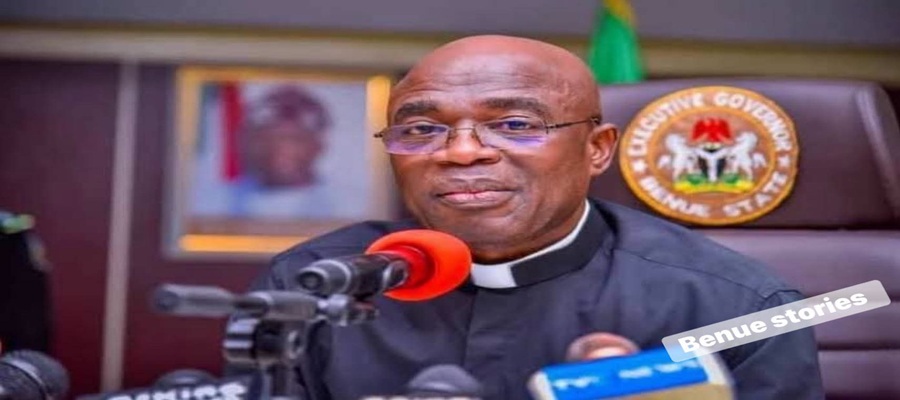
A commission of inquiry set up by the Benue State Government to investigate the state’s income and expenditure between 2015 and 2023 has uncovered N139.8 billion in unaccounted public funds.

Governor Hyacinth Alia
Justice Jubril Idrisu (retd), chairman of the Benue State Income and Expenditure Commission of Inquiry, disclosed this at the weekend 2026 while presenting the commission’s report to Governor Hyacinth Alia at the Government House, Makurdi.
Idrisu said the commission’s findings showed that the state generated more than N826.5 billion in revenue during the period under review, while expenditure stood at about N683.4 billion.
According to him, the records revealed an unaccounted balance of approximately N139.8 billion, which the commission recommended should be recovered from persons found responsible.
“The commission’s findings, contained in two volumes, revealed significant concerns in the management of public finances during the period under review.
“Records showed that the state generated over N826.5 billion in revenue, while expenditure stood at about N683.4 billion, leaving an unaccounted balance of approximately N139.8 billion,” he said.
The retired jurist explained that the commission, inaugurated in June 2025, was mandated to examine the income and expenditure of the immediate past administration and the 23 local government councils between May 29, 2015, and May 28, 2023.
He said the panel also uncovered questionable loan transactions involving some financial institutions and local government councils, including repayments that far exceeded the original loan amounts without adequate documentation.
Idrisu further disclosed that investigators identified irregular transfers of public funds to certain financial institutions without sufficient records or proof of legitimacy, recommending appropriate recoveries where necessary.
He stressed the need for stronger financial controls, including proper authorisation of online transactions by designated officers and an end to the practice of issuing blank pre-signed mandates.
According to him, such practices undermine transparency and accountability in public financial management.
Receiving the report, Alia reaffirmed his administration’s commitment to transparency, accountability and institutional reforms.
Represented by his deputy, Dr Sam Ode, Alia commended the panel for their courage and painstaking assignment undertaken in the public interest.
He said Justice Idrisu was selected to head the commission because of his reputation as a fearless jurist and a man of integrity.
He expressed confidence that implementation of the commission’s recommendations would strengthen institutions, curb the misuse of public resources and ensure accountability for those found culpable.
He acknowledged the challenges encountered by the commission, including difficulties in obtaining information and cooperation from some individuals and institutions, but commended members for their resilience and dedication.
He also apologised for logistical difficulties experienced by the commission, noting that the present administration inherited serious institutional and administrative challenges at the inception of its tenure.
He assured the panel that its work would serve as a critical reference point in the state’s efforts to rebuild public confidence and restore accountability in governance.
The governor added that future generations would look back at the report as evidence of the commission’s contribution to strengthening transparency and responsible management of public resources in Benue.
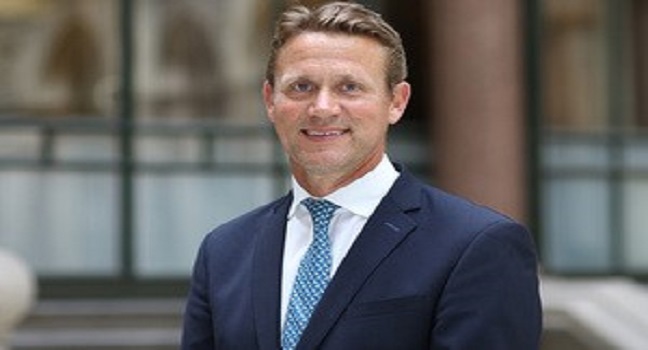
The UK Government has announced the appointment of Mr Peter Vowles as the next British High Commissioner to the Federal Republic of Nigeria.

Mr Vowles succeeds Dr Richard Montgomery CMG and is expected to take up his post in Abuja in September 2026. Dr Montgomery remains in post until that time.
Mr Vowles brings extensive diplomatic and development experience to the role, having served as His Majesty’s Ambassador to Zimbabwe from 2023 to 2026 and previously as Ambassador to Myanmar from 2021 to 2022.
He has held senior leadership positions across the FCDO and its predecessor department DFID, including as Transformation Director and Director for Asia, Caribbean and Overseas Territories.
Earlier in his career, Mr Vowles worked in international development across South Asia, Central Africa and East Africa, including postings in Bangladesh, India, the Democratic Republic of Congo and Kenya. He began his career in Zimbabwe, where he worked in education and development.
Peter Vowles said: “I am honoured to be appointed as British High Commissioner to Nigeria. Nigeria is a country of immense importance to the United Kingdom, and I look forward to working closely with Nigerian partners to strengthen our relationship across trade, development and security.”

Galaxy Backbone @ 20, Unveils New Identity

ALTON Backs CBN on Local Data Hosting Rule for Banks, Fintechs

MTN Nigeria Commits to Ethical Conduct with IFRS S1, S2 Compliance

NDPC to Review Data Law to Address AI, Privacy Concerns

FG Moves to End Double Taxation

CBN Extends PoS Geo-Fencing Enforcement Deadline to August 2026

London Strengthens Global Investment Ties with Africa @ First Ever London-Africa Business Summit

FG Targets Alleged N3tn Capital Flight, Opens Airtime Credit Market to Nigerian Fintechs

Japan, UNESCO Boost Digital Learning in 15 CoEs with Donation of ICT Equipment

African Electric Vehicle Platform Raises $215m to Scale Electric Mobility in Nigeria, Others




 Telecom3 days ago
TikTok, ICC Gather Nigeria’s Entrepreneurs to Drive Small Business Growth and Digital Transformation

 E-Business3 days ago
Payaza Launches AI-powered Storefront Platform to Drive Cross-border Commerce

 Telecom3 days ago
Nigeria Moves to End Solar Imports as NASENI, REA Seal Major Renewable Energy Deal

 Telecom3 days ago
How a New NITDA-TikTok Partnership Could Transform Thousands of Nigerian Businesses

 E-Business3 days ago
FG Bans Use of Gmail, Other Personal Emails for Civil Service Operations

 E-Financial3 days ago
NAICOM’s 18 Months Management Spill @ African Alliance Ends

 General News3 days ago
Indwelt Studios Seeks Increased Awareness @ World Sickle Cell Day

 E-Financial3 days ago
Standard Bank Targets $15.4b SME Growth in Nigeria, Others with Trade Expansion Drive