

E-Financial
Emefiele Tasks Bank CEOs, Others to Reset Economy

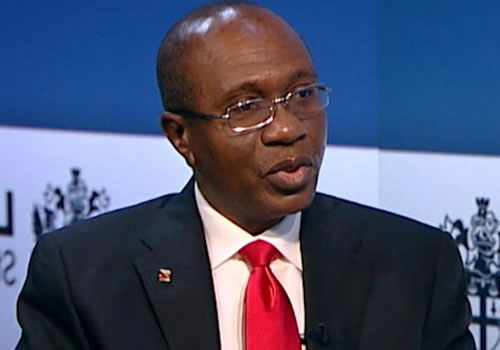
Mr Godwin Emefiele, Governor of the Central Bank of Nigeria (CBN) has urged Bank CEOs and other stakeholders to work together to reset the Nigerian economy to achieve massive growth.

Emefiele gave the advice at a one-day Special Summit on the Economy, organised by the Vanguard Newspaper in collaboration with CBN and Chief Executives of Banks, on Friday in Lagos.
The theme of the summit was, “How to overcome the Pitfalls of Recession: Bankers perspective on an Enduring National Growth Path”.
“Nigeria has grown as far as 5 per cent in the past and I think we have an opportunity now to reset our economy and begin to see massive growth.
“It is, therefore, imperative that we do all we can in 2021 to ensure that we build on the positive momentum and strengthen our efforts at stimulating growth.

“Let me repeat, with the discovery and deployment of vaccines, 2021 will be a year of massive global recovery and Nigeria must not be left out.
“Thank God key players in the banking industry are here, whether it be by force, they will have to participate in this journey,” Emefiele said.
According to him, in order to drive and sustain this recovery, there is need to engage in sustaining the accommodative fiscal and monetary policy measures aimed at improving access to finance to households and businesses.
The apex bank governor said there was also need to prevent a resurgence of COVID-19 cases by ensuring that a significant number of the population was properly vaccinated.
He said the Information and Communications Technology (ICT) was another sector which had emerged as a significant source of resilience in mitigating the impact of COVID-19 on the economy.
Emefiele encouraged banks and other financial institutions to leverage ICT in improving penetration of financial services to households and SMES, while supporting productivity across key sectors of the country.
He added that foreign exchange inflows into the country must also be improved so as to increase non-oil export earnings.
According to Emefiele, with the decline in revenues due to federal and state government, alternative ways of funding infrastructure are critical to generating sustained growth of the economy.
He said: “As we are all aware, a well-built infrastructure system can have a multiplier effect on growth by enabling the expansion of business activities in the country.
“That is why I am delighted that Mr President has continued to give all the necessary approvals and support to establish the Infrastructure Corporation of Nigeria Limited.
“InfraCorp will be co-owned by the CBN, the African Finance Corporation and the Nigerian Sovereign Investment Authority and would become fully operational by the second quarter of 2021.
“This vehicle would enable the use of private and public capital to support infrastructure investment that will have a multiplier effect on growth across critical sectors,” he said.
The Chairman of Vanguard Newspapers, Mr Sam Amuka, said the deficit areas that needed urgent attention in the economy of Nigeria were legion.
“Apart from addressing the infrastructure deficits like roads, transportation, health Agriculture etc, which is put at 3 trillion dollars, we also need to stimulate employment, increase in capacity of manufacturers, encourage industries and stimulate growth in all sectors,” he said.
Amuka was represented by the Managing Director of Vanguard, Mr Gbenga Adefaye.
(NAN)


Nigeria Deposit Insurance Corporation (NDIC) has begun paying insured deposits to customers of the 46 recently failed microfinance banks.

Mr Thompson Sunday, managing director and chief executive, NDIC, disclosed this in an interview with the News Agency of Nigeria (NAN) in Abuja.
The interview took place on the sidelines of the International Association of Deposit Insurers Africa Regional Committee meeting.
Sunday said the corporation was using the Nigeria Inter-Bank Settlement System (NIBBS) and customers’ Bank Verification Numbers (BVN) for the payments.
He said the NDIC had traced depositors’ alternative bank accounts and credited them directly without requiring physical visits.
He advised depositors without BVNs to visit the nearest NDIC zonal office for verification and payment processing
“The CBN revoked the licences of the 46 microfinance banks on July 1, 2026,” he said.
He said the NDIC automatically became the provisional liquidator after the revocation, in line with the law.
Sunday said the corporation had commenced payment of the insured maximum deposit of N2 million to eligible customers.
He explained that further payments would depend on the recovery of the failed banks’ assets and outstanding debts.
He said proceeds realised from recoveries would be distributed as liquidation dividends to eligible depositors.
Sunday cited Heritage Bank, Aso Savings and Union Homes as examples of the NDIC’s prompt reimbursement efforts.
He said insured depositors of Heritage Bank were paid within four days of the revocation of its licence.
He added that customers of Aso Savings and Union Homes received payments within 72 hours.
“The law allows us 30 days, but we are working to surpass our previous records,” he said.
The Central Bank of Nigeria (CBN) revoked the banks’ licences for failing to meet regulatory requirements for continued operations.
The apex bank said the action was aimed at protecting depositors, strengthening financial stability and ensuring regulatory compliance.

Mr Taiwo Oyedele, minister of Finance and Coordinating Minister of the Economy, has warned that fear, rumours and misinformation could trigger instability in the banking sector if not properly managed.

Mr Taiwo Oyedele, minister of Finance and Coordinating Minister of the Economy
Oyedele gave the warning in Abuja at the 2026 International Association of Deposit Insurers (IADI) Africa Regional Committee (ARC) Annual Meeting and Workshop, with the theme: “Safeguarding Stability: Public Awareness and Crisis Readiness for a Stronger Future.”
The minister said public confidence remained the foundation of every stable financial system, stressing that panic triggered by false information could create liquidity challenges even for financially sound institutions.
According to him, “there can be no economic growth without financial system stability, and there can be no financial stability without public trust.”
He explained that in the digital age, misinformation could spread rapidly across social media platforms, causing depositors to react out of fear.
“Public trust is fragile. In the digital age, rumours and misinformation can spread across social platforms in seconds, creating liquidity shocks even for solvent institutions,” Oyedele said.
He stressed that building public awareness should not be viewed as a public relations activity, but as a key risk management strategy capable of protecting depositors and strengthening the financial system.
Oyedele noted that deposit insurance had evolved beyond a mechanism for handling bank failures, describing it as a strategic tool for promoting confidence and economic stability.
He said effective crisis preparedness required clear frameworks, communication channels, simulation exercises and coordination among financial sector regulators before emergencies occur.
“Preparedness is not an event, it is a culture,” he said, adding that the strongest crisis response was one that prevented panic from occurring in the first place.
Highlighting Nigeria’s financial sector reforms, the minister said the country’s banking recapitalisation exercise, concluded in March 2026, strengthened the resilience of banks.
He disclosed that 33 out of Nigeria’s 37 banks met the new capital requirements, raising a combined N4.65 trillion in fresh capital, with over 70 per cent sourced from domestic investors.
Oyedele said a better-capitalised banking system would be better positioned to absorb shocks, sustain lending and reduce pressure on the deposit insurance fund.
He also pointed to Nigeria’s removal from the Financial Action Task Force (FATF) grey list in October 2025 as another milestone that strengthened confidence in the country’s financial system.
Also speaking, Mr Olayemi Cardoso, governor, Central Bank of Nigeria (CBN), said public awareness and crisis preparedness were central to maintaining financial stability.
Represented by Solaja Olayemi, director, Other Financial Institutions Supervision Department represented, Cardoso said financial systems globally were undergoing rapid transformation due to technological innovation, digital finance, changing consumer behaviour and increasing market interconnectedness.
According to him, while these developments create opportunities, they also introduce new risks that require stronger cooperation among financial safety-net institutions.
The CBN boss warned that misinformation could spread quickly through digital channels, amplifying depositor reactions and creating potential threats to financial stability.
He added that institutions must continuously strengthen crisis management frameworks, operational resilience and coordination mechanisms to respond effectively to emerging challenges.
The apex bank governor also highlighted the impact of Nigeria’s banking sector recapitalisation policy, saying stronger capital buffers would reduce the likelihood of bank failures and reinforce depositor confidence.
“No single institution can safeguard financial stability in isolation. It is through the coherence and complementarity of this institutional relationship that Nigeria’s financial safety net derives its strength,” he noted.
Earlier, Mr Thompson Sunday, managing director/chief executive officer, Nigeria Deposit Insurance Corporation (NDIC), said confidence remained the most valuable asset in any financial system.
The NDIC boss said trust could take years to build but could be lost quickly if stakeholders perceived uncertainty or instability. He said deposit insurers must ensure that the public understands and trusts existing protection frameworks during both normal periods and times of crisis.
He noted that the 2023 global banking turmoil highlighted the need for institutions to invest in crisis simulation exercises, contingency planning and effective communication strategies.
According to him, the NDIC has continued to strengthen its operational readiness through improved depositor reimbursement systems, public awareness initiatives and enhanced crisis management capabilities.
European Union (EU) has warned the public against a fraudulent document circulating online which falsely claims that the bloc, in collaboration with the World Bank, is offering compensation to individuals whose funds are allegedly trapped in banks and financial institutions across West Africa.

In a statement issued on Wednesday in Abuja, the EU Delegation to Nigeria and ECOWAS described the purported compensation programme as a scam, stressing that neither the European Union nor the World Bank is involved in any such initiative.
The fake document, fraudulently attributed to Thérèse Blanchet, secretary-general of the Council of the European Union, claimed that a special EU-World Bank recovery programme has been established to compensate citizens of Europe and other countries whose legally transferred funds were allegedly withheld by banks in the region.
It also falsely stated that the EU Ambassador to Nigeria and ECOWAS has been mandated to supervise the compensation exercise and directs potential claimants to contact him for processing.
However, the EU categorically dismissed the claims, describing every aspect of the document as fabricated.
“The document in its entirety is a scam. The information and claims contained therein are false. The European Union is neither aware of any such bogus programme nor part of it,” the Delegation stated.
The EU further disclosed that the email addresses and telephone numbers listed in the fraudulent document, purportedly belonging to Ms. Blanchet and Ambassador Gautier Mignot, EU Ambassador to Nigeria and ECOWAS, , are fake and are being used by fraudsters to deceive unsuspecting victims.
The Delegation urged members of the public to ignore the fraudulent claims and avoid engaging with anyone promoting the scheme.
It emphasized that all official announcements from the European Union Delegation to Nigeria and ECOWAS are published exclusively through its official website and verified social media platforms.
The warning comes amid increasing cases of cyber-enabled financial fraud in which criminal syndicates impersonate international organisations, government institutions and senior officials to lure victims into paying fictitious processing fees or divulging sensitive personal and financial information.
The EU reiterated its commitment to combating fraud and misinformation while urging citizens to remain vigilant against scams exploiting the names and identities of reputable international institutions.

NDIC Begins Payment to Depositors of 46 Failed Microfinance Banks

Telcos Seek Clear Regulatory Framework on Airtime Credit Services

FG Says Rumours, Fear, Can Crash Banks

MTN Warns Customers against Fake Promo

EU Debunks Fake Compensation Scheme Targeting West African Bank Customers

NRC, Ponzi Scheme Collapses Resulting Loss of Billions of Naira

NASENI Moves to Digitize CCB’s 5m Assets Declaration and Operations

Lebara Nigeria Launches Lebara Play, Africa’s First Telecom-Owned Micro-Drama Platform

Tokenization, Blockchain Technology will Transform Financial Institutions – IMF

EFCC Busts NIS Visa Overstay Racket, Uncovers N700m in an Account




 News2 days ago
YEDC Warns Customers, Says 20 Percent Electricity Bonus is Scam

 News2 days ago
PFIPC Probe: Dollar, Pounds Accounts of Fake Agency Inactive – CBN

 Broadcasting2 days ago
NBC, INEC, Plan Joint Broadcast Monitoring Framework ahead of 2027 Elections

 News2 days ago
STEM Africa Fest to Nurture Nigeria’s Future Innovators

 E-Financial2 days ago
No Going Back on July 31 Deadline for Insurance Firms’ Recapitalisation – NAICOM

 E-Business2 days ago
Jumia Nigeria Expands Flexible Payment Options with Klump Partnership

 E-Business2 days ago
Lagos Unveils N10m Single-digit Loan Scheme for MSMEs

 E-Financial2 days ago
Court Affirms FCCPC’s Power to Regulate Digital Lending