

Telecom
MTN Releases Result of Financial Year Ended 31 December 2020 with N298.9 Billion PBT, Up by 2.6%


MTN Nigeria on Sunday released its audited results for the financial year ended 31 December 2020, with Profit before tax (PBT) growing by 2.6% to N298.9 billion, active data users increased by 7.4 million to 32.6 million and Mobile subscribers increased by 12.2 million to 76.5 million.

Ferdi Moolman, ceo, MTN Nigeria, speaking about the report, said: “2020 was a challenging year for all. The unprecedented disruption that the COVID-19 pandemic caused the businesses and people we serve, challenged us in new and demanding ways.
“The impact continues to evolve. Adoption of our data and digital services accelerated as lockdowns and gathering restrictions were imposed, and work-from-home became the norm for many.
“Our thoughts and prayers are with those who have lost loved ones due to the pandemic; the toll on lives and livelihoods globally has been profound. To date, Nigeria has recorded 155,417 confirmed COVID-19 cases and 1,905 related deaths, according to the Nigeria Centre for Disease Control (NCDC).
“MTN Nigeria has also been directly impacted by the pandemic, with 62 employees diagnosed with COVID-19 and 46 recoveries. Sadly, one of our employees succumbed to the virus.
“Our employees adapted quickly to working remotely to ensure that our customers remained connected. I am incredibly proud that we were able to meet the challenges faced in 2020, by pulling together, working closely with the government and our regulators, and understanding our customers’ evolving needs”.
The report reads in part, As we navigated the fallout of the pandemic, adapting our processes and structures to the new realities, we acted swiftly to support the national response in a holistic way. This was encapsulated in our Y’ello Hope initiatives through which we provided support to our broad base of stakeholders to the value of approximately N25 billion.
We provided free-to-access services (including SMS and data) to the most vulnerable, supported the acquisition of essential medical supplies (tests and personal protective equipment), and joined the Coalition Against COVID-19 (CACOVID) that drove multiple initiatives, including building isolation centres across the country. We also paid our taxes early in support of government’s ongoing efforts. In January 2021, MTN Group partnered with the African Union contributing US$25 million to their COVID-19 vaccination programme. MTN Nigeria is pleased to play its part in this initiative, through which Nigeria will receive 1.4 million vaccine doses for the benefit of health workers.
In addition, we committed marketing resources to our #WearItForMe campaign to help create awareness around wearing masks, and our REVV support programme for Micro, Small and Medium Enterprises (MSME) helped them navigate the new digital reality.
Our performance demonstrated the strong operational execution and resilience in our business. We connected 12.2 million new customers to our network, bringing our total subscriptions to 76.5 million. The introduction of additional customer registration requirements and suspension of the sale and activation of new SIMs towards the end of the year affected subscriber growth. We remain committed to ensuring our subscriber records are updated with the National Identity Number (NIN), and continue working closely with the government, supporting their efforts by expanding capacity to provide NIN enrolment services across our customer interaction touchpoints.
Active data users increased by 7.4 million to 32.6 million, supported by growth in gross connections and the expansion of our 4G network. Our mobile money (MoMo) business also continued to accelerate with a 269.2% increase in the number of registered agents to over 395,000 and 4.7 million active subscribers from approximately 553,000 in 2019.
Service revenue grew by 14.7%, in line with our medium-term targets, driven mainly by voice and data revenue. Voice revenue growth was 5.9%, and although this was subdued in Q2 due to COVID-19 induced restrictions, we saw a pickup in momentum into H2. Data revenue rose by 51.2%, with increased data usage and traffic. To accommodate this and enhance service quality, we focused on capacity upgrades and 4G population coverage, while expanding our investments in rural connectivity. Our 4G network now covers 60.1% of the population, up from 43.8% in 2019.
EBITDA rose by 9.7%, supported by service revenue growth. However, the EBITDA margin declined by 2.5pp to 50.9%. This was mainly due to increased operating expenses, arising from the rollout of new sites and the impact of Naira depreciation, affecting in particular the costs of our lease contracts. Despite the increase in costs, we recorded an improvement in our bottom-line earnings, with profit before tax (PBT) and profit after tax (PAT) increasing by 2.6% and 0.9% respectively.
In line with our dividend policy, the board has proposed a final dividend of N5.90 kobo per share to be paid out of distributable net income. This brings the total dividend for the year to N9.40 kobo per share, representing an increase of 18.7%.
I thank the Board, Management, and staff of MTN Nigeria for the support given to me and the opportunity to serve in Nigeria as I complete my tenure as CEO of MTN Nigeria and assume a new role as MTN Group Chief Risk Officer. Effective 1 March 2021, Karl Toriola will take over as the CEO. I wish Karl and his new team the very best.”
Operational review
We made considerable progress in growing the base for our business, connecting 12.2 million new subscribers to access communication services. The growth in our subscriber base provided support for voice revenue, which accounted for 67.1% of service revenue and rose by 5.9%, with an acceleration in growth to 8.9% YoY in H2. This was enabled by our expanded customer acquisition touchpoints, rural telephony initiatives and revamped acquisition offers. The suspension of new SIM registration in mid-December did not have a significant impact on voice revenue as we saw an increased level of activity from the existing base.
Data revenue maintained the positive momentum from Q2, prompted by the COVID-19 lockdowns, rising by 51.2%. The performance in data was led by a combination of increased subscribers, usage (MB per user) and ultimately traffic, supported by increased network capacity and 4G penetration. Data traffic rose by 126.5% and average usage by 64.0%. We added approximately 8.2 million new smartphones to the network, bringing smartphone penetration to 45.9% of our base, up from 41.9% in 2019.
Fintech revenue rose by 27.3%, boosted by MTN Xtratime, our airtime lending service. We expanded our MoMo agent network with the addition of over 280,000 registered agents during the year. This was achieved as we continued to convert our traditional airtime agents in line with our one distribution model. Our fintech subscribers increased by more than eight times to 4.7 million, driving higher transaction volumes of over 51.5 million during the year and core fintech revenue growth of 28.0%.
The uptake of our digital business continued to gain traction with the revamp of our products and services, improved customer journey and increase in active user base. As a result, digital revenue recorded growth of 107.2%, entrenching the pleasing structural turnaround in the business. In H1, we redefined how we account for the active user base to capture unique paid subscriptions, and we have seen this number grow by 75% to 2.8 million from 1.6 million in H1. This was driven mainly by subscriptions for ayoba, our instant messaging platform, which rose by 120.9% to 1.4 million.
Enterprise revenue increased by 1.5%, supported by growth in revenue from devices and fixed connectivity. The economic impact of the COVID-19 lockdown, particularly in Q2, led to a decline in the uptake of our products and services by the businesses we support. We are, however, encouraged by the recovery that occurred in H2 as restrictions eased and economic activity began to improve. We anticipate further uplift in enterprise revenue once the USSD pricing dispute is resolved and we recover outstanding fees from the banks. Our enterprise business includes revenue from mobile and fixed connectivity, cloud and ICT solutions, and devices. It cuts across voice, data and digital services for SMEs, the public sector and large enterprise customers.
Capital expenditure (capex) in the year was N298.6 billion, up 19.4%. Excluding right of use assets, capex was up 15.2% to N240.1 billion. We accelerated site rollout in H2 following a slowdown in H1 due to foreign exchange paucity and port congestion. As a result and in line with our guidance, we were able to increase our 4G population coverage to 60.1% with the delivery of 5,724 sites during the year, of which 74% are 4G sites.
We expanded the scope of our service agreement with IHS Holding Limited (IHS) and amended the currency conversion provision for tower services in view of the long-term benefits. This led to the movement of the reference rate for conversion to Naira, from the CBN’s official rate to the NAFEX rate. We reviewed the treatment of non-recoverable VAT on lease payments to account for it as an expense over the lease period. These, together with the effects of Naira depreciation, put upward pressure on lease rental costs in the period. In addition to these, the combined effect of the 2.5pp increase in value-added tax (VAT) and COVID-19-related costs led to a 27.2% increase in operating expenses with a knock-on effect on EBITDA margin.
EBITDA rose by 9.7% and the EBITDA margin was 50.9%. We delivered a healthy free cash flow of N387.1 billion, up 3.2%. Depreciation and amortisation rose by 11.7% because of exchange rate and VAT impacts, while net finance cost rose by 25.4% arising from higher borrowings and lower yields earned on our investments in government securities. As a result, we recorded a PBT growth of 2.6%. In H1, we issued a N100 billion commercial paper, which was oversubscribed, at a blended rate of 5.7% per annum. This allowed us to broaden our sources of funding and lower our overall cost of funding, which reduced by 3.3pp in 2020.
PAT and EPS each rose by 0.9%, reflecting an increase in taxation mainly due to lower investment allowance and exempt income.
COVID-19 and the impact on the business
The pandemic caused unprecedented disruption to businesses and impacted lives and livelihoods. Although the operating environment remains challenging, the easing of lockdown restrictions led to an improvement in economic activity and market conditions into H2. Our response to the pandemic and its impact can be categorised into four broad areas, namely social, commercial, network and supply chain as well as funding and liquidity considerations.
In terms of the social impact, we launched various initiatives to provide support for our people, customers and the various levels of government as part of our Y’ello Hope packages. We empowered our people to work remotely and implemented health measures and monitoring to ensure their safety and business continuity. We continue to provide welfare support to them through the MTN Global Staff Emergency Fund.
Our customers, particularly lower-income earners, benefitted from the free SMS initiative introduced in Q2. This provided customers with 300 free text messages for three months to ensure that they remained in touch with friends and family. Over 4.3 billion text messages were sent by more than 75% of our subscribers. We zero-rated access to a range of health and education sites, enabling our customers to access vital information at no cost to them. Fees for local money transfers via the MoMo Agent Network were waived for a month, during the lockdown, to support our customers.
We rolled out a number of interventions to support the thousands of small businesses that rely on us for connectivity. These included the relaxation of payment terms at the beginning of the crisis as well as designing and delivering the multi-faceted REVV programme. These initiatives were aimed at supporting MSMEs amid the economic disruptions resulting from the COVID-19 pandemic. Over 20,000 MSMEs registered for our masterclass sessions and we provided support for the 200 MSMEs (Y’ello 200) that emerged from the programme, helping them to adapt to a digital marketplace.
To support government’s efforts at combatting the pandemic, we donated N1 billion to CACOVID and delivered N250 million worth of personal protective equipment (PPE) to the Nigeria Centre for Disease Control (NCDC), through the MTN Nigeria Foundation. This is in addition to the logistical and communications support provided to the Nigerian Governors Forum, NCDC and State Governments. We made an early payment of our taxes ahead of established deadlines to support the Federal Inland Revenue Services’ (FIRS) revenue acceleration efforts.
From a commercial perspective, we saw encouraging trends in our traffic patterns as COVID-19 restrictions eased. Demand for voice services, which initially came under pressure in April 2020, has fully recovered and voice traffic reached new highs by Q4. Demand for data and digital services grew significantly as lockdowns were imposed and remained resilient at elevated levels due to shifts in consumer spending patterns. There was also an increased uptake of our fintech services with transaction volume in April 2020 rising by more than three times above the March 2020 level to 4.3 million, and the momentum has continued to increase.
In terms of network and supply chain, our immediate response when COVID-19 restrictions kicked in was to enhance network capacity to maintain service quality following an unprecedented surge in data traffic. We were only able to rollout a limited number of sites in Q2 due to the constraints on movement, paucity of foreign exchange and port congestion. However, we accelerated site rollouts in H2 as restrictions and logistical bottlenecks eased. As a result, we achieved a 60% 4G population coverage in 2020, which is in line with our target.
Our funding and liquidity remain well-managed, supported by strong cash flows and approved funding facilities. Our headroom to leverage is comfortably within banking covenants and is able to meet our operational, investment and financial requirements. The foreign currency exposure of our borrowings is within comfortable limits, with 94% of our debt in local currency, which positions our balance sheet well to withstand currency volatility. We plan to use the bond market to further diversify our funding sources and optimise funding costs, while mitigating exposure to market risks.
Update on new SIM registration directive
On 9 December 2020, the Nigerian Communications Commission (NCC) suspended the sale and activation of new SIMs, and on 15 December 2020 directed all operators to update SIM registration records with valid NINs with an initial deadline of 30 December 2020. While suspension of new subscriber acquisition continues, the deadline for NIN update has been extended to 6 April 2021 to accommodate logistical challenges.
We are collaborating with the NCC and National Identity Management Commission (NIMC) to ensure our subscriber records are updated, and we have made significant progress in this regard. To date, over 37.2 million subscribers have submitted their NINs, representing 48.7% of our subscriber base. We are working with NIMC to complete bulk verification of the NINs collected. This requires improved integration with the NIMC database, the development of which has reached an advanced stage.
To support the Federal Government’s effort to ensure that every Nigerian has a valid NIN, we have been granted a NIN enrolment licence and have commenced enrolment in 36 centres across the country. We are also working with NIMC and the Ministry of Communications and Digital Economy to expand our enrolment centres and provide an access point for as many Nigerian as possible. To this end, we have acquired over 15,000 enrolment devices, which are being configured for this purpose, and placed orders for additional ones.
The impact on service revenue of the new SIM activation suspension was minimal in Q4 2020, though, we anticipate that subscriber growth will be significantly impacted in Q1 2021 should it remain in place. In the near-term, we expect the service revenue impact of the suspension to be moderate as usage is primarily driven by active SIMs in our base.
Outlook
The operating environment remains challenging and uncertain due to the effects of the pandemic. We remain focused on the safety and wellbeing of our staff, customers and broader stakeholders, as well as mitigating supply chain challenges, while safeguarding our financial and liquidity position. While we continue to manage the attendant risks and support our stakeholders, however, we are also well placed to unlock the opportunities that have risen in the areas of financial inclusion along with the rising demand for connectivity and digitalisation. We continue to refine our strategy to make our operating model future-fit to adapt to a dynamic world for sustainable growth.
In view of the new directive on SIM registration, our immediate priority is to protect our base by collaborating with NIMC to drive NIN enrolment and ensure that our customers’ records are updated with NINs.
We remain focused on our MoMo business given the important role it plays in driving financial inclusion in the country. We continue to engage with the CBN regarding obtaining a Payment Service Bank (PSB) licence, which would help to accelerate this ambition of broadening financial participation and inclusion. In the meantime, we will continue to expand the agent network through our one distribution model, broaden our service offerings and drive the overall contribution of our core fintech business to service revenue.
We will fast track 4G sites rollout to further increase population coverage, while continuing to expand rural coverage. Although the availability of foreign exchange remains a constraint, we strive to minimise its impact on the business. We will sustain our drive for cost management across the business and strengthen our operations and financial position to unlock efficiency and support margins.



Nigerian Communications Commission (NCC) has said that it was strengthening collaboration with state governments and industry players to develop a transparent, cost-based pricing framework for sharing telecom ducts as part of efforts to speed up broadband expansion across Nigeria.

Ayuba Shuaibu, director of Policy, Competition and Economic Analysis, NCC, disclosed this at the Stakeholders’ Forum in Abuja.
Shuaibu said the initiative was designed to build consensus among all parties.
“The primary purpose of this forum is to ensure seamless synergy between the Commission and all stakeholders,” he said.
The director said the consultation was prompted by longstanding complaints over permits, levies and other charges imposed by different levels of government.
He said bringing together state commissioners, telecom operators, tower companies and representatives of the Nigeria Governors’ Forum had helped improve understanding of the issues.
“This engagement is a work in progress. We expect more input from stakeholders before presenting the outcome to the Nigeria Governors’ Forum,” he added.
Dr Helen Adeneye, commissioner for Innovation, Science and Technology, Kogi State. welcomed the consultation, saying Nigeria needs a harmonised policy that clearly defines the responsibilities of both the federal and state governments.
“We need a harmonised policy that allows states to collaborate better with telecom operators and creates a more business-friendly environment,” she said.
Dr Adeneye added that adopting the Dig-Once policy would establish a uniform pricing system and help resolve disputes over charges for telecom infrastructure deployment.
Chidi Ajuzie, chief executive officer, WTES Projects Limited, whose firm is conducting the consultancy study, said the proposed framework would introduce a common cost structure for duct sharing to support broadband investment and economic growth.
“The study is designed to create a uniform pricing model that will drive broadband growth, economic development and wider adoption across the country,” he said.
Ajuzie explained that the consultants had developed preliminary floor and ceiling prices to guide operators while allowing flexibility within the approved range.
He added that the recommendations remain open to industry input before the NCC finalises the framework.
The Dig-Once Policy is designed to reduce the cost and disruption of deploying broadband infrastructure by requiring fibre ducts to be installed whenever roads are constructed or rehabilitated.
The NCC is developing a cost-based pricing framework for sharing these ducts to promote fair pricing, reduce duplication of infrastructure and encourage investment.
The proposed model is expected to support the Federal Government’s broadband expansion targets while improving collaboration between telecom operators and state governments.
Telecom
MUSON Graduates Shine at 2026 Concert as MTN Foundation Celebrates 20 Years of Music Scholarships

Emeka Nwodike, acting director of the MUSON School of Music, conducted the institution’s graduating class in a grand finale performance, bringing the 2026 graduation concert to a memorable close. The concert took place on July 7 at the Shell Hall of the MUSON Centre, Onikan, Lagos.

The event celebrated students who successfully completed the MUSON Diploma Programme through the MTN Foundation Scholarship Programme.
The graduating students delivered a rich choral repertoire that reflected the breadth of their musical training, performing Italian Salad by Richard Genee, My Song by Eriks Esenvalds, Obi Dimkpa by Laz Ekwueme, and an ABBA Medley arranged by Goran Bejstam. Under the Acting Director’s baton, the choir demonstrated technical precision, vocal maturity and artistic expression before an audience of family members, music enthusiasts and industry stakeholders.
The concert formed part of the long-running partnership between the MTN Foundation and the Musical Society of Nigeria (MUSON), which has, since 2006, provided scholarships for hundreds of talented young Nigerians to receive formal music education through the MUSON Diploma School. The programme continues to serve as one of the country’s foremost platforms for developing professional musicians and strengthening Nigeria’s creative economy.
Speaking at the close of the concert, Nwodike expressed appreciation to the MTN Foundation for its sustained support of the scholarship programme over the past two decades. He also thanked the Director of the MUSON Centre, faculty members, mentors and other stakeholders whose dedication has contributed to the school’s continued success.
“For nearly 20 years, the MTN Foundation has remained a steadfast partner in our mission to nurture young musical talent. We are deeply grateful for that commitment. I also want to thank the Director of the MUSON Centre, our faculty, mentors and everyone whose dedication has helped the MUSON School of Music continue to grow and thrive. Their support has made this programme what it is today, and our graduates are a testament to that collective effort,” he said.
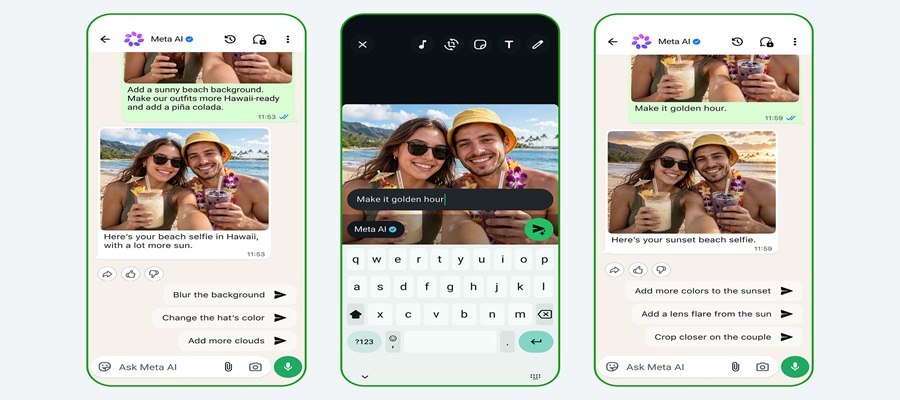
Meta is rolling out Muse Image, the companyʼs first image generation model from Meta Superintelligence Labs, now available in Meta AI . Muse Spark made Meta AI a smarter assistant; now, Muse Image acts as the creative partner that knows your world, making it easy to turn your ideas into high-quality visuals that you can download and share anywhere, including directly to your feed, story, or chat.

The model also powers new creative tools across Metaʼs apps. You can use more than 30 new AI-powered effects for Instagram Stories and generate images in your direct chats with Meta AI on WhatsApp — starting in limited countries with more locations on the way.
Simple Prompts, High-Quality Outputs
Whether you’re starting from scratch or working with an existing photo, you can describe what you want in simple, conversational language, and Meta AI handles the rest thanks to Muse Image. Ask it to mock up an image of you in front of a historical landmark, cleanly erase a photobomber from the background of a shot, or write a custom prompt to build a functional QR code. It will also render text cleanly inside your visuals, meaning you can ask for a how-to guide or a detailed infographic on a specific subject, and the text comes out legible and styled to match.
Suggested Presets to Help You Get Started
Sometimes the hardest part of creating is getting started. Meta AI now includes a presets panel with suggested prompts to help inspire you. One tap restores an old family photo, lets you see yourself with trending hairstyles, or reimagines you as a claymation character or a 16-bit video game hero. Whatever you create, itʼs easy to share with friends across Metaʼs apps so they can try the same preset on their own photos.
Shop Your Room Redesigns
You can also snap a photo of your room and ask Meta AI to redesign it with real products from the web or Facebook Marketplace. Suggest a style you love or ask Meta AI to pull from whatʼs trending to see what your space looks like with a full makeover.
An Intelligent Creative Partner
Muse Image doesn’t just build an image; it thinks through your prompt first. By pairing up with Muse Spark, the model takes multiple steps behind the scenes — planning its layout, looking up real-time web context, and intelligently blending multiple visual references at once. Whether you want to place your pet in a famous painting or combine a selfie with a vacation photo to create a custom postcard, Meta AI handles the complex reasoning for you so the final visual matches your vision perfectly.
Rooted in Your World
You can also @-mention Instagram accounts in the Meta AI app to bring specific Instagram profiles right into your images. Whether you want to design a custom event invitation, mock up a collaborative creative concept, or generate a personalized graphic, tagging a username lets Meta AI use public photos to build a visual thatʼs ready to post. You have control over how your content can be tagged for AI creation with an easy setting to turn this feature off at any time.
Edit Directly on the Photo
To make a change, just tap the markup icon on your creation to circle, sketch, or annotate edits right on top of the photo. Since Meta AI remembers the full context of your conversation, you can keep refining by swapping styles, adding elements, or tweaking details — all without starting from scratch.
Whatʼs Next
Soon, Meta will bring Muse Image to more countries and the places where people use Meta AI, including Facebook and Messenger, and additional surfaces on Instagram and WhatsApp. In the coming weeks, advertisers and agencies will be able to tap into Muse Image through Advantage+ creative.
Using Meta AI with Muse Image is free for everyday creation. For people who want to create even more, itʼs available as part of Metaʼs subscription plans.
Images are just the beginning. With Muse Video already in development, Meta is building entirely new ways for you to bring your ideas to life, getting one step closer to personal superintelligence.

CAC to Sanction Companies with Incomplete Business Letters From August 1

BVN Enrollments Hit 69.55m- NIBSS

CBN Warns against Rejection of N100 Banknotes

Data Protection Industry Hits N16.3Bn in 3 Years- NDPC

NCC Seeks Cost-Based Pricing Framework for Ducts

NASENI Moves to Digitize CCB’s 5m Assets Declaration and Operations

Mobile Internet Gender Gap Widest in Africa – GSMA

Nigeria Launches FreeTV Nationwide

CANAL+ Partners Samsung to Pre-Load DStv Stream on New Samsung TVs In Nigeria, Other African Countries

CredibleVoteNG Opens Free Access to all Polling Units in Nigeria after INEC Demanded N1.Bn for Register




 News1 day ago
NRC, Ponzi Scheme Collapses Resulting Loss of Billions of Naira

 General News2 days ago
IHS Nigeria, FCT-HSES Concludes Clean Cooking Energy Campaign “Project Breathe Clean Air” in Abuja

 E-Business2 days ago
Kaspersky Transforms Threat Intelligence Reporting into an Interactive Content Hub

 News2 days ago
Microsoft to Lay Off 4,800 Workers

 Broadcasting2 days ago
NELFUND Investigates 34 Universities Over Students’ Missing Tuition Refunds

 Telecom2 days ago
Airtel Africa Cuts Diesel Dependence by 9.1m Litres

 Telecom2 days ago
A New Blueprint – How Strategic Collaboration is Rewriting the Narrative on Youth Drug Abuse

 News2 days ago
Access Bank, Fifth Chukker and UNICEF Renew Commitment to Expanding Educational Opportunities for Nigeria’s Most Vulnerable Children