

General News
e-Commerce: Call to Rescue SMEs’ Data Genocide


By Dr. B. B. Usman
Many billions of data sets are entangled and suffocated in SMEs’ business value chain. This scenario is creating enormous problem to leveraging e-Commerce for economic development, provision of jobs and creation of wealth.

Post COVID-19 pandemic issueshave disclosed that,‘unless we consciously promote and empower e-Commerce in Nigeria, the consequences may result to the annihilation of SMEs’! Indeed, without a well-structured and resilience SME segment, there may be no viable trade and commerce platform for constructive intervention toattain our sustainable development goals.Gains from e-Commerce can write the cheque to significantly assist in revivingour dying SMEs and reduce youth employment in Nigeria.
This is possible, if we can intelligently provide the framework to secure and analyse related data sets that gets missing in action by policy makers each day.The phenomenal data genocide observed in our trade-ecosystem, if rescued, can create millionsof jobs; as well as value chains of wealth for the country. It will also renew lost hope for the disillusioned youths,their families and indeed contribute positively to the GDP.This calls for a proactive National e-Commerce policy and devoted strategies to energize indigenous business empires.

Unarguably, the biggest problem we face in Nigeria/Africa is leveraging evidence-based data for accelerated development and economic advancement. For want of an equitable expression, with respect to e-Commerce analytics; it appears we are annihilating data required for the growth and security of life.In other words, our concern should now be focused on exploring if we are not facing e-Commerce data genocide in Africa?
It is significant to note that data genocide contributes to catastrophic e-Commerce poverty in Nigeria/Africa.This is against the background of the energy status in the production and development processes of the wealth creation value-chain. For example, reliable data informs that the total energy consumption required for the advancement of education, shelter, trade and security in Africa is equal to the total power generation and consumption volume in the Republic of Spain!
Therefore, this is the right time to empower mega e-Commerce companies in Nigeria.
To achieve this, the smart economic approach is to urgently start trade recovery investment to rescue millions of small-scale SMEs currently on life support and dying out there. In the United States, for example, over 480,000 of small-scale enterprises have gone under! SMEs represent the economic backbone of mega enterprises and sustainable mechanism for effective governance and national security-of-things. Reliable estimatesindicate that if an e-Commerce outfit such as Konga in the Zinox Group and others are empowered to create physicalmarket distribution presence in the 36 States; the stimulant intervention will energise the creation of 20,000 new small-scale enterprises with capabilities to create over five million jobs and related activities in the trade, commerce and logistics industries. In a span of 24 calendar months; e-Commerce enabled solar energy to millions of homes will produce three million employment avenues for Nigeria.
Post-pandemic reality has now cleared the air that the world can now anticipate a 276.9% increase in worldwide ecommerce sales over the most-recently tracked period (cumulative data). However, many business owners and investors are vigorously scratching their heads and strategizing on how to participate and scale into that magic number adding up to $4.7 trillion; where e-Commerce has a sizeable chunk in the market playbook.How can Nigeria’s e-Commerce domain benefit from the emerging market?
Today, the term going global has become almost meaningless. The irony is that all nations, business and everything in-between are dreaming of going global. Whereas, this is an illusion, because the world is intertwined and already gone global. The new challenge is that some geographical spheres are dreaming of rebuilding traditional trade fences – domestically!Nevertheless, the Harvard Business Review recently informed that:“Business leaders are scrambling to adjust to a world few imagined possible just a year ago. The myth of a borderless world has come crashing down. Traditional pillars of open markets — the United States and the UK — are wobbling, and China is positioning itself as globalization’s staunchest defender.”
Currently, the majority of the world’s entrepreneurs/CEOs recognize that Big-Data holds the key to discovering and recovering the abundant wealth in Africa. But without evidence-based predictive analysis, the e-Commerce benefits will perhaps remain a pipe dream. Now, how can we propel African e-Commerce to the next level and at the same time limiting the risks?
Historically, Africa had been a mega trading continent. And to date, Africa remains a trading destination continent – reminding us about Mansa Musa of old Mali Empire and the gold riches. The recorded fame of Musa I. (c. 1280 – c. 1337), or Mansa Musa, apart from his kingship background, was entirely due to his ingenuity in trade and commerce. Little wonder he has been described as the wealthiest individual in all human history.But today the continent has been inundated with several challenges – limiting her trade development potential and innovation. Visibly noticed as central to Africa’s development challenges are technology and related trade and commerce infrastructure. The good news today is, the same technology phenomena infested by digital transformation is igniting Africa with e-Commerce revolution.
It is evident that, this revolution is happening at the speed of thought while Africa’s data rate of response to digital commerce is better described as unacceptable snail speed that leads to nothingness. Ironically, the continent still harbours a major chunk of the global wealth. The resilience to conquer those challenges lie on the capability and mastery of e-Commerce delivery and services.What constitutes the beneficial substances of re-imagining the Nigerian trade and commerce model? Numbers speak. According to WTO,‘‘Africa is undergoing a remarkable energy transformation. But African governments and their international partners must accelerate that transformation if we are to achieve our collective ambitions. Access to clean modern energy, especially in Africa, where 620 million people have no electricity, is critical to the success of global efforts to tackle poverty.’’
One critical factor stands out, andthat is, digital infrastructure to promote e-Commerce and energize multi-sectoral market segments.
The telecoms infrastructure support to e-commerce logistics and service delivery remains a strategic imperative. The INFRACO initiative targeted at the telecoms section holds a great promise, if the investment assurances are strategically put into action as a post COVID-19 pandemic recovery plan. This is critical, especially if channelled in partnership with experienced and trustworthy development groups. Again, a good example of such dynamic groups in Nigeria isthe Zinox Group where Konga qualifies and fulfils the expectations of showcasing reasonable equity to eliminate financing gaps. This can be achieved by concentrating such investment into digital innovation solutions. On the long term, as demonstrated by InfraCo Africa, Infraco model investment championed by proactive Government financing reduces identifiable risks and costs of implementation. Not only that, it goes a long way to ensure project reliability and standards that fulfils the expectations of sustainable development Goals (SDGs).
Looking at 2050, what will become of our post COVID-19 economic outlook, without a dynamic and health e-Commerce ecosystem? A very lucid question indeed! Will the digital evolution validate the known adage that; “when the poor have nothing more to eat, they will consume the rich”? This is the time to act. We must not allow the looming digital tsunami to consume our trade and commerce missions. There will be great consequences,if that is allowed to happen.We must avoid travelling back in timefrom digital divide tothe invisible traps of the emerging digital poverty!
Let there be action. The nation is at war with the COVID-19 pandemic. The vaccines are knocking at the door. Now, the central concern is how to empower the youth to engage and own the emerging digital knowledge ecosystem. This can be doneby instituting a special national cluster for Nigeria’sDigital Transformation Innovation Readiness for Nigeria. The first line of action is creating and reconstructing a digital transformation movement mindset and political will to defeat consumerism, corruption and enthrone bold philosophies of prioritizing merit for advancement in science and technology-enabled manufacturing. Nigeria must lead this complex mission in the combat of global digital knowledge acquisition to drive trade and commerce and succeed.
E-Commerce has the magic to facilitate the sustainable development of Africa’s youth employment and digital wealth creation. This agendaincludes re-imagining national economic development and corporate governance pathways;while fast-tracking government mandatory responsibilities through proactive intervention strategies. It also includes the conscious responsibility to analyseour environment, communication and digital divide challenges in Africa and prepare for the world of AI, which includes raising a future digital army for national and continentalsecurity.
Refocusing our development from figurative oil-based data to digital commerce transformation information system is the panacea for migrating the nation from an economy that generates an internal revenue of $9 billion as against $39billion import to register $trillion trade export numbers as a meticulous enterprise out of Africa.Moving forward, there should be no further excuses for Africa with her large population and market to continue failing digital exams repetitively; sitting in the same class of knowledge advancement! The new and profound dream must commence now. Our entrepreneurial-mind treasure is capable and must advance our success agenda from the euphoria of self-celebration to being celebrated by the world.


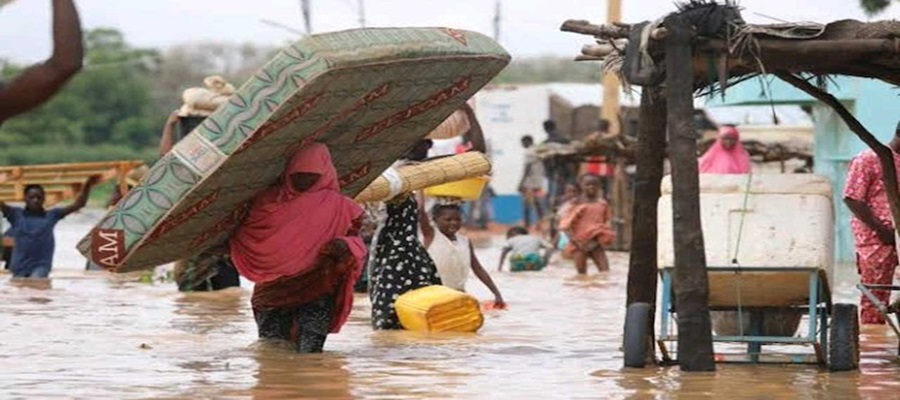
Nigeria Hydrological Service Agency (NIHSA) has warned of possible floods in parts of Adamawa, Bauchi, Edo, Imo, Enugu, Akwa Ibom, Cross River, Kaduna, Plateau, Niger, Benue, and Borno states within the next seven days.

According to information posted on NIHSA X handle, the Agency announced medium flood advisory in force for the next 7 days across Adamawa, Bauchi, and 11 other States.
“Localised inundation is forecast along the main channel; named communities below sit on the projected footprint. Stations: Saminara on the Karam river, Waya Dam Site on the Waya river, Amber on the Amber river.
“Adamawa; Lemsa, Lamurde, Numan Exposure: 147 comm. 49 schis 40 hith 6 mkts17 relig. Bauchi-Bauchi, Ningi, Shira. Exposure: 4 comm. Kaduna; Chikun, Giwa, Igabi, Jaba, Jema’a, Kachia, Kaura, Kauru, +6 more. Exposure: 1 comm.
“Borno-Gubio, Mobbar. Exposure: 680 comm. 8 schls 6 hith 5 mkts 21 relig. Edo-Akoko-Ed, EtsakoEa, EtsakoWe, Ikpoba-Okha, Orhionmw, OviaNort, OviaSo.. Exposure: 3 comm.
“Imo-Aboh-Mba, Oguta, Ohaji/Eg, Okigwe, Owerri North, Owerri West. Exposure: 3 comm. 7 more states affected and severity LGAs”.
NIHSA advised people in the affected areas to “do NOT cross flooded roads, bridges, or fast-moving water on foot or by vehicle.
“Clear drainage channels and river-mouth blockages; avoid building or living in the floodplain and move people, livestock and valuables from the floodplain to pre-identified higher ground,” NIHSA stated.
General News
First Trustees Advocates Estate Planning as an Essential Tool in Every Wealth Creation Strategy


First Trustees Limited, a subsidiary of FirstHoldCo Plc., and a leading provider of fiduciary and trusteeship services in Nigeria, is encouraging individuals, professionals, entrepreneurs, and investors to view Estate Planning not as an end-of-life exercise, but as a strategic investment tool for protecting, preserving, and transferring wealth across generations.

As more Nigerians focus on wealth creation through businesses, real estate investments, and other income-generating assets, experts are emphasizing that building wealth is only one part of the equation.
Equally important is creating structures that ensure those assets remain protected, properly managed, and seamlessly transferred to succeeding generations in accordance with the asset owner’s wishes. Importantly, Estate Planning is not solely for the wealthy, it is a prudent step for anyone with assets, dependants, or a business to protect, regardless of age, profession, or net worth.
Speaking on the importance of Estate Planning, Ereifemi Akeredolu, Managing Director/CEO, First Trustees Limited, noted that Estate Planning should be considered a core pillar of every long-term financial strategy.
“Many people focus on creating wealth but give litle thought to preserving it. Estate Planning is a wealth protection strategy that helps individuals safeguard their assets, secure their family’s future, and ensure that the value they build today continues to benefit future generations.”
Using tools such as Trusts, Wills, and advanced succession plans, individuals can build structures that support wealth preservation, business continuity, asset protection, and intergenerational wealth transfer.
For entrepreneurs and business owners, Estate Planning serves as a powerful tool for ensuring business sustainability, helping organizations remain stable and operational regardless of unforeseen circumstances.
First Trustees continues to emphasize and educate on the importance of Estate Planning as a comprehensive strategy for proactive planning. It remains one of the most important financial decisions an individual can make: it provides clarity, minimizes uncertainty, and protects assets from unnecessary erosion and disputes. It also creates financial security for loved ones, supports business succession and continuity, and facilitates long-term investment and legacy planning.
General News
Nearpays, Nigerian Fintech Becomes First African Startup to Win UN’s AI for Good Innovation Factory

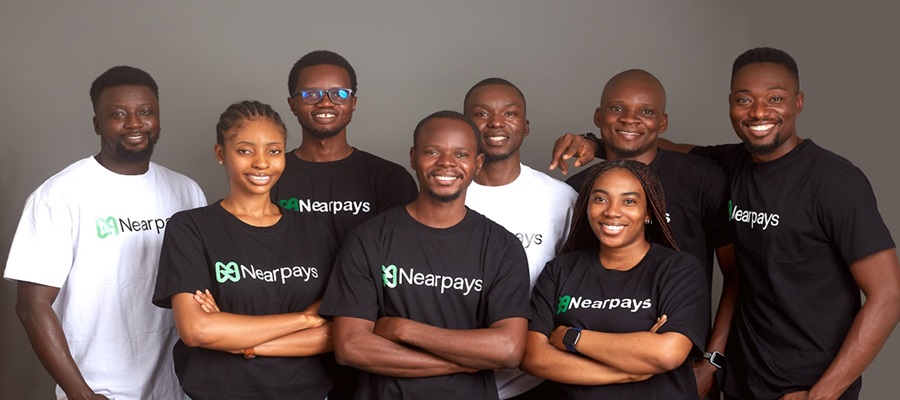
Nearpays, Nigerian fintech, has won the AI for Good Innovation Factory grand finale — the first African startup ever to take the global title in the competition, which runs as part of the United Nations’ AI for Good Global Summit.

The competition drew more than 500 startups worldwide, each pitching AI solutions aimed at social and economic challenges.
The summit itself is organised by the UN through the International Telecommunication Union (ITU) in partnership with several UN agencies, convening governments, researchers, startups, and technology companies around AI’s role in development.
Nearpays’ route to the title ran through Johannesburg, where it won the African regional competition, before advancing to the global finals in Geneva.
There, the company progressed through the semi-finals and claimed the grand finale — a first for the continent.
The company describes the win as bigger than a corporate milestone, calling it a victory for African innovation and proof that technology built to solve local problems can compete, and win, on the world stage.
Nearpays was founded to close a stubborn gap in African payments: small and medium-sized businesses that can’t afford or access traditional point-of-sale terminals.
Cost, availability, and deployment hurdles have kept many merchants — particularly in rural and underserved communities — locked out of digital payments.
Its answer is SoftPOS: an AI-powered platform that turns compatible Android smartphones into payment acceptance devices, letting merchants take contactless card payments with nothing more than their phones. AI is embedded across the platform, supporting payment processing, compliance, fraud detection, and business operations.
Crucially, the platform was built for African infrastructure realities — it works both online and offline, so merchants can keep accepting payments even without internet connectivity.
The company credited its team’s years of product development and customer engagement for the result, and thanked the UN, the ITU, and the AI for Good initiative for building a platform where innovators can apply AI to real-world problems.
It also said it hopes the win encourages more African founders to build technology that answers local needs while competing internationally.
For Nearpays, the title closes one chapter and opens another, as the company pushes on with expanding digital financial infrastructure across Afric

Next Currency Crisis May Turn $300Bn in Stablecoins into National Currencies

NIHSA Warns States of Possible Flood within Seven Days

FG to Raise N1.2 Trillion via Fresh Bond Offer – DMO

Gigbanc Nigerian Fintech Startup Closes Shop after 3 Years

Mbunabo, Nigerian Filmmaker Accuses Ghana TV Stations of Pirating Nollywood Films

NRC, Ponzi Scheme Collapses Resulting Loss of Billions of Naira

Nigeria Launches FreeTV Nationwide

NASENI Moves to Digitize CCB’s 5m Assets Declaration and Operations

Lebara Nigeria Launches Lebara Play, Africa’s First Telecom-Owned Micro-Drama Platform

CANAL+ Partners Samsung to Pre-Load DStv Stream on New Samsung TVs In Nigeria, Other African Countries




 News2 days ago
Xora Finance, Fintech Firm Refuses to Hire Nigerians over Alleged Dishonesty

 Telecom2 days ago
NCC Advances Dig Once Policy, Engages Stakeholders on Cost-Based Framework for Duct Sharing

 Telecom2 days ago
NCC to Keynote Telecom Sector Sustainability Forum 7.0

 General News2 days ago
FG Secures Fresh $208.3m World Bank Loan for Cash Transfer
 News2 days ago
How Ponzi Scheme Victims can Seek Legal Remedies — Lawyers

 News2 days ago
PalmPay Nigeria Appoints Samuel Oluyemi as Chief Operating Officer

 General News2 days ago
SERAP Sues INEC over Alleged N800Bn 2027 Tinubu Campaign Fund

 Telecom1 day ago
MTN Nigeria Slashes Cost of Broadband Internet Router, Unwraps New Data Bundles for Low-Budget Users