

Broadcasting
What Can the Rest of the World Learn From Africa’s Approach to Tech and Innovation

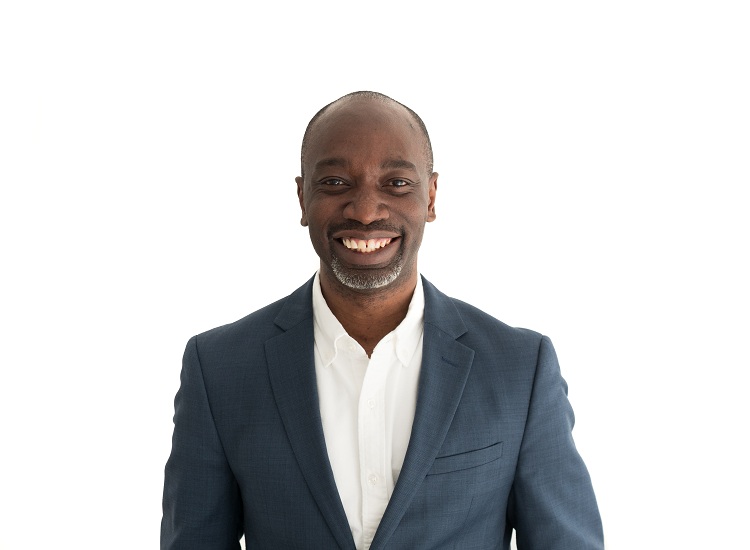
By Ndagi Job Goshi, GM of Liferay Africa
When it comes to listing the regions that have embraced and taken the biggest advantage of digital transformation, most commentators wouldn’t put Africa anywhere near the top. And purely based on metrics, they would be right. According to BCG, Africa trails other regions of the world in digital penetration, usage, and capabilities, and its companies are generally less mature than those in more developed markets.

That said, digital maturity levels across the continent are rising rapidly. And, outside of the broad picture, there are examples of African companies using digital transformation in exciting and innovative ways. Within these examples are lessons that can be applied to the rest of the world, not least because they show that digital transformation is an ongoing process and not a “once-and-done” exercise.
You can compete with big multinationals
During the 2010s, the “Africa Rising” narrative — brought about by unprecedented economic growth during a period of relative political stability — saw many multinational companies either enter the continent or expand their existing operations. Despite their considerable heft, however, many have struggled to compete with local companies.
That’s because these companies have been able to combine technology with on-the-ground knowledge to build a real competitive advantage.
Whatever troubles it’s faced in recent years, mobile operator MTN (itself an enabler of digital transformation) was able to enter Nigeria at a time when other international carriers were too afraid to. The other companies that had a chance to bid on spectrum in Nigeria were more focused on the country’s risks than on its opportunities, and as a result they held back. MTN was able to use its experience and data gathering capabilities to establish and grow a massive footprint. Today, MTN is the largest mobile operator in Nigeria and has 64-million internet subscribers.
Globally, smaller companies can similarly use local knowledge, coupled with a focus on digital transformation, to remain competitive amongst much bigger players.
Utilise the technology at hand
For years, many column inches were devoted to how Africa’s high mobile penetration rates (as high as 149% in parts of Sub-Saharan Africa) would allow it to leapfrog more developed markets. More recently, there was a sense that this promise was unfulfilled and that Africa had missed out on its first-mover advantage.
There is evidence, however, that this disparaging view may have been misplaced. More and more African tech startups are being acquired by international companies. Their technologies are then baked into their acquirer’s offerings. Many of these technologies are mobile-based and are built off the back of Africans being willing to experiment and adopt new technologies that people in more developed markets might be willing to try.
Startups aren’t the only ones innovating either. Financial services giant Discovery perfected its Vitality rewards programme in South Africa, progressively integrating it with new technologies (including smartphone apps and wearables), sometimes years before its competitors. This success then allowed it to expand the programme internationally to more than 20-million users in countries like the UK, Canada, and China.
Customer experience is always crucial
When it comes to the areas in which African companies lead their international competitors on BCG’s digital maturity index, one observation stands out:
In businesses where customer-centricity is key (such as banking and telecoms), African players compete more effectively.
It’s also hardly surprising that these are two sectors where Africa has led the world when it comes to technology-led innovation.
Their success shows how important customer experience is to digital transformation. Some companies might approach digital transformation as a technology project. Implement all the right technologies, the thinking goes, and the organisation will be transformed. When they inevitably don’t get the rewards they were hoping for, they might wonder why they spent all that money and revert back to old ways of doing things.
In truth, digital transformation is more about a mindset shift within organisations than it is about technology adoption. That is, organisations need to embrace the idea that technology can help them better understand and serve the customer, allowing them to create personalised experiences rather than just lumping new technology onto old ways of doing business.
Embracing innovation
Ultimately, while Africa may be less digitally mature than other markets, there can be no doubt that businesses on the continent are unafraid to embrace technology and innovation. And, in the customer-centric ways in which they’ve done so, despite facing adversity and strong headwinds, there are lessons for the rest of the world to learn from the tenacity and ingenuity birthed and nurtured in the African soil.


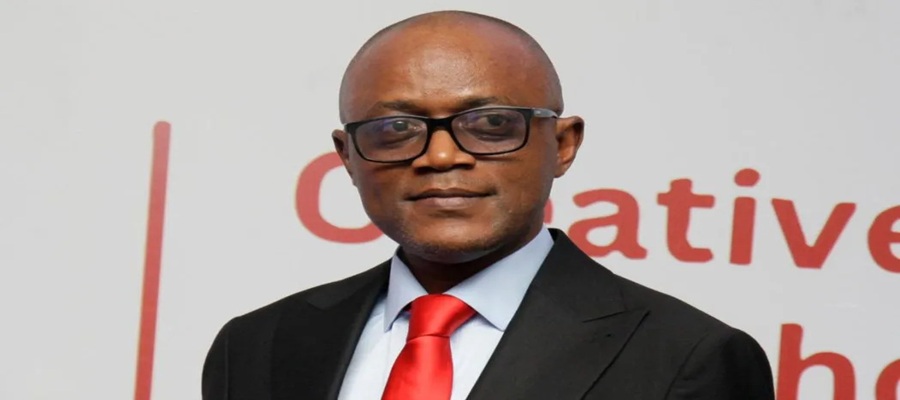
QEDNG Creative Powerhouse Summit will hold its second edition on August 11 in Lagos, bringing together leaders across the creative, business and policy spaces.

Convened by Mighty Media Plus, publishers of online newspaper QEDNG, the summit brings together conversations at the intersection of creativity, enterprise and influence, with a focus on strengthening Nigeria’s creative economy.
Reflecting on the inaugural edition, Iyanda said the summit drew participation from respected figures across sectors, including group managing director of SO&U Udeme Ufot as chairman and founder of The Africa Soft Power Group Dr Nkiru Balonwu as keynote speaker, alongside panellists such as filmmaker Kunle Afolayan, All Africa Music Awards (AFRIMA) founder Mike Dada and executive director of the National Film and Video Censors Board (NFVCB) Dr Shaibu Husseini who contributed to discussions on the direction of the creative economy.
“The first edition showed that there is a strong interest in serious engagement around the creative economy. We had contributions from experienced voices who helped set the tone for the kind of platform we are building,” Iyanda said.
Building on the success of its inaugural edition, the summit continues to expand its scope, attracting a diverse mix of industry leaders, entrepreneurs, policymakers and emerging talents.
“This summit is designed as a meeting point for ideas, influence and execution. It is not just about conversations, but about outcomes that strengthen the creative economy,” Iyanda added.
He noted that the timing of the summit is significant as the country’s creative sector continues to evolve.
“Nigeria’s creative sector has grown in visibility, but the structures that support it are still evolving. The QEDNG Creative Powerhouse Summit is part of the effort to bring clarity, direction and serious engagement to that growth,” he said.
The 2026 edition will feature keynote addresses, panel discussions and curated sessions addressing themes around innovation, growth, funding and the global positioning of Nigerian creative talent.
According to Iyanda, the long-term goal is to build a platform that remains relevant across generations.
“Our goal is to build a platform that remains useful over time, one that documents progress, connects stakeholders and contributes meaningfully to policy and practice,” he said.
Further details on speakers, partners and the full programme will be announced in the coming weeks.
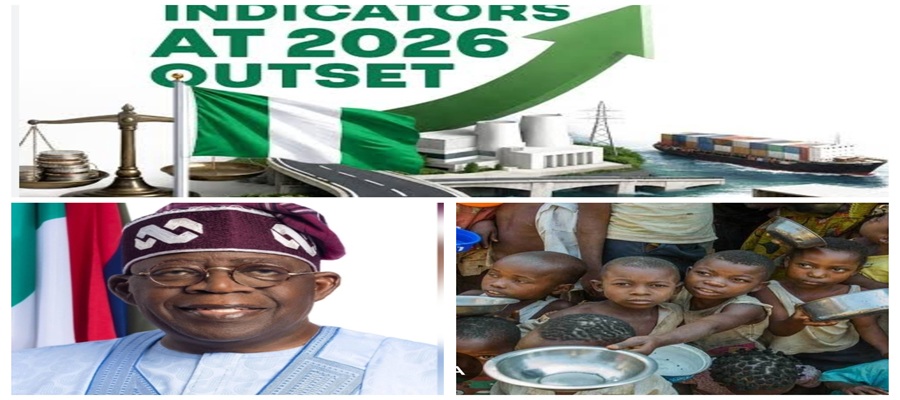
With the chanting of the ‘Renewed Hope’, it appears to be Uhuru in Nigeria, following the recent World Economic Outlook presented by the International Monetary Fund, which projected that Nigeria’s economy would expand by 4.1 percent in 2026. Though this specifically shows an economy faster than economies like the United States and the United Kingdom, as it handed the administration of President Bola Tinubu a powerful narrative. No doubt, the projection happens to be a narrative of progress, of reform, of a nation supposedly turning the corner after years of instability and setting the kind of moment that reassures investors, quiets critics and signals competence.

But once its statistical sheen is put aside, the weight of reality takes center stage. The truth is while Nigeria may be growing on paper, it is simultaneously shrinking and does not in any way reflect the lived experience of its citizens, as the populace can attest to. With the current lived experience, nowhere is this contradiction more glaring than in the widening gulf between macroeconomic projections and the daily economic suffering of over 200 million people.
The truth is uncomfortable, but it must be said plainly that a country where poverty is deepening, inflation is persistent, debt is rising, and basic survival is becoming more difficult cannot meaningfully claim economic success, no matter what the growth figures suggest.
The most damning evidence against the “fastest-growing economy” narrative as enumerated by the Special Adviser to President Tinubu on Policy Communication, Daniel Bwala comes not from opposition voices or political critics, but this time it is coming from the World Bank itself. Alarming to this is that according to its latest Nigeria Development Update, poverty in the country rose to 63 percent barely months back, translating to roughly 140 million Nigerians living below the poverty line. This is not just a statistic; it is a humanitarian crisis unfolding in real time, which in a real sense calls for quick interventions.
Even more troubling is the trend. Poverty has not plateaued; it is accelerating, worsening and not stablising at all. From 56 percent in 2023 to 61 percent in 2024, and now 63 percent in 2025, the trajectory is unmistakable, as can be seen the data shows a clear upward trend over time that calls for concern. And projections from PwC suggest that the numbers will climb even higher, with an estimated 141 million Nigerians expected to be poor in 2026.
It would surprise many that these figures expose a fundamental contradiction; it is a total irony that an economy is growing while its people are becoming poorer, hence, while no one would hesitate to say that the type of growth taking place is flawed. Well, without jumping to a hasty conclusion, the answer lies in that growth. To say that the economic growth taking place is imbalanced, it is uneven, exclusionary, and not absolutely linked or largely disconnected from the sectors that sustain the majority of Nigerians. Growth driven by services and capital-intensive industries does little for a population whose livelihoods depend heavily on agriculture and informal enterprise. When growth bypasses the poor, it ceases to be development and becomes mere arithmetic.
The government’s defence often leans on the argument that inflation is easing and that reforms are beginning to stabilise the economy. But even this claim is increasingly fragile, as reported that the recent data from the National Bureau of Statistics shows that inflation has begun to rise again. This now shows that the headline inflation is ticking up to 15.38 percent in March 2026, alongside a sharp month-on-month increase of 4.18 percent. The pain Consumer Price Index climbed to 135.4, underscoring sustained pressure on household spending.
Another aspect that raises further questions is that the most critical component for ordinary Nigerians, which is the food inflation skyrocketed to 14.31 percent, with also a similar month-on-month surge. It must be made known that these are not just numbers on a chart; they represent the escalating cost of survival, mostly for the common man. The ripple effect of this, which is yet to change, is that families are compelled to pay more for basic meals, more for transportation, and more for the essentials of daily life.
Noteworthy is that even when inflation showed signs of moderation in previous months, the fact is that it did little to reverse the damage already inflicted. The World Bank has been clear on this point when it said that household incomes have not kept pace with price increases. The underlying point is that the earlier spikes in inflation eroded purchasing power to such an extent that any subsequent easing has been insufficient to restore real income levels and this is where the figures churned out were misleading.
This explains the inconsistency at the heart of Nigeria’s economy, where nominal indicators are improving, but real conditions are deteriorating. Nigerians are earning more in absolute terms but are able to afford less. This is further confirmed by data showing that while nominal household spending increased significantly, real consumption declined, while it would be said that people are spending more money, but they are consuming less. That is not growth; but the right word for it is economic suffocation.
The structural consequences of ongoing reforms compound the situation. The removal of fuel subsidies, which was the gift to Nigerians for electing President Tinubu and the liberalisation of the foreign exchange market were framed as necessary steps toward long-term stability. And in theory, they are defensible policies. But in practice, the result has been an extraordinary cost-of-living crisis, especially for the larger section of struggling Nigerians.
Speaking of the fuel subsidy removal, which has driven up transportation costs across the country, affecting both urban commuters and rural farmers, as the pain has been further intensified by the geopolitical conflict in the Middle East. The second policy shift which was the exchange rate liberalisation, has led to currency depreciation with the experiences biting hard across board, making imported goods more expensive and fueling inflationary pressures. These policy choices, which were perhaps deemed necessary, and without further ado have imposed immediate and severe burdens on households that were already vulnerable.
The International Monetary Fund has warned that these pressures are far from over. Rising global tensions, particularly in the Middle East, are pushing up the cost of energy, food, and transportation. For Nigerians, especially those at the lower rung in society, this translates into even higher living costs and deeper economic strain to contend with.
In this context, the government’s insistence on celebrating growth projections begins to appear not just disconnected, but insensitive. Because for millions of Nigerians, the economy is not an abstract concept measured in percentages. It is a daily struggle defined by whether they can afford food, transport, and shelter.
Compounding these challenges is Nigeria’s growing debt burden. Unexpectedly, public debt has climbed to over N159 trillion, with projections indicating a continued rise in the coming years because of the government’s appetite for borrowing. While the debt-to-GDP ratio may appear moderate compared to global averages, this comparison is totally misleading. The question is why the debt is ballooning when Nigeria’s revenue base is narrow, heavily reliant on oil, and constrained by a large informal sector that contributes little to tax income.
The current position of things is that debt servicing consumes a disproportionate share of government revenue, leaving limited fiscal space for investment in infrastructure, healthcare, education, and social protection, which has continued to expose the majority of Nigerians to untold hardship. It is a precarious position, one where the government is borrowing more while having less capacity to translate that borrowing into meaningful development outcomes and the part that is also critical is that Nigeria’s rising debt profile is entering discomforting quarters, as concerns shift from the sheer size of borrowings to the growing risks associated with refinancing existing obligations.
Even more troubling are the emerging questions around fiscal transparency and governance. Only recently, there were allegations by Peter Obi on the missing N34 trillion in federation revenue that remains unaccounted. This, according to him, has intensified concerns about systemic leakages and institutional corruption. The fact is, even though these claims remain contested, they resonate deeply in a country where public trust in government financial management is already fragile and has remained a subject of discussion for many Nigerians.
The truth is that if even a fraction of such resources were effectively managed and invested, the impact on infrastructure, social services, and poverty reduction could be transformative but this is yet to be embarked upon. Instead, the persistence of such allegations reinforces the perception of an economy where wealth exists but is inaccessible to the majority, which brings to bare if there will ever be a respite in a situation like this.
Adding another layer to this complexity is the excessive contradiction of oil revenue. With global crude prices that were once sold above $113 per barrel and currently hovering around $85-$90, which is still far exceeding Nigeria’s budget benchmark, and the country stands to hugely benefit from a significant windfall, as was the case in the past. You know that history is more revealing than ever; it suggests that such opportunities are often squandered.
Analysts repeatedly have continued to warn that without disciplined fiscal management, these revenues may be absorbed by debt servicing or recurrent expenditure rather than being invested in productive sectors. The risk is that Nigeria once again experiences a boom without transformation, a cycle that has defined its economic history for decades.
Meanwhile, the irony in all of this is that, despite having plenty, every day Nigerian continues to bear the brunt of systemic inefficiencies. As the people bear the brunt, the country’s transportation costs are rising, food prices remain volatile, and access to basic services is increasingly strained, while the rural areas are not left out of the equation, as insecurity continues to disrupt agricultural production. This has further constrained food supply and driven up prices. In urban centres, the cost of living is pushing more households into financial distress.
The cumulative, as well as the ripple effects of these pressures is a society under strain. Lest we mistake this, economic hardship is not just a financial issue; it has social and psychological consequences, while unbeknownst to many, its resultant effect fuels frustration, erodes trust in institutions, which also leads to fertile ground for instability.
What makes the current situation particularly troubling is the widening disconnect between official narratives and lived reality. There are two instances in which it was noted that, on the one hand, the government points to IMF projections and macroeconomic indicators as evidence of progress. On the other hand, citizens experience rising poverty, declining purchasing power, and limited opportunities. Another good example stems from when President Tinubu declared in September of last year that the federal government had met its 2025 non-oil income goal by August.
However, the former Minister of Finance, Wale Edun stated that the Federal Government lacked sufficient funds to appropriately fund its capital budget during a public hearing at the National Assembly late last year. The minister stated that in order to pay the N54.9 trillion “budget of restoration,” which was intended to stabilize the economy, ensure peace, and create prosperity, the federal government had estimated N40.8 trillion in income for 2025.
These two reports sounded and appeared contradictory and it probably was first of many factors responsible for the fallout.
This disconnect is more than a communication gap, it is a credibility crisis. When people’s lived experiences contradict official claims, trust erodes. And without trust, even well-intentioned policies struggle to gain acceptance.
The claim that Nigeria is growing faster than advanced economies may be technically accurate, and perhaps it must be seen as an absolute insult to Nigerians and it must be noted that it is fundamentally irrelevant to the country’s core challenges. This key fact must be taken into cognizance that growth rates, in isolation, do not capture the quality, inclusiveness, or sustainability of economic progress and this is because they do not reflect whether growth is creating jobs, reducing poverty, or improving living standards. Note that in Nigeria’s case, the evidence suggests otherwise, in which the reality continues to dominate outcomes and this is not but the fact.
For growth to be meaningful, it must translate into tangible improvements in people’s lives. At this point, it is necessary to understand that it must create jobs, raise incomes, and expand opportunities. Another important factor that must not be left out is that it must be inclusive, reaching not just the top tiers of society but the millions at the base of the economic pyramid. At present, Nigeria falls short on all these counts.
The path forward requires more than optimistic projections and reform rhetoric. It demands a fundamental rethinking of economic priorities. Policies must be designed not just for macroeconomic stability but for human welfare and while investment must be directed toward sectors that generate employment and improve productivity, particularly agriculture and manufacturing. Social safety nets must be strengthened to protect the most vulnerable from economic shocks which has yet to be considered by the government of the day.
Equally important is the need for transparency and accountability in public finance. Without trust in how resources are managed, even the most ambitious economic plans will struggle to gain legitimacy.
Nigeria is not lacking in potential and this is one of the ironies of it all since it has a young population, abundant natural resources, and a dynamic entrepreneurial spirit. But potential, without effective governance and inclusive policies, remains unrealised.
The uncomfortable reality is that Nigeria is at risk of normalising a dangerous illusion which connotes that growth on paper is equivalent to progress in practice. The truth is that it is not and cannot be contested. And until this illusion and deception is confronted, the gap between economic narratives and human realities will continue to widen.
In the end, the true measure of an economy is not how fast it grows, but how well it serves its people. By that standard, Nigeria’s current trajectory raises serious questions, take it or leave it. Because in a nation where over 140 million people live in poverty, where inflation continues to erode incomes, where debt is rising and where basic survival is becoming more difficult, the claim of being a “fast-growing economy” is not just misleading. Yes, it is a mirage!
And for millions of Nigerians struggling to get by each day, it is a mirage that offers no relief, no hope, and no future.
Blaise, a journalist and PR professional, writes from Lagos and can be reached via: [email protected]

Nigeria Union of Journalists (NUJ) has criticised the National Broadcasting Commission (NBC) over a recent directive to broadcast stations, describing it as a threat to free speech and press freedom.

In a press release signed by Achike Chude, national secretary, the union said it viewed the NBC’s notice released on 17th April with “grave concern and utter disappointment.”
It said the directive, which warned broadcasters to ensure “strict and uncompromised compliance,” was “nothing short of a veiled attempt to gag the media and institutionalise censorship.”
The union argued that the NBC’s warning against anchors expressing “personal opinions” interferes with newsroom decisions.
“Journalism, particularly in the realm of current affairs and political analysis, requires robust engagement,” the NUJ said.
It added, “To strip presenters of their right to analyze and contextualise news is to reduce the Nigerian media to a mere mouthpiece.”
The NUJ also faulted what it called vague rules and harsh penalties.
It said classifying such actions as offenses punishable by fines or suspension creates “a chilling effect.”
According to the statement, “This regime of fear encourages self-censorship, where journalists are too afraid to ask tough questions.”
Citing Section 39 of the 1999 Constitution, the union stressed that freedom of expression includes “the freedom to hold opinions and to receive and impart ideas and information without interference.”
It added, “The NBC Code cannot and must not be used to override the supreme law of the land.”
The NUJ called for dialogue instead of threats and urged journalists to remain “resolute, professional, and fearless.”
It said, “The media is the watchdog of society, not the lapdog of the government.”

Ecobank in Talks with Bank of China for Direct Yuan Settlement

Cross River State Isolates 10 More Persons with COVID Symptoms

Vivo, Credit Direct Ink Agreement on Smartphone Credit Purchase

Government, Industrial Sectors became the Primary Targets for Cybercriminals in 2025 – Report

The Visibility Trap

NBC Boss Urges Content Ceators to Participate in DSO

NITDA Takes Over National Digital Architecture System

FG Shifting Focus to “Meaningful Connectivity” to Drive Inclusion – Minister

Jury Finds Meta, Google Liable for Woman’s Social Media Addiction

FG to Gift Nigerians over 100 Free TV Channels from May 15




 E-Business3 days ago
CIBN Allegedly Hit by 250GB Data Breach

 E-Business3 days ago
Nigeria @ Risks Losing Digital Control- NiRA

 E-Financial3 days ago
Flutterwave Dismisses Reported $75m Investment by FG

 Telecom3 days ago
Nigeria Moves to Curb Fraud as NCC, CBN Seal Consumer Protection Pact

 Telecom3 days ago
FCCPC Denies Banning Airtime, Data Borrowing Services in Nigeria

 E-Business3 days ago
Kaspersky MDR Introduces Major Updates, Strengthening Detection and Investigation Capabilities

 News3 days ago
BOI, RMRDC Seal MoU to Address Agric Value Chain Challenges, Boost Nigeria’s GDP

 Broadcasting3 days ago
NUJ Accuses NBC of Attempting to Gag Media, Demands Dialogue