

E-Business
HP Unveils New Z Desktops with NVIDIA

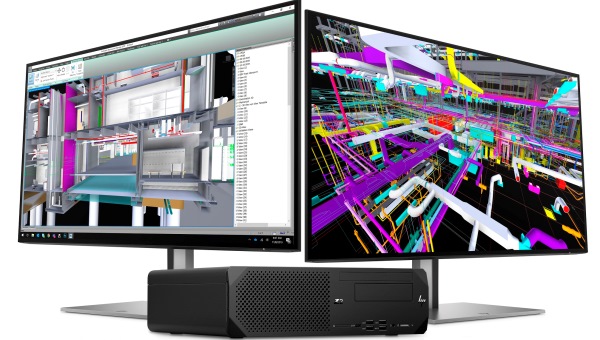
Bringing new levels of power previously only available in high-end desktop workstations, at NVIDIA’s GTC 2021, HP is announcing significant GPU performance improvements to its entry Z by HP desktop lineup, including HP Z1 Tower G8, HP Z2 Small Form Factor G8, and Z2 Tower G8, to ensure today’s professionals have the right technology and tools to be productive, connected, collaborative, and secure, whether working from home or in the office.

Additionally, in order to democratise 3D for entry workflows and bring advanced visualisation to the masses, Z offers the latest technology from NVIDIA® and Samsung, brands trusted by the creative community to bring reliability.
Performance is critical for creators to speed up the conversion of ideas into designs and their needs continue to grow with real time engines as design cycle times are reduced.
As companies migrate to a more hybrid work model, 77 per cent of IT decision makers agree that this means an increase in security vulnerabilities. The Z entry desktop lineup offers advanced security features, equipping IT departments the ability to keep devices, data, and identities protected.
NVIDIA’s new NVIDIA® RTX™ A4000 and RTX™ A5000 provide HP Z2 Tower G8 customers the option to configure their Z desktop with the latest generation RT cores, Tensor Cores, and CUDA cores to deliver a powerful desktop experience for designers, engineers, and artists to create the future, without limits.

Z by HP is also adding additional Ampere graphics options to the performance desktop line, including the Z4, Z6, and Z8 desktop workstations, for improved performance across segment workflows.
“Remote work is going to continue and employees will have a choice of where to work,” said Bob Pette, vice president of Professional Visualization at NVIDIA. “The new NVIDIA Ampere architecture GPUs with Z by HP desktops will give employees the computing power they need to work from anywhere.”
To further enhance the performance of the Z entry desktop lineup, customers can now configure the Z1 Tower, Z2 SFF, and Z2 Tower with Samsung’s recently announced PCIe Gen4 drives.
The latest drives from Samsung offer increased transfer rates, delivering improved bandwidth for even greater performance and seamless workflows for data-intensive users. Customers now get unthrottled storage performance because of innovative thermal solutions designed by Z by HP engineers.
“Today’s rapidly changing work environment has cemented the PC’s role as a critical productivity tool,” said Jaejune Kim, Corporate Senior Vice President of Memory Marketing, Samsung. “With applications growing in complexity and file sizes increasing exponentially, PCIe Gen4 SSDs offer a big step up in performance.
“We’re proud to partner with HP on the design in of our PM9A1 SSD into HP’s newest performance platforms to maximise the technology benefits for an improved user experience.”
The Z2 Small Form Factor, the world’s fastest SFF workstation running Autodesk and SolidWorks applications, and the Z2 Tower improves on previous generations with the latest components from NVIDIA®, Intel®, and Samsung, and continues to be an industry-leader in sustainability being part of the world’s most sustainable PC portfolio.
To help meet needs of the today’s workforce, the Z2 SFF and Z2 Tower continue to offer increased expandability capabilities with tool-less access in condense and compact desktop footprints.
The Z2 Small Form Factor features up to 11th generation Intel® Core® and Xeon® W processors and up to an NVIDIA® Quadro RTX™ 3000 GPU to deliver outstanding performance for accelerated ray tracing and AI in a small size with endless options to upgrade. The Z2 Tower is the benchmark in entry-level workstation power for professional creators.
With the Z2 Tower, users can now run multi-threaded applications while multitasking by leveraging up to an NVIDIA® RTX™ A5000 GPU and Intel® Xeon® vPro® processors and Intel CPU K-series performance with no throttling in SPECapc™ for SOLIDWORKS™ 2021 benchmark in a design engineered to evolve.
The Z2 G8 SFF and Z2 G8 Tower also feature unthrottled performance (Z’s industry-leading thermals keep the processor and graphics card cool) so they can run at max performance for extended periods of time.
The Z1 G8 is HP’s most affordable pro-certified Z desktop, built to handle design editing, and even gaming. Now offering the latest pro-grade performance with up to an NVIDIA® Quadro™ P2200, this SolidWorks and AutoCAD®-certified desktop is perfect for 2D/3D design and drafting workflows.
Additionally, users can choose to configure the Z1 G8 with NVIDIA® GeForce® graphics up to an RTX™ 3070 for VR and software development work. For powerful performance on complex multithreaded threaded applications, the Z1 G8 offers the latest Intel® Core™ vPro® processors.
HP Z1 Tower G8, HP Z2 Small Form Factor G8 and the HP Z2 Tower G8 are expected to be available in Nigeria from May this year.



Kaspersky has released a report about a phishing campaign where attackers abuse Microsoft’s authentication mechanism. The campaign spanned from early April to mid-May 2026 and was styled as a notice from a law firm.

The goal was to steal victims’ credentials and access their data. Previously Kaspersky warned about phishing exploiting Google Tasks, Google Forms, Bubble and Amazon Simple Email Service.
Microsoft’s authentication mechanism – the OAuth 2.0 Device Authorisation Grant – allows users to log into their Microsoft accounts on devices with limited input capabilities, such as smart TVs, by pasting a code or scanning a QR code on another device, like a smartphone or a PC. This convenience also creates an opportunity for attackers to abuse the flow, potentially hijacking accounts and maintaining control through stolen refresh tokens.
Attackers sent victims emails disguised as communication from a law firm, with a password-protected PDF file attached. After opening the PDF and entering the password, they were presented with a webpage that listed several documents.
Viewing these documents required clicking a provided link, which led to a legitimate Microsoft address. However, the URL parameters were configured to redirect the user to a phishing resource after they opened the Microsoft page.
The phishing page featured multiple CAPTCHAs, presumably deployed to filter out security bots which are used to check websites for threats. Once past the CAPTCHAs, the user was routed to a final page that instructed them to copy a one-time code. This code was the one that the attackers had already fetched by starting the login process on their side.
Clicking the displayed one-time code automatically copied it to the clipboard while simultaneously redirecting the user to Microsoft’s actual, legitimate authentication page where they were prompted to paste and enter the code.
After the user entered the code, the multifactor authentication process completed and the attackers got hold of the session’s tokens. This enabled them to read and send emails from the victim’s mailbox, exfiltrate files from OneDrive and access Teams conversations.
“Threat actors don’t always rely on harvesting credentials or deploying malware to access sensitive data – they can weaponise legitimate tools. Therefore, users must exercise vigilance not only when visiting suspicious sites, but also when navigating official platforms.
“We advise enterprise teams to evaluate the business necessity of the Device Code Flow within their corporate infrastructure. If this authentication mechanism is not required for daily operations, it should be disabled,” commented Roman Dedenok, Anti-Spam Expert at Kaspersky.
To establish a comprehensive defence against Device Code Phishing attacks, organisations should deploy robust email security solutions. For corporate users, Kaspersky Security for Mail Server with its multi-layered defence mechanisms powered by machine learning algorithms provides robust protection against a wide range of evolving threats and offers peace of mind to businesses in the face of evolving cyber risks. For individual users, Kaspersky Premium offers AI-powered anti-phishing features designed to help avoid phishing attacks and improve overall cybersecurity.

Against the backdrop of struggles by small and medium enterprises in Africa to scale their businesses because of lack of formal processes, Ovaloop Technologies has unveiled an inventory solution aimed at supporting retailers across Nigeria and Africa to formalise their businesses.

Combining inventory management, payment processing, accounting and business intelligence, the platform enables retailers to generate accurate financial records, improve operational efficiency, reduce internal fraud and strengthen their ability to access credit.
The company said the expansion of Nigeria’s digital payment ecosystem has created the need for solutions that go beyond processing transactions to helping small and medium-sized enterprises (SMEs) manage their day-to-day operations.
Speaking during the company’s launch event in Lagos on Monday, Princewill Mba, CEO and co-founder of Ovaloop Technologies described the platform as an indigenous technology designed to grow and formalize Africa’s retail economy
“Ovaloop is an inventory management system, but we like to always define it as a retail operating system, so think about it as your Microsoft Office. For us, the whole idea is to manage how businesses are being run. So Ovaloop manages your business operation end-to-end, from how you’re taking stock, to how you manage your stock, how you make sales, and how you collect payments,” Mba said.
Mba further noted that the company aims to change the conversation from building products that simply process payments to developing technology that helps retailers manage their entire business operations.
According to him, the formalisation of retail operations will also bring onboard unbanked SMEs, unlocking access to credit facilities which remain one of the major challenges facing SMEs in Nigeria and Africa.
“Most of these retailers are not bankable. They make a lot of money but when they come to collect loans from financial institutions, they struggle, because their cash flow statement is not very accurate, the data they provide to the banks or other financial institutions is not very accurate, and then they can’t work with that data.
“But with Ovaloop, we can generate useful data for them that they circulate to these institutions to help them access funding, and you can’t shy away from the fact that funding is very imperative for businesses to operate smoothly,” he said.
Acknowledging the gap in the inventory space, the CEO disclosed that the company took time to understand business operations across Africa and has built a solution that manages business operations end-to-end.
Mba said there is a huge gap in inventory management solutions across Africa, noting that many businesses still rely on manual record-keeping or disconnected software.
“What we’ve built and why we took this long was for us to understand how Africans operate business, because whether you would like it or not, most businesses are still taking inventory and stock using basic books while others use fragmented tools.
“So there’s a tool that collects your payment. There’s a tool that runs your business and another tool that runs your accounting. But when we talk about Ovaloop, it’s taking all these activities into cognisance. So, from end to end, we can manage your inventory.”
Daniel Kilanko, co-founder and CTO of Ovaloop Technologies commenting on the platform noted that it is easily accessible with strong security software that verifies payments and detects fraud.
“Our Ovaloop Pay Protect will tie every sales transaction to verified payments. So with that, you don’t have to deal with fragmented tools. The tools you are using for your inventory, payments and everything synchronise properly.
“So no transaction can be completed unless a verified payment is linked to that transaction. And with this, we also hope that we will be connecting with other local technology so that you just have one central system that does everything for you end-to-end.”
Kilanko said Ovaloop can be accessed through the web, Android and iOS mobile phones which gives users a complete business overview from anywhere in the world.
The platform will also be linked to various supply chains, enabling users to access products within and outside the country.
Also speaking, Titilope Ejimagwa, chairperson, Ovaloop Technologies, inventory losses and employee theft remain major operational challenges for many entrepreneurs
Ejimagwa recalled losing inventory to trusted employees despite maintaining close oversight of her business, citing nearly four decades of experience in marketing and entrepreneurship.
She noted that technology such as the Ovaloop platform, which can track inventory, verify payments and improve operational transparency, could significantly reduce such losses for SMEs.
“As entrepreneurs, one of our biggest challenges is fraud and inventory losses. Having one platform that helps monitor operations and reduce those risks is a major advantage for businesses,” she said.
Jumia Nigeria, the country’s e-commerce platform, has introduced a new instalment payment option on its marketplace through a partnership with Buy Now, Pay Later (BNPL) provider Klump, giving customers another way to pay for purchases without bearing the full cost upfront.

The new option allows eligible customers to spread payments for selected purchases over a period of up to 12 months after making an initial deposit of between 20 and 30 percent. The partnership is expected to widen access to products such as smartphones, electronics, home appliances, and other everyday essentials for consumers who may prefer structured repayment plans over one-time payments.
Customers selecting the option at checkout can compare financing offers from participating financial institutions, complete a digital credit assessment, and, once approved, begin repayment through fixed monthly instalments. The introduction of instalment payments comes as digital commerce continues to evolve in Nigeria, with retailers exploring payment options that respond to changing consumer spending patterns and the growing demand for financial flexibility.
Commenting on the partnership, Chief Executive Officer of Jumia Nigeria, Temidayo Ojo, said the initiative reflects the company’s commitment to making online shopping more accessible to a wider range of consumers.
“We are constantly looking at practical ways to remove barriers to online shopping. For many customers, affordability is not always about the price of a product but about having payment options that fit their financial reality. By introducing instalment payments with Klump, we are giving customers greater flexibility while making quality products more accessible.”
He added that expanding payment choices forms part of Jumia’s wider effort to improve the overall customer experience and support the company’s ambition of becoming Nigeria’s everyday retail destination.
“Whether we are strengthening our logistics network, expanding product selection, or introducing new payment solutions, the goal remains the same: to make shopping on Jumia simpler, more convenient, and more accessible for customers wherever they are,” Ojo said.
Founded to simplify access to goods across Africa, Jumia has continued to invest in technology, logistics, and payment solutions to make digital commerce easier for consumers in both major cities and emerging markets across Nigeria.
The addition of instalment payments complements the range of payment methods already available on the platform and comes at a time when consumer demand for flexible financing options is increasing across the retail sector.
Celestine Omin, Co-founder and Chief Executive Officer of Klump, said the partnership aligns with Klump’s objective of expanding access to responsible consumer credit.
“When we started Klump, our mission was simple: to give Nigerians access to affordable credit wherever they shop. Today, we’re pleased to partner with Jumia to bring flexible instalment payments to one of Africa’s largest e-commerce marketplaces, making it easier for more customers to access the products they need,” Omin said.
Under the arrangement, Klump will provide the financing infrastructure while customers complete the application process digitally during checkout. Financing offers are provided through participating financial institutions, subject to approval.
For Jumia, the partnership represents another step in expanding the range of services available on its marketplace while supporting broader efforts to deepen digital commerce and financial inclusion. As more Nigerians turn to online shopping, the availability of flexible payment options is expected to lower one of the barriers to e-commerce adoption, particularly for higher-value purchases.
Customers can access the instalment payment option by selecting Klump at checkout on eligible products available on the Jumia platform.

NDIC Begins Payment to Depositors of 46 Failed Microfinance Banks

Telcos Seek Clear Regulatory Framework on Airtime Credit Services

FG Says Rumours, Fear, Can Crash Banks

MTN Warns Customers against Fake Promo

EU Debunks Fake Compensation Scheme Targeting West African Bank Customers

NRC, Ponzi Scheme Collapses Resulting Loss of Billions of Naira

NASENI Moves to Digitize CCB’s 5m Assets Declaration and Operations

Lebara Nigeria Launches Lebara Play, Africa’s First Telecom-Owned Micro-Drama Platform

Tokenization, Blockchain Technology will Transform Financial Institutions – IMF

EFCC Busts NIS Visa Overstay Racket, Uncovers N700m in an Account




 News2 days ago
YEDC Warns Customers, Says 20 Percent Electricity Bonus is Scam

 News2 days ago
PFIPC Probe: Dollar, Pounds Accounts of Fake Agency Inactive – CBN

 Broadcasting2 days ago
NBC, INEC, Plan Joint Broadcast Monitoring Framework ahead of 2027 Elections

 E-Financial2 days ago
No Going Back on July 31 Deadline for Insurance Firms’ Recapitalisation – NAICOM

 News2 days ago
STEM Africa Fest to Nurture Nigeria’s Future Innovators

 E-Business2 days ago
Jumia Nigeria Expands Flexible Payment Options with Klump Partnership

 E-Financial2 days ago
Court Affirms FCCPC’s Power to Regulate Digital Lending

 E-Business2 days ago
Lagos Unveils N10m Single-digit Loan Scheme for MSMEs