

Telecom
MY! a Social Media Platform for Africans Set to be Launched Next Month


MyCountry MyWorld is set to launch MY! a social media platform for Africans by Africans providing possibilities in world exploration by giving users the opportunity to bring their country and world to each other.

MY! A social media platform is set to be launched in May 2021. “Having developed the app over a period of two years, with a series of tests; we are now confident that the app is ready to be released to the world”, Samuel Zean Jr, Co- founder, MY!
With over 4 billion internet users across the world and growing by 332 million in the past 12 months and more than 900,000 new users each day, MY! Presents a platform where these users especially from developing economies can tell their story their own way and own the platform.
Globally, internet user numbers are growing at an annual rate of more than 7½ percent, but year-on-year growth is much higher in many developing economies.
“Majority of Africans complain of how African nations are portrayed by the western countries on both traditional media and digital media.

“The MY! app is developed by Africans for Africans to help change this narrative. Whereby, everyone is given a chance to tell their story their way.” Samuel Zean Jr, Co- founder, MY!
MY! is an inclusive social media platform that appeals to all age groups. The app provides unmatched user experience, engagement, interaction and entertainment. The app’s interface is user friendly and easy to navigate through.
It enables users to share content effortlessly, by providing feedback and updating a post status. It simplifies the collaboration between users and gives them the full visibility of content created.
Developed and founded by a small group of self-funded African immigrant community from Liberia and Sierra Leone who reside in Minnesota, the app is meant to take on both Facebook and Instagram.
“In a time of so much unrest, it brings hope to many seeing this diverse group of people coming together to create something special for the world”. Adam Borgerding, VP of Operations, MY!
Furthermore, the app gives users the opportunity to retain the rights of authentication for their work. MY! allows its users to maximize their creativity to the maximum and rewards them for every uploaded post shared.
The app enables users to represent their country by showcasing an individual’s country’s unique attraction sites, features, wildlife, culture, cuisine, art, skills, talent, stories, business hustle, history and so much more.
MY! will officially launch on May 10th, 2021 and will be readily available on Google Play and Apple Store.


By Chris Chinchilla
In 2005, Nokia sold its billionth mobile phone, a budget-friendly device that went to a customer in Nigeria.

By then, the company, based in Espoo, Finland, was making one of every three cellphones globally.
But just nine years later, the mobile-device maker offloaded its entire handset division to Microsoft for pennies on the dollar, compared to what it had been worth at its peak.
Nokia had risen from obscurity in the 1990s to become a worldwide cultural phenomenon by the turn of the millennium, its signature devices featured in TV shows and movies, announcing their presence with instantly recognizable Nokia ringtones.
As Nokia was becoming comfortable in the spotlight, the smartphone era arrived.
And what came next was swift and brutal.
But, as revealed in Nokia internal documents recently made public and interviews with key Nokia engineers from that era, the company saw it coming. Within 24 hours of Apple CEO Steve Jobs’s iPhone unveiling in 2007, Nokia was already weighing its options. They’d immediately recognized the threat. However, outrunning it was another matter.
What follows is Nokia’s story over 14 years, from 1998 to 2012, as the world’s top cellphone maker—how its devices defined their time, how the tech reshaped what phones could be and do, and how the company’s good fortunes in the handset business came to an end.
Nokia Was Once Unbeatable
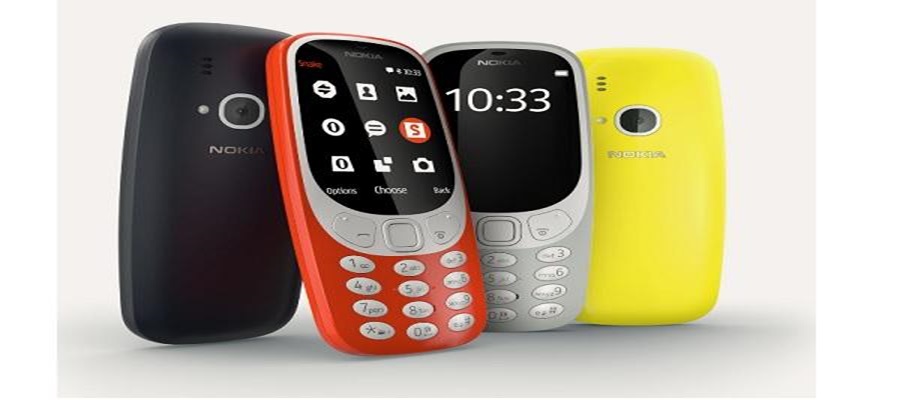
The centerpiece Nokia devices, the ones that people probably think of when they see the words “Nokia phone,” were the 3210 and its cousin, the 3310. TechRadar has called the 3310 “the greatest phone of all time.”
Released in 1999 and 2000, respectively, the two devices sold more than 280 million units worldwide. Their most innovative hardware feature was the internal antenna—the first mass-market phone without even a stub or retractable aerial. “Consumers had the perception that it could not work well without an external antenna,” said Peter Røpke, a former Nokia senior vice president, in a 2016 interview with Slate.
The phones shipped with games, including the legendary Snake, one of the most popular pre-smartphone mobile games—in which a pixelated serpent eats and grows with every morsel consumed.
Nokia introduced no small portion of the world to texting.
At the time of the 3210 and 3310, the prevailing texting standard was SMS (short message service), which allowed up to 160 characters per message. Nokia appended its own Nokia smart-messaging service to SMS, which allowed the sending of small bitmapped images across an otherwise text-only system. A rich-text messaging system that allowed visual images, audio, and video followed in 2002, leading to a multimedia messaging service (MMS) standard that remains in place today.
Nokia also enabled users to easily create and share ringtones on their devices. By 2000, Nokia’s custom-ringtone
Composer app had popularized a new, short-form musical medium that the ringtone industry, at its peak, would transform into a billion-dollar marketplace in the United States.
A face-on view of the Nokia 1100 feature phone, including a keypad and a black-and-white LCD screen.
Nokia introduced its 1100 phone in 2003 and ultimately sold half a billion units, making it the most popular cellphone in history.
A few years later, Nokia reimagined its mobile handsets, releasing the 1100 in 2003.
The 1100 sold a half a billion units, more than any cellphone in history.
It remains one of the best-selling consumer products ever. Much of the 1100’s success was due to its price tag—in the neighborhood of US $100, making it at the time Nokia’s most affordable device.
Also contributing to the 1100’s popularity were features designed for longevity and tough environments, including dust resistance, nonslip sides for better handling in rainy conditions, and a 400-hour standby battery life.
The 1100 introduced a flashlight as well, which the user turned on and off by holding down the “C” key.
Where most device makers at the time were worried about camera megapixels and color screens, Nokia had leapfrogged its competition with a back-to-basics phone that could survive the rain, endure unreliable power grids, and light the way home.
Apple Launched the iPhone, Nokia Scrambled
On 9 January 2007, at the Macworld conference in San Francisco, Steve Jobs made a characteristically bold claim.
“Today, Apple is reinventing the phone,” he said, soon pulling one of the first iPhones out of his pocket.
Apple CEO Steve Jobs famously launched the iPhone at the Macworld Conference in San Francisco on 9 January 2007.
Nokia held a rapid-response meeting to the event the following day.
Rumors of Apple entering the phone market had swirled since the iPod’s debut in 2001, but nobody had really reckoned with what that might mean.
“Executive summary: Apple iPhone is a serious high-end contender,” read a slide from a Nokia internal meeting held the day after Jobs’s keynote. (That slide is now in the company’s online archives, opened to the public last year.)
“User interface has been a big strength for Nokia,” it continued. “Nokia needs to develop touch [user interface] to fight back.”
Peter Bryer, at the time Nokia’s manager of strategic foresight, was part of that 10 January meeting, and he recalls that Jobs’s announcement wasn’t unexpected.
But the iPhone’s extensive reliance on multitouch—save for a single home button on the front—did surprise the team.
Nokia was already aware of multitouch technology, Bryer notes.
In 2006, the U.S. computer scientist Jeff Han had given a celebrated TED talk about it, demonstrating a multitouch screen, which could sense multiple fingers on the screen at a time, not just one.
Bryer remembers his colleague Timo Partanen, then Nokia’s director of market and competitor analysis, getting excited about Han’s demo.
By the end of the decade, multitouch—in which multiple fingers can interact with a touchscreen at once—would play a key role in smartphones from Apple, HTC, and Palm.
“Timo burst into the room, saying, ‘You’ve got to see this TED video of this guy using multitouch,’” Bryer recalls. “We both thought that was cool and that’s the future. Then I looked at the sponsors of the presenter’s research, and among them were Nokia and Microsoft.”
And yet it took Nokia years to develop a phone that used multitouch.
“Remember, Nokia is based in Finland,” he says. “It’s very cold in Finland. They wear gloves for six months of the year, including the executives. They didn’t think a device like that would work.”
Partanen was also at Nokia’s post-iPhone launch meeting, and recalls that there was little concern in the room. “We felt okay,” he says.
“This is yet another competitor launching a great product. But we had no doubt that, if it’s successful, we would do the same. We will launch similar products.”
Two hands hold and interact with a touchscreen phone. The right hand uses a stylus to interface with the device.
In November 2008, Nokia released the 5800 Xpress Music, a year and a half after Apple had launched its iPhone.
That similar product ended up being the Nokia 5800 XpressMusic, known as the Tube, released in 2008. “The idea was to focus on streaming videos and television,” Partanen says. “So we made a phone with a similar form factor to the iPhone [that was] optimized for streaming content.”
But the 5800 was “delayed, delayed, delayed, delayed,” he says.
“It didn’t materialize in the way it was planned. It was released as a watered-down version.”
Critics skewered the 5800’s “outdated” feature set and “ancient” S60 operating system, which ran on top of Symbian OS, an open-source mobile platform Nokia had recently acquired. The 5800 sold reasonably well for its time, reaching around 8 million units in its first year alone. But it did not feature multitouch.
“I think that started to be the point when everybody realized that, hey, this is by far more difficult than earlier competitive issues we’ve had,” Partanen says.
Nokia finally released its first device with multitouch in 2010, three years after Jobs’s splashy iPhone announcement and four years after Han’s TED talk demo.
How Android Ate Up the Low-End Market
Nokia had long owned the low end of the cellphone market, with its sturdy, no-frills devices suited for that segment.
So the years immediately following the iPhone’s launch saw the Finnish firm continue to thrive as it kept turning out simple, rugged devices.
As one review of the Nokia 1200—successor to the 1100—put it in October 2007, “This handset chucks away all the fancy features you’ve come to expect on a modern mobile, leaving you with a pared-down feature set that’s easy for tech novices to get their heads around.”
A man behind a wire screen holds up a Nokia phone to a user in the foreground, who looks at the device.
The 1200 kept the 1100’s dust-proofing, flashlight, and long-lasting battery, and added features aimed squarely at the developing world.
The 1200 was the first to include call-time tracking and a multiuser phone book, allowing owners who planned to lend their device to set up call limits based on time or cost.
This feature helped enable what Nokia researchers called kiosks—informal pay-per-call services, in which an enterprising phone subscriber charged neighbors and family members by the minute for use of the device.
In 2006, Nokia studied how Ugandans used their Nokia phones in rural and remote areas.
An internal company slide deck from the time reveals just how keyed-in Nokia was to its lowest-income users. “Village phone operators are often women,” the slide deck notes. “And there tend to be a lot of children around. (Phones need to suffer considerable abuse from chewing, dust, sweat, etc.)
“A unit of phone time is 60 seconds,” another slide states. “But to avoid accidentally going over that time and incurring extra costs, kiosk operators shorten the unit to 57 seconds, allowing a three-second margin of error. Shared mobile used as phone kiosk must show call time.”
Nokia’s familiarity with its market couldn’t protect the company forever, though.
That’s because the iPhone wasn’t Nokia’s only looming smartphone competitor.
In September 2008, the first Android phone went on sale—the HTC Dream, which was also sold as the T-Mobile G1.
While the iPhone was aimed mostly at early adopters and affluent users who could afford to drop hundreds of dollars on a new phone, Android phones were, within a couple of years, aiming at the same low-cost, global user base Nokia was selling to.
“I think it’s fair to say Android is the one that disrupted the market more for Nokia,” Bryer says. “Most of Nokia’s successful devices were not on the high-end market. But then, when Android came along, it started to fill that lower end and eventually took that market away from us.”
A man holds two phones while standing in front of a large poster showing enlarged versions of the two devices.
With two emerging competitors in the low end and high end, the Finnish device maker responded with a device that split the difference—and satisfied neither camp.
Released in 2009, the Nokia 5230 attempted to be a low-priced, touchscreen (though not multitouch) competitor to both the iPhone and Android. It sold an impressive 150 million units, doing especially well in developing countries.
But the 5230 didn’t have Wi-Fi—one of the biggest complaints at the time. In the developing world, Wi-Fi connections were still rare, so the lack of Wi-Fi made some sense. But the rest of the world was not pleased.
“We had such a big gap and dominant position,” Bryer says. “Which does maybe create a level of comfort which you should never get.”
How Nokia Lost the Smartphone Race
By the beginning of the 2010s, Nokia could have still drawn from the company’s labs, which were regularly spinning out new technologies and innovations. However, the Finnish handset maker ultimately failed to turn its R&D into viable new product lines in response to the emerging smartphone threat.
Nokia’s predicament had precedent—Kodak, dominant in film photography, had actually invented the digital camera in 1975 but failed to commercialize it before digital imaging made its core business obsolete.
“The technology coming from our R&D teams was cutting edge,” says Gordon Murray-Smith, director of services and ecosystems intelligence from 2008 to 2011. He recalls attending annual R&D innovation days that showcased work on self-healing materials and flexible screens, long before those technologies were seen elsewhere. “But why was Nokia not able to commercialize some of that really interesting and innovative activity more than it did?”
Nokia desperately needed an injection of life to change its fortunes.
The company’s first non-Finnish CEO, Stephen Elop (a Canadian fresh off a two-year stint on Microsoft’s leadership team), did not mince words.
In an internal memo from February 2011 that was soon leaked to the media, Elop wrote, “The first iPhone shipped in 2007, and we still don’t have a product that is close to their experience. Android came on the scene just over two years ago, and this week they took our leadership position in smartphone volumes. Unbelievable.”
In 2011, Nokia released the N9, a smartphone with a Linux-derived operating system. Within a year, Nokia had pivoted toward its Windows Phone-powered line of Lumia devices.
Elop oversaw the 2011 launch of a Linux-based smartphone, the Nokia N9.
The N9 ran on a distribution of Linux called MeeGo. Reviewers at the time praised the new smartphone direction the Finnish phone maker had taken. “Possibly the most beautiful phone ever made,” wrote one reviewer about the N9 for Engadget.
But the N9’s accolades did not ultimately carry the day. Nokia announced its Lumia line of phones the same year—a direct pivot away from MeeGo toward the Windows Phone.
It would be the last major strategic turn Nokia would take as a cellphone manufacturer. From this point forward, a succession of C-suite decisions all but sealed the fate of Nokia’s iconic line of phones.
In 2013, Microsoft announced its bid to acquire Nokia’s handset operations. After the sale went through the following year, it rebranded the division Microsoft Mobile.
But the year after that, Microsoft decided it had made a costly mistake, writing down $7.6 billion—nearly what it paid for Nokia’s handset division—and laying off nearly half of the former Nokia staff it had inherited.
In 2016, Microsoft sold its feature phone assets to HMD Global. The latter still sells Nokia-branded phones—budget-friendly devices as well as nostalgia reproductions of models from Nokia’s glory days.
What remained was a brand name, some intellectual property, and two decades of hard-won lessons about what it takes to stay on top—and what it costs when you can’t.
“When you look at the players in the world of smartphones today, any of those players would struggle ever to achieve 14 consecutive years of being No. 1,” says Murray-Smith.
Partanen says there was a downside to Nokia’s mobile-phone dominance.
“Often, being the first mover is not necessarily the best position,” he says. “Being a quick follower is the best position.”
The company itself ultimately survived, even if the transition wasn’t painless. Nokia’s revenues, which peaked in 2007, fell sharply through the mid-2010s before the company refocused on a decades-old business line—telecom infrastructure—that many had forgotten Nokia was even in. Nokia now ranks among the world’s top three suppliers of 5G network equipment, serving carriers across more than 125 countries, alongside Ericsson and Huawei.
Although the company could never quite crack the smartphone, it now plays a key role in providing the network backbone those smartphones run on.
This piece by Chinchilla was published on IEEE’s website
IEEE is the world’s largest technical professional organization and a public charity dedicated to advancing technology for the benefit of humanity
Telecom
MTN Nigeria Slashes Cost of Broadband Internet Router, Unwraps New Data Bundles for Low-Budget Users

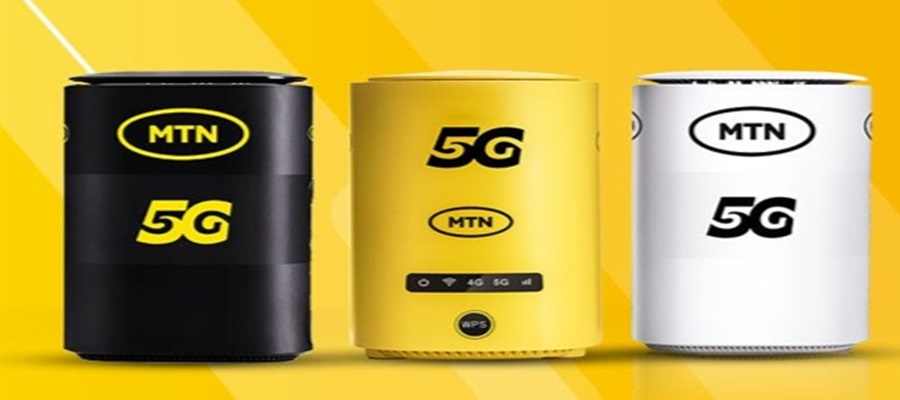
MTN Nigeria has introduced bundled broadband solutions that combine data plans with compatible routers as part of efforts to expand broadband penetration and improve internet access for homes, small businesses and professionals across the country.

The telecommunications company said the initiative is designed to meet the growing demand for reliable, high-speed internet among households, entrepreneurs, students and remote workers while supporting wider broadband adoption in Nigeria.
The new offerings include a 30GB broadband data bundle with a 4G Standard Router for N9,000, a 60GB broadband data bundle with a 4G Premium Router for N14,500, and a Broadband Unlimited Standard Plan with a 5G Router for N40,000.
Egerton Idehen, chief broadband officer at MTN Nigeria, said the company remains committed to expanding access to quality connectivity through innovative and affordable broadband solutions.
“At MTN, we are constantly innovating to ensure that more Nigerians enjoy the benefits of reliable, high-quality connectivity. Broadband has become an essential service for modern living, enabling people to work, learn, create and stay connected,” he said.
According to Idehen, the bundled offerings are designed to make broadband more affordable while empowering individuals, households and businesses with the connectivity required for everyday activities.
He added that the initiative would accelerate digital inclusion and broadband adoption across Nigeria while delivering greater value to customers.
MTN said the solutions build on its Fixed Wireless Access (FWA) portfolio, leveraging its 4G and 5G networks to deliver reliable internet connectivity for homes and small businesses by combining data plans, devices and the company’s nationwide network coverage.
Telecom
Innovation Takes Centre Stage as The Gathering on 100 Pitchathon Rewards Kano’s Young Founders


Young entrepreneurs took centre stage at The Gathering on 100 in Kano as the popular Pitchathon concluded after a three hour competition on Saturday, July 11, at the Meena Event Centre.

Innovator Samiat Damilola Yusuf emerged as the overall winner after competing against 10 startups for a total prize pool of ₦5 million.
The competition showcased innovative business solutions from young founders across technology, fashion, education and the creative economy. This reinforced the growing role of entrepreneurship in solving local challenges and creating economic opportunities.
Over the course of the competition, these 10 founders pitched solutions designed to address everyday problems, with entries assessed on innovation, scalability, market viability and potential impact.
The Pitchathon provided participants with an opportunity to present their businesses before a panel of judges while gaining visibility, feedback and access to valuable networks.
At the end of the competition, Samiat Damilola Yusuf secured the first-place prize of ₦2.5 million for Aplikant, a technology AI powered platform designed to manage applications, track participants, take attendance, and generate impact reports.
Amina Jummai Mayaki, Creative Director of Vogues by Maj, claimed the second-place prize of ₦1.5 million for her fashion brand, while Abdullahi Muhammed Jamil received ₦1 million for Roomie, an application that helps university students find compatible roommates, addressing a common challenge faced by undergraduates across Nigeria.
The quality and diversity of the ideas reflected the growing confidence of Nigeria’s startup ecosystem. According to the 2024/2025 Global Entrepreneurship Monitor (GEM) Global Report, entrepreneurial activity continues to be a major driver of innovation, employment and economic resilience across emerging economies, with young founders playing an increasingly important role in building scalable businesses.
Reflecting on the competition, Abu-Sufyan Aliyu, Senior Manager, Sales, North-East Region, MTN Nigeria, said: “The Gathering on 100 Pitchathon brings young people together with mentors, collaborators, business partners and opportunities that can help move their ideas forward.
Beyond the grants, we want every participant to leave with new knowledge, stronger networks and the confidence to keep building. That’s what it truly means to Live It 100.”
The Kano edition attracted more than 500 Pitchathon applications, reinforcing the competition’s growing reputation as a launchpad for young entrepreneurs.
Following the success of previous editions in Lagos, Aba and Enugu, where winning startups received a combined ₦55 million in seed funding, the initiative continues to connect promising founders with the resources and support needed to scale their ideas.

Tinubu Orders NIMC to Enrol Every Nigerian by End of this Year – DG

Nigerians Accumulate $59Bn in Cryptocurrency Assets —FDC

Nearpays, Nigerian Fintech Becomes First African Startup to Win UN’s AI for Good Innovation Factory

Nokia’s 14 Years of Mobile-Phone Supremacy Ended in an Afternoon

MTN Nigeria Slashes Cost of Broadband Internet Router, Unwraps New Data Bundles for Low-Budget Users

NRC, Ponzi Scheme Collapses Resulting Loss of Billions of Naira

Nigeria Launches FreeTV Nationwide

NASENI Moves to Digitize CCB’s 5m Assets Declaration and Operations

Lebara Nigeria Launches Lebara Play, Africa’s First Telecom-Owned Micro-Drama Platform

CANAL+ Partners Samsung to Pre-Load DStv Stream on New Samsung TVs In Nigeria, Other African Countries




 News3 days ago
Police Busts Syndicate Who Allegedly Stole N3Bn from Financial Institution

 Telecom3 days ago
MTN Accelerates Network Expansion to Meet Surging Telecom Demand

 General News3 days ago
Court Remands Akujobi, Ex Access over alleged Theft of N294.5m

 News1 day ago
Xora Finance, Fintech Firm Refuses to Hire Nigerians over Alleged Dishonesty

 General News1 day ago
FG Secures Fresh $208.3m World Bank Loan for Cash Transfer

 Telecom1 day ago
NCC to Keynote Telecom Sector Sustainability Forum 7.0
 News1 day ago
How Ponzi Scheme Victims can Seek Legal Remedies — Lawyers

 News1 day ago
PalmPay Nigeria Appoints Samuel Oluyemi as Chief Operating Officer