

Broadcasting
E-Commerce: How Konga Saved My Family During the Peak of COVID-19

Nigeria has fared fairly well with the COVID-19 pandemic, especially when compared with its counterparts in other parts of the world and against the backdrop of some worrisome predictions which pegged the country’s shabby public health care system as a potential source of concern.

India, for instance, is battling a terrible resurgence of the pandemic while the UK and others are only just lifting some severe restrictions.
Till date, Nigeria has recorded a little over 2,000 deaths, which for a country of an estimated 180 million people, represents a very good figure. For many, divine providence is one of the reasons that Nigeria has remained fairly immune from the sad tales being told by other countries who have racked up huge casualties since the pandemic began its rampaging run across the globe. This is so because the Nigerian primary, secondary and tertiary health care systems, as highlighted earlier, fall short of the standards that obtain globally. Moreso, the predilection of many to flout basic preventive measures, such as wearing of face masks, observing social distance and improvement of personal hygiene is well known in this part of the world; with many Nigerians attending parties and other gatherings even at the height of the pandemic and the social status of the majority meaning that public transportation systems are often crammed with passengers and open air markets filled to the brim, with scant regard for the principles of physical distancing.
The foregoing, however, does not mean that we did not suffer some of the ravaging effects of the pandemic. A number of prominent Nigerians, many of them with underlying ailments, lost their lives to the COVID-19 pandemic, despite the efforts of some of the best hospitals in Nigeria and beyond to save them.
Many families also lost loved ones, especially after one or two of their members had the misfortune of contracting the dreaded virus.

The above would have been the fate of my family but we have Konga to thank for seeing us through one of the darkest periods of our life. One Tuesday morning in June 2020, we had woken up to my husband coughing and sneezing heavily. This was in the middle of the government-imposed lockdown. My husband and I, both white-collar professionals, had been taking stringent measures to guard against being infected with COVID-19. At the first hint of trouble, all our kids had been withdrawn from schools and were being home-schooled by their teachers virtually.
Also, my husband and I had started alternating the days we went to the office. Both of us, by virtue of our positions at our respective places of work, could not work from home totally. Therefore, we selected the days on which we went to work, which did not exceed thrice in a week. In addition, we made sure we strictly observed all laid-down measures to prevent infection. We even stopped our official drivers at the time in order to reduce the possibility of contracting the virus from exposure to them. Our home was fumigated and all visitors were barred.
So, when my husband woke up with that recurring cough and sneezes, we dismissed it as a potential case of common cold. However, when it got worse upon his return from the office that day, we feared the worst. Our fears were confirmed after a couple of days when his test result came back positive for COVID-19. Before then, I had started isolating myself and the kids from him, solely as a preventive measure but that seemed like a measure too late.
After three days, I lost all sense of taste and smell, which had also been identified by the Nigeria Centre for Disease Control (NCDC) as a symptom of COVID. Consequently, I submitted myself as well as our kids for sampling. Of the family of seven, five of us tested positive to the virus, leaving only two of the kids negative at the time.
It was a shattering discovery and one of the most depressing periods of my life. But we could not keep wallowing in self-pity. We had to take action. Immediately, my husband and I took the decision to protect the two kids who had managed to evade contracting the virus. One of our relatives who resided close by in Lekki had come to pick up the two kids after another round of tests which confirmed their negative status.
The next couple of weeks proved to be arguably the hardest and most nerve-racking I have faced as a mother and care-giver. We had reached out to the NCDC hotline to notify them of our status but we were told at the time that bed spaces at the isolation centres were a bit limited. Consequently, we were given a list of medications to be taken on a daily basis, while being asked to hold on for an update on our evacuation to the isolation centre.
But that was the beginning of our worries.
Barely 24 hours after discovering our positive COVID-19 status, a power surge wreaked havoc in the house, damaging the large TV set in the living room and a few other appliances. Our depression levels went up a notch as the TV set was one of our major sources of keeping up with developments in the outside world.
In view of our status, we could not risk going out to the markets in order to limit the chances of infecting others. Our supplies were running dangerously low, however, and we needed to replenish them. We also needed to get the medications recommended by the NCDC. The youngest member of the family, my two-year-old toddler, also had some special dietary needs and other requirements which we urgently needed to source.
Having being exposed to e-Commerce, my husband and I had reached out to one of the players in the market and explained our plight.
It seemed, however, that informing them of our COVID-19 status was a mistake. We were told by the agent who picked up the call that they would get back to us shortly. It was after we had waited nearly 18 hours without a feedback and placed another call – which was dropped abruptly after we repeated our request – that we realized we were in trouble.
At this stage, our little baby was almost down to the last tin of food and his diapers were already exhausted. He had resorted to crying for long hours. For the rest of the family, we were also on the verge of starvation. We could not get a family member or friend to source the items as news of our COVID-19 status had spread and many were keeping their distance from us, as was expected.
My husband and I were confused and at our wit’s end.
Suddenly, my husband had a brain-wave and recalled seeing a Konga advert on TV, urging Nigerians to stay safe by observing all laid-down COVID-19 preventive measures. I must confess, at this juncture, that prior to that moment, we had never shopped with Konga, even though a couple of our relatives had often talked up the company and their services.
My husband decided to take a chance and placed a call through to the Konga call centre after checking up the number online. The soothing but professional voice of the call centre representative at the other end of the line was a relief. Shelistened to our story and proceeded to reassure us that our request would be given special attention. The agent took down our orders which was a fairly long list. There were food supplies, diapers, disinfectants, antibiotics and other items for the baby, while the rest of the family required groceries, a bag of rice, FMCG products, cooking oil, a laptop for one of our kids, the medications recommended for us, as well as a new TV set to replace the damaged one and a UPS. She also took down our address and contact details.
Barely a few minutes afterwards, my husband’s phone rang again.
On the line was a young man who introduced himself as Prince Nnamdi Ekeh, co-CEO of Konga. He had proceeded to empathise with my husband over our condition and promised to personally deliver the items. We were dumbfounded! Even when we pressed to pay online due to the fear of being disappointed a second time, he assured us not to worry, adding that we can pay on delivery.
True to his words, Prince Ekeh called up my husband in the evening at about 6pm, notifying him that he was at our Ajah residence. Could this be true? We almost fell over ourselves in the rush to get outside. Outside, we saw a young man, fully kitted in Personal Protective Equipment (PPE), complete with goggles and gloves, with a Konga-branded vehicle parked on our front porch. We were over the moon with delirium.
While keeping the recommended distance, he proceeded to drop all of the ordered items and handed over a delivery note which we cross-checked. All of the items we ordered were intact and Konga even added a free bottle of hand sanitizer to the items.
Never in my wildest imagination did I expect such quick, thoughtful and professional service from an e-Commerce company led by Nigerians. To cap it all, our needs were delivered by the CEO of the company! A lot of people are quick to write off Nigeria or Nigerians as good-for-nothing, but I am inspired to share this experience as a way of boldly declaring that right here in this country, there are people and corporate organizations delivering great service.
Before we allowed him leave, my husband, myself and the kids showered prayers on Prince Ekeh and Konga. It is hard for this business not to succeed as it is evident that Konga is blessed already.
Two weeks after that incident, my entire family started feeling better from the effects of the COVID-19. Two rounds of test afterwards, we were all certified negative and returned to our normal lives after welcoming back our two estranged kids.
I have followed the massive strides of Konga in the e-Commerce sector till date and I can see one of the best businesses to emerge out of Nigeria. Even with all that Konga is doing in the market today, I believe more is yet to come. Lest I forget, my entire family and I are loyal customers of Konga and I have also succeeded in converting most of my friends, colleagues and other relatives.
Without Konga, my family and I would have probably been victims of COVID-19. God will continue to lift this great company to bigger heights!
My very civilized man of God advised me to make this testimony public in appreciation of God’s favours and I am happy I have finally done this. I held back the family’s real name for privacy sake.
Mrs. X, a Chartered Accountant and mother of five, writes from Lagos


Broadcasting
NBC Files Fresh Appeal against Judgment Barring it from Imposing Fines on Broadcast Stations

National Broadcasting Commission (NBC) has filed an application seeking the permission of the court of appeal to file a fresh appeal against the judgement of the federal high court in Abuja barring it from imposing fines on erring broadcast stations.

In the application filed at the court of appeal in Abuja by Dapo Akinosun, counsel to the NBC, the commission argued sanity in Nigeria’s broadcasting sector is under threat and that the public interest would be better served if the court grants the application.
On January 17, 2024, Rita Ofili-Ajumogobia, a judge at the federal high court in Abuja, restrained the NBC from imposing a N5 million fine on broadcast stations sanctioned in 2022 over allegations of “undermining Nigeria’s national security by broadcasting documentaries on banditry in Nigeria”.
The affected broadcast stations were Multichoice Nigeria Limited, owners of DSTV; TelCom Satellite Limited (TSTV); Trust-TV Network Limited; and NTA StarTimes Limited.
The suit was filed by Media Rights Agenda (MRA).
Dissatisfied with the ruling, the NBC appealed the judgement filed an appeal at the court of appeal in Abuja.
In June, the court of appeal dismissed the commission’s appeal, holding that it was “fundamentally defective” and incompetent.
Jane Inyang, lead judge of the panel, held that the parties before the lower court were identified as “Incorporated Trustees of Media Rights Agenda (as applicant) and National Broadcasting Commission (as respondent)” but in the notice of appeal the purported appellant was described as the “Nigerian Broadcasting Commission”,
The judge held that the discrepancy was significant and that the court lacked jurisdiction to entertain the commission’s appeal.
In the application, the NBC urged the court to grant it leave to raise and argue a fresh issue on appeal relating to the legal capacity of MRA to institute and maintain the original suit before the lower court.
The commission argued that the defect in the earlier notice of appeal, which resulted in the dismissal of its appeal, arose “solely from an inadvertent misdescription” of its name by its lawyer.
The NBC told the court that the subsisting judgement raises questions on the commission’s statutory powers to regulate broadcasting and enforce compliance with broadcasting standards in Nigeria.
The commission argued that the subsisting judgment is capable of creating uncertainty regarding its regulatory powers if it is allowed to stand.
The NBC also argued that without the pronouncement by the appellate court on the issues raised in the appeal, its regulatory framework would be weakened.
“A weakened regulatory framework may embolden non-compliance with established broadcasting standards, thereby increasing the dissemination of false, misleading and unverified information capable of causing unnecessary public anxiety, panic and social unrest,” the NBC said.
“Absence of effective regulatory oversight may further encourage irresponsible broadcasting practices and the misuse of broadcast and digital media platforms by persons who deliberately publish sensational, inaccurate or inflammatory content to intimidate, harass or unduly influence individuals, institutions and public discourse.”

David Adedeji Adeleke, known professionally as Davido, has shared his past suicidal thoughts as he dropped Oriadé, his sixth studio album yesterday.

Davido
Davido said he chose the date on purpose as it marks exactly 15 years since he began his professional music career.
Oriadé is a Yoruba word combining “Ori,” meaning destiny, and “Adé,” meaning crown.
It translates to “the crowned head.” The album has 13 tracks and features Black Sherif, Aya Nakamura, Leon Thomas, Mayorkun, and Llona.
It follows his 2025 project, 5ive, which reached number two on the Billboard World Albums chart.
Davido also announced an international tour to support the new record.
In the days leading up to the release, Davido gave interviews that revealed personal details about his past and his current life.
Speaking to Vibe Magazine on Thursday, he described a 2014 incident in Ghana that left him feeling suicidal.
He said he invited a woman back to his hotel room after a show, and she later posted a photo of him sleeping online.
He said the fallout overwhelmed him.
“My daddy was calling me. My sisters were calling me. If I saw the balcony that day, I would have jumped,” he said.
He said he was young at the time and did not fully understand the consequences of his actions.
He described the experience as a turning point that changed how he thinks about privacy and fame.
In the same interview, he explained why he often dresses down in public despite his wealth.
He recalled a trip to the South of France where he went out in shorts and slippers without his watch.
“I’ve been on jets, I’ve been flying, I’ve been in all these places since I was a baby. I’ve been seeing money since I was a baby. So all these things don’t really excite me,” he said.
He added that he sometimes prefers to drive a Toyota to the supermarket in Atlanta instead of one of his luxury cars.
In a separate livestream with Davrel, Davido spoke about how his life has changed since marrying his wife, Chioma, and becoming a father.
He said his home no longer holds the large crowds it once did.
“I can no longer have 100 people in my house like before,” he said.
He said he speaks to Chioma every day regardless of his schedule.
He also disclosed that he spends between $200,000 and $300,000 a month on himself, not including costs for his wife, children, jewelry and cars.
He said the amount is lower when he is in the United States, where he described his lifestyle as quieter.
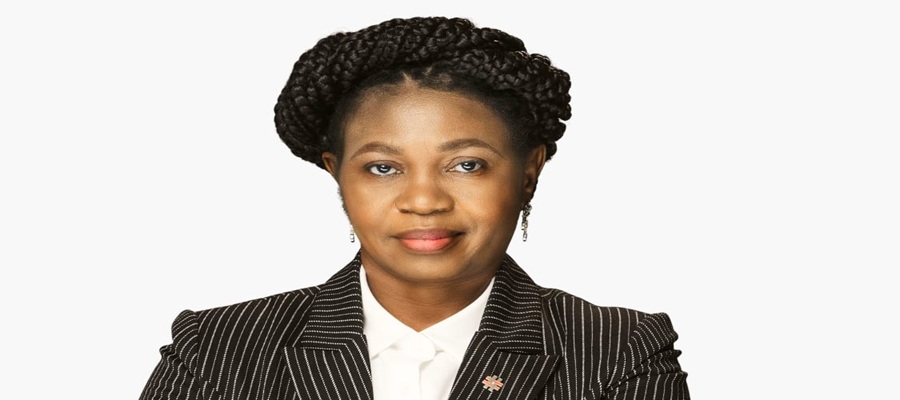
Africa Prudential Plc has reaffirmed its commitment to digital transformation, revenue diversification and sustainable growth after reporting a strong financial performance for the first half of 2026.

Dr Catherine Nwosu
The company made this known during its H1 2026 Investor Call, which brought together institutional investors, shareholders, investment analysts, regulators and other stakeholders to review its financial performance and strategic outlook.
Dr Catherine Nwosu, managing director and Chief Executive Officer of Africa Prudential, said the company’s performance reflected the resilience of its business model and the effectiveness of its long-term growth strategy despite prevailing macroeconomic challenges.
According to the company’s financial results, gross earnings rose by 27 per cent year-on-year to N4.28 billion, from N3.34 billion recorded in the corresponding period of 2025.
Profit before tax increased by 22 per cent to N2.41 billion, while profit after tax grew by 18 per cent to N1.59 billion.
The company also reported a 27 per cent rise in net operating income to N4.21 billion, while total assets increased by 13 per cent to N46.53 billion.
Shareholders’ funds equally rose by 13 per cent to N12.52 billion, reflecting continued financial strength.
Management attributed the performance to sustained growth in its core registrar business, increased corporate action activities in the Nigerian capital market, improved treasury earnings and rising adoption of its technology-driven solutions.
The company said it was steadily transforming from a traditional share registrar into a broader technology and business solutions provider serving Nigeria’s capital market ecosystem.
During the interactive session, investors sought clarification on the sustainability of earnings, particularly as interest rates are expected to moderate.
Responding, Nwosu said the company was deliberately expanding its recurring fee-based revenue streams to reduce dependence on treasury income.
“Interest rates influence our treasury income positively, but that is why we are deliberately diversifying our revenue streams.
“Our strategy is to grow recurring fee-based business lines such as our digital solutions, Know Your Customer (KYC) services, Annual General Meeting (AGM) technology, probate services and the SabiVest mobile app.
“Over time, this will reduce our reliance on interest income and create a more balanced and resilient earnings mix,” she said.
Nwosu noted that increasing capital market activities had created stronger demand for seamless digital investor experiences, improved operational efficiency and enhanced compliance solutions.
She said the company would continue investing in technology-enabled products capable of delivering long-term value to shareholders while strengthening its competitive position.
According to her, Africa Prudential has identified five strategic priorities for the second half of 2026.
The priorities include driving sustainable growth across its core registrar and emerging business lines, accelerating technology-led product innovation, strengthening brand leadership, investing in talent development and deepening corporate governance.
She said the investor engagement demonstrated the company’s commitment to transparency, accountability and regular engagement with shareholders and the investment community.
Africa Prudential reaffirmed its commitment to leveraging innovation, operational excellence and sound financial management to sustain growth and strengthen its leadership position in Nigeria’s capital market.

ITUC-Africa Faults FG’s Plans to Remove Electricity Subsidy

SEC Begins Full e-Registration for Capital Market Services

NAICOM Revokes Nigeria Reinsurance’s Licence over Failure to Meet MCR

Many Nigerian Airlines May Collapse within 30 Days – Onyema

Ogbaga, Abuja Lawyer to Sue Telcos, DStv over Alleged Unfair Practices

NRC, Ponzi Scheme Collapses Resulting Loss of Billions of Naira

From Scarcity to Scale: What Africa Can Learn from India’s Agricultural Transformation

EFCC Busts NIS Visa Overstay Racket, Uncovers N700m in an Account

BON Establishes Six Ad Hoc Committees to Modernize Broadcasting

How EFCC Turned Recovered Loot Into School Supplies for Thousands of Nigerian Students




 E-Business3 days ago
Kaspersky Identifies Cyberespionage as a Growing Threat Across Africa, Others

 Broadcasting3 days ago
NBC Files Fresh Appeal against Judgment Barring it from Imposing Fines on Broadcast Stations

 News3 days ago
INTERPOL Report Shows AI Powers 55% of Cybercrimes in Africa Amid $484m Losses

 E-Financial3 days ago
Nigerians Lost N25.85Bn to Digital Payment Fraud in 2025 –CBN

 Telecom3 days ago
Why Strong Institutions Remain Africa’s True Growth Engine

 News3 days ago
Nigeria Expands Deep-tech Skills Pipeline

 E-Financial3 days ago
NRS Announces 30 Percent Tax on Corporate Crypto Income

 E-Business2 days ago
Kaspersky Reveals a New Malicious Framework Targeting Cryptocurrency Users with the Use of OkoSpyware