

News
Arguments Swing Left and Right over Rumours of ‘Coup against Buhari’


The Presidency yesterday, said, it was ready to ruffle unruly feathers as the opposition claimed that rumours of plot to remove President Muhammadu Buhari from office through undemocratic means are attempts to blackmail Nigerians and distract them from the ruling government’s below par performance.

President Muhammadu Buhari
Elsewhere, the military, dissociated itself from such anti-democratic utterance and position and pledged loyalty to the President.
Also, Primate Elijah Ayodele, leader of INRI Evangelical Spiritual Church, assured that no form of coup will oust the President from power, because God endorsed democracy of Nigeria.
And Femi Adesina, special adviser to the President on Media and Publicity, expressed the federal government’s readiness to thwart such moves by ruffling some unruly feathers in the process.
In what appears a major doubling down on a statement by the Department of State Services (DSS), alleging sinister moves by misguided elements to wreak havoc on the government, sovereignty and corporate existence of the country; the presidency in statement, said available evidence indicated that some disgruntled religious and past political leaders are poised to throw the country into a tailspin, which would compel a forceful and undemocratic change of leadership.
According to the statement, further proof showed that the disruptive elements are now recruiting the leadership of some ethnic groups and politicians round the country, with the intention of convening some sort of conference, where a vote of no confidence would be passed on the president, thus throwing the land into further turmoil.
“The caterwauling, in recent times, by these elements, is to prepare the grounds adequately for their ignoble intentions, which are designed to cause further grief for the country. The agent provocateurs hope to achieve through artifice and sleight of hands, what they failed to do through the ballot box in the 2019 elections,” it said.
The Presidency emphasised that Nigerians have opted for democratic rule since 1999, adding that the only accepted way to change a democratically elected government is through elections, “which hold at prescribed times in the country as any other way is patently illegal, and even treasonable. Of course, such would attract the necessary consequences”.
It also accused external forces of collaborating with the mischievous individuals and groups to cause crisis in the country and warned that it will not take kindly to such move.
“These discredited individuals and groups are also in cahoots with external forces to cause maximum damage in their own country. But the Presidency, already vested with mandate and authority by Nigerians till 2023, pledges to keep the country together, even if some unruly feathers would be ruffled in the process,” the release added.
The Peoples Democratic Party (PDP), the major opposition party described the allegation by the Presidencyas a resort to blackmail in the face of failure.
In a statement on Tuesday signed by Kola Ologbondiyan, national publicity secretary, PDP said that the Buhari government and the ruling All Progressives Congress (APC) should live up to the responsibilities of office rather than “engage in frivolous allegations against Nigerians”.
The statement was titled, ‘You’re Haunted By Your Own Shadows, PDP Tells Buhari Presidency, APC’.
It partly read, “It is however imperative to state that the Buhari Presidency and the All Progressives Congress are being haunted by their own shadows as Nigerians know the persons as well as the political party with the history and penchant to scuttle democratically elected government.
“Perhaps, the Presidency has forgotten that in 1983, Brigadier Muhammadu Buhari, as he was then known, led a military coup to truncate a democratically elected government thereby causing our nation a huge drawback on democratic governance.
Also, the military, stated categorically that the Armed Forces of Nigeria remain fully committed to the present Administration and all associated democratic institutions.
In a release by brigadier general, Onyema Nwachukwu, acting director defence information, said that “We shall continue to remain apolitical, subordinate to the Civil Authority, firmly loyal to the President, Commander-in-Chief of the Armed Forces of the Federal Republic of Nigeria, President Mohammadu Buhari and the 1999 Constitution as Amended”
Reacting, Primate Ayodele, said though the administration will continue to experience imbalance, economic hardship, protest, insecurity, there will be no coup.
“The Presidency should not be afraid of any form of coup, there will be no coup. Nobody can overthrow the government though the administration will be marred by anarchy, destruction, and confusion.
“The presidency should put their head on their pillow and sleep, no coup can happen in Nigeria now even though economic hardship, protest, will continue. As long as the government fails to work on insecurity in the country but they should not think of coup, it can’t be successful’’
“God is more powerful than humans, I’m not against the government but I say what God tells me, if the government continues like this, there will be so much imbalance, and they won’t get things right unless they listen to the masses and solve the problem we are facing.”
N



On International Day of Families observed on May 15th, a global Kaspersky study* reveals that while 47% of respondents talk about online safety, only 33% secure all their family devices – highlighting the need for proactivity from Family Digital Managers.

As online threats develop and every generation joins the online space, cybersecurity habits have become an essential part of life for every family. Typically, in every family, one or two people become so-called Family Digital Managers, responsible for managing subscriptions, setting up new devices, or thinking about cyber protection. Kaspersky has conducted a survey to find out what measures modern families take to stay safe online.
According to Kaspersky’s data, a significant portion of respondents adopt an educational approach to cybersecurity within their families:
47% regularly coach elderly relatives and children on safe online practices
45% advise family members to adopt password manager solutions
42% encourage the use of multi-factor authentication (MFA)
An equal 42% actively review and adjust privacy settings on both family devices and critical online accounts
Although a growing awareness of the importance of proactive, family-focused digital protection can be observed, when it comes to the implementation of security solutions, the trend is slightly different. 10% of respondents take no measures at all to protect their loved ones online, rising to 21% among those aged 55+.
As for the parental control apps, 67% of families with children under 18 years use this tool to monitor and secure their kids’ online activity. Parental control, such as the Kaspersky Safe Kids solution, can help restrict children’s access to inappropriate content and also gently manage their online habits by limiting access to certain websites and apps, controlling their screen time, and even enhancing their physical security by tracking their geolocation.
The most worrying number is that only 33% of respondents – just 1 in 3 – install security solutions on all family members’ devices. Kaspersky experts highlight that the current threat landscape shows that mobile devices and tablets as well as PCs all require comprehensive cyber protection, as they are often targeted by cybercriminals.
According to the survey, only 30% of respondents set up new devices for their families. Setting up a new device is not often regarded as a step that contributes to cyber safety; however, some actions performed before the device is put into use can significantly enhance its security.
For instance, experts recommend installing a security solution first, to scan the device for hidden threats and make web browsing safe from the first queries. What’s more, reviewing privacy settings on a new device allows you not to share data that you would like to keep private with some applications and services.
The research also shows that the older generation (55+) is generally less included in family security habits. Around 1 in 5 (21%) of this age group globally do not take any measures to protect their family online and only a quarter (24%) install security solutions for family members. The most popular security measure among them turns out to be a password manager, as 40% of this age group recommend their family members to use it.
“We are now using a lot of gadgets and digital services, and with every new device and every additional hour spent online, the potential entry points for cybercriminals continue to grow, exposing us to a wider range of cyber threats. At the same time, not every generation adapts to these rapid changes with the same ease.
“That’s why having someone in the family take on the role of a ‘Family Digital Manager’ can be so valuable, especially when it comes to protecting kids and elder people from digital cyberthreats, give advice and help with the use of trusted security solutions,” comments Brandon Muller, Technical Expert at Kaspersky.
News
The Nigeria Prize for Science & Innovation Records New Height as 2026 Edition Attracts 237 Entries

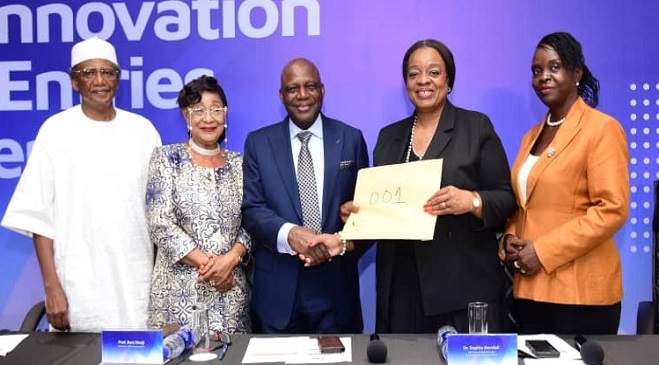
For the first time since it was established in 2004, the 2026 edition of The Nigeria Prize for Science and Innovation has recorded an historic milestone, attracting a record-breaking 237 entries.

The submissions were formally handed over to the Prize’s Advisory Board at a press conference in Lagos on Thursday, marking the start of the adjudication process.
The handover marks the beginning of the search for Nigeria’s most innovative scientific mind, under the theme “Innovations in ICT, Artificial Intelligence (AI), and Digital Technologies for Development.” The theme was a deliberate retention from the 2025 edition, which concluded without a winner after no entry met the required standard for selection.
Speaking at the press conference, Sophia Horsfall, NLNG’s General Manager, External Relations and Sustainable Development, said the continued focus on digital technologies reflects both global trends and Nigeria’s development priorities. She noted that the Prize remains a platform for identifying solutions with real-world relevance.
“In this fourth revolution, digital infrastructure is as foundational to our survival as electricity or water. For Nigeria, our economic sustainability depends on our ability to move beyond promising research and into undeniable innovation that delivers,” she said.
She added that global recognition for Nigerian innovation must be earned through stringent standards. “We believe that if a Nigerian discovery is to command global respect, it must withstand the highest levels of scrutiny. It is this conviction that guided the difficult decision seven months ago”.
While acknowledging the level of interest the theme continues to attract, Horsfall maintained that expectations remain uncompromising, noting that only solutions demonstrating real impact and scalability will be considered. She added that the decision not to award a winner in 2025 reflects this commitment and sets the benchmark for the current adjudication process.
Receiving the entries, Chairman of the Advisory Board, Barth Nnaji, described the handover as a decisive stage in the Prize’s selection process, emphasising that its credibility is anchored on strict standards of excellence. He reaffirmed that the Prize remains focused on identifying innovations that translate scientific insight into tangible socio-economic outcomes.
“Our refusal to award the prize in 2025 was not a dismissal of the hard work of Nigerian innovators; rather, it reinforces that The Nigeria Prize for Science and Innovation holds a gold standard of excellence,” he stated.
He further clarified that the outcome of the 2025 edition, in which no winner was declared, should be viewed within the context of the Prize’s rigorous evaluation framework, which demands novelty, depth, relevance, and demonstrable impact. He emphasized that all entries will continue to be subjected to the same high level of intellectual and technical scrutiny.
Professor Nnaji added that the Prize seeks solutions that directly address Nigeria’s real-world challenges. “Our broader objective is to identify work that brings tangible impact to the challenges Nigeria faces, whether through digital health technologies that serve rural populations or the use of AI in preserving our cultural heritage and languages.”
Other members of the Board are Chief Dr. Nike Akande, a two-time former Minister of Industry, and Professor Baba Yusuf Abubakar, a professor of quantitative genetics and animal breeding.
The Nigeria Prize for Science and Innovation, now in its 22nd year, is valued at $100,000 and remains arguably Africa’s most prestigious science award. The winning entry for the 2026 edition will be unveiled at a world press conference scheduled for September.


Federal government, in partnership with the World Bank, has launched a fresh $65 million funding phase of the Sustainable Procurement, Environmental and Social Standards Enhancement (SPESSE) project aimed at benefiting more than 24,000 Nigerians through professional training and institutional capacity development.

The initiative, coordinated by the National Universities Commission (NUC), is designed to strengthen procurement systems, environmental management and social standards across public and private institutions, while promoting transparency, accountability and sustainable development practices nationwide.
Abdullahi Ribadu, executive secretary of the Commission, disclosed this in Abuja during the signing of performance contracts for the additional SPESSE financing. He explained that the intervention builds on the gains of the initial $80 million SPESSE project, which became effective in 2021.
According to Ribadu, the programme has significantly improved institutional frameworks and developed professional expertise in key governance sectors. He noted that the initiative was introduced to address the shortage of qualified professionals in procurement, environmental management and social standards within both public and private institutions.
He said: “With the support of the World Bank and under the coordination of the NUC, six centres of excellence were established across the six geopolitical zones to provide sustainable capacity building in these critical sectors”.
Ribadu stated that the participating universities were selected through a transparent and competitive process based on institutional readiness, quality assurance and sustainability.
He added that the institutions have continued to produce skilled manpower capable of advancing transparency, environmental responsibility and inclusive national development.
He described the contract signing ceremony as a renewed commitment to accountability, sustainability and institutional excellence, noting that the centres have recorded major achievements, including the introduction of specialised academic programmes ranging from short courses to undergraduate and postgraduate degrees.
The NUC boss further disclosed that three of the six centres have already commenced PhD programmes, while the remaining centres are expected to begin by July 2026.
He added that under the new funding phase, the Commission targets at least 60 PhD graduates, enrolment of 60 foreign students, staff internships and expanded student exchange programmes with international institutions.
Also speaking, Adebowale Adedokun, director-general, Bureau of Public Procurement (BPP), said the project has so far trained more than 2,700 officers from both the public and private sectors to improve procurement competence nationwide.
He said the next phase would support the rollout of Nigeria’s electronic procurement system and expand online capacity-building programmes for policymakers and small and medium-scale enterprises involved in managing public funds.
On his part, Ishtiak Siddique, World Bank Task Team Leader for SPESSE, revealed that more than 40,000 participants had benefited from training under the original project, with over 4,000 certified in procurement, environmental and social standards.
Siddique said the additional funding would focus on strengthening the capacity of federal, state and local government agencies to improve development outcomes and service delivery, stressing that sustainability remained central to ensuring continuity beyond donor support.
For her part, Prof. Folasade Ogunsola, Vice-Chancellor, University of Lagos, reaffirmed the institution’s commitment to advancing professional capacity development under the SPESSE framework through postgraduate training, institutional ownership and international collaborations.

World Bank Blocks Social Media Comments from Nigerians over Loan Backlash

Nigerians Lose N12.5bBn to Telecom-Related Financial Crimes – PwC

Jumia Nigeria Records Strong Q1 2026 Growth as Technology-Led Strategy Drives Market Expansion

Lagos Plans New Cybersecurity Centre

LG Electronics Strengthens Household Energy Efficiency in Nigeria with Advanced Inverter Refrigerator Solutions

MTN, VDT, Zoracom, Digital Realty Back 2026 Girls in ICT Campaign

Vitel Wireless Partners Fintechs to Expand Access to Services

Kaspersky Discovers Vulnerability in Qualcomm Snapdragon Chips that can Lead to Data Loss & Device Compromise

MTN Suspends Data, Airtime Borrowing Service over New FCCPC Lending Rules

Bank Customers to Pay N1,500 for ATM Card Issuance, Replacement – CBN




 Telecom3 days ago
NCC Says Telecom Industry on Course to Improve Quality of Service

 News3 days ago
Kaspersky Challenges IT Leaders with Next-generation Cyber Protection Simulations

 General News3 days ago
FG to Balance Innovation with National Security with Stronger Drone Regulations

 Telecom3 days ago
Africa to get AI Data Centres Through Three-way Partnership

 News3 days ago
FG, World Bank Launch $65m SPESSE Funding for 24,000 Nigerians

 Telecom3 days ago
Distinguished Industry Veteran Dr. Olusola Teniola to Chair NDSF 2026

 Broadcasting3 days ago
FG to Launch Nationwide Free Digital TV Platform June 17

 News2 days ago
The Nigeria Prize for Science & Innovation Records New Height as 2026 Edition Attracts 237 Entries