

E-Financial
SEC Unveils Measures to Cool off Demand for Foreign Stocks

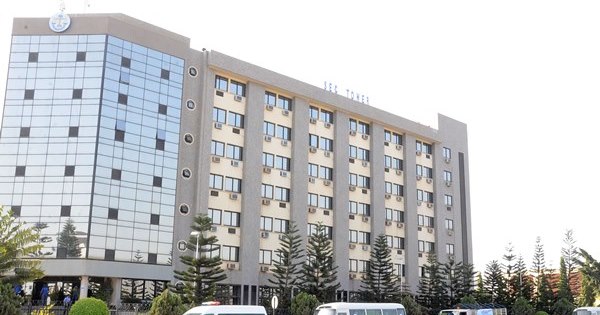
The Securities and Exchange Commission (SEC) has announced a tighter regulatory oversight of local brokers aimed at cooling off demand for foreign stocks.

The apex regulatory body in the nation’s capital market now plans to register brokers selling stocks of foreign companies as more Nigerians pile into the assets to hedge against inflation and currency weakness.
An earlier effort last month met local resistance, backfiring after warnings alerting people of risks and threats to sanction local traders.
“The commission plans to actively monitor the local market in foreign stocks in furtherance of our mandate of ensuring investor protection and market transparency,” Dayo Obisan, executive commissioner for operations of the SEC, said in an interview.
The regulator wants to draw a curtain on a period that saw legions of young Nigerians turn to online platforms to invest in stocks and digital currencies.

The need to protect savings took on more urgency after the central bank devalued the local currency three times within a year while inflation accelerated at the fastest pace in four years.
Before now, the online platforms could connect high net-worth individuals without an independent license. The SEC now wants to regulate them directly over concerns they’re targeting retail investors that require protection.
The All-Share Index, Nigeria’s benchmark equity gauge has retreated 2% this year, compared with a gain of about 11% in the S&P 500 Index.
At least 400,000 Nigerians poured funds into foreign stocks through online brokers in the past 18 months, Obisan said.
Nigerians actively trading or holding foreign equities now exceeds those investing in local collective investment schemes or mutual funds, according to the regulator. About 70% are between the ages of 18 and 40, a demographic that’s shunned the local stock market, whose total active investor base is less than a million.
“There is an increasing interest among the younger population and this is of concern to the commission primarily because it creates an avenue for exploitation,” Obisan said.
Nigerians have been accumulating foreign currencies to protect their wealth from naira volatility and surging inflation, according to a research paper in a journal published by the Central Bank of Nigeria.
“Higher real-exchange rate volatility is associated with an increased level of currency substitution,” central bank economists including Isaiah Ajibola, Sylvanus Udoette, Rabia Muhammad and John Anigwe said in the paper available on the central bank’s website.
There is a need to contain “exchange-rate volatility and inflation as a way of curbing the spate of currency substitution in the country,” they said.
One measure of currency substitution, the ratio of foreign cash deposits to naira deposits on demand in the banks exceeded the International Monetary Fund’s 30% threshold from 2009 following the global financial crisis, the researchers said. It hit a peak of 98.2% in 2014 before declining to 83% in 2018.
A broader measure of foreign currency in banks to naira savings, demand and term deposits, stayed largely within the IMF limit over the study period from 1995 to 2018.


Financial Derivatives Company (FDC) Limited, a premier economic think-tank and financial advisory firm, led by Bismarck Rewane, has reported that Nigerians have accumulated an estimated $59 billion in cryptocurrency holdings.

Bismarck Rewane
According to data released by the firm highlights the country’s emergence as one of Africa’s and the world’s major players in digital assets.
The earlier disclosure reflects a profound shift in Nigeria’s financial landscape.
In Africa’s largest economy, crypto has moved from a fringe activity to a mainstream tool amid persistent inflation and naira volatility.
Citizens and businesses are increasingly turning to dollar-pegged stablecoins and decentralised platforms, building a parallel financial system with significant economic influence.
Nigeria continues to rank among global leaders in adoption.
According to Chainalysis’ 2024 Global Crypto Adoption Index, the country placed second worldwide for grassroots adoption, driven by widespread use in everyday transactions and cross-border commerce.
Despite these impressive statistics, a notable contradiction remains in public perception.
While stocks, real estate, mutual funds, and foreign currency are openly discussed, many Nigerians still approach cryptocurrency with caution, often downplaying their involvement.
Crypto assets, or cryptocurrencies, are digital assets utilizing cryptography, peer-to-peer networking, and distributed ledger technologies (like blockchains) to secure, verify, and record transactions.
Unlike traditional fiat currencies issued by central banks, these assets operate without central intermediaries, functioning globally as alternative stores of value or transactional mediums.
Flutterwave, an African-founded payments technology company, has partnered with Xoom, PayPal’s international digital money transfer service, to enable faster international money transfers into Nigeria.

The partnership connects Xoom’s global money transfer network with Flutterwave’s local payout infrastructure, allowing customers worldwide to send funds directly to Nigerian bank accounts with local settlement in naira.
Under the arrangement, Flutterwave converts Xoom transfers and settles them locally, enabling recipients to receive funds directly into accounts held at Access Bank, United Bank for Africa, Zenith Bank, First Bank of Nigeria, Guaranty Trust Bank and other participating banks.
Nigeria is one of Sub-Saharan Africa’s largest remittance recipients, receiving more than $20 billion in personal remittances in 2024. However, international payments have historically been affected by foreign exchange constraints and settlement delays.
Flutterwave said the partnership aims to address those challenges by combining Xoom’s international reach with its local compliance capabilities and banking partnerships to simplify cross-border money transfers into Nigeria.
Xoom enables consumers to send money, pay bills and top up mobile phones in approximately 160 markets worldwide as part of PayPal’s global payments ecosystem.
“Millions of Nigerians rely on money from abroad to support everyday needs, whether it’s families receiving help from loved ones, freelancers getting paid for their work, or individuals earning income from the global economy,” said Olugbenga Agboola, founder and CEO of Flutterwave.
“This partnership makes it easier and more reliable for people in Nigeria to receive funds and stay connected to opportunities beyond borders.”
The collaboration expands Flutterwave’s cross-border payments infrastructure and strengthens access to international remittance services in one of Africa’s largest payments markets.
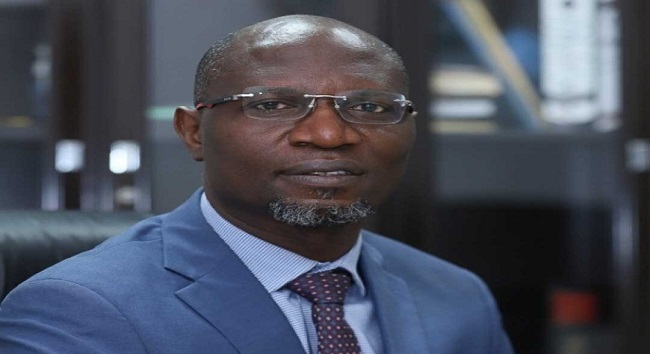
The Securities and Exchange Commission (SEC) has unveiled plans to make sustainability reporting mandatory for large public interest entities from 2027 as Nigeria moves to align its corporate disclosure framework with global environmental, social and governance (ESG) reporting standards.

The phased implementation will begin with voluntary adoption by early adopters and large public interest entities before becoming mandatory in 2027. The requirement will extend to other public interest entities in 2028 and small and medium-scale enterprises (SMEs) by 2030.
Dr Emomotimi Agama, Director-General of the SEC, disclosed this at the 2026 Financial Institutions Training Centre (FITC) Sustainability and ESG Conference 3.0 in Lagos, themed ‘Building a Sustainable Africa: Integrating Environmental Stewardship, Social Investment, and Strong Governance for a Prosperous Future’.
Agama said Nigeria’s sustainability disclosure regime is being aligned with the International Sustainability Standards Board (ISSB) framework, including IFRS S1 and IFRS S2, which have emerged as the global benchmark for sustainability reporting.
He said that institutional investors increasingly consider ESG performance a key determinant of capital allocation rather than a peripheral corporate responsibility issue, noting that the price of entry is disclosure.
He said the reforms would strengthen investor confidence and position Nigerian businesses to access global capital markets, where sustainability disclosures are becoming an essential investment requirement.
According to him, Nigeria’s capital market has recorded significant expansion, with market capitalisation growing from about N130 trillion to nearly N160 trillion following recent market reforms, while assets under management have surpassed N9 trillion.
To deepen sustainable finance, Agama said the commission was promoting infrastructure, green and municipal bonds, alongside infrastructure-focused investment funds, to mobilise long-term capital for critical national projects.
He added that the SEC would also encourage investments in the blue economy and support financing for the power sector through green energy bonds, project bonds and public-private investment structures.
The SEC chief cited the recent launch of the Nigerian Exchange (NGX) Impact Board as another milestone in advancing sustainable finance and urged companies, regulators and investors to move beyond commitments by embedding sustainability into governance, operations and investment decisions.
Managing Director and Chief Executive Officer of the Financial Institutions Training Centre (FITC), Dr Chizor Malize, said sustainability and ESG had evolved from compliance issues to core drivers of business competitiveness, investment decisions and economic development.
She said the conference, now in its third edition since 2024, had become a leading platform for advancing sustainability discourse in Africa, adding that this year’s gathering was designed to move stakeholders “from conversation to commitment”.
Chairman of the FITC Advisory Board, Prof Fabian Ajogwu, described governance as the foundation of sustainable development, arguing that Africa must become a standard-setter rather than merely adopting frameworks developed elsewhere.
Although Africa contributes less than four per cent of global greenhouse gas emissions, he said, the continent bears a disproportionate share of climate-related impacts, including worsening floods and increasingly erratic weather patterns.
Ajogwu also cited estimates that poor governance costs Africa between $88 billion and $90 billion annually, while highlighting technology-driven agricultural initiatives, including a partnership involving Morocco’s OCP Group and the Nigeria Sovereign Investment Authority (NSIA), as examples of practical models that should be replicated across the continent.
Delivering the keynote address, Chairman of the MTN Nigeria Foundation, Mosun Belo-Olusoga, said the debate over the relevance of sustainability and ESG had ended, with the real challenge now centred on implementation.
She observed that global investors increasingly evaluate businesses on governance quality, resilience and their ability to manage environmental and social risks, in addition to profitability.
Belo-Olusoga noted that despite contributing the least to global carbon emissions, Africa possesses vast arable land, abundant renewable energy resources and critical minerals required for the global energy transition.
She identified four leadership priorities for the continent: shifting from short-term performance to long-term value creation, replacing corporate philanthropy with strategic social investment, moving beyond regulatory compliance to responsible leadership, and strengthening collaboration among governments, businesses and development partners.
She also outlined five priorities for Africa’s ESG agenda over the next decade, including embedding sustainability into corporate strategy and governance, investing in human capital, mobilising indigenous capital through instruments such as green bonds and pension funds, strengthening institutional accountability, and fostering partnerships in renewable energy, digital technology and climate-smart agriculture.
“The defining challenge before Africa is not a shortage of vision; it is execution,” Belo-Olusoga said, urging governments to create enabling policies, businesses to integrate ESG into enterprise risk management, and financial institutions to develop innovative financing mechanisms that support a green and inclusive economy.

Tinubu Orders NIMC to Enrol Every Nigerian by End of this Year – DG

Nigerians Accumulate $59Bn in Cryptocurrency Assets —FDC

Nearpays, Nigerian Fintech Becomes First African Startup to Win UN’s AI for Good Innovation Factory

Nokia’s 14 Years of Mobile-Phone Supremacy Ended in an Afternoon

MTN Nigeria Slashes Cost of Broadband Internet Router, Unwraps New Data Bundles for Low-Budget Users

NRC, Ponzi Scheme Collapses Resulting Loss of Billions of Naira

Nigeria Launches FreeTV Nationwide

NASENI Moves to Digitize CCB’s 5m Assets Declaration and Operations

Lebara Nigeria Launches Lebara Play, Africa’s First Telecom-Owned Micro-Drama Platform

CANAL+ Partners Samsung to Pre-Load DStv Stream on New Samsung TVs In Nigeria, Other African Countries




 News1 day ago
Xora Finance, Fintech Firm Refuses to Hire Nigerians over Alleged Dishonesty

 Telecom1 day ago
NCC Advances Dig Once Policy, Engages Stakeholders on Cost-Based Framework for Duct Sharing

 General News1 day ago
FG Secures Fresh $208.3m World Bank Loan for Cash Transfer

 Telecom1 day ago
NCC to Keynote Telecom Sector Sustainability Forum 7.0
 News1 day ago
How Ponzi Scheme Victims can Seek Legal Remedies — Lawyers

 General News1 day ago
SERAP Sues INEC over Alleged N800Bn 2027 Tinubu Campaign Fund

 News1 day ago
PalmPay Nigeria Appoints Samuel Oluyemi as Chief Operating Officer

 E-Business1 day ago
Kaigama,Catholic Archbishop of Abuja Warns against Misuse of AI