

Broadcasting
Angst over Poor Services Offered by FreeTV


Subscribers to FreeTV, recently launched in Lagos as the country’s official Free-To-View digital terrestrial television (DTT), have expressed disappointment over poor reception, total lack of it and lean channel offerings among others.

The service was launched in Lagos on April 30 by Alhaji Lai Mohammed, minister of Information, as part of the national digital switchover (DSO) programme.
According to New Telegraph, but two weeks after launch, subscribers have been venting their anger on FreeTV’s official Facebook page.
Reginald Iyama, a Facebook user who has bought the decoder, wrote that his decoder has not been activated six days after purchase. “FreeTV is gone too soon. I have been trying to activate for over six days now,” he wrote.
Omekele Onogwu Matthew, another user, detailed his experience as: “Activation problem, subscription problem, refresh problem. For all of these, you must pass through their top dealers, who will demand commission.”
It is the same for Ehibor Loveday, who stated: “You can’t activate, you can’t subscribe, you can’t refresh. What a useless FreeTV. I have it (the decoder) in the dustbin. This is Nigeria where nothing works.”
Osho Abiodun said he bought 10 decoders from a dealer in Lagos and has been unable to activate any, the reason he demanded a refund.
“I bought 10 decoders from one of your distributors in Lagos and all are not working. The dealer can’t activate the decoders. Now, I don’t want to have any issue with FreeTV as from today and I want my money back,” he wrote.
For many others in the state, there is little information on where to buy decoders.
Tunde Niyi Abiodun, who resides in Ikorodu, wrote that the decoders are not available in the town. It is the same with Arix Oyekan, who asked where he can buy in Lagos, and Dorcas Adeleye, who wanted to know where to buy in Agege.
Subscribers also complained about is the refusal of FreeTV staff to respond to their enquiries on activation, subscription renewal and signal disappearance.
Mbanugo Steve, a discontented user, wrote: “Some of the questions I wanted to ask like the names of stations on offer, price and where to buy have been asked over an hour ago, but nobody is offering answers.”
When a call was put through 0703887277, the number listed as FreeTV’s on its Facebook page, the call was a female, who said she is a staff of the National Broadcasting Commission (NBC) in Abuja. She said the decoder costs between N12,000 and N13,000, with subscribers expected to pay a yearly digital access fee of N1,500.
Those lucky with the signal complained of the limited number of channels on the platform, saying some of the channels they once watched have since disappeared, with no explanation offered.
Egwim Mamba Chris, who said he rescanned his decoder many times, wrote: “Children need a particular station dedicated to cartoons, so they too can enjoy FreeTV. Also, what happened to stations like Core TV, One Music etc…They have stopped showing for long.”
The experiences are not exclusive to Lagos, where the service has just been launched, but have been endured by residents of states where FreeTV was launched between 2016 and 2017.
In a post made two years ago, one Oluwatoyin Afolashade, who did not give her city of residence, complained that her decoder was inactive for six months.
“Our FreeTV stopped working six months ago. When I click on factory reset, it detects channels but still says no signal though the green light is on,” she wrote.
Also, Lorenzo Nathan, who is based in Kubwa in the Federal Capital Territory, said he got a FreeTV decoder a few years ago, but has not enjoyed it.
New Telegraph


MTN Group has begun rolling out MTN One TV, a new entertainment proposition designed to make digital video content more accessible, relevant, and flexible for customers across African markets.

Introduced in line with MTN’s Ambition 2030 strategy, MTN One TV brings together local storytelling, live channels, international programming, and market-specific viewing options tailored to how customers across the continent access and pay for digital entertainment.
The proposition is designed to give customers greater choice in how they watch content, with viewing models that may vary by market and can include free-to-view content, advertising-funded experiences, pay-as-you-watch access, and subscription offerings.
Depending on local availability, customers may also be able to pay through airtime, Mobile Money, and other locally supported payment methods, helping to reduce common barriers to streaming access.
Beyond enhancing customer experiences, MTN One TV creates new opportunities for African creators, broadcasters, advertisers, and ecosystem partners by helping connect content to wider audiences through MTN’s scale across connectivity, payments, and digital services.
By bringing together a broad mix of content experiences under a single proposition, MTN aims to support greater content discovery, broader audience reach, and sustainable growth across Africa’s digital entertainment ecosystem.
Anchored in MTN’s strategic platforms of Connectivity, Fintech, and Digital Infrastructure, MTN One TV forms part of the Group’s broader ambition to build digital experiences that create value for customers while enabling participation and growth across Africa’s digital economy.
“Entertainment is increasingly becoming an important gateway to digital participation,” said Selorm Adadevoh, MTN group chief commercial, strategy and transformation officer.
“Through MTN One TV, we are leveraging the scale of our connectivity, fintech, and digital capabilities to make relevant content more accessible while creating new opportunities for Africa’s creative and digital economies. This is aligned with our ambition to deliver digital solutions for Africa’s progress.”
MTN One TV is being introduced progressively across MTN markets through a phased rollout approach that reflects local market needs, existing services, and partnership opportunities.
Over time, MTN will bring together a combination of video capabilities, content partnerships, and customer experiences under the MTN One TV brand to create a more consistent and scalable entertainment proposition across its footprint.
Through MTN One TV, MTN continues to extend its role beyond connectivity by combining entertainment, payments, and digital services to deliver experiences tailored to the needs of African consumers.
The rollout supports MTN’s Ambition 2030 vision of leading digital solutions for Africa’s progress while expanding access to digital entertainment across the continent.
International Air Transport Association (IATA) has identified Nigeria as one of the most expensive countries in the world for airline operations, citing high taxes, charges and operational costs that continue to weigh heavily on local carriers.

IATA’s Regional Vice President for Africa and the Middle East, Kamil Al-Awadhi, disclosed this during the association’s Annual General Meeting held in Rio de Janeiro.
Al-Awadhi said that although Nigeria’s Minister of Aviation and Aerospace Development, Festus Keyamo, had been pursuing reforms aimed at improving the aviation sector, airlines operating in the country still faced enormous cost pressures.
According to him, the high-cost operating environment has continued to affect the profitability and competitiveness of Nigerian airlines, making it difficult for the industry to realise its full potential.
He noted that excessive taxes, regulatory charges and other operating expenses remained major obstacles to airline growth across the region, with Nigeria ranking among the most challenging markets from a cost perspective.
Al-Awadhi urged member states of the Economic Community of West African States to adopt a proposed 25 per cent reduction in aviation taxes and charges to ease the burden on airlines and passengers.
According to him, lowering taxes and charges would reduce airfares, stimulate passenger traffic and strengthen the competitiveness of carriers operating within West Africa.
He stressed that a more supportive policy environment was critical to unlocking the economic benefits of aviation, including increased trade, tourism and regional integration.
Industry stakeholders have consistently advocated lower taxes and regulatory fees, arguing that the current cost structure makes air travel less affordable and limits the growth of the sector.
IATA’s latest remarks add to calls for governments in West Africa to implement policies that will promote a more sustainable and competitive aviation industry across the region.
Broadcasting
NASENI Trains 50 Women in Kano on Renewable Energy Technologies Under She-Powers Initiative

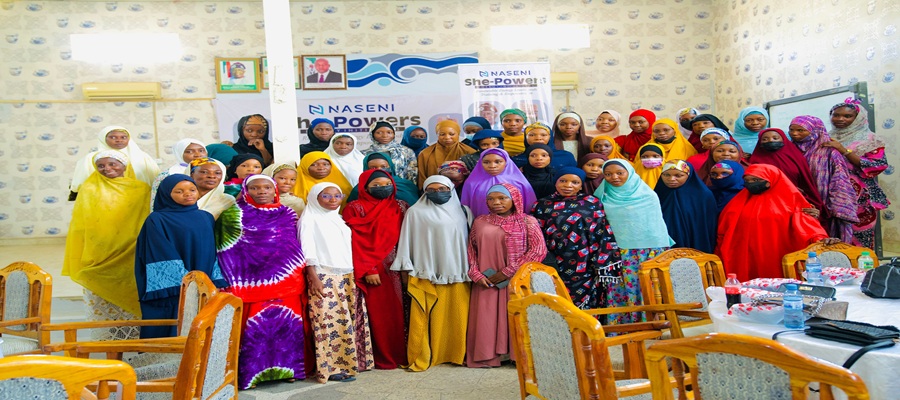
The National Agency for Science and Engineering Infrastructure (NASENI), under the leadership of its Executive Vice Chairman/CEO, Khalil Suleiman Halilu, has trained 50 women in Kano State on inverter and battery technologies through its She-Powers Energy Initiative.

The three-day programme, held at the Technology Incubation Centre, Farm Centre, Kano which ended yesterday, was designed to equip participants with practical renewable energy skills, promote women-led enterprises, and enhance sustainable livelihoods.
The initiative forms part of NASENI’s broader commitment to empowering women, creating economic opportunities, and expanding participation in Nigeria’s growing clean energy sector. It also aligns with the Renewed Hope Agenda of President Bola Ahmed Tinubu by supporting job creation, entrepreneurship, and inclusive economic development.
Through targeted interventions such as the She-Powers Energy Initiative, NASENI continues to demonstrate its commitment to leveraging technology and innovation to improve lives and drive sustainable development across the country.
Photos: Participants at the She-Powers Energy Initiative training organised by the National Agency for Science and Engineering Infrastructure (NASENI) held at the the Technology Incubation Centre, Farm Centre, Kano yesterday.

Galaxy Backbone @ 20, Pledges Nationwide Connectivity, Data Sovereignty

KidsCook Showdown 2.0 Set to Empower Public School Pupils with Culinary, Life Skills

CBN Orders Banks, Fintechs to Host Payment Data Locally

PalmPay Joins Industry Leaders @ Digital Pay Expo 2026

UK Bans TikTok, Instagram, Facebook for Under-16s in Landmark Crackdown

CBN Extends PoS Geo-Fencing Enforcement Deadline to August 2026

NCC Drafts New Rules for Virtual Mobile Operators

TD Africa, HPE Drive Conversations on the Future of Intelligent Networking

London Strengthens Global Investment Ties with Africa @ First Ever London-Africa Business Summit

Easybuy Partners WAWUAfrica to Upskill 10 Million Youths and Women, Boosting Nigeria’s Economic and Financial Inclusion




 General News1 day ago
₦5m up for Grabs as 10 Startups Clash at the Gathering on 100 Pitchathon Aba

 E-Business1 day ago
CSOs Raise Alarm over Nigeria’s Data Protection Crisis

 E-Financial1 day ago
CBN to Expand eNaira for Salaries, Pensions and Welfare Payments

 E-Business1 day ago
AI-Powered Cyber Threats Put Nigerian Banks on Alert

 General News1 day ago
CBN Moves to Stop Banks From Using Customers’ Money for Fintech Subsidiaries

 E-Financial1 day ago
CBN to Bar HoldCos from Influencing Banks’ Lending Decisions

 Telecom1 day ago
NITDA Reveals Why AI Could Be Nigeria’s Biggest Wealth Creator, Not Oil

 Telecom1 day ago
NASENI Unveils Ambitious Plan to Produce 600 Million Diagnostic Kits Annually