

E-Business
LG Inverter ACs: Promoting User Comfort and Healthy Living

Life is not just about having the latest electronics but about the experiences technology creates. To live a healthy and more convenient lifestyle, many people across the world are seeking eco-friendly, energy-saving and sustainable smart home appliances than ever before.

In an attempt to address the needs of its esteemed consumers who are health conscious and want to live a healthy lifestyle, LG Electronics in the last few years, have focused on innovative ways deliver next generation of quality products that will fit into the smart home of the future.
In the residential air conditioners market, some of the products that the company has achieved remarkable innovation success are the ARTCOOL and DUALCOOL Premium Air Conditioners.
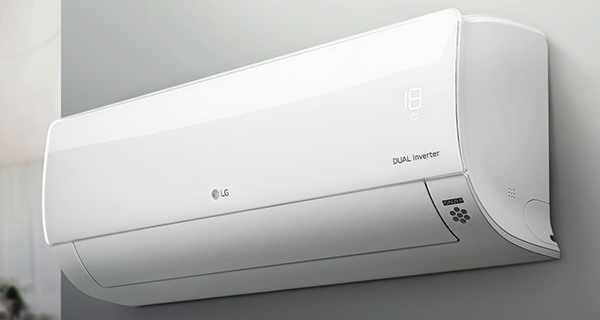
LG ARTCOOL and DUACOOL Premium are life changer because they are beyond just ACs as they are packed with health benefits such as the Plasmaster Ionizer that removes 99% of adhering bacteria and deodorizes and 40% fast cooling.
According to Mr. Jung June Yoon, Product Manager Air Solutions, LG Electronics, West Africa Operations, LG’s Dual inverter compressor technology enables our residential air conditioners to operate at a pleasantly low noise level, enabling users to relax or rest comfortably without the distracting hum of the air conditioner.

“LG DUALCOOL Premium Air Conditioners are equipped with dual premium design and unique features such as Smart ThinQ, ice & custom cooling and energy saving. It comes in Rose Gold and White Colour, they are truly an epitome of beauty as they add décor and novelty to your home.
Speaking on the aesthetics, Mr. Yoon said “The ultra-sleek black mirror and frame adds an extra touch of elegance to its already stunning appearance, making it ideal for premium style homes. The eye-catching aesthetic design of the appliance is sure to attract attention just as its convenient features are guaranteed to enhance usability
LG takes AI to the next level and learns its surroundings and customers on its own and works in the best way. LG ARTCOOL product is equipped with sympathetic artificial intelligence which notifies the user of the driving mode that changes according to the situation without a customer’s question and tells the necessary information.
Compared to general cooling of 10.8℃ in average, LG DUALCOOL Premium Air Conditioner blows 6.8℃ wind in average to provide instant cooling when it is turned on. Even the electric fans adjust the wind directions.
It does not make sense an air conditioner is unable to adjust the wind directions. The only air conditioner in the country that provides custom cooling of direct indirect winds with up down left right wind control.
LG Inverter ACs available in Nigeria today include ARTCOOL 2.0HP; DUALCOOL 1.5HP; ARTCOOL 1.5HP; DUALCOOL 2.0HP and many others.
All the new range of LG air conditioners and other smart home products are available at all Fouani Nigeria Limited outlets in Lagos, Port Harcourt, Abuja, Kano, Jos, Asaba, Ibadan and Benin City.


E-Business
Kaspersky Discovers Vulnerability in Qualcomm Snapdragon Chips that can Lead to Data Loss & Device Compromise

Kaspersky ICS CERT discovered a hardware-level vulnerability affecting Qualcomm chipsets that are widely used in a range of consumer and industrial devices, including smartphones and tablets, car components, IoT devices and more.

The vulnerability resides in the BootROM – firmware embedded at the hardware level. Attackers could potentially get access to any data stored on the device or device sensors like camera and microphone, implement complicated attack scenarios and in some circumstances get full control of the device. The results of the research were presented at Black Hat Asia 2026.
The vulnerability affects Qualcomm MDM9x07, MDM9x45, MDM9x65, MSM8909, MSM8916, MSM8952 and SDX50 series and was reported to Qualcomm in March 2025. Qualcomm formally acknowledged the vulnerability in April 2025. It has been assigned a CVE-2026-25262. Other Qualcomm-based chips may be affected as well.
Kaspersky researchers explored the Sahara protocol, a low-level communication system used when a Qualcomm chip enters Emergency Download Mode (EDL) – a special recovery mode designed for repairing or restoring smartphones or other devices. Sahara acts as the first step that allows a computer to connect to the device and load software before the operating system on the device starts.
Kaspersky demonstrated that a security flaw in this process could allow an attacker with physical access to the target device to bypass key security protections in the chip, compromise the secure boot chain and, in some cases, deploy malicious applications and backdoors to the chip’s Application Processor, thus fully compromising the entire device.
For example, in cases when the target device is a smartphone or a tablet, the attacker can potentially get access to entered user passwords, and subsequently this opens further access to multiple types of sensitive user data, such as files, contacts, location, access to the devices’ camera and microphone, etc.
A potential attacker only needs a few minutes of physical access to a device to compromise it. Therefore, if a smartphone has been sent for repair or left unattended for a short time, one can no longer be sure it is not infected. Researchers warn that the threat extends beyond end-user scenarios to include potential compromise during the supply chain phase.
“Vulnerabilities like this may allow attackers to deploy malware that is difficult to detect and remove. In practice, this could enable covert data collection or influence device behaviour over extended periods of time.
“While a reboot might seem like an effective way to remove such malware, it cannot always be relied upon: compromised systems may simulate a reboot without actually resetting. In such cases, only a complete loss of power – including battery depletion – guarantees a clean restart,” comments Sergey Anufrienko, security expert at Kaspersky ICS CERT.
Kaspersky advises organisations and individual users to exercise strict physical security control over devices including at the supply, maintenance and decommissioning phases. A reboot of the device by cutting off the power supply to the affected chip (if available) or full battery discharge may help to get rid of the malware if it was installed.
E-Business
Survey Shows Gaps in Cybersecurity Policies and Employee Commitment Leave Organisations Vulnerable

A recent Kaspersky survey entitled “Cybersecurity in the workplace: Employee knowledge and behaviour”, showed that 39% of professionals in the Middle East, Turkiye and Africa (META) region, consider cybersecurity rules in their company to be excessive or not fully appropriate.

While 7% noted that their organisations do not have cybersecurity rules or that they are not aware of them. These results show a disconnect between corporate cybersecurity policies and employee commitment to these rules, underscoring the risks associated with shadow IT and unmanaged device usage in the workplace.
Shadow IT is defined as the use of unauthorised software, devices, or services without IT oversight, and it has evolved into a critical business risk. While often driven by employee productivity needs, it creates blind spots for IT departments.
The rise of hybrid work environments, increased reliance on cloud-based tools and the spread of AI tools have accelerated this trend. Without robust cybersecurity management and oversight, organisations face heightened exposure to ransomware attacks, data leaks, and regulatory penalties.
19% of survey respondents in the META region said there are no policies regarding the use of non-corporate devices in their company. 35% of employees admitted that they can use their own devices to access business information, provided they have some type of cybersecurity protection, even consumer-grade software.
On the positive side, 21% said they can use their own device, but these must first pass more stringent corporate IT security checks; while 25% of respondents indicated that only devices provided by the IT function can be used for work purposes.
The situation is significantly better with permissions for employees to install software on corporate devices without IT department’s approval. 50% reported that only IT specialists in their company are allowed to install software, while in 31% of organisations only top management or designated users can do so. 11% of employees can install software that is approved by the IT team. However, 8% of respondents said that all users can install any software they need without IT agreement in their organisation.
At the same time 21% of professionals surveyed acknowledged that within the past year they installed software on their work devices without IT supervision. That highlights a persistent shadow IT challenge that continues to expose organisations to security vulnerabilities, compliance risks, and data breaches.
“Shadow IT is now a mainstream operational risk. When one in five employees installs software without IT oversight, it signals a policy gap. Many organisations already have security policies in place, but employee perception must also be considered.
Organisations should move beyond restrictive controls and instead implement intelligent, user-centric cybersecurity strategies that combine strategies that integrate technology with employee awareness and responsible use,” said Toufic Derbass, Managing Director for the META region at Kaspersky.


Microsoft is facing a £1.7 billion ($2.3 billion) class action lawsuit in the United Kingdom over allegations that it abused its dominant market position in cloud computing.

Microsoft
The case, filed before the Competition Appeal Tribunal, was brought by Maria Luisa Stasi on behalf of about 59,000 British businesses and organisations. It alleges that Microsoft unfairly imposed higher costs on customers running its Windows Server software on rival cloud platforms.
Stasi said the company’s practices have had a significant financial impact on both public and private sector organisations over several years.
In allowing the case to proceed, the tribunal ruled that it has a “reasonable prospect of success.” The judges noted that Microsoft is alleged to have abused its dominance in the paid server operating system market to undermine competition in the cloud services space.
If the claim succeeds, compensation for affected organisations is estimated to range between £1.7 billion and £2.1 billion.
Microsoft has rejected the allegations and confirmed it will appeal the ruling. A company spokesperson said the decision does not represent a final judgment on the claims and that it disputes the substance of the case.
The lawsuit comes as regulators in the UK and the European Union intensify scrutiny of Microsoft’s cloud business practices. UK authorities are currently assessing whether the company should be designated as having “strategic market status,” a move that would subject it to stricter competition rules.

NCC Blames Growing Data Demand Network Quality Issues

EFCC Detains Ayeni, Ex-Skye Bank Chairman over Alleged N36.5Bn, $30m Fraud

Bank Customers to Pay N1,500 for ATM Card Issuance, Replacement – CBN

Summit Factory Opens in Ogun, Targets Hygiene Market Expansion

Kaspersky Discovers Vulnerability in Qualcomm Snapdragon Chips that can Lead to Data Loss & Device Compromise

NBC Boss Urges Content Ceators to Participate in DSO

NITDA Takes Over National Digital Architecture System

FG Shifting Focus to “Meaningful Connectivity” to Drive Inclusion – Minister

FG to Gift Nigerians over 100 Free TV Channels from May 15

Jury Finds Meta, Google Liable for Woman’s Social Media Addiction




 E-Business2 days ago
FCCPC Licenses 5 Firms for Airtime, Data Lending as Telcos Step Aside

 General News3 days ago
Breaking News…Hackers Allegedly Expose EFCC Data, Operatives’ Identities

 E-Financial2 days ago
Ecobank in Talks with Bank of China for Direct Yuan Settlement

 E-Financial2 days ago
CBN Warns of Cyber Hack Attempt Days after CAC Attack

 Telecom2 days ago
Deadline Extended! MTN Nigeria Offers More Time for Media Innovation Programme

 Telecom2 days ago
Payments Forum Nigeria (PAFON 3.0) Holds This Friday in Lagos

 E-Financial1 day ago
EXPLOSIVE: How Titan Trust Bank Allegedly Used Union Bank’s Own Assets to Fund Its Takeover

 Telecom2 days ago
Vivo, Credit Direct Ink Agreement on Smartphone Credit Purchase