

News
How Africa Can Prepare as Drones Enter Hands of Insurgents

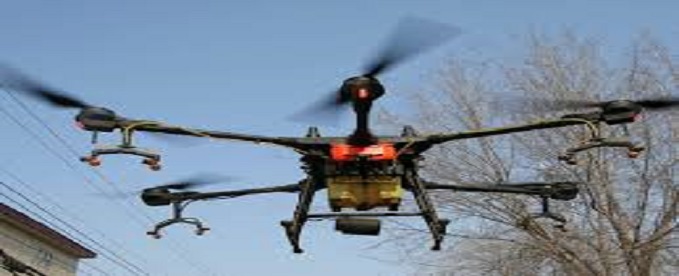
By Karen Allen
Like in the Middle East, drones are a new threat posed by armed groups and violent extremists in Africa.

The proliferation of drone technology across Africa has significantly expanded humanitarian, development, business, and military operations. Drones, also known as unmanned aerial systems, have many positive uses. In the hands of non-state armed groups however, they pose a threat that governments must be prepared for.
The global commercial drone market is forecast to reach US$43 billion by 2024, with Rwanda, Ghana, South Africa and Kenya expected to be Africa’s biggest users.
Commentary typically focuses on military drones and implications for international humanitarian law, or the use of drones for business and humanitarian purposes.

The impact of other entities using drones – be they companies, hobbyists or insurgents – has attracted little attention.
In exploiting the benefits of transformative technology, African states should be aware of the potential risks and develop strategies to track and trace drone proliferation.
Armed groups either receiving supplies from proxies or using drones as weapons in Iraq and Syria, and more recently in Yemen and Libya, should alarm African governments.
The risk of drones becoming a new form of improvised explosive device as seen in Iraq, Syria, Afghanistan and Ukraine was also recently highlighted by General Kenneth McKenzie of the United States Central Command.
Armed groups have recently used drones to locate targets in the Democratic Republic of the Congo
Drones already form part of the military’s arsenal in many African countries and are deployed in peacekeeping missions.
Although the adaptation of commercial drones by insurgents into strike platforms in Africa is yet to happen, there’s evidence of their use by armed groups for surveillance and precision targeting.
In the Democratic Republic of the Congo, insurgents have recently used unmanned aerial systems to locate targets for attacks.
And in May, Mozambique’s Interior Minister Amade Miquidade told a press briefing that insurgents had deployed drones for precision targeting in Cabo Delgado province. This aligns with unverified reports by private security companies in the region that militants used small drones for surveillance.
Analyst Jasmine Opperman told ISS Today that, ‘If we look at the ease with which [insurgents] are getting weapons and mounting attacks on the military, I will never underplay the possibility that they are [using] more technologically advanced capabilities including drones.’
The fact that hobbyist drones are commercially accessible and becoming more affordable heightens the threat and presents a challenge to those seeking to restore peace.
The Middle East experience doesn’t mean drones will be used as weapons in the same way in Africa
Don Rassler of the Combating Terrorism Center at West Point has focused on the dynamics of drone acquisition in Iraq and Syria. He told Institute for Security Studies (ISS) researchers that it’s ‘only a matter of time before drones get deployed more actively across Africa.’ His studies show how extremists acquire shop-bought drones in large numbers, transport them to conflict zones and adapt the technology to transform the devices into weapons.
It’s unclear whether Africa-based insurgents would use organisational ties to acquire technological know-how from Islamic State networks. Preliminary research in the Sahel and East Africa suggests that direct links are hard to prove. While more empirical studies are needed, the availability of shop-bought drones across Africa suggests that indigenous innovation is more likely to be observed than direct technology transfer.
The Middle East experience doesn’t necessarily mean that drones may be used in the same way in Africa, says Matt Herbert from the Global Initiative Against Transnational Organized Crime, who has focused on Libya and emerging technologies. ‘Their tactical utility may be limited as a weapon; however, strategically they could be of use for wider intelligence gathering, for collection of footage and propaganda materials and for precision targeting.’
That aligns with information from Somalia that al-Shabaab has deployed drones for surveillance and propaganda purposes. Retired Colonel David Peddle, a former military service member in South Africa and the United Kingdom, believes it’s only ‘a matter of time’ before we start seeing the deployment of ‘clusters’ or ‘swarms’ of drones in Africa, given their accessibility and relatively low cost.
Early warning systems could flag large consignments of drones delivered to areas of conflict
The psychological advantage of threatening to deploy such aerial assets could give insurgents an advantage over their adversaries and expand their spheres of control. This applies both on land and at sea, with eyewitness accounts from Mozambique of drones used offshore during the March Palma attack.
Even if drones are primarily used for surveillance now, they remain a powerful tool. ‘It doesn’t have to be a hijacking or an attack,’ argues ISS maritime Project Leader Timothy Walker, who is investigating the expansion of maritime policing operations in the region. ‘It just has to be an intrusion for it to have potency.’
Increasing drone use in Africa should give policymakers and the humanitarian sector pause for thought. The United Nations’ World Food Programme, for example, deploys drones for disaster response and mapping purposes across Mozambique.
As a first step, mapping the use of drones by violent non-state groups across Africa could help ensure that aid programmes and humanitarian corridors aren’t compromised. This would also enable private or private-public partnerships such as oil and gas refineries, ports and harbours, airports and military bases to develop countermeasures.
While African governments may struggle to control the proliferation of commercial drones, early warning systems could flag large consignments of drones procured and delivered to areas of conflict. A registration scheme similar to that used for cellphones could be considered for shop-bought drones that don’t need a licence.
Internationally, the Global Counterterrorism Forum has developed the Berlin Memorandum under its Initiative to Counter Unmanned Aerial System Threats. It urges states to observe numerous UN Security Council Resolutions that require ‘effective measures to establish domestic controls to prevent the proliferation of nuclear, chemical, or biological weapons and their means of delivery.’ The means of delivery includes drones.
African policymakers should play an active role in shaping future drone policy beyond the technology’s use in assisting agricultural development. Even when used for surveillance rather than attack, drones can provide insurgents with a strategic and operational advantage that could threaten security forces’ ability to protect citizens and stabilise conflict zones.
Karen Allen, Senior Research Adviser, Emerging Threats in Africa, ISS Pretoria



Police Special Fraud Unit (PSFU), Ikoyi, Lagos, said its operatives have busted a syndicate who used Point of Sale (POS) terminals and other technological tools to gain access to financial institution’s database to steal more than N3 billion.

Police did not name the financial institution where the money was stolen but DSP Ovie Ewhubare, spokesperson for the Unit, in a statement Friday, said that while a member of the syndicate has been arrested, other remained at large.
The PSFU spokesperson said the suspect was apprehended following an extensive investigation into a sophisticated cyber intrusion targeting a financial institution.
“The members of the syndicate allegedly used Point of Sale (POS) terminals and other technological tools to gain unauthorised access to the financial institution’s database.
“The breach enabled the suspects to initiate fraudulent transactions worth more than N3 billion,’’ he said.
According to him, investigations reveal that the proceeds of the alleged fraud are quickly laundered through multiple bank accounts in an attempt to conceal the source and movement of the funds.
The spokesperson said that the detectives deployed advanced digital forensic techniques and financial analysis to trace the transactions, identify members of the syndicate and recover key evidence to support prosecution.
Ewhubare said that Mr Eloho Okpoiakpo, commissioner of Police in charge of the PSFU, commended the investigating team for its professionalism in uncovering the alleged fraud.Law Enforcement
He said that Okpoiakpo directed the detectives to intensify efforts to apprehend other fleeing members of the syndicate, assuring that every effort would be made to bring all those involved to justice.


A new case study by Moniepoint Inc., Africa’s all-in-one financial ecosystem platform for individuals, businesses and their customers, traces four decades of Nigeria’s food service industry and reveals how the sector’s most persistent payment problems, that include settlement delays, unreliable confirmation, unchecked theft and inaccessible credit have been resolved by real-time digital infrastructure, turning food commerce into an $11.09 billion market in 2025.

The sector has undergone a massive structural shift marked by food-delivery super-apps, as well as a new generation of cloud kitchens operating without a single dining chair, with the food service industry poised to experience unprecedented growth as the Nigerian market is projected to reach $19.31 billion by 2030, growing at 11.73% annually.
The study traces the industry’s roots from the UAC-owned Kingsway Rendezvous of 1973 and the 1986 launch of Mr Bigg’s, through the rise of Chicken Republic and other quick-service chains, to the present day, where food and drinks form the second-largest merchant sector on Moniepoint’s platform, trailing only retail.
Tosin Eniolorunda, group CEO of Moniepoint Inc., noted that “Moniepoint believes financial inclusion is not just about access. It’s about dignity, about enabling people to transact on their terms. What’s happening in the food service sector today is significant. The real competitive question today is how deeply that payment infrastructure is woven into the way the business actually runs day to day.
“Moniepoint is sitting right at the centre of that shift. We are ensuring that payments are connected to inventory, inventory to recipes, recipes to procurement, procurement to credit, and credit to growth plans. By building out tools like Moniebook and Orda that match the operational reality of these culinary entrepreneurs, who act as mini-factories converting perishable raw materials into time-sensitive output, we are providing the digital operating system that drives sustainable scale for Nigeria’s socio-economic development.”
The report finds that for most of that history, Nigerian food businesses ran almost entirely on cash, with multi-location operators managing cash across a dozen or more outlets, facing constant exposure to loss, theft and human error. The rise of bank transfers in the 2010s introduced a new pain point around confirming that the payment had actually landed before releasing an order. At peak hours, the study notes, this manual verification could add two to five minutes to every transaction, with digital infrastructure most likely to falter precisely when demand and stakes were highest, especially during Christmas, New Year’s and Eid celebrations.
The study also documents how disconnected payment and inventory systems enabled operational leakage that was structurally difficult to detect, from unaccounted stock in the kitchen to under-ringing at the till and how Nigeria’s collateral-based lending system routinely locked thriving food businesses out of credit.
The International Finance Corporation estimates that the country’s unmet MSME credit demand was $32.2 billion in 2022, a gap that falls disproportionately on women, who, the report shows, own 86.8% of businesses in the accommodation and food services sector, the most female-dominated sector in the Nigerian economy.
To address these bottlenecks, Moniepoint introduced three structural interventions that reshaped the industry’s economics. Moving away from the traditional $T+1$ bank settlement cycle, it provided instant, same-day access to funds, allowing operators to finance the next morning’s inventory directly from the previous day’s sales.
This was paired with automated transfer confirmation at the terminal to eliminate manual verification queues and an embedded lending model that used verified transaction history instead of property collateral to unlock bulk purchasing power ahead of seasonal surges. Driven by these updates and the tightening of the cashless policy, Moniepoint witnessed a 2,823% surge in QSR terminal usage.
Beyond payments, a unified business banking dashboard replaced month-end spreadsheets with real-time, role-based visibility to curb financial misconduct across multiple branches. With Moniepoint’s launch of Moniebook and the acquisition of Orda, analysts say that the business is transitioning from a payment provider to a complete operating system, in line with its ecosystem ambition.
This integration allows culinary businesses to track ingredient depletion against precise recipes to expose hidden theft or portioning errors, while simultaneously consolidating fragmented orders from delivery apps, social media, and walk-ins into a single inventory ledger.
Some other insights from the study:
- Transaction volume across the industry peaks at lunch, between 1 pm and 2 pm, with a second evening peak at 7 pm reaching 10 to 15 times its level at 7 am – except online food delivery, which peaks and remains strong past 10 pm.
- Card payment activity records its biggest month-on-month jump of the year between November and December, while April is the industry’s quietest month for payment activity, running 46.3% below December’s.
This food service case study joins Moniepoint’s expanding pool of definitive thought leadership materials curated for the benefit of stakeholders, including regulators, investors, and the general public, aimed at enhancing their understanding of how digital payment ecosystems are transforming Nigeria’s commercial landscape across diverse sectors and market structures.

Flutterwave has secured a strategic investment from Circle Ventures, the venture capital arm of Circle Internet Group, to accelerate the expansion of its USDC payments and settlement infrastructure across Africa.

This comes as demand for faster and more efficient cross-border transactions grows.
The investment strengthens Flutterwave’s ambition to integrate USDC settlement into its existing payment ecosystem, allowing businesses to receive payments in local currencies while settling in the dollar-backed stablecoin.
The company said the move would reduce settlement delays and transaction costs while enabling near-instant settlements beyond traditional banking hours.
The announcement comes after Flutterwave participated in the launch of the Circle Payments Network in 2025, marking a deeper collaboration between the two companies in advancing digital payment infrastructure across the continent.
Flutterwave said the investment aligns with its strategy of positioning stablecoins as a key component of Africa’s financial infrastructure, while ensuring blockchain-based payment services operate within existing regulatory and compliance frameworks.
Commenting on the development, Flutterwave Founder and Chief Executive Officer, Olugbenga Agboola, said the investment would help build the infrastructure required for the next phase of global money movement from Africa.
According to him, stablecoins have evolved beyond experimentation into core financial infrastructure capable of transforming how businesses move money across borders.
“This support from Circle Ventures is about backing the rails that will power the next era of global money movement from Africa. Stablecoins like USDC are no longer an experiment; they are becoming core financial infrastructure.
“By embedding USDC settlement into our current payments infrastructure, we are building a system that lets businesses move money at the speed of the internet. This fundamentally changes how payments from Africa connect to the world, and it positions Flutterwave as the default stablecoin gateway for the continent,” Agboola said.

Police Busts Syndicate Who Allegedly Stole N3Bn from Financial Institution

MTN Accelerates Network Expansion to Meet Surging Telecom Demand

Court Remands Akujobi, Ex Access over alleged Theft of N294.5m

TeKnowledge, Equinix Partner to Advance Nigerian Digital Infrastructure

NSIB Faults Runway Identification, Reveals Cockpit Disagreement in Asaba Jet Incident

Nigeria Launches FreeTV Nationwide

NASENI Moves to Digitize CCB’s 5m Assets Declaration and Operations

NRC, Ponzi Scheme Collapses Resulting Loss of Billions of Naira

Lebara Nigeria Launches Lebara Play, Africa’s First Telecom-Owned Micro-Drama Platform

CANAL+ Partners Samsung to Pre-Load DStv Stream on New Samsung TVs In Nigeria, Other African Countries




 Telecom2 days ago
Fixed Wired Internet Market Lags as Mobile Gains Ground

 News2 days ago
Study Reveals How Moniepoint is Powering Nigeria’s $11Bn Food Service Sector

 Broadcasting2 days ago
BON Establishes Six Ad Hoc Committees to Modernize Broadcasting
 News1 day ago
Police Busts Syndicate Who Allegedly Stole N3Bn from Financial Institution

 E-Business2 days ago
New NIMC Act Strengthens Data Protection, Privacy – Director

 General News2 days ago
Court Adjourns Alleged Binance Tax Evasion Case over Settlement Talks

 Telecom1 day ago
DStv, GOtv Owner MultiChoice Officially Joins Canal+ Group

 General News2 days ago
Xenophobic Attacks: OYC Threatens to Picket MTN Nigeria Offices