

News
Women to Lead Corporate Nigeria from 2026 As Predicted By Ekeh, Zinox Boss

By Hilary Audu,
In a world that is predominantly patriarchal in nature, it is refreshing to see the women-folk doing great things and giving the men-folk a good run for their money.

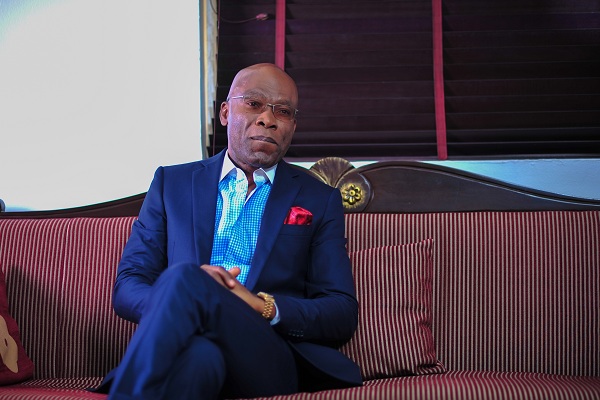
Leo Stan Ekeh, Chairman, Zinox Group
From the likes of outgoing German Chancellor, Angela Merkel, former President of Liberia, Ellen Johnson-Sirleaf, President of the European Central Bank, Christine Lagarde, American talk show host, television producer, actress, author, and philanthropist, Oprah Winfrey and even our own Director-General of the World Trade Organization (WTO), Dr. NgoziOkonjo-Iweala, women have displayed ample evidence that they have the capacity, the brain-power, and the determination to hold their own in the leadership sphere.
It is also instructive to note that the rise of this gender and the need to empower them is one that has been consistently predicted, preached, put in practice by one man – Chairman of the Zinox Group, Leo Stan Ekeh, whom I have followed his public talks and other teachings over the years.
I must confess that the unerring stance of the tech guru on the place of women in contemporary society had inspired me in altering my life course.
Well over 15 years ago, Ekeh had declared that women would play a greater role in the global scheme of things by the turn of the 21st Century, with the Zinox boss disclosing that the impact of women would be felt even keener in leadership roles from the year 2026. Simply put, the Zinox boss had predicted that women would take over and that a time would come when corporate organizations that had no females as CEOs or in their Executive Management cadre would be considered old-fashioned.
Even more importantly, he had affirmed that in judging or rating the success of a man, one should assess the quality of woman he married. Inadvertently, he had aligned the success of a man to his choice of a partner.
At this point, I was a little bit discomfited by these bold assertions by the Zinox boss who was a like a lone voice in the wilderness of women empowerment then, especially in Nigeria. Back then, the sense of male domination was a foregone conclusion. Women were hardly represented in leadership positions, be it in corporate or political circles. Indeed, it was a rarity to see a man go against the grain in predicting female domination or gender empowerment in those days.
But those were not the reasons for my discomfort.
I was less than adequately educated back then, having come from a conservative background where women are hardly given the same consideration as their male counterparts when it comes to education. Therefore, hearing Mr. Ekeh utter these words at a public event organized by Technology Distributions Ltd. in Ikeja many years ago had not only opened my eyes to the need to better my lot; it had also made me decide to seek higher education.
If Mr. Ekeh were a preacher or owned a church, I would have been one of his most loyal church members.
Ekeh has consistently submitted that women are more financially prudent, humble, less prone to fraud, spiritually sound, better counsellors and possibly even smarter than their male counterparts of the same age – factors which he has identified as traits which make them more naturally suited for leadership.
At the inaugural edition of the Africa Fintech Disrupt Conference sponsored by Access Bank in 2018, Ekeh had returned, after delivering a rousing speech to standing ovation, to encourage women to prepare to take charge, even as he specifically declared that the world should adjust to this coming reality which he reiterated would begin to take shape from 2026.
Today, his prediction about women domination is beginning to emerge, just in the same way his many other projections – such as the rise of e-commerce as a global game-changer and the position of technology in altering the nature of business, among many others – have come to pass with glaring accuracy.
If the example of Lagarde (a former head of the International Monetary Fund) and Okonjo-Iweala (a Harvard-trained two-time former Minister of Finance in Nigeria), both of whom currently oversee affairs at two of the most respected global institutions is not enough proof, what of the instances of women who have aspired to and secured the number one jobs in their countries?
The list is long.
Estonia has a female Prime Minister in KajaKallas,Moldova’s female President, Maia Sandu, has been in office since December 4, 2020 and Lithuania’s President, a woman, Ingrida Simonyte has occupied that office since December 25, 2020. Also, Greece’s President Katerina Sakellaropoulou has been in office since March 13, 2020, Denmark has a female Prime Minister, Mette Frederiksen who took office on June 27, 2019; Slovakia’s President Zuzana Caputova has thrived after assuming the role on June 15, 2019, among many others.
Even in tech which is widely regarded as a male-dominated sector, women are also gradually taking over.
Susan Wojcickiis CEO of YouTube. She contributed to the development of Google Images and AdSense as she rose up the ranks before eventually suggesting the acquisition of YouTube, and becoming its CEO in 2014. Sheryl Sandberg, billionaire business executive and philanthropist, is Chief Operating Officer of Facebook. Also, Meg Whitman is CEO of Hewlett Packard Enterprise and chairman of HP Inc. while IBM also has a female CEO in Ginni Rometty.
Here in Nigeria, the women are also gradually rising above the age-long patriarchal culture and shattering the proverbial glass ceilings that have long held them back, just as Ekeh had predicted.
While we are yet to achieve the level of political maturity that would see a woman become President of Nigeria – a development that may not be that far off – women have broken into and are dominating many other sectors.
Today, Nigeria has seven female bank CEOs, a development that many would have declared as impossible many years ago but which a man like Ekeh foresaw. The list of female bank MD/CEOs include YemisiEdun, acting MD/CEO, First City Monument Bank (FCMB); OluwatomiSomefun, MD/CEO, Unit Bank Plc; Miriam Olusanya, MD/CEO, Guaranty Trust Bank (GTB); Halima Buba, MD/CEO, SunTrust Bank Plc; NnekaOnyeali-Ikpe, MD/CEO, Fidelity Bank Plc; KafilatAraoye, MD/CEO, Lotus Bank and Ireti Samuel-Ogbu, MD/CEO, City Bank.
And in the much-vaunted tech sector, we have the likes of OlufunkeOpeke of MainOne who is effortlessly rubbing shoulders with other men in this field. There is also Ify Afe, former MD, Central Africa at HP Inc. and who is now Chief of Staff and Board Member, HP Diversity,Equity and Inclusion (DE&I); in addition to Google Country Manager, Nigeria, Juliet Ehimuan-Chiazor, among others.
But in closing this piece, it would be out of place to talk about the growing role of women in tech and as leaders, especially in Corporate Nigeria without returning to the pivotal role played by Ekeh in putting into practice something he has preached for years.
My interest in the Zinox Group in the wake of Mr. Ekeh’s inspiring clamour for gender empowerment and belief in the rise of the women-folk received further impetus when I learnt of the pivotal roles played by women in his companies.
Perhaps, there is no other globally renowned entrepreneur in the world today who has placed as many women in leadership positions, solely on merit, in his organization as Mr. Ekeh. In the Zinox Group, there are about five female Managing Directors, arguably a first in today’s business world.
In TD Africa, Sub-Saharan Africa’s leading technology distributor, you can find four of these female MDs. They are led by Mrs. Chioma Ekeh, wife of Mr. Ekeh, a cerebral mathematician, Chartered Accountant and globally recognised woman tech leader who has led the company in consistently breaking new grounds over the years. There is also Mrs. Shade Oyebode who heads the company’s Operations Unit, Mrs. Chioma Chimere, a Coordinating Managing Director (CMD) who manages the company’s business development drive and yet another MD in Mrs. GozyIjogun who oversees Sales.
Then you move over to Zinox Technologies Ltd. and there you find Mrs. Kelechi Eze-Okonta, another outstanding performer, who has been MD of the tech giant for the past three years. The Human Resources Unit of the Zinox Group is also headed by a female Executive Director in the person of Mrs. Chioma Nwoke.
Certainly, there is no stopping the rise of the women-folk and with notable male champions of gender empowerment such as Ekeh and others in our corner, it is only a matter of time before the world aligns.
Hilary Audu, a female gender empowerment expert, writes from Abuja



National Reading Culture (NRC), an online investment platform targeting Nigerians has collapsed, resulting in the loss of billions of Naira for investors.

The website unexpectedly shut down, blocking users from withdrawing their funds and locking in their investments.
Just like all other investment scams, victims were lured with promises of doubling their money in few weeks.
When National Reading Culture eventually crashed, the operators vanished with users’ funds, leaving investors devastated.
How the Platform WorkedTask-Based Earning:
According findings, National Reading Culture lured users with promises of making money by completing simple daily tasks like reading articles, clicking links, or inviting friends.
They also offered investment tiers to earn higher daily profits, where users had to deposit their own money into the platform.
Evidence showed the website previously operated as a Chinese job search platform before rebranding into an “earning” scheme.


The Nigeria Social Insurance Trust Fund (NSITF) has signed a memorandum of understanding (MoU) with Rand Mutual Assurance (RMA) to collaborate on digital transformation aimed at strengthening worker protection systems and support economic growth.

According to RMA, the agreement was concluded during a visit by its delegation to Abuja.
The partnership will focus on institutional capability development, modernising operating models, improving service delivery and sharing knowledge between the two organisations.
Through the partnership, RMA and NSITF will collaborate to strengthen institutional capability, modernise operating models, accelerate digital transformation and improve services for workers and employers.
The organisations will also explore opportunities for knowledge exchange and the adoption of best practices in social security administration.
RMA said the agreement forms part of its broader engagement with governments, regulators and social security institutions across Africa to support improvements in governance, operational resilience and service delivery.
“Our partnership with NSITF reflects much more than the signing of an agreement,” said Mandla Shezi, group chief executive officer of RMA. “This partnership is not simply about sharing knowledge. It is about co-creating the next generation of African social security systems.”
He added: “By combining our respective strengths, we can help build institutions that are more resilient, more responsive and better equipped to protect workers while supporting national development.”
Shezi said the future of social security depends on integrated systems where prevention, insurance, healthcare, rehabilitation, technology, investment management and institutional capability work together.
Microsoft has announced plans to cut about 4,800 jobs, representing roughly 2.1 percent of its global workforce, with Xbox, its gaming division, expected to bear the largest share of the layoffs.

The company said more than 1,600 positions at Xbox would be eliminated immediately, while another 1,600 jobs would be phased out over the next year as part of a major restructuring of the gaming business.
In a memo to employees, Amy Coleman, executive vice president, Microsoft, said the company was streamlining its operations to focus on areas that deliver greater value to customers in a rapidly changing technology industry.
Asha Sharma, chief executive officer, Xbox, described the move as “the most significant restructure in Xbox history,” saying the changes are intended to position the gaming business for long-term growth rather than downsizing.

Court Declares ARCON’s N60Bn Fine against Facebook Nigeria Illegal

NIN Enrollment Hits over 136m as New ID Law Takes Effect

NRC, Ponzi Scheme Collapses Resulting Loss of Billions of Naira

Plateau PCC Collects Nigerians’ Data without Privacy Policy – FIJ

FG Suspends New Internet Regulations to Prevent Overlapping Rules

Mobile Internet Gender Gap Widest in Africa – GSMA

NASENI Moves to Digitize CCB’s 5m Assets Declaration and Operations

Nigeria Launches FreeTV Nationwide

CANAL+ Partners Samsung to Pre-Load DStv Stream on New Samsung TVs In Nigeria, Other African Countries

UK, Nigeria Launch £15m Growth Programme to Accelerate Economic Transformation




 E-Financial2 days ago
Tokenization, Blockchain Technology will Transform Financial Institutions – IMF

 General News2 days ago
NIS Deploys Advanced Surveillance Masts, other Critical Infrastructure to Boost Border Security

 Broadcasting2 days ago
Obi, NDC Presidential Candidate Faces N50Bn Defamation Claim over Alleged Podcast Remark

 E-Business2 days ago
Weebly Websites to Shut Down for Nigeria, 66 Other Countries from September

 General News1 day ago
IHS Nigeria, FCT-HSES Concludes Clean Cooking Energy Campaign “Project Breathe Clean Air” in Abuja

 E-Financial2 days ago
FG Denies N8 Trillion ‘Shadow Budget’, Says IMF Quoted out of Context

 Telecom2 days ago
No Plans for Fresh Tariff Hike – MTN

 News2 days ago
World Bank Sounds Alarm: Low Revenue, Not Debt, Is Nigeria’s Biggest Fiscal Threat