

Broadcasting
TETFund Joins the Science Granting Councils Initiative in Sub-Saharan Africa

The UK’s West Africa Research and Innovation Hub, has facilitated the joining of Nigeria’s Tertiary Education Trust Fund (TETFund) into the membership of the Science Granting Councils Initiative in sub-Saharan Africa

The Science Granting Councils Initiative in sub-Saharan Africa (SGCI) on Monday announced that the Nigeria Tertiary Education Trust Fund (TETFund) has joined the initiative to advance research excellence in sub-Saharan Africa.
TETFund is an agency set up by the Federal Government of Nigeria to provide supplementary support to all levels of public tertiary institutions. It’s Research and Development (R&D) support is becoming an institutional reference and has changed Nigeria’s narrative in many aspects.
Nigeria is already a major producer of research in Africa, though a recent study suggests that it has the clear potential to do more, given the number of its universities (196), think-tanks and research professionals.
Speaking on the development, Prof. Suleiman Elias Bogoro, Executive Secretary Tertiary Education Trust Fund (TETFund), said: “National growth and competitiveness (in the context of globalized economy) depends very much on continuous technological improvement and innovation driven by a well-organized vibrant Research and Development System.
“We are confident that our admission into SGCI will open a new window of opportunities that will provide platforms that can serve as a fulcrum in achieving our goals of Nigeria’s transition to a knowledge economy in the 21st century.
“We are assured of quality partnerships and collaborations on the continent of Africa and beyond.”
Starting in 2015, the Science Granting Councils Initiative has been jointly funded by the United Kingdom’s Foreign, Commonwealth and Development Office (FCDO), Canada’s International Development Research Centre (IDRC), South Africa’s National Research Foundation (NRF), the Swedish International Development Cooperation Agency (Sida) and the German Research Foundation (DFG). The initiative aims to strengthen the capacities of Science Granting Councils (SGCs) in sub-Saharan Africa in order to support research and evidence-based policies that will contribute to economic and social development.
Through this engagement with TETFund, facilitated by FCDO’s West Africa Research and Innovation Hub, Nigeria has become the 16th country in SGCI.
Initially it will join other SGCs through the SGCI Annual Forum, bilateral exchange visits and other activities to share lessons in managing research funds for maximum impact and to identify areas for future collaboration, such as joint research calls, as resources become available.
According to Dr. Dominique Charron, Vice-President, Programs and Partnership Branch at Canada’s International Development Research Centre, “with the largest population and economy in Africa, Nigeria’s participation expands the potential for the Science Granting Councils Initiative to achieve its goals of strengthening science systems and building alliances between science granting councils in multiple regions across the sub-continent and internationally.”
Executive Director, Strategic Partnerships at National Research Foundation-South Africa and SGCI Executive Committee Member, Dr Aldo Stroebel, added: “I am thrilled that Tertiary Education Trust Fund (TETFund) of Nigeria is joining the Science Granting Councils Initiative (SGCI).
“This collaboration will allow us to work closely with the TETFund in advancing the Science, Technology and Innovation agenda in Africa.”
Speaking on FCDO’s involvement and the benefit to Nigeria, the British High Commissioner to Nigeria, Ms Catriona Laing CB said: “Nigeria’s TETFund admission to the Science Granting Councils Initiative is a positive development that will better position Nigeria to maximise the commissioning and use of research for development, in line with critical national social and economic priorities.
“The UK champions the use of science to address global challenges, we are pleased to have supported the TETFUND to join the SGCI and will continue to work in partnership with them and other ministries, departments and agencies in Nigeria to better realise the benefits of science and research.”


Nigerian Education Loan Fund (NELFUND) says it is investigating about 34 tertiary institutions over allegations that they failed to refund students whose tuition fees were paid twice under the Federal Government’s student loan scheme.

The Managing Director of NELFUND, Mr Akintunde Sawyerr, disclosed this during an interview on Arise Television.
Sawyerr said the agency had deployed a five-member investigative team, including operatives of the Economic and Financial Crimes Commission (EFCC) and internal auditors, to examine the allegations.
According to him, the investigation was prompted by numerous complaints received from affected students.
“As of right now, there are 34 institutions that we are looking at closely with respect to this issue,” he said.
Sawyerr explained that the double payment issue arose because President Bola Tinubu directed that the student loan scheme commence in the middle of an academic session instead of at the beginning.
He said the decision compelled many students to pay their tuition fees to meet registration deadlines while awaiting approval of their loan applications.
“What happened is that a lot of schools got double payment; some from the students and some from us,” he said.
“The refund process is entirely out of our hands. It is the recipient of the double payments that is obliged to make refunds to the students.”
The NELFUND boss noted that many students had borrowed money from family members, friends and other sources to pay their tuition with the expectation of receiving refunds once the loans were disbursed.
He said while some institutions had promptly refunded affected students, others had failed to do so.
“Some have been very good at this. Others haven’t been so good at it,” Sawyerr said.
“I reserve judgement on the intentionality around it because, for some of them, they just didn’t have the process to make refunds.”
Sawyerr disclosed that NELFUND was exploring a tokenised payment system that would enable students to authorise tuition payments directly to their institutions, thereby reducing the likelihood of duplicate payments.
He said the agency deliberately chose not to disburse tuition loans directly to students to minimise the risk of fund diversion.
“Paying the funds to the students could really lead to the temptation for them to divert and do other things,” he said.
The managing director, however, acknowledged that NELFUND lacked the statutory powers to compel institutions to refund students or prosecute officials found culpable.
He added that many frustrated students had submitted complaints not only to NELFUND but also to anti-corruption agencies, including the EFCC and the Independent Corrupt Practices and Other Related Offences Commission (ICPC).
Sawyerr also expressed concern over increases in tuition fees by some institutions following the introduction of the student loan scheme.
He said NELFUND had declined to pay institutions that increased their tuition fees beyond acceptable levels.
“Some schools, because they get paid easily, started to put up their fees. We refused, point blank, to pay institutions who had hiked their fees beyond a certain level,” he said.
He reaffirmed the agency’s commitment to investigating every reported irregularity and strengthening the implementation of the student loan programme through continuous monitoring and internal reviews.
Broadcasting
Obi, NDC Presidential Candidate Faces N50Bn Defamation Claim over Alleged Podcast Remark

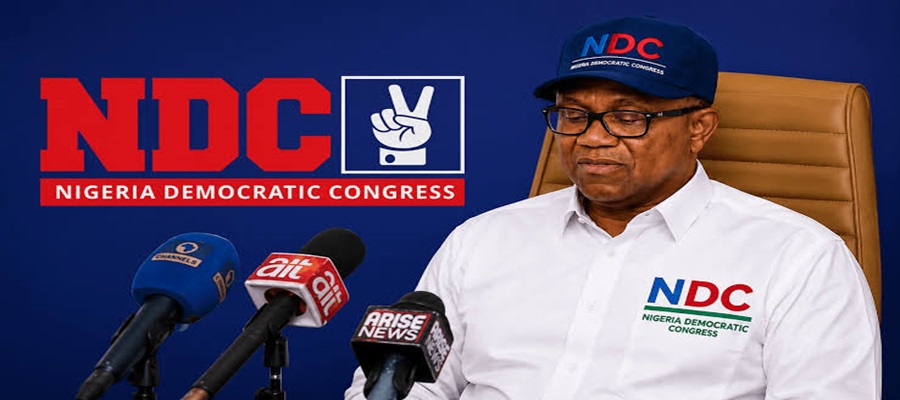
Abayomi Arabambi, national vice chairman (South-West) of the Labour Party, has demanded a public apology, a retraction, and N50 billion in damages from Peter Obi, presidential candidate of the Nigeria Democratic Congress (NDC), over an alleged defamatory statement made during a podcast interview.

The demand was contained in a letter issued by the law firm Neplus Ultra Attorneys and signed by Anderson U. Asemota, Peter O. Asimegbe, and Stanley C. Eziefulle on behalf of Arabambi.
According to the letter, the legal dispute arose from comments allegedly made by Obi during the interview, where he reportedly stated that Arabambi “does not have an address.”
Arabambi’s legal team described the statement as false, malicious, and defamatory, arguing that it portrayed their client as a faceless individual without legitimacy, credibility, or standing in public life.
The lawyers further claimed that the interview was widely circulated on television stations and digital platforms, exposing Arabambi to public ridicule and damaging his reputation.
“Our client has had a known residential and business address, maintains professional and political affiliations within Nigeria, and has never been a person whose whereabouts or identity were unknown,” the letter stated.
The legal team maintained that the alleged publication caused embarrassment and harmed Arabambi’s public image and political standing.
As part of their demands, the lawyers called for an unreserved public apology to be aired on national television, published on Obi’s verified social media platforms, and carried as full-page apologies in national newspapers.
They also demanded the payment of N50 billion as compensation for the alleged injury to Arabambi’s reputation, dignity, political standing, and public image.
Broadcasting
Why We’re Partnering With NIHOTOUR To Bring Nigerians In South Africa Home – Steve Babaeko

When Nigerians began arriving back home on emergency flights following an ultimatum from anti-migrant groups in South Africa, Steve Babaeko, alongside The Nigerian Institute of Hospitality and Tourism (NIHOTOUR), saw an opportunity to step up for his fellow citizens.

Steve Babaeko
The CEO of X3M Ideas explains that he saw a deep obligation, one that had nothing to do with advertising and everything to do with hospitality. For Babaeko, it was a reminder that an agency owes a duty of care to the community it exists within.
That conviction shaped the creative agency’s partnership with the Nigerian Institute of Hospitality and Tourism (NIHOTOUR) for the newly launched ‘Welcome Home’ pilot programme at Murtala Muhammed International Airport (MMIA) in Lagos. Rather than simply crafting a messaging campaign around the crisis, X3M Ideas helped design a tangible, physical system.
“This wasn’t built as a campaign about a crisis,” Babaeko said. “It was a hospitality agency deciding what it owes its own citizens the moment they land.”
For Babaeko, what X3M has built is infrastructure, something returnees can physically walk through, use, and benefit from the instant they clear the arrival gate.
With the MMIA pilot now officially running, NIHOTOUR directs returnees to immediate support services and issues them a Returnee Card. This card grants individuals a free first night at partner hotels, immediate transport assistance from the airport, and fast-tracked business registration support.
Furthermore, the initiative features a dedicated Restart Desk to assist returnee entrepreneurs and tradespeople with job placement referrals and business registration. This operates alongside a public Homecoming counter that tracks the cumulative number of returnees welcomed, businesses restarted, and jobs facilitated.

Court Declares ARCON’s N60Bn Fine against Facebook Nigeria Illegal

NIN Enrollment Hits over 136m as New ID Law Takes Effect

NRC, Ponzi Scheme Collapses Resulting Loss of Billions of Naira

Plateau PCC Collects Nigerians’ Data without Privacy Policy – FIJ

FG Suspends New Internet Regulations to Prevent Overlapping Rules

Mobile Internet Gender Gap Widest in Africa – GSMA

NASENI Moves to Digitize CCB’s 5m Assets Declaration and Operations

Nigeria Launches FreeTV Nationwide

CANAL+ Partners Samsung to Pre-Load DStv Stream on New Samsung TVs In Nigeria, Other African Countries

UK, Nigeria Launch £15m Growth Programme to Accelerate Economic Transformation




 E-Financial2 days ago
Tokenization, Blockchain Technology will Transform Financial Institutions – IMF

 General News2 days ago
NIS Deploys Advanced Surveillance Masts, other Critical Infrastructure to Boost Border Security

 Broadcasting2 days ago
Obi, NDC Presidential Candidate Faces N50Bn Defamation Claim over Alleged Podcast Remark

 E-Business2 days ago
Weebly Websites to Shut Down for Nigeria, 66 Other Countries from September

 E-Financial2 days ago
FG Denies N8 Trillion ‘Shadow Budget’, Says IMF Quoted out of Context

 General News1 day ago
IHS Nigeria, FCT-HSES Concludes Clean Cooking Energy Campaign “Project Breathe Clean Air” in Abuja

 Telecom2 days ago
No Plans for Fresh Tariff Hike – MTN

 News2 days ago
World Bank Sounds Alarm: Low Revenue, Not Debt, Is Nigeria’s Biggest Fiscal Threat