

Telecom
Ericsson says Connecting Schools has the Potential to Boost GDP by up to 20 percent in the Least Connected Nations


An Economist Intelligence Unit (EIU) report sponsored by Ericsson has found that nations with low broadband connectivity have the potential to realize an increase in GDP by up to 20 percent by connecting schools to the internet.

A well-educated workforce is more likely to be innovative and foster ground-breaking ideas, leading to economic development and job creation. EIU analysis shows that for every 10 percent increase in school connectivity in a country, GDP per capita could increase by 1.1 percent.
In the context of the West African country of Niger, the report finds that improvements in school connectivity to Finnish levels could increase GDP per capita by almost 20 percent – from USD 550 per person in the baseline, to USD 660 per person by 2025.
The report focuses on four key actions to make a change:
- Collaboration is key: A holistic, public/private partnership strategy is needed to coordinate efforts with stakeholders to overcome barriers to school connectivity.
- Accessibility and affordability: Building infrastructure to enable access to the internet is a starting point. Quality of connection and cost are important factors as well.
- Embedding internet and digital tools into education: Once access to school connectivity is achieved, it must be embedded into the curriculum. Teachers must be trained to integrate technology into everyday learning.
- Protecting children online: School connectivity provides opportunities for children. Additional steps must be taken to ensure healthy and protected online learning environments. Internet usage must be properly managed to ensure safe and secure use..
The report also recommends that public, private and NGO sector leaders around the world can make a dramatic impact towards bridging the digital divide by joining forces to make internet connectivity a global reality for school children of all ages.
As a result, Ericsson today appeals to these players to get behind the efforts of Giga (a school connectivity initiative founded by UNICEF and the International Telecommunication Union) through actions such as: funding, data sharing, technological expertise and reimagining sustainable business models for connectivity. Ericsson has committed its efforts through a three-year partnership with UNICEF to help map the current school connectivity gap across 35 countries.
The Ericsson-backed EIU report – Connecting Learners: Narrowing the Educational Divide – has reinforced the company’s belief that the ambitious goal of Giga, to connect all schools and their surrounding communities by 2030 is achievable.
Heather Johnson, Vice President of Sustainability and Corporate Responsibility, Ericsson, says: “When Giga was announced, we immediately understood the positive impact it could deliver – bridging the digital divide between and within countries, to give children the world over the opportunity of bright and rewarding futures.”
She adds: “The report makes it clear that partnership between business leaders, public sector leaders and NGOs can take effective action to address this issue and significantly impact lives. Every player in these sectors, no matter how big or small, can make a difference. We encourage stakeholders to read the report and more importantly join the Giga initiative to help realize this important goal.”
Charlotte Petri-Gornitzka, UNICEF Deputy Executive Director, Partnerships, says: “Together, we’re mapping schools around the world to identify connectivity gaps in communities. It’s key that we collaborate across sectors to connect schools and provide quality digital learning, so every child and young person can leapfrog to a brighter future.”
The report
The EIU report shows how school connectivity can lead to improved educational outcomes and enhanced career opportunities for children. Resulting in higher economic activity and community growth.
The report finds that these individual-level benefits for children have a snowball effect leading to higher incomes, better health, and improved overall wellbeing. The benefits can extend beyond children, supporting wider community development and economic growth.
Other potential school connectivity benefits highlighted by the report include:
- Increasing quality of education
- Creating a more productive workforce that fosters innovation and ground-breaking ideas
- Job creation
- Community development
- Driving economic growth and development


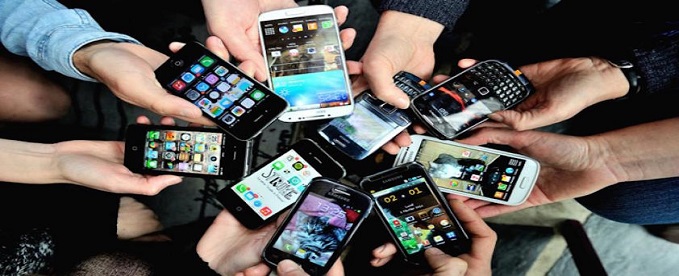
Global System for Mobile Communications Association (GSMA) has urged African governments to recognise telecommunications as a core economic pillar and implement specific tax reforms that could dramatically accelerate digital inclusion across the continent.

Mr. Daddy Mukadi, chair of GSMA Africa’s Policy Group, proposed a two-to-three-year exemption on import duties and taxes for entry-level smartphones priced between $40 and $150 to help bridge the usage gap.
He also called for the removal of entry duties on telecommunications equipment for at least three years to support the expansion of network coverage.
“These measures would help deliver inclusive and sustainable digital technology for economic and social progress. They would also support faster connectivity, improved access and the ability to connect more people, businesses and communities to the digital economy,” he said.
Mukadi who is also the chief regulatory officer of Airtel Africa, spoke at the first edition of the États Généraux du Secteur des Postes et Télécommunications in Kinshasa, DRC, an event convened to support the development of a strategic roadmap for the country’s digital and telecommunications sector and attended President Félix Tshisekedi.
He urged government and industry stakeholders to rethink the role of telecommunications in national development, arguing that it should be framed not as a sector specific concern, but as a continent-wide imperative.
“The telecoms sector can no longer be considered merely as a support sector. It is now a core sector. Both are vital, and every other sector, from security and finance to transport and health, depends on digital technology for growth,” Mukadi said.
His remarks come at a critical moment for Africa’s digital economy. According to the GSMA’s Mobile Economy Africa 2025 report, the mobile sector contributed $220 billion to the continent’s economy in 2024.
This is equivalent to 7.7per cent of GDP and is projected to reach $270 billion by 2030. Yet despite mobile networks now covering 95per cent of Africa’s population, nearly 75per cent of people across the continent remain offline.
The GSMA identifies this gap as Africa’s greatest connectivity challenge, driven above all by the unaffordability of devices.
Mukadi therefore called for strategic adjustments to public policy, as well as legal and regulatory frameworks, to support wider access to digital services. He said the telecommunications sector should be treated as a foundational pillar of economic development, with stakeholders working together to accelerate investment, expand coverage and close the usage gap across the continent.
The Chief Regulatory Officer of Airtel Africa also highlighted key barriers to digital inclusion, including the affordability of smartphones and the impact of import duties on telecommunications infrastructure.
He added that government and the private sector must work closely to create a regulatory environment that encourages innovation, protects consumer interests and supports long-term investment.
Federal High Court in Abuja has issued an interim injunction restraining MTN Nigeria and Airtel Networks from suspending or interfering with Nairtime Nigeria’s access to critical telecommunications platforms including short codes, SMS, USSD, and billing services, following a directive by the Federal Competition and Consumer Protection Commission (FCCPC) that left Nigerians without a safety net.

The order, granted on April 24, 2026 in Suit No: FHC/ABJ/CS/779/2026, ensures that millions of consumers, particularly those without access to traditional banking, can continue to access airtime and data on credit, services increasingly vital for daily communication, work, education, and digital participation.
Nairtime, part of the Optasia Group, is a leading provider of airtime and data credit services in Africa and the Middle East, facilitating micro-lending for mobile users.
According to Nairtime, the court’s intervention provides policy certainty and reinforces the legitimacy of its operations, which are conducted under a valid Value-Added Service licence issued by the Nigerian Communications Commission (NCC).
The company noted that the suspension linked to the Digital, Electronic, Online or Non-Traditional Consumer Lending Regulations 2025 risked disrupting services relied upon daily by ordinary Nigerians.
Ms Uchenna Agbo, chief commercial officer of Optasia and chief executive officer of Nairtime Nigeria Limited, said: “This decision is ultimately about protecting underserved Nigerian consumers.
It ensures that millions of people, many of whom are underserved by traditional financial systems, retain uninterrupted access to essential digital services. Over time, using these services responsibly can help them prove reliability and improve their chances of accessing bigger financial opportunities in the future.
“Our platform enables responsible, data-driven lending that keeps people connected when they need it most and we look forward to working with our partners to restore services in a manner that resumes full service value to the Nigerian consumers without further delay.”
Nairtime reaffirmed its commitment to consumer and data protection through stringent governance frameworks and ethical use of artificial intelligence, and emphasised that it shares the broader consumer protection objectives of the Federal Government while remaining open to constructive engagement with regulators and industry partners.
Agbo added: “We have built a system that supports inclusion at scale, while maintaining strong risk controls for industry stability and economic impact. This ruling allows us to continue delivering safe, reliable services that Nigerians depend on every day.
“We remain focused on ensuring that the Nigerian consumer stays at the centre of innovation and will continue working with regulators and our partners, including MTN and Airtel, to promote a fair, transparent, and inclusive digital ecosystem that benefits Nigeria and all Nigerians.”
Optasia, which listed on the Johannesburg Stock Exchange in late 2025 and was founded in Nigeria 14 years ago, provides the infrastructure layer connecting mobile network operators and banks to millions of underserved customers.
Through global partnerships with 50 distribution partners and 17 financial institutions, including some of Africa’s largest MNOs and tier-one banks, the platform uses proprietary AI that processes credit decisions in under one second, using alternative data to assess risk for customers who have never held a formal credit product.
Beyond telcos, the company is also developing new propositions including SME and merchant finance, longer-term and higher-value credit, telco BNPL and revolving credit lines, and embedding its platform across adjacent ecosystems and verticals.

Nigeria has been ranked the most spammed country in Africa, according to a new report by Truecaller has shown. The report showed that more than half of all unknown calls received by Nigerians in 2025 were identified as spam or fraudulent.

About 51 per cent of unknown calls were flagged as spam, placing Nigeria eighth in the world and ahead of African countries like South Africa, Kenya, Ghana and Ethiopia.
According to the report, most spam calls in Nigeria are linked to telecom companies and network-related promotions. Telecom-related calls made up 35 per cent of spam calls, while sales and telemarketing accounted for 10 per cent. Scam calls represented six per cent.
Truecaller said many Nigerians now struggle to know whether an unknown caller is a real network provider, a marketer, or a fraudster pretending to be from a trusted company.
The report also noted that Brazil faces a similar problem, with telecom-related calls dominating spam activities.
Globally, Indonesia ranked as the most spammed country in the world, with 79 per cent of unknown calls marked as spam. Chile came second with 70 per cent, while Vietnam, Brazil and India completed the top five.
The company added that the Middle East and Africa region passed 100 million monthly active users in late 2025, making Africa one of its fastest-growing markets.
Chief Executive Officer of Truecaller, Rishit Jhunjhunwala, said fraud and impersonation calls have become a serious global concern.
He said the company plans to focus more on stopping fraudulent calls before they reach users in 2026.
Truecaller also announced that it surpassed 500 million monthly active users worldwide as of March 31, 2026, with more than 150 million users outside India.

Nigeria Hit by 24.1m Data Breaches – Surfshark

GSMA Urges Import Duties Exemption for Smartphones

NITDA Warns of AI-Powered DeepLoad Malware Targeting Banks, Govt Agencies

Court Blocks Telcos from Cutting Nairtime’s Credit Services

NASSCO Says 12.3m Nigerians Linked to Social Register through NIN

Kaspersky Discovers Vulnerability in Qualcomm Snapdragon Chips that can Lead to Data Loss & Device Compromise

FG to Gift Nigerians over 100 Free TV Channels from May 15

MTN Suspends Data, Airtime Borrowing Service over New FCCPC Lending Rules

What Adekunle Gold’s Support Means for ‘The Gathering on 100

Bank Customers to Pay N1,500 for ATM Card Issuance, Replacement – CBN




 E-Financial2 days ago
FCMB Opens Applications for Zero-Interest Loans of Up to ₦10m for Women Entrepreneurs

 E-Business3 days ago
Trusted Relationship and Exploits in Public-facing Applications Strengthen Position as the Main Attack Vectors

 E-Business3 days ago
Kled AI, US Data Firm Blocks Nigeria over High ‘Fraudulent Activity’

 E-Business2 days ago
Kaspersky Identifies Ongoing Supply Chain Attack on Official Daemon Tools Website Distributing Backdoor Malware

 Telecom2 days ago
Reps Claim NCC’s Weak Regulatory Oversight Responsible for Poor Telecom Services

 Telecom2 days ago
Vitel Wireless Partners Fintechs to Expand Access to Services

 Telecom2 days ago
GSMA Africa Policy Group Chair Calls for Urgent Tax Reforms to Accelerate Digital Inclusion

 E-Financial3 days ago
UBA, Redtech, MoMo PSB Expand Merchant Payment Access Across Nigeria