

Telecom
MTN Nigeria Records N790.3b Increase in Service Revenue in Half –Year Ended 30 June 2021

MTN Nigeria Communications Plc has released its unaudited results for the half-year ended 30 June 2021, as well as plans to celebrate its 20th anniversary with numerous national impact projects.

Commenting on the results, Karl Toriola, ceo, MTN Nigeria, said: “In the first half of 2021, we made good progress strengthening the resilience of the business, managing the impact of the COVID-19 pandemic and enhancing support to our people, customers and other stakeholders.
“We extended our commitment to the Coalition Against Covid-19 (CACOVID) with an additional N3 billion contribution over a two-year period, half of which has already been paid.
“This is in support of efforts to promote the health and security of Nigerians, as we navigate our way through the pandemic; and in line with our Y’ello Hope initiatives through which we provided support to our broad base of stakeholders to the value of approximately N25 billion in 2020.

“Our progress towards achieving greater business resilience is reflected in the upgrade by Global Credit Ratings (GCR) of our national scale long-term issuer rating to AAA and affirmation of our national scale short-term rating of A1+ with a stable outlook.
“This puts MTN Nigeria on the highest possible GCR scale for short-term andlong-term ratings, providing asolid platform for growth.
2021 marks the 20th anniversary of MTN’s presence in Nigeria. As we celebrate this milestone, we are pleased to announce that our Board of Directors has approved our participation in the Road Infrastructure Tax Credit (RITC) Scheme.
“This is in response to Government’s drive towards public-private partnerships in the rehabilitation of critical road infrastructure in Nigeria.
“We intend to participate in the restoration and refurbishment of the Enugu-Onitsha Expressway.
“Conversations in this regard have already commenced, and further announcements will be made in due course.
“In line with our desire to plant deeper and more permanent roots in Nigeria, we have also initiated plans to commission a purpose-built, state of the art MTN Head Office, designed to act as a central hub for our network, a catalyst for creativity and innovation, and a showcase for the flexible working structures that are driving efficiency gains in this new normal working environment.
“Aligned with our wider commitment to environmental sustainability, it will meet the highest global environmental standards, demonstrating the role of green technology in our future.
“Following MTN Group’s stated intention to sell down up to 14% of its investment in MTN Nigeria, subject to market conditions over the medium-term, MTN Nigeria’s shareholders approved an equity shelf programme at the last Annual General Meeting.
“This will facilitate a process to increase ownership of the Company by more Nigerian retail and institutional investors.
“Alongside this, we further localised our predominantly Nigerian management team with the appointment of Nigerians to two key senior positions (Chief Marketing Officer and Chief Information Officer) previously held by expatriates.
:MTN Nigeria continues to invest in improved world class services and its network, accelerating the expansion of our 4G coverage and providing home broadband. As part of our rural connectivity programme,
“we plan to connect approximately 1,000 rural communities to our network this year with additional 2,000 communities in 2022. We are delighted that these are translating into strong operational performance in line with the objectives of Ambition 2025.
“In the next 3 years, we will invest over N600 billion to expand broadband access across the country in support of Government’s Broadband Plan”.
He further said, “Operationally, our mobile subscribers closed H1 at 68.9 million, down 9.9% from December 2020.
“This was due to the regulatory restrictions on new SIM sales and activations, which was lifted on 19 April 2021.
“Although the initial run-rate of additions has been slower than usual due to new process requirements, we anticipate growth to normalise in the short-term as more of our acquisition centres are certified for SIM registration.
“Finally, our Board of Directors has approved an interim dividend of N4.55 kobo per share to be paid out of distributable net income. This represents a growth of 30% over N3.50 kobo per share paid in H1 2020.”
Operational Review
Service revenue grew by 24.1% YoY, driven by the sustained growth in data and also partly due to the lower base in comparative 2020 voice revenue that resulted from lockdowns during that period.
Voice revenue grew by 13.1%, benefitting from an 11.8% increase in traffic and our customer value management (CVM) initiatives.
The impact on voice revenue from the industry-wide suspension of new SIM registration was partly offset by higher usage in our active SIM base as well as migration to a higher quality of experience.
Data revenue continued the positive momentum from H2 2020, rising by 48.3%. This was driven by increased usage from the existing base, supported by the accelerationin our 4G rollout and enhanced network capacity following the acquisition and activation of additional 800MHz spectrum in Q1.
Data traffic rose by 83.0% YoY, while smartphone penetration was up by 5.8pp to 49.3%. Our 4G network now covers 65.1% of the population, up from 60.1% in December 2020.
Fintech revenue rose by 48.2%, driven by increased adoption of Xtratime and our core fintech services. We continue to expand our MoMo agent network and broaden our service offerings. Our registered MoMo agents increased by 121,000in H1 2021 to more than 515,000. Transaction volumeincreased by 280.8% YoY to 55.6 million in H1 2021, and our active subscriber base is now more than 6.1 million, up 180.0% YoY.
Our digital business continued to gain traction on the back of our strong partner ecosystem and the uptake of our products and services. Digital revenue rose by 61.8%, also supported by our rich media and value-added services. Our active user base rose by 38.0% to over 3.9 million, led by Ayoba – our instant messaging platform – with more than 2.3 million active users.
The enterprise business revenue increased by 6.0%, demonstrating the continued recovery from the impact of the COVID-19 lockdown and the uptake of our services by the businesses we serve. We have made significant progress in concluding the operational modalities for the new pricing framework for USSD services, which incorporates the recovery of outstanding USSD debts.
We continue to pursue and realise efficiency through cost discipline and enhanced digitisation. However, due to an accelerated site rollout, the effects of Naira depreciation on lease rental costs and Covid-19 related expenditure, operating expenses increased by 24.6%.
Our continued ability to drive operating leveragehelped to drive EBITDA growth to 27.6%, with a1.4pp expansion in our EBITDA margin to 52.7%.
Capital expenditure in the period was 39.1% higher to N186.4 billion, as we continued to invest in our network to maintain service quality and aggressively expand our footprint in terms of 4G and rural coverage. We recorded a healthy free cash flow of N230.8 billion, up by 19.6%.
Despite a 50.6% increase in core capex excluding right of use assets to N114.5 billion, capex intensity remained within target levels at 14.5%. Depreciation and amortisation rose by 17.1% and net finance costwas down by 9.8%, resulting from a lower average cost of borrowings. Overall, we recorded a PBT growth of 54.1%, also reflecting the softer base of H1 2020.
New SIM Registration Requirement
We are actively supporting the Government’s NIN enrolment programme with more than380 points of enrolment active across the country. We are working with National Identity Management Commission (NIMC) to complete bulk verification of the National Identity Numbers (NINs) collected and increase the enrolment centres to provide an access point for as many Nigerian as possible.
To this end, we have acquired over 40,000 enrolment devices, which are being configured for this purpose. As of 26 July 2021, approximately 37 million subscribers have submitted their NINs, representing around 54% of our subscriber base and 65% of service revenue. The deadline for NIN verification has been extended to 31 October 2021.
Outlook
To enable us to continue to take advantage of emerging opportunities, we have refined our strategy. The new strategy called Ambition 2025 is closely aligned with that of MTN Group and is built on four key strategic priorities: build the largest and most valuable platforms, drive industry-leading connectivity operations, create shared value and accelerate portfolio transformation.
These priorities will define our focus for the next five years. Taking advantage of MTN’s existing platforms and assets, we are well-positioned to accelerate long term growth as we continue to monitor and manage the impacts of the pandemic.
We have a clear focus on sustaining double-digit service revenue growth ahead of inflation, driving 4G and rural network expansion, as well as positioning our fintech and digital businesses for accelerated growth in order to unlock their full value. In addition, we will continue to sustain our expense efficiency programme to strengthen our financial position and support margins.
In the remainder of the year, we anticipate that the base effects will partly influence our commercial and financial trends. Although the availability of foreign exchange remains a constraint, we strive to minimise its impact on the business.
We are driving a positive culture change across the organisation to enhance productivity and further improve performance. We maintain our strong focus on deeper, proactive and inclusive engagements to drive shared value for all stakeholders, while ensuring that our activities align with and contribute to the Government’s development agenda.
Finally, emerging trends indicate a steady recovery in economic activity. However, given the ongoing uncertainties presented by the new wave of the COVID-19 outbreak and the NIN registration exercise, we remain mindful of changes to the operating environment as the rest of the year unfolds.


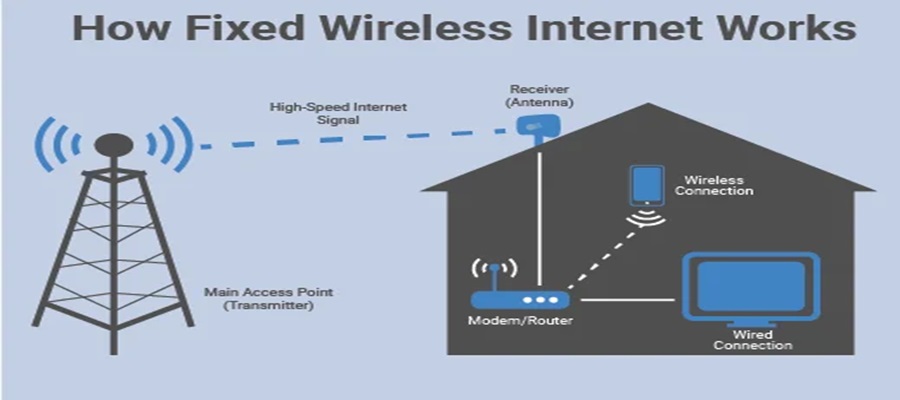
Nigeria has exactly 156,662 active fixed wired internet subscriptions as of mid-2026.

This is a tiny fraction compared to mobile GSM networks, which dominate the market with over 154 million subscribers.
The fixed wired market primarily consists of homes and offices using direct physical cables like fiber optics.
Fixed wired services use physical cables, like glass fiber or copper wire, to bring internet directly into a building.
It is like a dedicated, private water pipe for your home. It provides very fast speeds, unlimited data, and is reliable.
In contrast, mobile GSM uses radio waves transmitted from tall towers to phones, acting more like a sprinkler that sprays a signal across an entire neighborhood.
Because laying physical cables across cities is expensive and hard to do, these subscriptions are very rare.
However, the market has seen recent growth, driven largely by Fiber-to-the-Home (FTTH) services.
The top players are: MTN FibreX with 110,564 subscribers, which is roughly 88.7 per cent of the entire market.
SWIFTNG accounts for about 13,945 connections.
The others are ipNX and 21st Century Technologies which make up the number.

Nigerian Communications Commission (NCC) says it is intensifying efforts to implement Nigeria’s planned 112 national emergency number following its approval by the National Economic Council (NEC).

NCC
The commission disclosed this during a meeting between Vice President Kashim Shettima and an NCC delegation led by the Chairman of its Governing Board, Chief Idris Ibikunle Olorunnimbe, at the Presidential Villa, Abuja.
Briefing the Vice President, Olorunnimbe said the NCC had already established about 35 Emergency Communications Centres (ECCs) across the country to support a unified national emergency response system.
He said the next phase of implementation would focus on closer collaboration with state governments and emergency response agencies to ensure the effective rollout of the initiative.
The development follows the recent approval by the NEC, chaired by the Vice President, for the adoption of 112 as Nigeria’s single national emergency number across all tiers of government and emergency response agencies.
The council also approved the establishment of a multi-agency implementation committee to be jointly coordinated by the Office of the Vice President and the NCC.
Olorunnimbe stressed that the success of the initiative would depend on the commitment of state governments to support and maintain emergency communications infrastructure, as well as the readiness of response agencies to promptly attend to distress calls.
“We need commitment at every level of all response agencies—from top to bottom—including the Nigeria Police Force, ambulance services across the states and, at the national level, the National Emergency Management Agency (NEMA),” he said.
Responding, Shettima directed the NCC to develop a comprehensive roadmap for the nationwide implementation of the single emergency number in line with international best practices.
He also urged the commission to work closely with the National Emergency Management Agency (NEMA), citing the agency’s experience in disaster management, relief and rehabilitation.
The Vice President assured the commission of the Federal Government’s commitment to sustaining the initiative, saying funding would be mobilised through the National Economic Council and partnerships with the private sector.
He also called for greater dedication from all emergency response agencies to ensure the success of the programme.
The adoption of 112 is expected to harmonise emergency communications across Nigeria by providing a single number through which citizens can quickly access police, fire, ambulance and other emergency services.
The initiative is also expected to replace multiple emergency contact numbers currently in use and improve coordination and response during emergencies.

Nigerian Communications Commission (NCC) has said that it was strengthening collaboration with state governments and industry players to develop a transparent, cost-based pricing framework for sharing telecom ducts as part of efforts to speed up broadband expansion across Nigeria.

Ayuba Shuaibu, director of Policy, Competition and Economic Analysis, NCC, disclosed this at the Stakeholders’ Forum in Abuja.
Shuaibu said the initiative was designed to build consensus among all parties.
“The primary purpose of this forum is to ensure seamless synergy between the Commission and all stakeholders,” he said.
The director said the consultation was prompted by longstanding complaints over permits, levies and other charges imposed by different levels of government.
He said bringing together state commissioners, telecom operators, tower companies and representatives of the Nigeria Governors’ Forum had helped improve understanding of the issues.
“This engagement is a work in progress. We expect more input from stakeholders before presenting the outcome to the Nigeria Governors’ Forum,” he added.
Dr Helen Adeneye, commissioner for Innovation, Science and Technology, Kogi State. welcomed the consultation, saying Nigeria needs a harmonised policy that clearly defines the responsibilities of both the federal and state governments.
“We need a harmonised policy that allows states to collaborate better with telecom operators and creates a more business-friendly environment,” she said.
Dr Adeneye added that adopting the Dig-Once policy would establish a uniform pricing system and help resolve disputes over charges for telecom infrastructure deployment.
Chidi Ajuzie, chief executive officer, WTES Projects Limited, whose firm is conducting the consultancy study, said the proposed framework would introduce a common cost structure for duct sharing to support broadband investment and economic growth.
“The study is designed to create a uniform pricing model that will drive broadband growth, economic development and wider adoption across the country,” he said.
Ajuzie explained that the consultants had developed preliminary floor and ceiling prices to guide operators while allowing flexibility within the approved range.
He added that the recommendations remain open to industry input before the NCC finalises the framework.
The Dig-Once Policy is designed to reduce the cost and disruption of deploying broadband infrastructure by requiring fibre ducts to be installed whenever roads are constructed or rehabilitated.
The NCC is developing a cost-based pricing framework for sharing these ducts to promote fair pricing, reduce duplication of infrastructure and encourage investment.
The proposed model is expected to support the Federal Government’s broadband expansion targets while improving collaboration between telecom operators and state governments.

Court Adjourns Alleged Binance Tax Evasion Case over Settlement Talks

Fixed Wired Internet Market Lags as Mobile Gains Ground

Xenophobic Attacks: OYC Threatens to Picket MTN Nigeria Offices

New NIMC Act Strengthens Data Protection, Privacy – Director

BON Establishes Six Ad Hoc Committees to Modernize Broadcasting

NASENI Moves to Digitize CCB’s 5m Assets Declaration and Operations

Mobile Internet Gender Gap Widest in Africa – GSMA

Nigeria Launches FreeTV Nationwide

CANAL+ Partners Samsung to Pre-Load DStv Stream on New Samsung TVs In Nigeria, Other African Countries

Lebara Nigeria Launches Lebara Play, Africa’s First Telecom-Owned Micro-Drama Platform




 News3 days ago
NRC, Ponzi Scheme Collapses Resulting Loss of Billions of Naira

 News3 days ago
NSITF Partners South African Insurer on Digital Transformation

 E-Financial3 days ago
FCT-IRS Unveils New Digital Platform, Taxporta

 General News3 days ago
KPMG Urges Africa’s Most Innovative Tech Entrepreneurs to Enter the Global Tech Innovator 2026 Competition

 E-Business3 days ago
FG Suspends New Internet Regulations to Prevent Overlapping Rules
 E-Business3 days ago
NIN Enrollment Hits over 136m as New ID Law Takes Effect

 E-Business3 days ago
Plateau PCC Collects Nigerians’ Data without Privacy Policy – FIJ

 Telecom2 days ago
NCC Seeks Cost-Based Pricing Framework for Ducts