

E-Financial
FirstBank Boosts SMEs with N500,000 Grant –Official


FirstBank of Nigeria Ltd on Sunday announced a N500,000 business grant to five Small and Medium Enterprises (SMEs), through its SMEConnect initiative aimed at boosting employment.

Mrs Oludolapo Adigun, Group Head, Retail Banking, Lagos Mainland 1, FirstBank, listed the five beneficiary SMEs to include: Buyscrap Nigeria Enterprise; Arteasy Nigeria; Gris Business; Digital Solutions Network and Edatsu Technology Ltd.
She said each of the SMEs was given a N100,000 grant to support their businesses after the SME clinic 2021, held in partnership with Techpoint Africa.
Adigun explained that SMEConnect was one of the tools by which FirstBank delivers the capacity-building pillar of its value propositions to SMEs, with a focus on impacting SMEs in key areas that affect their business growth and development.
“In recent years, FirstBank has embarked on the task of empowering SMEs, considering their immense value to the Nigerian economy.
“We created SMEConnect to help drive this mission and we’re delighted to have partnered with Techpoint Africa for the SME clinic 2021.
“The small business grant is the tip of the iceberg of what SMEs stand to benefit from the programme. We’re looking forward to future partnerships, Adigun said.
Also speaking, Precious Mogoli, Director, SME Clinic by Techpoint, said SMEs were the lifeblood of any economy, and in Nigeria, current data had shown that SMEs made up to 96 per cent of businesses, contributing over half of the country’s Gross Domestic Product.
She noted that COVID-19 was changing the way businesses operate globally, with more emphasis being placed on technology.
“While technology startups have been able to handle this change, traditional enterprises have found it more difficult.
“With this in mind, the SME Clinic by Techpoint creates a forum that teaches Nigerian SMEs grit, resilience, and how to scale their businesses with technology.
“The SME Clinic by Techpoint tries to reach Nigerian SMEs through its newsletter, town halls/webinars, an annual flagship event.
“It was a truly memorable moment and we hope to keep building a community of business owners who will use technology to impact the Nigerian economy,” Mogoli said.
She explained that small business owners in a pandemic-ridden world must find ways to the new normal – social distance, remote work and technology, among others, to survive.
“While few businesses have found ways to use these new and emerging tech tools to solve everyday problems and grow their businesses, several others still struggle to adapt,” she added.
The News Agency of Nigeria reports that participants at the 2021 SME Clinic, were taught how to sustain their businesses using technology, with trainings on bookkeeping and managing online business.



The World Bank has approved a fresh $1.25 billion loan for Nigeria under its Nigeria Actions for Investment and Jobs Acceleration (NAIJA) programme.

The approval was announced this week as the World Bank unveiled a new Country Partnership Framework (CPF) for Nigeria covering the 2026–2032 period.
According to the bank, the six-year framework is designed to support Nigeria’s development priorities by promoting private sector-led growth and creating more employment opportunities across the country.
“The World Bank Group has endorsed a new Country Partnership Framework for Nigeria spanning 2026–2032, setting out a strategy to create more and better jobs at scale by unlocking private sector-led growth,” the statement read.
It added that the bank had “also approved the Nigeria Actions for Investment and Jobs Acceleration Development Policy Financing operation, which supports Nigeria’s transition toward a more inclusive growth model that spurs growth and creates jobs.”
The latest approval follows recent criticism after reports emerged that the Federal Government was seeking another $1.25 billion facility from the World Bank to finance economic reforms, improve competitiveness and stimulate job creation.
The move drew concerns from many Nigerians, who argued that increasing foreign loans had not translated into better living conditions.
The World Bank said its new partnership framework builds on the country’s recent macroeconomic reforms, which it believes have strengthened economic growth, improved government revenue, increased external reserves and boosted investor confidence.
As part of the programme, the bank plans to help expand electricity access to 32 million Nigerians, provide broadband connectivity to 58 million people, improve health and nutrition services for 40 million citizens and support about 9.5 million farmers.
The framework also targets improvements in human capital development, agricultural productivity, energy supply and digital infrastructure.
Mathew Verghis, country director for Nigeria, World Bank, said the institution’s support would focus on ensuring that recent economic reforms deliver tangible benefits for Nigerians.
“Our new Country Partnership Framework provides the strategy for how the World Bank Group will support Nigeria over the coming years, with a strong focus on helping to create more and better jobs, particularly by enabling private sector-led growth.
“The recent macroeconomic gains have been critical to help stabilise the economy. Translating improved macroeconomic conditions into better living standards will require addressing the structural constraints to spur private sector investment and job creation,” he said.
The bank said the $1.25 billion Development Policy Financing operation is expected to back reforms aimed at improving Nigeria’s business environment and strengthening long-term economic growth.
According to the statement, the planned reforms include expanding capital markets, updating regulations for the digital economy and e-governance, accelerating electricity sector reforms, reducing trade barriers in line with Nigeria’s commitments under the Economic Community of West African States and the African Continental Free Trade Area, improving access to quality agricultural seeds and increasing domestic revenue generation.
“The NAIJA DPF operation, which amounts to $1.25bn, supports a set of Government reforms to strengthen the foundations for growth and competitiveness.
“These include deepening capital markets, modernising the regulatory framework for the digital economy and e-governance, advancing power sector reforms to accelerate electrification, lowering trade barriers in line with Nigeria’s ECOWAS and AfCFTA commitments to help ease price pressures, improving access to quality agricultural seeds, and strengthening domestic revenue mobilisation.”
Dahlia Khalifa,divisional director for Nigeria, International Finance Corporation, said ongoing reforms had positioned the country to attract more private sector investment.
“Nigeria’s long-term growth potential will be shaped by the economy’s ability to attract investment, raise productivity, and unleash private sector job creation, building on the capital of a rapidly growing population,” she said.
Also speaking, Ed Mountfield, vice-president and chief financial officer, Multilateral Investment Guarantee Agency, said although Nigeria’s reforms had created opportunities for investors, risks remained.
“Nigeria’s reform progress is creating important opportunities for private investment, but risks remain for investors. MIGA’s role is to help manage these risks—through guarantees and political risk insurance—so that investors can step in with confidence,” he said.
The newly approved facility is the second-largest single World Bank loan secured by Nigeria since President Bola Ahmed Tinubu assumed office, behind the $1.5 billion Reforms for Economic Stabilisation to Enable Transformation Development Policy Financing approved in June 2024.

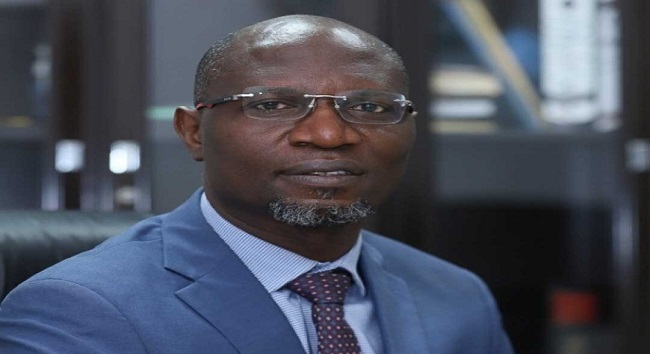
The Securities and Exchange Commission (SEC) has admitted seven new companies into its Accelerated Regulatory Incubation Programme (ARIP), expanding the number of digital asset firms operating under its regulatory sandbox as Nigeria continues efforts to formalise oversight of the sector.

The Commission disclosed this in a statement issued on Friday, noting that the newly admitted firms would receive Approval-in-Principle (AIP), allowing them to operate within the defined scope of the programme, subject to regulatory and supervisory conditions.
The seven companies are Bitbarter Technologies Limited, Luno Fintech Nigeria Limited, GetEquity Limited, Koinkoin Global Network Limited, Wrapped CBDC Ltd, Trovotech Ltd, and Blockvault Custodian Ltd.
The latest approval follows the SEC’s admission of Quidax and Busha into its regulatory framework in August 2024, as the Commission continues efforts to formalise oversight of Nigeria’s digital asset industry.
According to the SEC, the Approval-in-Principle confirms that each company has satisfied the admission requirements for participation in the programme.
However, the regulator stressed that the approval does not amount to a final operating licence.
“An Approval-in-Principle confirms that an entity has satisfied the Commission’s admission requirements for the Programme. Please note that it is not a final licence and remains conditional on the entity’s continued compliance with all applicable regulatory, operational, and supervisory obligations,” the Commission said.
The SEC added that the latest admissions reflect its commitment to promoting responsible innovation while protecting investors and preserving market integrity.
Announcing the development in a separate statement, one of the approved companies, Luno, said the approval comes after an extensive engagement process with the SEC and marks another step in its regulatory journey in Nigeria.
The company, which began operations in Nigeria in 2015, said the approval provides a clearer regulatory pathway as it expands its operations in the country.
Luno Nigeria Chief Executive Officer, Ayotunde Alabi, described the approval as an important milestone for the business.
“This is an important milestone for Luno Nigeria and a strong validation of our commitment to building responsibly in one of Africa’s most important cryptocurrency markets,” Alabi said.
He added that the approval would strengthen the company’s engagement with customers and institutional partners while supporting its expansion into business-to-business (B2B) services.
Luno said regulatory clarity has become increasingly important as more financial institutions, fintechs, payment providers, asset managers, and corporate organisations explore digital asset services.
According to the company, it intends to expand offerings for institutional clients, including digital asset infrastructure, stablecoin applications, treasury solutions, and crypto-as-a-service products.
The Accelerated Regulatory Incubation Programme is the SEC’s regulatory sandbox designed to fast-track the onboarding of digital asset service providers and other investment service providers while allowing the Commission to supervise their operations under controlled conditions.
The framework enables the regulator to assess emerging technologies and business models while ensuring investor protection and market integrity before granting full operational licences.
The initiative forms part of the SEC’s broader efforts to establish a structured regulatory framework for virtual asset service providers in Nigeria following years of uncertainty surrounding the sector.
Nigeria remains one of Africa’s largest cryptocurrency markets, with growing adoption by retail users despite periods of regulatory uncertainty.
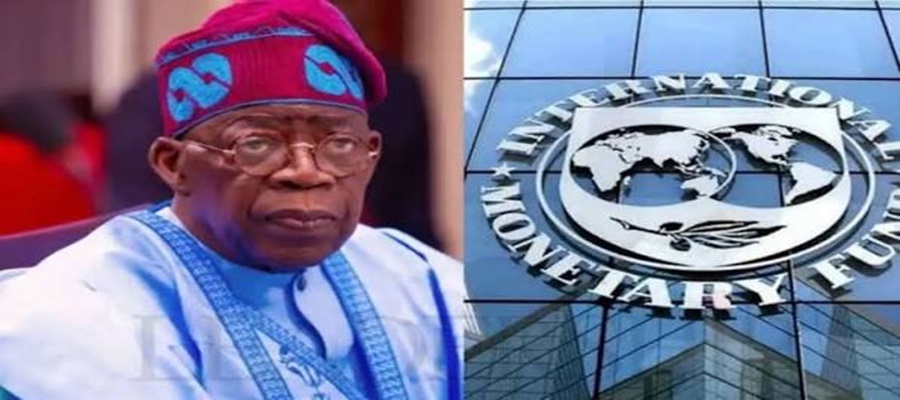
International Monetary Fund (IMF) has raised concerns over Nigeria’s fiscal transparency, disclosing that about two per cent of the country’s Gross Domestic Product (GDP), estimated at N8.83 trillion, was omitted from recent official budget documents.

Bola Tinubu
Unreported public spending—also known as off-budget expenditure—happens when a government spends money on public projects or services without including those costs in official budget documents.
This practice hides the true size of the government’s deficit, hides debt accumulation, and distorts overall economic data.
The IMF said the unreported expenditure has created a significant gap between Nigeria’s reported fiscal deficit and its actual financing requirements, making government borrowing appear lower than it truly is.
Speaking at an industry event in Lagos, Christian Ebeke, resident representative of IMF in Nigeria, said the expenditure should have been reflected in the country’s fiscal accounts to present a more accurate picture of public finances.
“So far we think that there are about two per cent of GDP of expenditure that were not reported that should be reported and should be recorded, so that this statistical discrepancy will disappear,” Ebeke said.
The estimate translates to approximately N8.83 trillion, based on the National Bureau of Statistics’ (NBS) latest nominal GDP figure of N441.5 trillion for 2025.
According to the NBS, Nigeria’s nominal GDP increased from N372.8 trillion in 2024 to N441.5 trillion in 2025 following improved performance across both the oil and non-oil sectors.
Using the Central Bank of Nigeria’s average exchange rate of N1,436 to the dollar for 2025, the omitted expenditure amounts to about $6.15 billion.
Ebeke attributed the discrepancy largely to capital projects executed outside the formal budget framework, noting that the omission had distorted assessments of Nigeria’s fiscal position and public investment profile.
He explained that some government spending was neither captured in approved budget documents nor reflected in budget implementation reports, resulting in an understatement of the country’s actual fiscal deficit.
According to him, the lack of comprehensive reporting also complicates coordination between fiscal and monetary authorities, as policymakers are left without a complete picture of government finances.
“The lack of full reporting can also complicate coordination between fiscal and monetary policy, as policymakers may not have a clear picture of the true deficit,” he said.
Ebeke warned that off-budget spending raises broader concerns about accountability, procurement processes and institutional oversight, stressing that improving fiscal transparency should remain a priority for the government.
“Improving transparency is critical,” he added, noting that expenditures outside the formal budget process undermine effective oversight and public accountability.
The IMF representative, however, acknowledged that the Federal Government has begun taking steps to address the problem through legislative reforms aimed at bringing previously unreported expenditures within the formal budget framework.
He said the authorities were working to amend existing budget laws to ensure greater disclosure of government spending but stressed that such reforms must be accompanied by timely and comprehensive budget implementation reports.
According to him, closing the reporting gap is essential to strengthening public financial management, improving transparency and restoring confidence in Nigeria’s fiscal framework.
The IMF’s latest observations come months after the National Bureau of Statistics rebased Nigeria’s economy, changing the GDP base year from 2010 to 2019, a revision that significantly increased the size of the country’s economy and, by implication, the value of expenditure estimates expressed as a percentage of GDP.
The concerns also follow the IMF’s recent Article IV Consultation on Nigeria, in which the Fund commended the Federal Government’s ongoing economic reforms for improving macroeconomic stability and boosting investor confidence, while cautioning that persistent structural weaknesses continue to limit the impact of the reforms on the broader population.

World Bank Okays New $1.25Bn Loan for Nigeria

Xenophobia: MTN Nigeria Belongs to Nigerians, Not Only South Africans — Toriola

SEC Grants Approval to Luno, Other Crypto Firms under Regulatory Sandbox

MTN Nigeria Celebrates Volunteers at Y’ello Care Impact Showcase

Listicle: 10 Essential Meta Safety Tools Every Parent and Teen Should Know

Mobile Internet Gender Gap Widest in Africa – GSMA

London Strengthens Global Investment Ties with Africa @ First Ever London-Africa Business Summit

FG Targets Alleged N3tn Capital Flight, Opens Airtime Credit Market to Nigerian Fintechs

Nigeria Launches FreeTV Nationwide

NASENI Trains 50 Women in Kano on Renewable Energy Technologies Under She-Powers Initiative



 Telecom2 days ago
MTN Foundation, Microsoft Empower Nigerian Educators with AI Integration Skills

 Telecom2 days ago
NCC Raises Alarm as Nigeria Lags in Fibre Internet, Pushes for Urgent Expansion

 E-Financial3 days ago
UBA Surprises Thousands of Customers with Over ₦400 Million Cash Bonus

 Telecom2 days ago
Airtel Nigeria CEO Urges Adoption of Intelligent Technology Platforms to Accelerate National Growth

 Broadcasting2 days ago
Spotify partners Afro Nation Portugal to expand African music experience

 E-Financial2 days ago
CBN Cracks Down, Revokes Licences of 46 Microfinance Banks

 E-Business2 days ago
Report Reveals More than Half of Users Encountered Fraud or Scams Online

 Telecom2 days ago
Google Rolls Out Fresh AI Projects Across Africa, Opens New Innovation Hub