

E-Business
Big Data: Big Hype or Big Value?


Opinion By Olayinka Oni
As big data continues to grow, the most successful, competitive organizations will be the ones with the ability to turn that data into game-changing paths to new revenue opportunities and operational effectiveness, says Booz Allen Hamilton.
Increasingly technology scholars and analyst the world over seem to be in agreement around what is (are) the most important technology trends shaping our world Very easily the four mega-trends that everyone seems to agree is at play are Cloud, Social, Mobility and Big Data.
I would say there has been a lot of discuss around three of these trends in our locale – Cloud, Social and Mobility, what has not yet start to be main-stream in conversation and dialogue is Big-data.
Some may argue it’s not near or that it’s still far from us but some recent occurrencesin our country seem to challenge this notion and point to the fact that the time of Big Data is upon on us than we think. But maybe the first challenge is the understanding of what Big Data means?

The term big data was coined by the sciences like astronomy and genomics which first experienced data explosion.
According to Mayer-Schonberger & Cukier, in the real sense of the word, there is no rigorous definition of big data; one simplistic way to think of it is: big data refers to things one can do at a large scale that cannot be done at a smaller one, to extract new insights or create new forms of value, in ways that change markets, organizations, the relationship between citizens and governments and more.
In 2012, Gartner defined it as follows: “Big data is high volume, high velocity, and/or high variety information assets that require new forms of processing to enable enhanced decision making, insight discovery and process optimization.
To address the challenge of data haven grown so large that it no longer fit into the memory that computer use for processing, engineers came up with new processing technologies that lets you manage large quantities of data than before and more importantly the data need not be structured (in tidy rows or classic database tables).
Back to the recent local occurrences, the recent spate of air-craft mishap in our country for example got me thinking could big data have helped? In my thinking probably yes, what if our aviation industry and its regulators had capabilities that are able to use predictive tools (basically using mathematical models and historic data) to determine before a flight takes up to a near perfect prediction that a flight may most likely go wrong mid-air?
A model that marsh data that includes weather conditions (like wind and storm, etc.),data created by jet engines in real time, sensors collecting data on the surrounding environment (temperature, humidity, air pressure, etc.), air-craft maintenance data, number of hours clocked, etc. regulators are therefore able to ensure compliance and safety in real-time by setting up all the compliance rules & safety criteria and validating them against a streaming data set comprised of data from flight sensors, flight management system, vertical navigation system, etc.
The system is built to trigger alerts, in real-time, if there is a potential compliance breach or a safety concern.
And another occurrence that comes to mind is the banking crisis that we have only truly/somewhat started to come out of, again maybe if the regulators had capabilities to simulate in a near to real time the sensitivity of each bank’s Capital Adequacy Ratio to moving data feeds like (both external & internal); Sectorial Risk tied loan-book exposure, Cash Reserve Ratio, Foreign Exchange Rate movement, Consumer Price Index, Loan Account Velocity, Asset/Collateral Cover & Quality, Quality & Sophistication of Loan Management Process & Organization, Frequency of Approach to Re-discount Window, etc. Maybe, just maybe they could have saved the day by knowing the best time to stop the systemic hemorrhage possibly with the right ‘policy-dosage’.
Beyond these situational scenarios, increasingly enterprises are finding new use for big data that was hitherto not possible.
Before now when people think of big data, they think of social media and Internet sites but this is changing very quickly due to advances in technologies which is bringing to mainstream and within affordable reach the discuss and relevance of big data in enterprise and government.
Advances in technologies like in-memory technologies that allow for processing of millions of rows of data in seconds, increased sophistication of analytics software and tools allowing for deeper/greater data visualization and Self-service BITechnology.
These coupled with the always connected trend powered by two of the 4 technology mega trend (Cloud & Mobility) mobility fueled by proliferation of mobile devices
Would it be interesting to a CEO of a bank when the banking relationship starts to wane with a particular customer segment; say after a set number of complaint and complaint type, in a particular branch category/location running a particular product based on their social profile (tribe, creed, current status in life, network, etc.)?Assuming he gets to have an early-warning signal just as that threshold was about to be reached.
This is powerful and business value in that it ensure that truly organization get to know something is happening and needs immediate attention before it truly happens and we are left with situational analysis as to causes.
Would it also be interesting to be able to generate Liquidity Risk of millions of customers on the fly from their millions of cash flows whilst doing real-time sensitivity analysis using data like exchange rate movement, interest rate, etc.?A practical example and common scenario that bankers would easily relate to in this locale is the concept of “Follow the Money”, consider a situation where all inflow across channels and across locations can be consolidated for the source of the fund to bubble up a new customer to capture just purely be able to leverage big data technology and analytics tools.
A similar scenario is where a large and unusual deposit into a customer’s account triggers real time alert to the relationship team and contact centre of the moment of truth opportunity to make a new product offer real time.
Increasing the opportunity to trap and lock the funds in the bank and deepen the bank’s share of the customers’ business.
And you can extrapolate the value of this to other relevant banking scenarios like real time and granular transactional risk-based pricing, real time interaction of data across multiple channels to detect fraud threat as it happens real time in order to provide live responses/action, enhancement of data quality/data cleansing, etc.
And lastly, with the increasing IT Consumerization trend, customers are being preconditioned and stereotyped to expect high level of personalization in the channel interaction with their bank. Reality, most of our banks are non-starters when it comes to leveraging big data for personalization of customer experience
Another scenario that would largely benefit from Big Data is the increasing need for Business automation and integration as a result of the increasing complex status most of our businesses have started to attain, most especially our Financial Services and Telco sector.
Whilst there is nothing new about business automation and integration, but leveraging cloud computing has greatly enhanced the extensibility of what is possible.
For the techno at mind, it simply means we can now expose or call APIs securely (whilst selectively gating access to more sensitive data) at scale combining hundreds millions of search terms/data to produce answer in near real time system automation.
In lay terms it means our traditional system automated processes now have the ability to be more intuitive and more granular in decisioing and hinging closer to age long desire of business to unlock value from its already sunk huge investment in technology.
Imagine for a moment a real life scenario when you have been on a trip for a while and wanted to place a call to loved ones and suddenly discovered we have been cut-off by our mobile operator?
Would it not have been nice if the system before it went ahead to cut off your line that you are above your contract level, was able to pull several data and churn same to arrive at a decision, data like the average monthly spend of the customer, credit record of the customer, frequency of roaming, previous customer contact with the service/call centre, customer profile (status, preferences, sentiments, etc.). Other relevant telco opportunity leveraging big data and Internet of things include;
Saving the best for last. As I was finalizing this piece, I asked that a colleague help me peer-review my write-up and his profound comment was that the place where big data can unlock the biggest value is in public sector; and that whilst government are typically a little further back in technology maturity they have also been known to leap-frog the fastest and to scale. Beyond trends, some practical examples that government can use to leverage big data to better execute on their mission.
A good use is in criminal investigation – Microsoft published recently a case study on Thailand’s Department of Special Investigations (DSI), and its use of big data to dramatically accelerate and improve the accuracy of its investigations into criminal cases.
Leveraging better BI and data-mining tools the DSI was able to reduce complex and manual processes and establish a system that could automatically notify personnel of suspicious persons or activities related to criminal cases.
For example, when many foreign criminals pour into the country and all travel to the same location, or when there is a noticeably large sum of money being transferred into the country. The most impressive about DSI’s new big data implementation is the dramatic impact that it’s had on investigations overall.
Before, conducting a traditional investigation could take as many as two years to search for tips, gather, and analyze data.
Today, with the Microsoft big data solution, the DSI is able to conduct investigations in as few as 15 days, thanks to the automated processes, reduced complexity and more accurate insights afforded by the new system. If you’d like to learn more about this impressive case study
The key to achieving greater judicial efficiency is unlocking data so that it can be easily shared, analyzed, and acted upon.
Today’s case management solutions break down jurisdictional and organizational barriers to ensure that every stakeholder has an up-to-date view of case information from any location, and can update and distribute that data as needed.
It’s about getting attorneys, judges, and law enforcement personnel on the same page, through one integrated solution that not only facilitates more efficient collaboration, but enables high-level business intelligence analysis through powerful analytics.
Decision-makers need access to historical justice data in order to identify hidden trends and make better, more informed decisions.
We’ve seen the power of case management at work within organizations like the County Commissioners Association of Pennsylvania (CCAP). CCAP was facing resource-constraints while operating several disparate case management solutions across its various courts, jails, and corrections offices, which severely limited information sharing and required redundant data entry at each location.
To address these challenges and become more efficient, CCAP partnered with Microsoft to build a Unified Case Management system on Microsoft Dynamics CRM that brought stakeholder data together within one system, empowering users to easily search, share, and act upon all of the information at the organization’s disposal. CCAP leaders are now able to extract better insights due to more accurate dashboards and reporting tools, and with manual data entry kept to a minimum, personnel are free to focus more of their time on pursuing justice and keeping citizens safe.
Other big challenges that can be tackled by big data include; using sensors to better understand phenomena such as weather, pollution, or traffic patterns to analyzing massive sets of “nanodata” to model the societal effects of policy, to the fast and low-cost mapping of the human genome to deliver better health outcomes.
Some persons may say all these is but another hype from the tech world, agreed some of it may end of being particularly when approached from just a technology purchase/nice to do IT Project standpoint (hmmm, nice to do IT Project is actually something I like to write about soon).
But there are already references to real tangible value: In 2003 Oren Etizioni needed to fly from Seattle to Los Angeles for his younger brother’s wedding. He bought online his plane ticket months before online on the premise that it would be cheaper.
When he got on the flight he was curious to validate that he got a good bargain, so he asked couple of people around him the cost of their ticket to his surprise he paid more than everyone around him.
Back from his trip Etzioni was determined to figure out a way for people to know if a ticket price they see online is a good deal or not. An airplane set is a commodity: each one is basically indistinguishable from others on the same flight.
Yet the prices vary wildly, based on a myriad of factors that are mostly known only by the airlines themselves. Using a sample of 12,000 price observations that was obtained by “scraping” information from a travel website over a 41-day period, Etzioni created a predicted model that handed its simulated passengers a tidy savings.
The model had no understanding of why, only what. That is, it didn’t know any of the variables that go into airline pricing decisions, such as number of seats that remained unsold, seasonality, or whether some sort of magical Saturday-night-stay might reduce the fare.
It based its prediction on what it did know: probabilities gleaned from the data about other flights. “To buy or not to buy, that is the question,” Etzioni mused. Fittingly, he named the research project Hamlet.
The little project evolved into a venture capital – backed startup called Farecast. Microsoft snapped up Farecast for around $110million, and integrated it into the Bing search engine.
By 2012 the system was making the correct call 75% of the time and saving travelers, on average, $50 per ticket.
In conclusion, the world of data is changing in a big way, and customer expectations are changing right along with it. Big Data gives you the tools to make sense of all your collected data. It challenges you to view your business in new ways. And it gives you a basis to power innovation. What this writeup tries to do is to illicit thoughts as to the various scenarios of use of Big Data both in the enterprise and individual lives.
At Microsoft our approach to big data is to; “Enable insights into ‘Big Data’ to all users wherever they are”, taking Big Data to a billion people because everyone can make smarter decisions based on data. We believe big data should be in the hands of the people closest to your business who are moments away from that next big idea.
Our approach is simple – we enable organizations of any size to access data of all types, whether structured or unstructured, big or small. We empower end users to easily analyze their data with familiar tools like Excel.
And we offer a complete data platform for IT to scale insights across their organization with Enterprise-class security and data governance. Microsoft Big Data gives you the power to take action. You can gain a flexible platform and accessible tools to discover, connect, and deliver new insight.
Big Data is here today, within your reach. Isn’t it time to get started?
Olayinka Oni is seasoned IT professional with experience spanning consulting and the banking industry, he is currently, Chief Technology Officer, Microsoft Nigeria and he writes from Lagos.


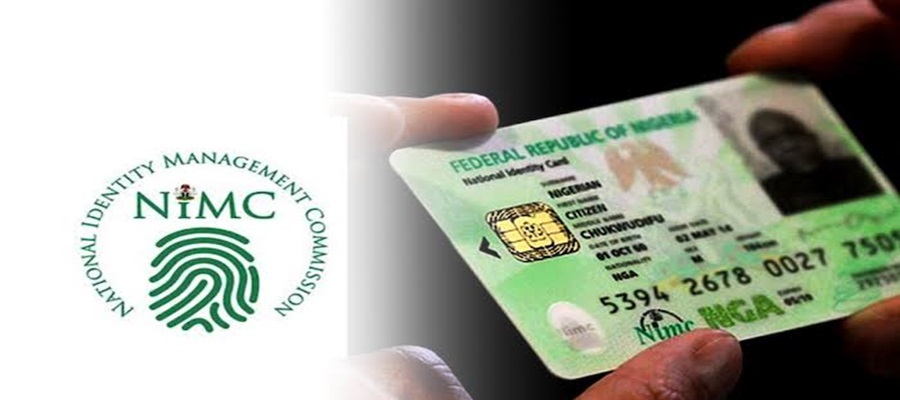
Uche Chigbo, coordinating director of Operations, National Identity Management Commission, (NIMC), has said the newly enacted NIMC Act strengthens data protection and privacy, expands identity coverage to include everyone in Nigeria and Nigerians in the diaspora, and provides the legal framework for a secure and trusted digital identity ecosystem.

She said the new law replaces the 2007 NIMC Act, which had become outdated due to rapid technological advancements, evolving cybersecurity threats, the growth of the digital economy, and the enactment of the Nigeria Data Protection Act.
According to her, the updated legislation better positions the Commission to deliver Nigeria’s digital identity agenda and improve access to government and private sector services.
“The Act itself has taken in a whole lot of things to make sure that NIMC is well-positioned to be able to deliver on the identity agenda and program of Nigeria. The area of universal coverage was expanded within the Act so that NIMC can enroll everybody that is within the soil of Nigeria—male, female, children, whether they are IDPs or orphans or whatever it is, and even Nigerians in diaspora.
“There is quite a lot within the Act that over the few days and weeks, even with my Director-General’s courtesy visit, we are trying to sensitize and educate the general public, and also bring awareness to this new Act so that people will know what are the rights that exist within it, what are the obligations, what are the stronger enforcement and penalties that has also been expanded within the Act, and then what are also the regulatory autonomy that has been given to NIMC to make sure that they drive the digital identity ecosystem in Nigeria,” she explained.
“There’s a lot of provisions and changes with the new Act. Um, the NIMC 2007 Act has been operating for close to 19 years now. So, we can see that, um, you can actually say it’s almost obsolete. And then with a lot of technological advancements in the world now, with the enactment of the Nigeria Data Protection Act, and then with also a lot of evolving security challenges, cybersecurity challenges, as well as the ever-growing digital economy, it became very necessary that a comprehensive review of the NIMC Act should be done.
So, that 2007 Act has been repealed and a new NIMC 2026 Act is in place,” she explained.
Chigbo clarified that the National Identification Number (NIN) is Nigeria’s unique identifier and the only valid means of identification for accessing government services.
She added that it enables secure identity verification and improves access to services.
“NIN has been designated as the unique identifier in Nigeria and then by the government of Nigeria establishing it as the only valid means of identification for assessing government services. So, NIN, it’s positioned to be a valuable tool for empowering citizens and legal residents to facilitate access to service delivery in Nigeria. And it’s also a tool for people to be able to prove their identity as they go about their daily businesses,” she said.
Speaking on identity harmonisation across government agencies, Chigbo said NIMC is integrating identity databases to enable Nigerians to access services seamlessly using the National Identification Number (NIN), while other agencies continue to issue functional identities for specific purposes.
“There’s a distinction between a foundational identity and a functional identity. NIMC provides the foundational identity, which answers the question, ‘Who are you?’ Are you a Nigerian or a legal resident? Who are you? That’s what NIMC is providing. All these other agencies that you have mentioned, they provide functional ID, which is an ID that relies on the foundational ID, where they have established who you are and then they are now trying to answer the question, ‘Are you now eligible to have these services? Are you now eligible to benefit from this transaction or scheme?’ So, those are two different distinctions.”
However, Chigbo said NIMC’s mandate is to harmonise and integrate identity systems across government, with the amended Act designating the Commission as the sole repository for biometric data.
“However, NIMC mandate is to make sure that we harmonize and integrate with all these agencies so that you’re one and the same person in any of the databases or registries that you have. The Act that has been expanded and amended also positions NIMC as the only repository for biometric data capture so that we can have effective identity management and coordination in Nigeria.
“So, that harmonization is already happening, the integration is already happening,” she stated.
She also disclosed that NIMC has introduced an online modification portal that allows Nigerians to begin the process of correcting or updating their personal information from the comfort of their homes or offices.
“But also, NIMC we have a modification portal that enables you to sit in the comfort of your home or office to be able to start the process of correction or updates of your data. We already have a self-service modification portal that allows you to make corrections,” she disclosed.
On the cost of obtaining a NIN, Chigbo clarified that enrolment and issuance of the National Identification Number are free.
She, however, noted that some other identity-related services attract approved fees, which are published on the NIMC website and paid electronically through the government Remita platform.
“Enrollment for the issuance of the National Identification Number, NIN, is free. There are other services, identity services that NIMC provide. Those ones have their charges, and those fees and charges are publicized on the NIMC website so that people can see what those charges are. And NIMC does not collect cash. Our transactions and the charges are paid electronically through the government Remita platform,” she said.


International Monetary Fund (IMF) has retained Nigeria’s economic growth forecast at 4.1 per cent for 2026, while warning that rising prices of essential goods could worsen poverty and food insecurity in the country.

IMF
The IMF made the projection in its July 2026 World Economic Outlook (WEO) Update, released on Wednesday.
According to the report, Nigeria’s Gross Domestic Product (GDP) is projected to grow by 4.1 per cent in 2026 and improve to 4.3 per cent in 2027, with both forecasts unchanged from the Fund’s April outlook.
The IMF also maintained its growth projections for sub-Saharan Africa at 4.3 per cent in 2026 and 4.5 per cent in 2027.
The Fund said Nigeria’s economic outlook continued to benefit from improved macroeconomic stability and favourable terms of trade but cautioned that the rising cost of essential commodities remained a major concern.
“Nigeria is supported by improved macroeconomic stability and favourable terms-of-trade effects, though higher prices for essentials are expected to further aggravate poverty and food insecurity,” the report stated.
The IMF noted that economic performance across sub-Saharan Africa would remain uneven, reflecting differences in policy implementation, reform progress and countries’ exposure to external shocks.
It added that oil-importing and non-resource-intensive economies would likely face increased pressure from rising food and energy prices, while some larger economies continued to benefit from earlier macroeconomic reforms.
Globally, the IMF revised its 2026 growth forecast downward to 3.0 per cent from the 3.1 per cent projected in April but raised its 2027 forecast to 3.4 per cent.
According to the Fund, the downgrade for 2026 reflects the impact of the ongoing conflict in the Middle East, although stronger demand driven by advances in artificial intelligence and technology adoption has helped cushion some of the adverse effects.
Despite the resilience of the global economy, the IMF warned that risks remained tilted to the downside.
It identified renewed trade tensions, geopolitical conflicts and tighter global financial conditions as key threats to economic growth.
The Fund urged governments to rebuild fiscal buffers through credible fiscal consolidation, improved revenue mobilisation, stronger tax administration, efficient public spending and increased investment in infrastructure, skills development and targeted social protection programmes.
It also advised commodity-exporting countries to avoid excessive public spending during periods of high commodity prices.
“Economies benefiting from commodity windfalls and the upturn in the global technology cycle should avoid procyclical spending and save or redeploy gains within a credible medium-term fiscal framework anchored in debt sustainability,” the report stated.
The IMF further called on policymakers to accelerate structural reforms aimed at boosting productivity, strengthening labour markets, expanding digital and physical infrastructure, promoting predictable trade policies and enhancing international cooperation to support sustainable economic growth.
Nigeria’s data protection industry has grown into a N16.3 billion ecosystem within three years of formal regulation, according to the Nigeria Data Protection Commission (NDPC).

Olufemi Ibitayo, head of Finance Management and Control, NDPC, announced the milestone at the Regional Data Governance Exchange in Nairobi, Kenya, where he represented Dr Vincent Olatunji, national commissioner and chief executive officer, NDPC.
Presenting Nigeria’s progress, Ibitayo said the country’s strong regulatory framework and the establishment of an independent data protection authority have strengthened confidence in the digital economy and enhanced Nigeria’s reputation as a destination for foreign investment.
The Regional Data Governance Exchange, organised by the Data Governance in Africa Initiative and hosted by the Office of the Data Protection Commissioner in Nairobi, brought together African data protection authorities to strengthen institutional capacity, deepen collaboration and promote peer learning on data governance. Photo: NDPC
He said the Commission’s “Compliance First, Not Punishment” approach encourages organisations to meet their obligations through dialogue and voluntary compliance, while ensuring effective regulatory oversight.
Ibitayo added that the NDPC is developing regulatory technology solutions, a regulatory sandbox and a data privacy innovation laboratory to further strengthen Nigeria’s data governance ecosystem and support future growth.
United Nations Commission on International Trade Law (UNCITRAL)
The ongoing UNCITRAL session has brought together delegates from Nigeria, Australia, China, Ghana, France, the United States and other member states to develop harmonised legal frameworks aimed at facilitating secure, trusted and efficient cross-border digital commerce. Photo: NDPC
Meanwhile, Olatunji reaffirmed Nigeria’s commitment to global data governance during a meeting with Nigeria’s Permanent Representative to the United Nations, Ambassador Jimoh Ibrahim.
He made the remark on the sidelines of the ongoing United Nations Commission on International Trade Law (UNCITRAL), where Nigeria is participating alongside delegates from several member states to advance harmonised legal frameworks for secure and trusted cross-border digital commerce.
The NDPC boss highlighted the Commission’s achievements since its establishment, noting that strategic institutional reforms have positioned Nigeria as a leading voice in the global data protection ecosystem.
He said the country’s data protection framework has continued to earn international recognition, adding that the Commission remains committed to promoting trusted data governance as a driver of digital transformation, economic growth, innovation and sustainable development in line with the Renewed Hope Agenda of President Bola Ahmed Tinubu.
During the meeting, Ambassador Ibrahim commended the Commission’s progress since the enactment of the Nigeria Data Protection Act 2023 and called for the establishment of a comprehensive national data bank to support evidence-based policymaking, research and national development.

Court Adjourns Alleged Binance Tax Evasion Case over Settlement Talks

Fixed Wired Internet Market Lags as Mobile Gains Ground

Xenophobic Attacks: OYC Threatens to Picket MTN Nigeria Offices

New NIMC Act Strengthens Data Protection, Privacy – Director

BON Establishes Six Ad Hoc Committees to Modernize Broadcasting

NASENI Moves to Digitize CCB’s 5m Assets Declaration and Operations

Mobile Internet Gender Gap Widest in Africa – GSMA

Nigeria Launches FreeTV Nationwide

CANAL+ Partners Samsung to Pre-Load DStv Stream on New Samsung TVs In Nigeria, Other African Countries

Lebara Nigeria Launches Lebara Play, Africa’s First Telecom-Owned Micro-Drama Platform




 News2 days ago
NRC, Ponzi Scheme Collapses Resulting Loss of Billions of Naira

 News2 days ago
NSITF Partners South African Insurer on Digital Transformation

 E-Financial2 days ago
FCT-IRS Unveils New Digital Platform, Taxporta

 General News2 days ago
KPMG Urges Africa’s Most Innovative Tech Entrepreneurs to Enter the Global Tech Innovator 2026 Competition

 E-Business2 days ago
FG Suspends New Internet Regulations to Prevent Overlapping Rules
 E-Business2 days ago
NIN Enrollment Hits over 136m as New ID Law Takes Effect

 E-Business2 days ago
Plateau PCC Collects Nigerians’ Data without Privacy Policy – FIJ

 Telecom1 day ago
NCC Seeks Cost-Based Pricing Framework for Ducts