

News
Jobberman Launches Alliance for Better Work Initiative


Jobberman, the single largest job placement website in sub-Saharan Africa, has announced its Alliance for Better Work initiative, as part of its longstanding partnership with the Mastercard Foundation.

The employer-centred initiative is geared to radically bolster recruitment in Nigeria, with a focus on driving female hires and providing integrated end-to-end support on the easy to use online jobs platform.
Large corporations to SMEs in Lagos, Abuja, Kano and Kaduna will be able to capitalise on access to over 182,000 pre-vetted jobseekers between the age of 18-35, segmented by industry and qualification level and with a core focus on the agricultural, creative and digital sectors in Nigeria.
The Alliance for Better Work has been designed to improve job retention, workplace productivity, business development and, crucially, bridge the gap on gender unemployment which according to recent data is 35.2% compared to 31.8% for men.
To-date, employers have faced challenges such as cost for training new employees, a flood of unfiltered applications and wide skills gap.
The campaign will run in parallel to Jobberman’s successful soft skills training program, which has already equipped 190,628 young people between the age of 18-35 for the workplace, as well as placing more than 82,600 in dignified employment.
The latest drive will see the pioneering platform draw from its leading expertise in the market to tackle both strands of recruitment with equal volition and on course to reach its target of securing employment for 3 million young people by 2025.
The Alliance will establish a commitment between Jobberman and employers in the agriculture, creative, digital, finance, healthcare, retail/FMCG, advertising and education sectors to #hirebetter and move beyond the inertia of costly recruitment processes.
According to Jobberman’s data insights, companies can spend an average of 4-6 weeks on their hiring process and cost an estimated 20-25% of the annual gross salary of a candidate to recruit.
The Alliance for Better Work is an exclusive recruitment club that gives employers access to the largest pool of trained quality candidates in the country, innovative end-to-end recruitment and post-hiring support, brand amplification, and exclusive rates, all tailored to companies specific needs.
Speaking on the initiative, Rolake Rosiji, CEO of Jobberman Nigeria said, “The Alliance for Better Work is ultimately about unlocking the competitive advantage of Nigerian companies, often lost in long and poor cycles of recruitment.
“By joining forces with Nigeria’s most astute companies we aim to set a standard of progressive recruitment practices that will allow businesses to flourish. Plus, this opens up the opportunity to accelerate our mandate with Young Africa works in placing trained young people in dignified work. Employees are a company’s greatest asset and Jobberman has the experience, the tools, platform and the resources to make this a reality for employers.”
Chidinma Lawanson, Country Head Nigeria, Mastercard Foundation, added, “The Mastercard Foundations Young Africa strategy aims to give 10 million youth, and women access to dignified and fulfilling work in Nigeria – 70% of which must be women. The Foundations’ partnership with Jobberman is one of the many ways that we intend to achieve this.
The launch of the Alliance for Better Work Campaign is intentional in filling the gap in the recruitment process, particularly as it pertains to gender unemployment. We look forward to seeing its impact.”
With over a decade in the recruitment business, Jobberman has used its platform to develop job seeker skill sets, identify gaps in the labour market and streamlined the hiring processes for employers.
The partnership with the Mastercard Foundation is steering transformative change in the issues surrounding unemployment in Nigeria. The partnership aims to train 5 million job seekers and place 3 million in dignified employment over the next five years.


Microsoft has announced plans to cut about 4,800 jobs, representing roughly 2.1 percent of its global workforce, with Xbox, its gaming division, expected to bear the largest share of the layoffs.

The company said more than 1,600 positions at Xbox would be eliminated immediately, while another 1,600 jobs would be phased out over the next year as part of a major restructuring of the gaming business.
In a memo to employees, Amy Coleman, executive vice president, Microsoft, said the company was streamlining its operations to focus on areas that deliver greater value to customers in a rapidly changing technology industry.
Asha Sharma, chief executive officer, Xbox, described the move as “the most significant restructure in Xbox history,” saying the changes are intended to position the gaming business for long-term growth rather than downsizing.
News
Access Bank, Fifth Chukker and UNICEF Renew Commitment to Expanding Educational Opportunities for Nigeria’s Most Vulnerable Children
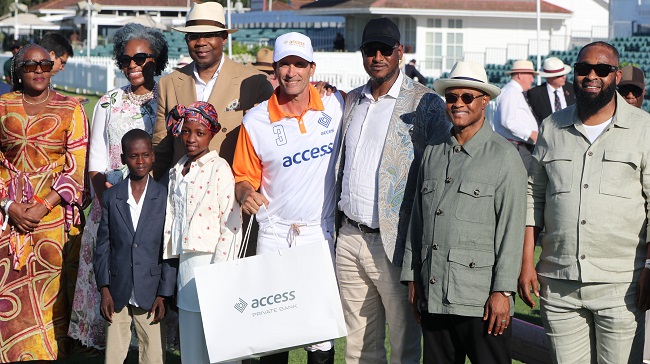
The transformative power of collective action in expanding access to education took centre stage in London as Access Bank UK, Fifth Chukker, UNICEF and the Kaduna State Government reaffirmed their shared commitment to creating brighter futures for Nigeria’s most vulnerable children.

Hosted by Access Bank UK, Access UK Polo Day celebrated more than 15 years of impact driven by a shared vision to expand educational opportunities for underserved children. What began as a modest initiative has evolved into one of Africa’s most impactful education programmes, with the Access Bank Fifth Chukker School in Kaduna State and its associated interventions positively impacting more than 14,000 children across underserved communities in Northern Nigeria.
At the heart of this transformation is the Access Bank Fifth Chukker School, where investments in educational infrastructure, learning resources and student support have created lasting opportunities for thousands of children.
Between 2018 and 2026 alone, the school recorded 2,538 graduates, with female pupils accounting for more than 54 per cent of the total, underscoring the programme’s contribution to advancing girls’ education and promoting inclusive access to learning.
More than 1,000 pupils benefit from the school’s internationally recognised foundational learning programme each year, contributing to improved literacy and numeracy outcomes and a reported 15 per cent increase in learning performance. Students continue to secure admission into leading secondary schools, while teachers receive ongoing professional development and digital learning support.
Enhanced infrastructural facilities and expanded learning resources have further strengthened the overall learning environment, helping to sustain the programme’s long-term impact.
This year’s event reinforced a compelling message: Every pledge should lead to a classroom, every classroom should empower a child, and every child should have the opportunity to shape a brighter future.
Speaking at the event, the Managing Director and Chief Executive Officer of Access Bank Plc, Roosevelt Ogbonna, reflected on the remarkable growth of the initiative and the unwavering commitment of its supporters.
“What began as a dream to transform the lives of 100 children has grown into a movement that has positively impacted more than 14,000 young people. We want to return next year talking about 28,000 children. Education remains the greatest leveller, giving every child a genuine opportunity to realise their potential and contribute meaningfully to society.”
Ogbonna expressed appreciation to donors and partners whose support has sustained the initiative, noting that investment in education creates lasting intergenerational impact.
Kaduna State Governor Uba Sani described education as one of the most valuable investments any society can make. He praised the longstanding alliance between Access Bank, Fifth Chukker and UNICEF, noting that it has restored hope and opportunity to thousands of children from underserved communities.
Highlighting Kaduna State’s ongoing education reforms, the Governor revealed that approximately 300,000 out-of-school children had been returned to classrooms over the past year through partnerships with organisations including UNICEF and other development partners.
He also announced plans to construct an additional 120 classrooms at the Fifth Chukker Access Bank UNICEF School, enabling even more children to access quality education.
“What we are doing here is about humanity. By giving children access to quality education, we are empowering them to dream, to lead and to build a better future for themselves and their communities.”
Governor Sani also paid tribute to the late Herbert Wigwe, acknowledging his vision, leadership and enduring commitment to improving educational outcomes for underserved populations.
For Aigboje Aig-Imoukhuede, Chairman of Access Holdings, the true success of the initiative is reflected in the lives being transformed.
“The most meaningful measure of success is not the number of buildings we construct, but the opportunities we create. Every child who receives an education, every young person who discovers their potential, and every community strengthened through learning represents the lasting impact of this partnership. Together, we are proving that when purpose meets collaboration, we can create opportunities that change lives for generations.”
Welcoming guests, Jamie Simmonds, Chief Executive Officer of The Access Bank UK, described the gathering as polo with purpose, a celebration not only of sport but of a shared mission to create opportunity through education.
He highlighted the institution’s commitment to supporting initiatives that deliver sustainable social impact and broaden access to learning for underserved children.
The event concluded with a renewed commitment from all stakeholders to deepen investment in education as a catalyst for national development and social progress.
The Access Bank Fifth Chukker School continues to demonstrate the impact of sustained collaboration among the private sector, government and development partners, delivering measurable outcomes for vulnerable children in Northern Nigeria.

Socio-Economic Rights and Accountability Project (SERAP) has given Godswill Akpabio, Senate President, and Tajudeen Abbas, speaker of the House of Representatives, seven days to explain how over N1.3 billion was allocated in the 2026 Appropriation Act to a presidential council that the Presidency has described as fictitious.

In a Freedom of Information (FoI) request dated July 4, 2026, SERAP asked the National Assembly leadership to release certified copies of all documents related to the approval of the N1,302,978,784 allocation to the Presidential Foreign Intervention Promotion Council (PFIPC)/Presidential Economic Advisory Council.
The rights group also called on the National Assembly to invoke its investigative powers under Sections 88 and 89 of the 1999 Constitution to probe the circumstances surrounding the allocation and identify those responsible for what it described as apparent irregularities in the budget process.
SERAP further requested records identifying the lawmakers and committees that considered the allocation, as well as the public officials or representatives who defended the budget proposal before the committees.
The civil organisation also sought clarification on whether the allocation originated from the Executive’s 2026 Appropriation Bill or was introduced during the legislative appropriation process.
It equally demanded to know whether any lawmaker questioned the legal status or operational mandate of the council before approving the allocation.
The FoI request follows a July 1 statement by the Presidency denying the existence of the Presidential Foreign Intervention Promotion Council and insisting that the Federal Government never created the body.
Describing the conflicting claims as alarming, SERAP said they raised “serious concerns regarding the integrity of Nigeria’s appropriations process, legislative oversight, public financial management, and accountability.”
The FoI request, signed by Kolawole Oluwadare, deputy director, SERAP, stressed that Nigerians have a constitutional right to know whether public funds were appropriated to an entity that does not legally exist.
SERAP said, “Nobody has a more sacred obligation to obey the law than those who make the law, and that the National Assembly has a constitutional responsibility not merely to approve the Executive’s budget proposals but to rigorously scrutinise them before authorising public expenditure.”
The organisation argued that disclosure of the requested documents would enable Nigerians to determine whether the National Assembly fulfilled its constitutional obligations under Sections 80, 81, 88, and 89 of the Constitution in approving the allocation.
SERAP warned that if the requested information is not released within seven days of receipt or publication of the letter, it would initiate legal proceedings to compel the National Assembly to disclose the documents.
The organisation further maintained that making the records public would strengthen confidence in the National Assembly’s credibility, enhance transparency in the appropriation process, and promote accountability in the management of public funds.
It also cited the Freedom of Information Act, the Nigerian Constitution, the African Charter on Human and Peoples’ Rights, the International Covenant on Civil and Political Rights, and the Tshwane Principles as legal bases for its demand for full disclosure.

DSS Spyware Acquisition Enables Illegal Wiretaps, Detentions – The ICIR

Microsoft to Lay Off 4,800 Workers

Access Bank, Fifth Chukker and UNICEF Renew Commitment to Expanding Educational Opportunities for Nigeria’s Most Vulnerable Children

IHS Nigeria, FCT-HSES Concludes Clean Cooking Energy Campaign “Project Breathe Clean Air” in Abuja

Kaspersky Transforms Threat Intelligence Reporting into an Interactive Content Hub

Mobile Internet Gender Gap Widest in Africa – GSMA

Nigeria Launches FreeTV Nationwide

NASENI Moves to Digitize CCB’s 5m Assets Declaration and Operations

CANAL+ Partners Samsung to Pre-Load DStv Stream on New Samsung TVs In Nigeria, Other African Countries

UK, Nigeria Launch £15m Growth Programme to Accelerate Economic Transformation




 General News1 day ago
NIS Deploys Advanced Surveillance Masts, other Critical Infrastructure to Boost Border Security

 E-Financial1 day ago
Tokenization, Blockchain Technology will Transform Financial Institutions – IMF

 Broadcasting1 day ago
Obi, NDC Presidential Candidate Faces N50Bn Defamation Claim over Alleged Podcast Remark

 E-Business1 day ago
Weebly Websites to Shut Down for Nigeria, 66 Other Countries from September

 Telecom1 day ago
No Plans for Fresh Tariff Hike – MTN

 E-Financial1 day ago
FG Denies N8 Trillion ‘Shadow Budget’, Says IMF Quoted out of Context

 General News1 day ago
PufferPay CEO to Keynote Business Journal Fintech & Financial Inclusion Roundtable 2026

 Telecom1 day ago
Airtel Africa Foundation Equips 200 Young Women with Digital Skills to Drive Nigeria’s Tech Economy