

Telecom
A4A1 says Broadband costs in Africa Remain Highest


The 2017 Affordability Report from the Alliance for Affordable Internet (A4AI) which the internet lobby group says it compiled using more recent pricing and income data revealed that a basic broadband connection is most expensive in Africa of all the regions around the world.
“While the Asia-Pacific region boasts the most affordable broadband – 1GB of data costs citizens, on average, 2.5% of monthly income – not one of the regions surveyed meets the “1 for 2″ target. Costs remain highest in Africa, with 1GB costing 9.3% of a citizen’s average income; however, Africa also experienced the most significant cost reductions of any region – an average drop of 3.2 percentage points across the continent drove most of the global improvement in affordability seen in this data,” reads an excerpt from a statement issued by A4AI.
A4AI first announced its “1 for 2” affordability threshold which requires for 1GB of mobile prepaid data to cost no more than 2% of average monthly income in its 2015-16 Affordability Report.
The organisation believes meeting this yardstick would enable all income groups to afford a basic broadband connection. The latest research shows some African countries have met the target.
Arch. Sunday Echono, Permanent Secretary for Nigeria’s Minister of Communications Adebayo Shittu endorsed the affordability target during a speech he delivered on behalf of the Minister during an A4AI-Nigeria Coalition meeting in January.
“Consequently, A4AI and the Ministry share the common goal to make the Internet universally affordable for all who want to use it. This goal is quantified in a measure of having 1 Gigabyte of bandwidth not costing more than 2% of a person’s monthly income,” said Echono.
The updated A4AI report shows that the cost of 1GB in Nigeria currently stands at 1.57% of income.
Ghana was second to Nigeria with its endorsement of the affordability target in April after an announcement by Ursula Owusu-Ekuful, Minister of Communications for Ghana that the country would start working toward reducing internet costs.
This is yet to materialise as the latest data shows 1GB in that country costs 4.11% of average income. Egypt has the lowest cost for 1GB on the continent at 0.47% of income. A Gigabyte of data in Africa is most expensive in Botswana, Zimbabwe and Mali among others.
A4AI also revealed that it may modify its affordability target in the near future so that it is a more accurate assessment.
“Mobile network operators in some countries are responding to the issue of income inequality through market segmentation – i.e., by offering very small plans (50MB or 100MB) or very big plans (2GB and above). One implication of this trend is that using a single price point (e.g., 1GB) to assess affordability might not be appropriate for all countries, and having additional price points (e.g., low, medium, high) will be useful — something we will explore in further updates.”
A4AI adds that while prices are dropping globally, affordability continues to be a major obstacle to access that is compounded by high levels of income inequality. The organisation has the support of ICT companies that include Google, Facebook and Cisco.


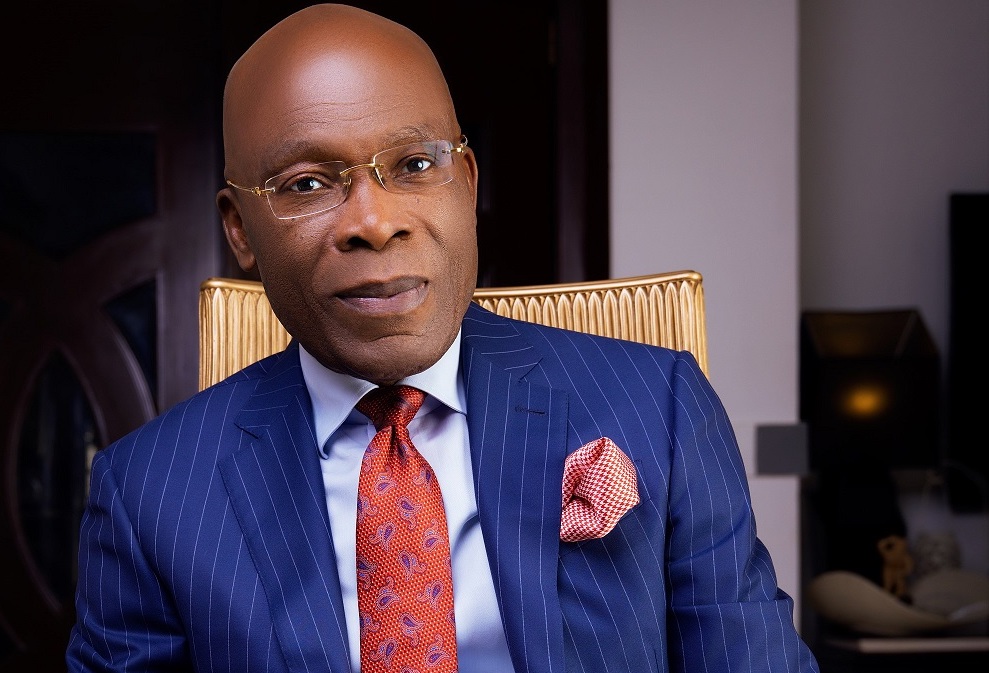
Renowned digital innovation expert, Prof. Chris Uwaje, has celebrated Leo Stan Ekeh as a visionary “digital anticipator” and pioneer on the occasion of his 70th birthday.

Leo Stan Ekeh
In a heartfelt tribute, Uwaje hailed Ekeh as the “Saint Leo of all Stars from the Ekeh Universe,” saluting his masterclass contributions to human innovation, development, and global youth empowerment.
Visionary Impact on Africa, World
Uwaje praised Ekeh’s foresight, emotional intelligence, and resilience in transforming digital entrepreneurship, creating millions of jobs, billions in economic value, and expanded education access worldwide.
The encomium spotlighted Ekeh’s trailblazing solutions driving sustainable development, employment, and economic growth across Africa and beyond.
“Your legacy continues to shape a brighter future,” Uwaje noted, adding that Ekeh’s “extraordinary best is yet to come” as the “Field-Marshall of ANTICIPATORS.”
Cheers to More Foresighted Legacy
Uwaje declared: “From the gaze into the digital cloud: ‘the world ain’t seen nothing yet’!” while toasting Ekeh as the “true digital Conqueror of Africa and the world.”
The tribute underscores Ekeh’s enduring influence in digital disruption, innovation, and youth-focused initiatives that continue to inspire global progress.
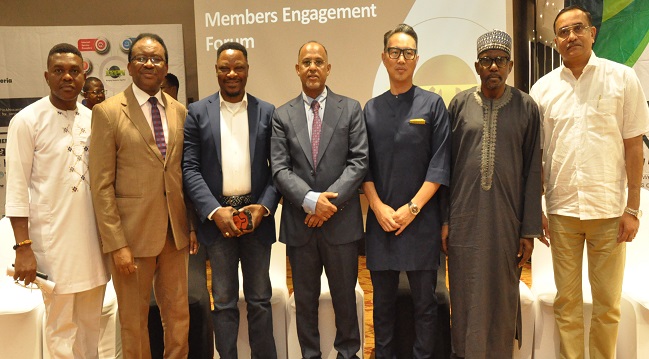
Internet Exchange Point of Nigeria is positioning as a regional Internet Exchange hub for West Africa in terms of infrastructure and traffic. Muhammed Rudman, chief executive officer, IXPN, stated this at its 2026 members engagement forum held in Lagos. He noted some of the major milestone IXPN achieved last year to include one terabit of traffic recorded in March 2025.

“At that time, we became the 63rd internet exchange point in the world. Among all the exchanges in Europe and America and in the entire world, we become the number 63 in the world. To achieve that one terabit of traffic. Again, we were able to achieve two terabits of traffic within seven, eight months of the year.
“We achieve this by ensuring that we push for members to upgrade, those that were on 1 Gig to 10 Gig, those on 10 Gig to 100 Gig. We had a strategic infrastructure upgrade across our networks, put 400 Gig enable switches, increase our fiber links to all the data centers and we onboarded 17 new members last year. All the trainings and the operational excellence ensured that our network is up and running 24/7,” he said.
Industry Impact
The impact of that one terabit traffic is data sovereignty. “We were able to domesticate. Based on the survey we conducted, 54% of our members said that they are exchanging 50% of their traffic and above locally, which is really, significant one.
“We are also setting up a benchmark for other African IXPs. I can assure you that in all the community driven internet exchange points in Africa, we are the number one. There’s a community driven internet exchange point in South Africa that was established 10 years before IXPN. There is one in Kenya that was established 6 years before IXPN, but we are way ahead of them when it comes to internet traffic.
“We are also promoting intra African connectivity. As at today, we have customers from Niger, from, Burkina Faso, trying to reach to Nigeria. Recently, we onboarded a very large company in Ivory Coast, to connect to Nigeria.
“Gradually, Nigeria is tilting towards becoming the regional hub for West Africa, where you see Internet Service Providers coming to achieve that. And in terms of the traffic, in 2015 we were at four Gigabits per second. It moves to 21 in 2017 and 52 gigabits per second.
“But by the year 2023 it has reached 540 gigabits. By 2024 we have reached 900 gigabits. But by the end of 2025 we have achieved the two terabits of traffic”.
Network Infrastructure Development
Some of the technical feet IXPN achieved includes, deployment of sFlow; which is a peer to peer traffic analysis. “We’re able to see what members are exchanging between themselves and between the data centers, not the actual content or information, but rather the volume of traffic, and also between our data centers. And based on this, we’re able to do the upgrades.
“We did a multiple link upgrades from 300 Gigabits last year from Digital Realty to Equinix. It was 300 Gig as at the end of 2024, and by 2025, we’ve increased that to 500 gigabits per second. Digital Realty to Rack Center, it was 200 Gigabits per second. We also upgraded that to 500 Gigabits per second.
Open Access Data Centre to Equinix. We’ve upgraded from 20 Gigabits per second to 200 Gigabits per second. We always monitor the ports, and based on that, we increase immediately we reach the threshold of 80%.
“We did an upgrade on the IXP manager. This allows each member to have a login portal to see the traffic they are exchanging and other details, the port as well as to do their own configuration,” he added.
Technical Project Milestones
Microsoft connected cache. “We deployed Microsoft content cache and that has been deployed in Lagos. It was 25 Gigabits per second as of 2024 by 2025 we had to upgrade the infrastructure to 75 Gigabits per second servers, that will be able to accommodate all the Microsoft updates they are doing, exports, download and among others.
“This is part of the content that Microsoft is not providing locally, but we got those servers deployed, and our intention is by next year to see how we can replicate this across the country. Last year, we also deployed the same server in Abuja so that the Abuja people and the Kano people can reach that content without coming back to Lagos.
The Google Global Cache (GGC); “We are hosting all these at IXPN. We also upgraded from 53 Gigabits per second servers in 2024 to 153 Gigabits per second. And this is a huge traffic of YouTube. And as we speak, we are also working towards upgrading those servers,” he explained.
Strategic Partnerships
“We signed an MoU last year between us and an IXP in Senegal, when we went for West African peering forum. A lot of African ISPs are looking to us to see how we can guide them and support them.
“For example, internet exchange point from Gabon, internet exchange point from Rwanda and ISPs in Africa are looking at us as a model to copy, and we tend to support them. We also had a strategic partnership with CIRA, the Canada Internet Registry Association, which is similar to Nira, the Nigerian Internet Registration Association, to have their secondary authoritative servers into Nigeria as an anycast instance. And when they are hosting that, they are hosting other top-level domains as well, like alibaba.info.org.ca, are also hosted with us.
“Since they launched last year, we have seen a traffic of over 1000 DNS responses per second. Presently, there are 13 global root servers in the world, and those 13 servers are the ones that translate your IP address into a domain name. Any website you browse, you put a domain name, it translates into an IP address and its chain of referrals, Nigeria has.ng as a country, called Top Level Domain”.
Earlier in his welcome address, Charles Nmeregini, Business Development Manager, IXPN, said that the members engagement forum is more than an annual country. “Today, we pause to celebrate the milestone, the milestone that we have reached together, the milestone that have bolstered our local traffic exchange, reduce latency and significantly lower the cost of Internet access across the nations and beyond.
“However, today is equally about the horizon. It is a strategic moment as we unveil our 2026 service road map, a forward-looking rubbing designed to deepen interconnection, enhance service delivery and unlock new value across the ecosystem. In an era defined by rapid technological shift, standing still is not an option.
“This forum will spotlight exclusive, strategic business opportunities, new avenues for growth, enhanced pairing capabilities and innovative service model tailored to give your organization a competitive edge. We are not just exchanging data, we are exchanging ideas that will drive the next wave of Nigeria digital economy,” he added.

In today’s rapidly evolving digital landscape, having a trusted and reputable IT partner is no longer optional—it’s essential. Consumers and businesses alike face numerous challenges: buying smartphones, tablets, and laptops that are substandard or incompatible, worrying about device security, and struggling with costly repairs when gadgets break down.

Menxtt NG
This is where Menxtt NG stands out as a true industry leader, providing EU-specification devices, nationwide service, and unmatched support across Nigeria.
As an official BitDefender reseller, Menxtt NG ensures that every device comes fortified with premium cybersecurity solutions. This addresses one of the biggest issues consumers face today: digital threats. With Menxtt NG, customers don’t just get a gadget—they get peace of mind knowing their data and devices are protected.
Beyond security, the company solves a critical problem in tech ownership: the lack of reliable warranties and repair services. Many users find themselves forced to buy new devices due to broken phones, laptops, or tablets.
Menxtt NG addresses this by offering repair services for all major gadgets, saving customers significant money while extending the life of their devices. And for new devices, they provide fully tested EU-spec phones, laptops, and tablets with a 6-month warranty, ensuring both performance and durability.
Accessibility is another barrier Menxtt NG tackles head-on. With free nationwide delivery and a free charging cord included with purchases, they make premium technology available across Nigeria.
Their presence in Ola Ayeni Street, Computer Village, Ikeja, combined with easy contact via 08115919964, 08140902614, 0802 061 1299, 0802 893 1940, +234 916 642 2759, as well as online support at www.menxtt.com.ng and [email protected], ensures convenience for every customer.
Anthony Nwosu, CEO of Menxtt NG, highlights the company’s mission: to deliver top-quality, secure, and durable devices while providing accessible repair and support services.
This comprehensive approach addresses all the pain points consumers face—device quality, security, warranty, and after-sales care—making Menxtt NG more than just a retailer; it’s a reliable IT partner.
In a market flooded with subpar devices and unreliable service, Menxtt NG proves that choosing a reputable IT plug is crucial. With EU-spec devices, nationwide delivery, genuine warranties, and expert repair services, Menxtt NG doesn’t just sell technology—they empower customers to enjoy, protect, and maximize the life of their devices.
Zinox Technologies and TD Africa Forge Strategic Partnership to Revolutionize African Tech Ecosystem

Uwaje Pays Tribute to Leo Stan Ekeh @70

ABoICT Lecture 2026 to Focus on Impact of AI, IoT on Business Operational Efficiency

Leo Stan @ 70: Blessed and Bruised by Country, Eyes Next Disruption

IXPN Positions as the Regional Internet Exchange Hub for West Africa
Nigeria’s 9 Top FinTech Firms Valued at $10.6Bn in January 2026

Kaspersky Launches OT Calculator to Align Cybersecurity Investments with Business Goals

CBN Upgrades Licences of Opay, Moniepoint, Kuda, Palmpay, Paga to National Status

NITDA, NBC Explore Strategic Collaboration on Digital Transformation, Media Regulation

Accidental Billionaire Opts for Jail Instead of Returning Money Credited Him by Mistake




 Telecom3 days ago
Banks, Telcos Settle Four-Year Dispute over N300Bn USSD Debt

 Telecom2 days ago
Group Condemns Gabon’s Social Media Shutdown Amid Protests

 General News2 days ago
How JustMarkets Is Empowering African Traders with Global Market Access

 E-Financial3 days ago
ACAMB Educates Content Creator to Curb Misinformation on Bank Recapitalisation

 General News3 days ago
PalmPay Unveils First Batch of Winners in #LoveWithPalmPay Campaign

 E-Business2 days ago
Mutual Benefits Assurance Settles ₦5.9bn Claims in January 2026
 Telecom2 days ago
IXPN Positions as the Regional Internet Exchange Hub for West Africa

 E-Financial3 days ago
FirstCap MD says Payment Security Remains Biggest Barrier to Bankable Gas and Power Projects