

Broadcasting
AAAN Announces 17th Edition of LAIF Awards

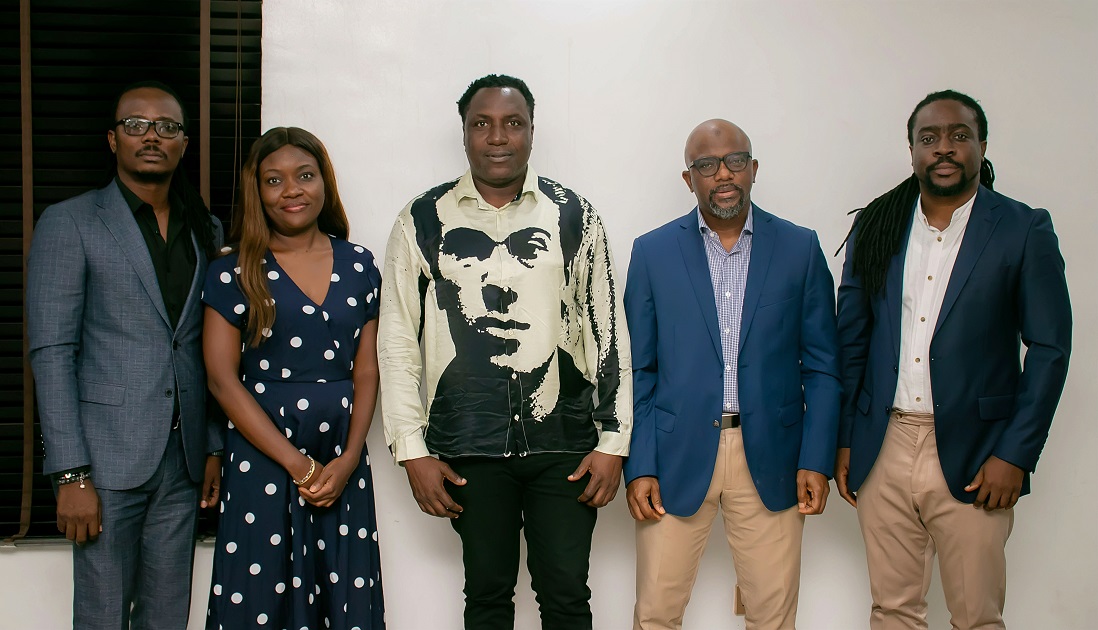
The 17th edition of the Lagos Advertising and Ideas Festival (LAIF) tagged ‘All ideas are welcome’ will hold on 26th November 2022. This was announced at a press conference held at the Association of Advertising Agencies of Nigeria (AAAN) secretariat in Lagos.

L-R: Henry Akpede, Board member, Lagos Advertising and Ideas Festival (LAIF) Awards, Kemi Awonusi, Director, Association of Advertising Agencies of Nigeria (AAAN), Steve Babaeko, President, AAAN, Lanre Adisa, Chairman, LAIF Awards, Segun Akinyemiju, Project Manager, LAIF Awards at the LAIF Awards press conference yesterday in Lagos
In his opening remark, the President, AAAN, and CEO, X3M Ideas, Steve Babaeko, stated that the LAIF Awards is a major milestone, each year, for AAAN, aimed at recognizing creative talents and challenging others to do better.
“The frontier of creativity is in a state of constant evolution. This year, the LAIF awards will reflect the award’s commitment to advocating and rewarding creativity and its commitment to becoming a top-recognized awards platform in Africa.
“We are improving the skills and craftsmanship of creatives in the industry with this award. Those who do not emerge winners are challenged to try again next year,” he said.
The Chairman, LAIF Awards, and CEO, Noah’s Ark Communications Limited, Lanre Adisa, reiterated the focus behind the awards initiative, which is in its 17th edition, as one that encompasses all creativity which is the reason for this year’s theme, ‘All Ideas are welcome’ and applauded the growth and reputation the awards has enjoyed so far.
“This year’s LAIF Awards will be focused on diverse and inclusive creativity welcoming people from all walks of life.
“We are at a stage where companies looking to engage the service of a creative advertising company use the LAIF awards as the benchmark for their selection on whom to invite for a pitch.
“With the LAIF Awards online portal, borne out of the challenges that came with the pandemic and our commitment to reward, regardless, we have seen more submissions of entries. Last year, we had over 700 entries and we are hopeful there will be an increase in entries this year,” he said.
This year, the LAIF awards will be a hybrid event and run from the 21st to the 26th of November, starting with the nominations party, followed by the Young LAIFERS, a 2-day LAIF seminar, and the awards event which will take place on the 26th of November.
The Young LAIFERS which is directed at encouraging under-30 years practitioners in the industry will be open to youths in the tertiary institutions and the winner of the Authentic African Story Awards, a special awards that was endowed by Mr. Lare Awokoya, Chairman TBWA Concept, will go home with 1 million naira. This year will also see the return of the Viewers’ Choice Awards.
With ten categories and over 30 jurors, the organizers guarantee the credibility of the judging process as the jurors for the Awards will comprise stellar industry figures comprising of advertising practitioners as well as those behind the scenes such as photographers, cinematographers, content writers, independent professionals and clients who will infuse the process with the credibility they have earned over the years.
The press conference was attended by the Director of AAAN, Kemi Awonusi, President, Brand Journalist Association of Nigeria (BJAN) Clara Okoro, LAIF Awards Board member, Henry Akpede, and members of the press.
The LAIF Awards is the brainchild of the Association of Advertising Agencies of Nigeria (AAAN) and seeks to reward creative excellence and promote the spirit of healthy competition in the creative industry.


Prof. Joash Amupitan, chairman, Independent National Electoral Commission (INEC), has urged broadcast organisations in Nigeria to exercise greater responsibility in the dissemination of information as the country prepares for the 2027 general elections.

Amupitan made the call on Wednesday, while addressing participants at the 81st General Assembly of the Broadcasting Organisations of Nigeria (BON), where he highlighted the growing influence of the media in shaping electoral processes.
He noted that the information environment has become increasingly significant in modern elections, warning that the spread of false or misleading information through broadcast channels could undermine public confidence in the electoral system.
According to the INEC chairman, media organisations must ensure strict compliance with the provisions of the Electoral Act 2026, particularly those relating to political broadcasting. Politics
He explained that the law requires equitable access to broadcast platforms for all registered political parties, stressing that fairness in media coverage is essential to maintaining a level playing field during elections.
“With 22 registered political parties, fairness in airtime allocation and coverage is a legal obligation,” Amupitan said.
The INEC chairman also cautioned broadcasters against airing content that contains abusive, inflammatory, or divisive language capable of inciting ethnic, religious, or sectional tensions.
Such broadcasts, he said, could threaten national unity and disrupt the electoral process if not properly managed.
Amupitan further reminded media organisations about the 24-hour cooling-off period mandated by law before election day, during which all political campaigns and advertisements must cease.
He explained that the measure is intended to provide voters with time to reflect on their choices without being influenced by last-minute campaign messaging.
While acknowledging the constitutional guarantee of freedom of expression, Amupitan emphasised that the right must be exercised within the limits of the law.
He noted that the airwaves are a public resource and must therefore be used responsibly to ensure fairness, balance, and equal access for all political actors.
The INEC chairman also pointed to the collaborative roles of INEC and the National Broadcasting Commission (NBC) in regulating political broadcasting, although he acknowledged that certain challenges persist.
These challenges, he said, include regulatory overlaps, gaps in enforcement, and the increasing convergence of traditional broadcast media with digital platforms, which has made monitoring political communication more complex.
Amupitan also expressed concern over perceived incumbency advantages in state-owned broadcast stations and the growing commercialisation of political airtime, warning that these practices could disadvantage smaller political parties. Politics
To address these concerns, he called for stronger collaboration between regulatory agencies, clearer guidelines on equal access to media platforms, and improved systems for fact-checking and verification.
He also advocated increased transparency in political advertising, including the disclosure of sponsorship and pricing structures.
Amupitan urged broadcasters to prioritise accuracy and professionalism in their operations, encouraging them to verify information before dissemination and play an active role in combating fake news.
He also called on the media to contribute to voter education and civic mobilisation, noting that public participation is vital to strengthening Nigeria’s democratic process.
Reaffirming the commission’s commitment to transparency, the INEC chairman advised media organisations to rely on official INEC communication channels for verified electoral information.
He added that the credibility of the 2027 general elections would depend not only on electoral logistics and technology but also on the integrity of the country’s information environment.
Rising cost of living, currency depreciation, and competition from streaming services have all conspired to see MultiChoice lose 589,000 South African subscribers in its latest financial year.

The decline is across premium, mid-market and mass segments of its operation.
After completing its acquisition of MultiChoice, Canal+ has moved to stabilise the business.
MultiChoice’s new leadership under David Mignot, CEO, hopes to “stop the bleeding and get back to growth”.
The new leadership has scrapped DStv’s annual price increase and decided to shut down Showmax, the in-house streaming platform that struggled to compete with Netflix and Amazon Prime Video.
Canal+execs have described Showmax as unsuccessful, noting that the difficult transition to online streaming, combined with currency devaluation in Nigeria and power cuts, had hurt MultiChoice’s profitability.
MultiChoice ended 2025 with 14.4 million subscribers across Africa, down from 14.9 million a year earlier, while revenue declined 6 percent to 2.4 billion euros.
Owners of several television and radio stations have distanced themselves from a recent threat issued by the Independent Broadcast Association of Nigeria (IBAN), which called for a boycott of media engagements involving Nyesom Wike, minister of the Federal Capital Territory (FCT).

Nyesom Wike, minister of the Federal Capital Territory
IBAN had threatened to withdraw coverage of the minister’s activities unless he retracted his comment on Channels Television’s Seun Okinbaloye and issue a public apology.
However, Ambassador Yusufu Mamman, chairman and owner of JKD Television (DSTV Channel 391) and Hamada Radio Networks, has dismissed the association’s statement as baseless.
Describing Ahmed Tijjani Ramalan, chairman, IBAN, as an impostor, Mamman argued that Ramalan has no authority to speak on behalf of broadcast station owners.
Mamman, who operates a television station and four radio stations, stated that he is not affiliated with any group called IBAN and would not support any action against the Minister, especially after Wike had already clarified his remarks.
“My attention has been drawn to an organisation called IBAN led by one Dr Ahmed Tijjani Ramalan, speaking for and Independent Broadcasters threatening to boycott media briefing by the FCT Minister, Nyesom Wike, unless he makes public apology in respect of his recent banters with Channels Television Anchor, Seun Okinbaloye.
“The position of so called IBAN is at best, an opinion of Mr Ramalan, who is never a broadcaster and had no idea of laws, norms, etiquette or professional broadcasting codes.
“Most importantly, Mr Ramalan has constituted himself into a fighting vehicle in courts against many broadcasting organisations and the National Broadcasting Commission.
Therefore, I urge the Minister to ignore his ranting.
“This is more so that on the live television program, the Minister took time to clarify what he meant and his Spokesperson also issued a statement saying categorically that the Minister’s comment was figurative and didn’t mean any harm,” he said.

See Key Changes in BVN Rule from May 1 by CBN

INEC Warns Broadcasters against Misinformation ahead of 2027 Polls

Paga Group Rejigs Leadership as Oviosu, Founder Becomes Group CEO

Reputation: The Real Currency Powering Fintechs

Jumia Expands Nationwide Footprint, Deepens Reach Across Underserved Nigerian Cities

Spotify’s Loud & Clear Report Reveals Over ₦60Bn Revenue for Nigerian Artists in 2025

China Threatens to Shut Nigeria’s Satellite Over $11.44m Unpaid Debt

Why JustMarkets Is a Strong Choice for Gold Trading

Kuda MFB Increases Kuda for Her Business Grants to ₦10 Million

Canal+ to Cut Jobs as Part Sweeping Restructuring




 E-Business2 days ago
Nigeria Cyberattacks: Stronger Collaboration as a Panacea

 Telecom2 days ago
Airtel Becomes World’s Second Largest Telco as Global Customer Base Surpasses 650 Million

 General News2 days ago
NIBSS Says 28 Percent of Nigerians have Registered for BVN

 Telecom1 day ago
From Import Dependency to Local Capacity: Nigeria’s Tech Manufacturing Journey

 E-Business2 days ago
CBN Slams Custodian Investment with N419m Fines over Rule Breaches

 General News2 days ago
NITDA DG Urges Stronger Collaboration to Drive Nigeria’s Digital Economy

 General News2 days ago
Ogun Set for Direct London Flights as Gateway Airport Gains Momentum

 News2 days ago
Lagos Govt Drags Top Firms to Court Over Billion-Naira Tax Debts