

Broadcasting
Adekunle Wins First Head of House Game in The BBNaija All-Stars Season As Mercy Eke Wins Black Envelope Immunity


Big Brother Naija returned yesterday with 20 former housemates accepting his challenge to take one more run in the Biggieverse. As is the show’s tradition, the housemates had to compete in a special game to decide who would lead the house for the week.

This competition is critical as the winner gets bragging rights as the first-ever All-Stars HOH, immunity, and his private lounge.
After five gruelling hours of playing the game of diversion and memory individually, Adekunle Olopade, popularly known as Bad Boy Deks, won the title with just 12 seconds on the clock. At the start of the HOH contest, Biggie announced that he would call the housemates into the arena one at a time. Whoever finishes the game fastest will be the week’s head of house.
Each housemate had 60 seconds to open 20 boxes filled with ten different items (two of each) and ten envelopes filled with pictures of the ten items arranged in the boxes. After opening each box, they memorized its content and noted which containers had identical items underneath them. After the first round, Biggie played any song of his choice, and the housemates danced for however long he chose.
The final round was the most important. When the music stopped, the housemates picked up an envelope from a basket with a picture of one of the items hidden in the boxes. They had to find the matching pair by opening the boxes one after the other. Biggie also warned that they can only open one box at a time. They are to close the box anytime they make a wrong guess while searching for the matching objects.
The game sounds interesting but isn’t as easy as it sounds. Uriel and Kiddwaya, who started the game, struggled to understand it, and Big Brother had to restart with clearer instructions.
After 16 housemates had taken a turn, Big Brother announced that the Head of House game would pause for a while, introducing the black envelope challenge. This brand-new challenge has the potential to grant at least one housemate immunity for the week’s nominations. The rule is simple – find the black envelope hidden in the house. One housemate can only have one envelope, but the search has to start after Biggie’s signal.
Some housemates flouted Biggie’s simple rule and began searching before the signal. So, Big Brother punished Kidwaya, Tolanibaj and Princess by disqualifying them from the game. Mercy and Frodd found the envelopes. While Mercy’s noted that she was immune from the week’s nomination, Frodd’s had a message to have better luck next time.
The HOH game continued after the Black Envelope game ended until Uriel and Kiddwaya rounded up the contest with their rematch. Afterwards, Big Brother announced that Alex, Ike, Cross, and Adekunle had the best time during the game, but Adekunle’s stood out with just 12 seconds. Hence, he earned the Head of House title and received the chance to choose four BFFs who would share his living quarters. Adekunle chose Seyi, Frodd, Cross, and Soma to be his BFFs for the week.
The HOH announcement led to the nominations. The housemates could only put up one person for possible eviction. Adekunle also won a nomination edge, allowing him to hear a secret. After nominating Princess, Big Brother told the HOH that they just went through a fake nomination process is fake and nobody is going home this week. He is not allowed to tell anyone.
Venita and Princess received the most nominations, with four nods each. Ilebaye received three, while Seyi and Doyin received two nominations. The housemates nominated Whitemoney, Tolanibaj, Pere, Soma, and Ike once. Big Brother extended Adekunle’s immunity to his chosen BFFs as part of his many twists. It means other housemates, excluding Adekunle, Seyi, Frodd, Cross, Soma, and Mercy, believe they are up for possible eviction.
Fans can breathe a collective sigh of relief as voting begins next week. Viewers can enjoy the show on the 24/7 channel – DStv ch. 198 and GOtv ch. 49. Remember, if you are away from home and don’t want to miss a minute of the action, you can catch up with your favourite All-Star housemates on the DStv app or Showmax.
Moniepoint Nigeria and HFM – forex and commodities broker – are the headline sponsors for the BBNaija All-Stars Edition.



Canal+ is to cut jobs at MultiChoice as part of a sweeping restructuring plan aimed at stabilising the African pay-TV operator, following years of operational and financial pressure.

The move comes alongside a planned $115 million capital injection, underscoring the urgency of efforts to revive the business after the French media group took control.
The planned layoffs are expected to form a core element of a broader cost-cutting and efficiency drive, as Canal+ seeks to streamline MultiChoice’s operations and improve profitability.
The restructuring signals a shift toward leaner operations, with a focus on eliminating redundancies and optimising the company’s cost base.
MultiChoice has struggled in recent years with declining subscriber numbers across key African markets, weighed down by macroeconomic pressures, currency volatility, and changing consumer behaviour.
The rise of global streaming platforms has intensified competition, chipping away at the company’s traditional pay-TV dominance.
Canal+’s intervention marks a pivotal moment for MultiChoice, reflecting a more aggressive approach to repositioning the business.
By combining fresh capital with structural reforms, the new owners are aiming to both stabilise short-term performance and lay the groundwork for longer-term growth.
The $115 million injection is expected to provide immediate financial relief, supporting operations and potential strategic initiatives.
However, the accompanying job cuts highlight the depth of the challenges facing the company and the scale of transformation required to restore competitiveness.
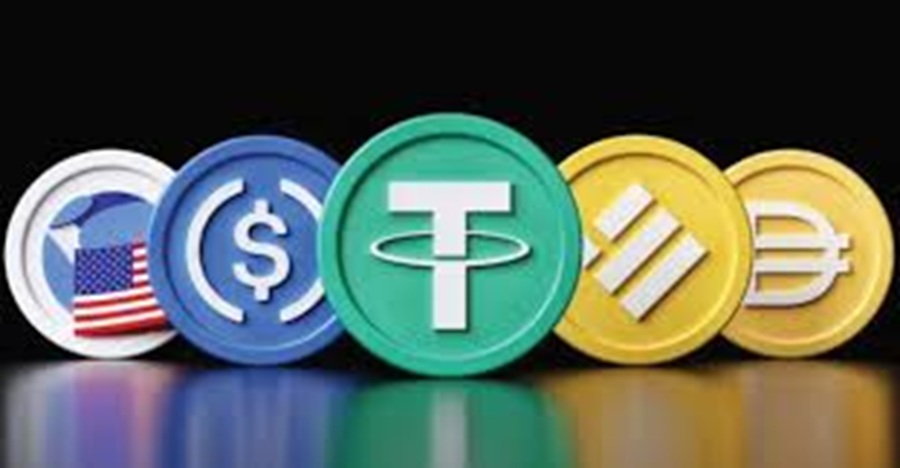
Nigeria has ranked first globally in the ownership of the two largest stablecoins, Tether (USDT) and USD Coin (USDC), reflecting the country’s growing reliance on dollar-linked digital assets.

USDT, USDC
Stablecoins such as USDT and USDC are designed to maintain a fixed value against the U.S. dollar, allowing users to store money digitally while avoiding the price volatility associated with cryptocurrencies like Bitcoin.
According to the 2026 Stablecoin Utility Report released by BVNK, about 59 percent of Nigerian crypto users hold USDT, while 48 percent own USDC, giving the country the highest combined ownership rate among all nations surveyed.
The report placed Nigeria ahead of several major economies, including Australia and India, highlighting the country’s strong adoption of dollar-denominated digital assets. Australia ranked second with 34 percent USDT ownership and 29 percent USDC, while India placed third with 30 percent USDT and 27 percent USDC holdings.
The study also examined adoption levels across other regions. Countries such as Colombia and Singapore showed strong usage of both stablecoins, while adoption levels were also notable in South Africa and the United States.
Other markets included in the analysis were Philippines, Thailand and Argentina, where stablecoin ownership has also increased significantly. Among European economies, the report said France and Germany showed moderate levels of adoption, while Latin American markets such as Mexico and Brazil recorded smaller but growing usage rates.
The United Kingdom also appeared in the ranking with modest levels of stablecoin ownership. The report noted that USDT ownership exceeds USDC in many countries, including Nigeria, Australia, India, Singapore, the Philippines, Thailand, Argentina and France.
However, USDC is often viewed as a more compliance-focused stablecoin because of its stronger transparency and regulatory alignment. In some markets, including South Africa, Colombia, Germany and Brazil, the report found that USDC adoption slightly exceeds USDT.
More broadly, the data suggests that stablecoin adoption is being driven largely by emerging economies rather than advanced financial markets. According to the report, countries such as Nigeria, Argentina and the Philippines are among the biggest users of stablecoins, where people increasingly rely on dollar-pegged digital assets to protect savings from currency volatility and facilitate cross-border payments.
Spotify has unveiled Nigeria-specific data from its annual Loud & Clear report, highlighting how Nigerian artists generated more than ₦60 billion in revenue from the platform alone last year, amid explosive growth in streams, local consumption, and global discovery.

The report, which analyzes millions of data points to illuminate music streaming economics, shows Nigerian artists’ revenue surged over 140% in the past two years.
This boom stems from rising global appeal and stronger domestic engagement, with 30.3 billion streams and 1.6 billion listening hours on Spotify in 2025. First-time discoveries of Nigerian music hit 1.3 billion, up 26% from 2024.
Locally, Nigerian tracks dominated Spotify Nigeria’s Daily Top 50, accounting for over 80% of features, while consumption of homegrown artists jumped 170% year-on-year.
“Nigeria’s music scene thrives on creativity, innovation, and global influence,” said Jocelyne Muhutu-Remy, Spotify’s Managing Director for Africa. “Loud & Clear spotlights how artists are forging sustainable careers and deepening local ties.”
Key highlights include:
55% year-on-year growth in local streams for Nigerian female artists.
75% surge in streams for independent Nigerian artists.
Independents and indie labels earning 58% of all royalties from Nigerian artists on Spotify.
Spotify’s editorial playlists featured nearly 2,000 Nigerian artists in 2025, boosting visibility. Nigerian music appeared in 320 million global user playlists and over 12 million in Nigeria, totaling more than 60 million playlists worldwide.
The report also notes evolving tastes, with top-growing genres in Nigeria over five years including pop urbaine, alternative pop, anime, emo, and drill.
For full details, visit spotify.com/loudandclear.

Court Jails ‘Colonel’, ‘Major’ of Global Money-Laundering Ring

Court Bans Kenyan Telcos from Recycling SIM Cards

Providus Bank Fully Meets CBN Capital Requirement, Sets Record Straight

African Tech Start-ups to Receive $46m of Speedinvest Africa Fund

U.S. Charges Three in $2.5 Billion Plot to Smuggle Nvidia AI Chips to China

Kaspersky Discovers New Phishing Campaign Exploiting Google Tasks Notifications to Steal Corporate Credentials

esentry 2025 Report Shows Healthcare, Financial Services and Telecoms as Staging Grounds for Increased Cyberattacks in Africa

AfDB, UNDP Launch $10Bn AI Initiative for Africa

Mutual Benefits Assurance Settles ₦5.9bn Claims in January 2026

MultiChoice Suspends Yearly DStv Price Hike as Canal+ Pushes Growth




 E-Financial3 days ago
CBN Introduces Stricter BVN Rules to Curb Fraudulent Transactions

 E-Financial3 days ago
Binance is Missing from Ghana’s Crypto Sandbox
 News2 days ago
African Tech Start-ups to Receive $46m of Speedinvest Africa Fund
 Telecom2 days ago
Court Bans Kenyan Telcos from Recycling SIM Cards

 News3 days ago
Nigeria, UK Sign £746M Landmark Ports Deal

 E-Financial3 days ago
World Bank Debars 3 PwC Subsidiaries for 21 Months over Alleged Project Fraud
 E-Financial2 days ago
Providus Bank Fully Meets CBN Capital Requirement, Sets Record Straight

 E-Financial2 days ago
UBA UK, BII Sign Letter of Intent to Slash Africa’s $80Bn Trade Finance Gap