

Telecom
Adeshina, Agric Minister Insists on Buying GSM Phones for Farmers

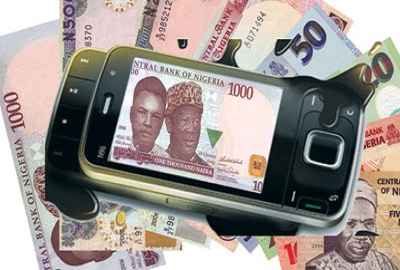
Akinwunmi Adeshina, minister of Agriculture, has affirmed that despite the criticisms trailing the proposed purchase of cell phones for farmers in the country, the ministry would not go back on its decision.
He said that the ministry intends to use the power of the mobile telephone technology to unlock the hidden wealth of the Nigerian farmers in the coming years.
Adeshina, who last week denied that the ministry intended buying mobile phones to farmers in the country, yesterday affirmed that the policy would not only enhance the performance of Nigerian farmers but also transform the agricultural sector.
The minister compared his critics to the Jews who falsely accused Jesus Christ, before the Roman emperor but was not found guilty.
“I will not be distracted. We will rebuild the broken walls of Nigeria’s agriculture and unlock wealth and opportunities for our farmers. For those calling for my crucifixion, let me say that when Jesus was before Pilate, they had accused him falsely. Pilate, after listening to his case, found no cause for condemning him. Nonetheless, should anyone still want me crucified, let me say this, along my faith: “I am crucified with Christ already. Nevertheless, I live and the life that I live, I live by the grace of the son of God, who died for me,” said Adeshina.
Adeshina noted that the government would not commit itself to direct purchase of cell phones for farmers but would only subsidise the phones through a partnership that would involve telephone service operators, Ministry of Communications Technology and other stakeholders.
He said the purchase of cell phones for farmers is tied to the distribution of fertilizers directly to the farmers without the involvement of third parties who had allegedly been ripping them off.
“Government policy must always be based on evidence and well analysed data. We carried out an analysis of our GES (growth enhancement support) work based on a large sample of 426,000 farmers from various local government areas in 13 states.We found that 71 percent of farmers sampled did not have cell phones. This shows that many of our farmers in rural areas are quite poor and are excluded from the benefits of the mobile phone revolution going on in Nigeria. These farmers cannot access the GES scheme without cellphones and we must find a way to include them. They must not be left behind,” said Adeshina.
Adeshina said that the Ministry planned to make phones available to farmers on a gradual basis, stressing that government would not be involved in direct purchase of the phones.
“Of course, we cannot get 10 million phones to all farmers who do not have phones this year. Our plan is a gradual scale up. We intend to get about 2 million phones to farmers who do not have phones this year”.
“How will these phones be paid for and how will they be distributed? We ended four decades of corruption in the fertilizer and seed sector by ending direct procurement and distribution of these inputs by the government.
“We also ended the ineffective and corrupt direct procurement and distribution of tractors by government. It will therefore be inconsistent for government to now start direct procurement and distribution of phones.
“There will be no direct procurement of phones by the Federal Government. We are also not going to give anyone contracts to import phones from China or anywhere else. Let me also state loud and clear.
“The Ministry of Agriculture and Ministry of Communications Technology are partnering together to implement this policy,” he emphasised.
Asked who will be eligible to benefit from the scheme, the minister said “we intend to use the GES scheme to distribute these phones. To be entitled to a phone, farmers must be registered on the e-wallet platform. Paper vouchers will be issued to farmers who do not have phones.
“The government will provide a subsidy to the farmer through the voucher to buy the phone. The farmer takes the voucher to the local mobile phone operator and pays the balance which is the difference between the value of the voucher and the cost of the phone.
“Once a farmer buys a phone and a SIM card, his new phone number will be updated on the e-wallet database and he will be able to receive his e-wallet voucher which will entitle him to purchase fertilizer and seeds at subsidized rates.
“Phones will be sold directly to farmers by local mobile phone service providers. The government simply subsidizes the cost of the phone directly to the farmer.
“We intend to start by first targeting farmers who live in areas where there is network coverage already but who do not have phones. We will then encourage phone companies to increase their coverage and as they do we will target farmers in those areas.
“By so doing phone companies will have the incentive to expand to rural areas because our programme will assure them of customers in those new areas. Cell phones in the hands of our farmers will do more than deliver government subsidized inputs.
“It will provide them access to market price information. They will be able to bargain better and save themselves from the middlemen who currently exploit them by paying them very low prices for their produce.
“Cellphones in the hands of our farmers will allow us to reach farmers with extension information such as what crops to plant, when to plant and other agronomic practices that will help them improve their productivity.
“It will allow farmers to better deal with shocks such as drought and floods in real time. Simple alerts to farmers’ phones can help them avoid catastrophes while saving lives.
“Majority of our farmers are excluded from financial services. 78.8 percent of Nigeria’s rural population are unbanked according to the report by Enhancing Financial Innovation and Access, EFInA. The cost of reaching them in rural areas is high for financial institutions.
“No bank can afford to build branches in every little village. Cellphones provide financial institutions with a low cost and efficient way of providing financial services to our farmers. The use of cellphones to provide financial services in rural areas is not new. It is already being used in several African countries.”
The minister said despite the wide criticisms on his plans for the farmers, he would not be deterred in his determination to transform the agricultural sector, stressing that “as a Minister, I cannot use hype to guide policies. I must use evidence to guide policies. When the floods occurred, there was panic in the land.
“Some derided our efforts and said Nigeria would have famine; that there would be massive food shortage; and there would be food riots. Those who wanted to import food and get waivers from government sponsored such media hypes. I was not moved.
“We used modern technology to guide our decision. Using remote sensing and satellite imagery, we mapped out the extent of the flood and determined that no more than 1.17 percent of our total cultivated area was affected by the floods. Our detractors wanted the world to believe the opposite, that food crisis was imminent. They were wrong. Today, five months after the floods, we do not have a food crisis.
“The same way these detractors have misled the public about the relevance of cellphones in Nigerian agriculture. They do not know that we are already using cellphones to distribute fertilizer and seeds to even mitigate the impact of the flood. We are already using cellphones to reach 232,000 farmers for rice production in the dry season, each getting three bags, across 10 states of the north east, North West and north central regions.
Speaking further the minister claimed that: To reach farmers affected by the flood, we are also using cellphones through the growth enhancement support.
We are reaching 98,000 farmers affected by floods across the country with two bags of fertilizers per farmer, plus one bag of agrolyser micro-nutrient to replace some of the soil micro-nutrients that have been washed away by the flood. Such is the power of cellphones revolutionizing agriculture today in Nigeria.



The GSMA yesterday announced the global launch of a new Innovation Fund offering grants of £100,000 to £200,000 to support small and growing enterprises using mobile and digital technologies to accelerate the green transition in low- and middle-income countries (LMICs).

The GSMA Innovation Fund for Green Transition for Mobile (the Innovation Fund), a GSMA-funded initiative supported by its members, builds on the GSMA’s commitment to advance inclusive and sustainable connectivity, and the mobile industry’s ambition to achieve net zero emissions.
The Innovation Fund will support commercially viable innovations that expand access to clean energy and promote circularity in mobile devices – including renewable energy solutions, smart metering, refurbishment models and responsible e-waste management – to advance digital inclusion and industry climate action.
The initiative aligns with the United Nations Sustainable Development Goals, recognising the critical role of mobile technology in enabling inclusive, sustainable development.
Targeting enterprises operating across Africa, Central and South America, and South and Southeast Asia, the Innovation Fund will focus on solutions that strengthen digital inclusion, affordability and socio-economic empowerment, while delivering environmental impact.
Philippe Bellordre, Acting Head of Mobile for Development, GSMA, said: “Through this Innovation Fund, we are investing directly in enterprises that are using mobile and digital technology to advance digital inclusion and enable a clean energy transition – while also scaling practical, circular solutions that extend the life of mobile devices and make connectivity more affordable for underserved communities.”
Driving circularity and improving handset affordability
Another core focus for the Innovation Fund is extending the lifespan of mobile devices through circular economy approaches, including repair, refurbishment and reuse, reducing e-waste while increasing access to affordable handsets for underserved populations.
The Innovation Fund will support solutions such as take-back and trade-in schemes, leasing models, refurbished device marketplaces, traceability tools, and responsible e-waste collection and recycling. By keeping devices in circulation for longer, these initiatives lower environmental impact while reducing the cost of ownership and expanding connectivity for low-income communities.
Building evidence for industry climate action
Beyond supporting individual enterprises, the Innovation Fund is designed to generate practical insights and lessons that contribute to the mobile industry’s wider climate and ESG priorities. This includes evidence that supports enabling environments for clean energy and circular economy solutions, informs policy discussions, and helps scale sustainable business models across emerging markets.
Who the Innovation Fund is for:
The Innovation Fund is open to for-profit small and growing enterprises with up to 250 employees that are:
- Operating in LMICs across Africa, Central and South America, or South and Southeast Asia
- Using mobile or digital technology as a core part of their solution
- Demonstrating commercial revenue and active users
- Able to contribute at least 25% matching funding
What the Innovation Fund provides:
Selected enterprises will receive:
- Grants of £100,000 to £200,000 over 15-18 months
- Technical assistance
- Support to connect with investors and build partnerships with mobile network operators
- Monitoring, evaluation and learning support
- Visibility through GSMA platforms, publications and industry engagement
Telecom
Prof. Adeyanju is Strengthening Nigeria’s Digital Backbone for a Connected Future in Two Years of Purposeful Leadership

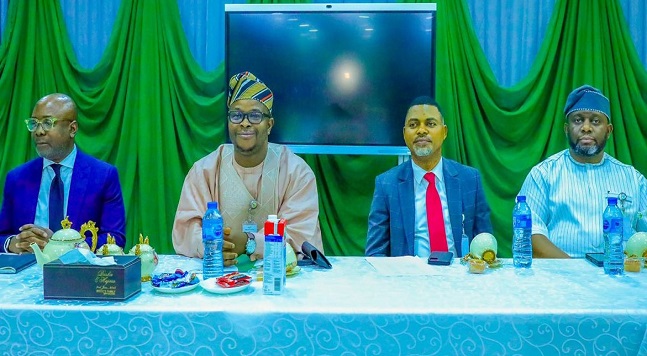
Two years ago, the President of the Federal Republic of Nigeria, Asiwaju Bola Ahmed Tinubu (GCFR), appointed a new Executive Management Team at Galaxy Backbone Limited (GBB) and this marked a defining moment in Nigeria’s digital evolution.

Today, as the organisation marks the second anniversary of the appointment of four distinguished Nigerians; Prof. Ibrahim A. Adeyanju, as Managing Director/Chief Executive Officer, Honourable Olusegun Olulade, Executive Director Customer Centricity and Marketing, Muhammed Sani Ibrahim; Executive Director, Finance and Corporate Services and Olumbe Akinkugbe, Executive Director, Digital Exploration and Technical Services to Galaxy Backbone Limited, the story is not one of rhetoric, but of infrastructure strengthened, partnerships deepened, and national capability measurably advanced.
From the onset, the mandate was clear: to anchor Nigeria’s digital transformation on secure, sovereign infrastructure while improving service delivery across Ministries, Departments, and Agencies.
The Executive team immediately aligned execution with strategy through the launch of the Integrated Digital Transformation Strategy (IDTS) 2023 to 2028. The focus evolved from simply providing connectivity to leading a digital ecosystem that integrates infrastructure, platforms, policy alignment, value creation, and people.
Within two years, Galaxy Backbone significantly expanded national digital access. Broadband connectivity was delivered to nine underserved Local Government Areas under Project 774, extending inclusion to communities previously beyond reliable access.
Fibre-to-Hostel projects were completed at the University of Lagos, University of Abuja, and University of Jos, strengthening academic research and digital learning environments. Connectivity to strategic national assets, including the Nnamdi Azikiwe International Airport and key Federal Secretariats, was enhanced to improve operational efficiency and service reliability.
In a major step toward long-term resilience, GBB executed strategic business partnership with one of Africa’s leading provider of inter-connected carrier scale digital Infrastructure Companies, West Indian Ocean Cable Company (WIOCC), reinforcing Nigeria’s national fibre backbone, improving redundancy, and enabling scalable broadband expansion across more states and underserved communities.
This strategic move significantly strengthened the country’s digital resilience architecture.
Beyond infrastructure expansion, the leadership deepened Nigeria’s sovereign digital capabilities. The 1Government Cloud platform was optimized and expanded to support more MDAs with operational efficiency, secure hosting and shared services.
GovMail, a locally developed email solution by GBB, for Federal Government Public and Civil Servants was birthed and today is enhancing trusted government communication for over 100,000 professionals currently on the platform. Cybersecurity posture was reinforced through 24/7 monitoring and strengthened controls, while colocation services and data centre operations were upgraded for greater resilience. Under this leadership, GBB’s Service desk now operates 24/7, 365 days a year.
The deployment of Government as a Platform (GaaP) framework, improvements to the Government Service Portal, ISO recertification milestones and the implementation of an Integrated Management System (IMS) further institutionalized governance, accountability, and operational excellence.
The journey has not been without challenges. Fiscal constraints, legacy systems, increasing cyber threats, and rising expectations for digital public services required decisive leadership.
Through disciplined financial management, strategic partnerships, stronger stakeholder engagement, and operational reforms, the Executive Management stabilised systems, improved service quality, and positioned Galaxy Backbone as a trusted enabler of public sector transformation.
Support from the Honourable Minister of Communications, Innovation and Digital Economy, Dr. Bosun Tijani, the Secretary to the Government of the Federation, Senator Dr. George Akume who chairs the GBB Board, and the Head of the Civil Service of the Federation, Mrs. Didi Esther Walson Jack and other top Government leaders across the arms of Government, have all been instrumental in aligning policy direction with execution momentum, ensuring that national priorities translate into tangible digital outcomes.
Over the past two years, Galaxy Backbone has earned over 20 reputable recognitions, including the NET5.5G Pioneer Award, the inaugural Artificial Intelligence Award, the Overall Winner award at the Nigeria @ 65 Independence Kitty, the BPSR Website Performance Award, and Best ICT Provider Company of the Year at the International Standard Excellence Awards and so on. GBB’s MD/CEO, Prof. Adeyanju has also been named as one of the top 100 leading Personalities in the Telecoms Industry in Nigeria.
These honours reflect not just institutional visibility, but measurable transformation in governance standards, infrastructure resilience, and service delivery impact.
Two years on, Galaxy Backbone stands stronger — not merely as an infrastructure provider, but as a strategic custodian of Nigeria’s sovereign digital backbone.
With clarity of vision, disciplined execution, and sustained collaboration across government, the organisation continues to deepen connectivity, strengthen cybersecurity, expand cloud sovereignty, and build a resilient digital foundation for national development.
The progress achieved affirms a simple truth: purposeful leadership, aligned with national vision and supported by strategic partnerships, can translate ambition into enduring capability. Galaxy Backbone remains committed to powering a secure, connected, and digitally enabled Nigeria for generations to come.
Telecom
Moniepoint Case Study Reveals Digital Payments Fuel Nigeria’s Vibrant Community Nightlife Economy


Moniepoint Inc., Africa’s leading all-in-one financial ecosystem, has released a new case study titled “The Business of Community Nightlife in Nigeria,” providing a rare, data-driven look into the country’s informal night economy.

Moniepoint
While high-end “Detty December” venues grab headlines with daily revenues of ₦360million and table prices reaching ₦1.2million, Moniepoint’s research shifts the spotlight to the “community nightlife” where roadside bars, suya spots, and neighborhood joints form the bedrock of social life for millions of Nigerians.
The robust study was drawn from transaction data across more than 27,000 clubs, bars, and lounges sitting on Moniepoint’s payment rails alongside fieldwork with nightlife operators and workers across the country.
Combining anonymised transaction data processed by Moniepoint with field interviews and observational research across multiple Nigerian cities, the study provides a rare, ground-level view of how money, labour, and social life intersect after dark.It is the latest in a series of sector-specific studies by the company aimed at bringing data visibility to Nigeria’s informal economy.
According to the report, in a stark contrast from wider informal economy trends, cash plays a diminishing role in nightlife payments. The report shows that bank transfers dominate, followed closely by card payments, with cash actively discouraged due to security concerns.
Moniepoint’s data shows that transfers outpace card payments by nearly 2 million transactions during peak nighttime hours across its network.
One of the study’s most operationally significant findings concerns the timing of spending. Nightlife in Nigeria runs long but economically, the night is decided early.
Transaction volumes begin climbing sharply from 8pm, peak before midnight, and then decline steadily even as venues remain full. By the time the night is at its longest, purchasing activity has already wound down.
However, for bar operators, this has clear practical implications – the most critical hours for staffing, stocking, vendor payment and cash flow management are the earliest hours of the day between midnight and 6am.
The report further underscores the sector’s role in employment, noting that local bars typically expand their workforce by 30-50% on peak nights. Conservative estimates suggest at least 54,000 people are engaged in nightlife labor every night across Nigeria.
“Nigeria’s local bars and night-time operators are not peripheral to the economy, they are a critical part of its architecture.
We see a substantial and sustained economic sector that employs hundreds of thousands of Nigerians every night and deserves the same attention we give to agriculture, healthcare, and retail. Our goal is to make sure every one of those businesses has the tools to grow.
From giving credit to finance renovations and sound systems to providing same-day settlement that allows vendors to restock and with tools like Moniebook that power inventory management and reconciliation, Moniepoint is ensuring that this vital artery of the nation’s economy remains viable and empowering,” said Tosin Eniolorunda, Co-Founder and Group CEO, Moniepoint Inc.
Other key interesting findings include:
The most common transaction narrations from the data sourced – “food”, “pay”, “sent”, “pos”, “cash” – reflect the full breadth of nightlife spending: street food, club entry, lounge tabs, transport, and afterparties. Digital payments have gained huge traction in Nigeria’s social space.
While alcohol remains a key revenue driver, the data shows that food is the quiet stabiliser of Nigeria’s night economy, particularly in local and informal settings. In several neighbourhood venues, bottled water and meals outsell beer and spirits, especially early in the evening.
Lagos leads in sheer concentration of nightlife establishments, with 4,856 bars, clubs, and lounges on the Moniepoint network. FCT follows with 2,515, then Rivers (2,362), Delta (1,930), and Edo (1,574).
Katsina leads the country in nighttime food truck payment value, with vendors pulling in over ₦130 million in the last 12 months. Kwara State leads in transaction count. Nigeria’s nightlife economy is distributed, not overly elitist.
On the lending side, the report notes that a significant share of loan requests from bar and lounge operators is directed toward renovations, furniture, lighting, and sound systems showing that investments intended to attract and retain customers in a competitive sector where ambience plays a decisive role.
Moniepoint continues to fuel this sector through innovative features like “POS Transfers” and by assigning a dedicated bank account to each terminal, the system provides an instant “audio-visual” confirmation, a signature “ping”, that allows service to continue without the friction of waiting for SMS alerts or verifying screenshots.
Furthermore, in addressing the unique safety needs of consumers, Moniepoint cards are designed without visible card numbers, expiry dates, or CVVs, ensuring that a customer’s financial information remains secure.
As Nigeria’s largest distributor of financial services, Moniepoint’s ongoing commitment to financial inclusion and economic development has positioned it as a catalyst for growth across Nigeria and beyond.
The company processes billions in transactions monthly and continues to expand its reach, supporting millions of businesses with payments, banking, credit, and business management solutions.

Obasanjo, Vanguard’s Amuka Lead Prayers for Zinox Chief Leo Stan Ekeh @70

Retiree Slams N50m Suit against over Alleged Privacy Breach, Unauthorized Accounts

Court Fines Lafarge Africa N2m for Using Ex-Employee’s Name, Details Online after Dismissal

GSMA Launches Innovation Fund to Accelerate Green Transition Through Mobile Technology

NITDA Urges Stronger State Partnerships as Key to Digital Economy Goals @ South-South Stakeholders Forum
Nigeria’s 9 Top FinTech Firms Valued at $10.6Bn in January 2026

CBN Upgrades Licences of Opay, Moniepoint, Kuda, Palmpay, Paga to National Status

Kaspersky Launches OT Calculator to Align Cybersecurity Investments with Business Goals

NITDA, NBC Explore Strategic Collaboration on Digital Transformation, Media Regulation

Accidental Billionaire Opts for Jail Instead of Returning Money Credited Him by Mistake




 News3 days ago
ABoICT Lecture 2026 to Focus on Impact of AI, IoT on Business Operational Efficiency

 General News3 days ago
Leo Stan @ 70: Blessed and Bruised by Country, Eyes Next Disruption

 General News2 days ago
Zinox Technologies and TD Africa Forge Strategic Partnership to Revolutionize African Tech Ecosystem

 Telecom2 days ago
Uwaje Pays Tribute to Leo Stan Ekeh @70

 Telecom2 days ago
Cyber Immunity Emerges as Shield for Nigerians Amid Rising Scams

 E-Financial2 days ago
$214Bn Missing, Institutions Silent: Is Accountability Dead in Nigeria?

 General News2 days ago
NITDA, Abia Partner on Enterprise Architecture Reform

 E-Business2 days ago
Interswitch Partners Abia to Digitise Public Hospitals