

Telecom
AfriTECH 3.0: Maida Urges Service Providers to Embrace TaaS

Dr. Aminu Maida, Executive Vice Chairman/Chief Executive Officer of the Nigerian Communications Commission (NCC) has said that the convergence of Technology-as-a-Service and infrastructure deployment marks a new era in technological advancement.

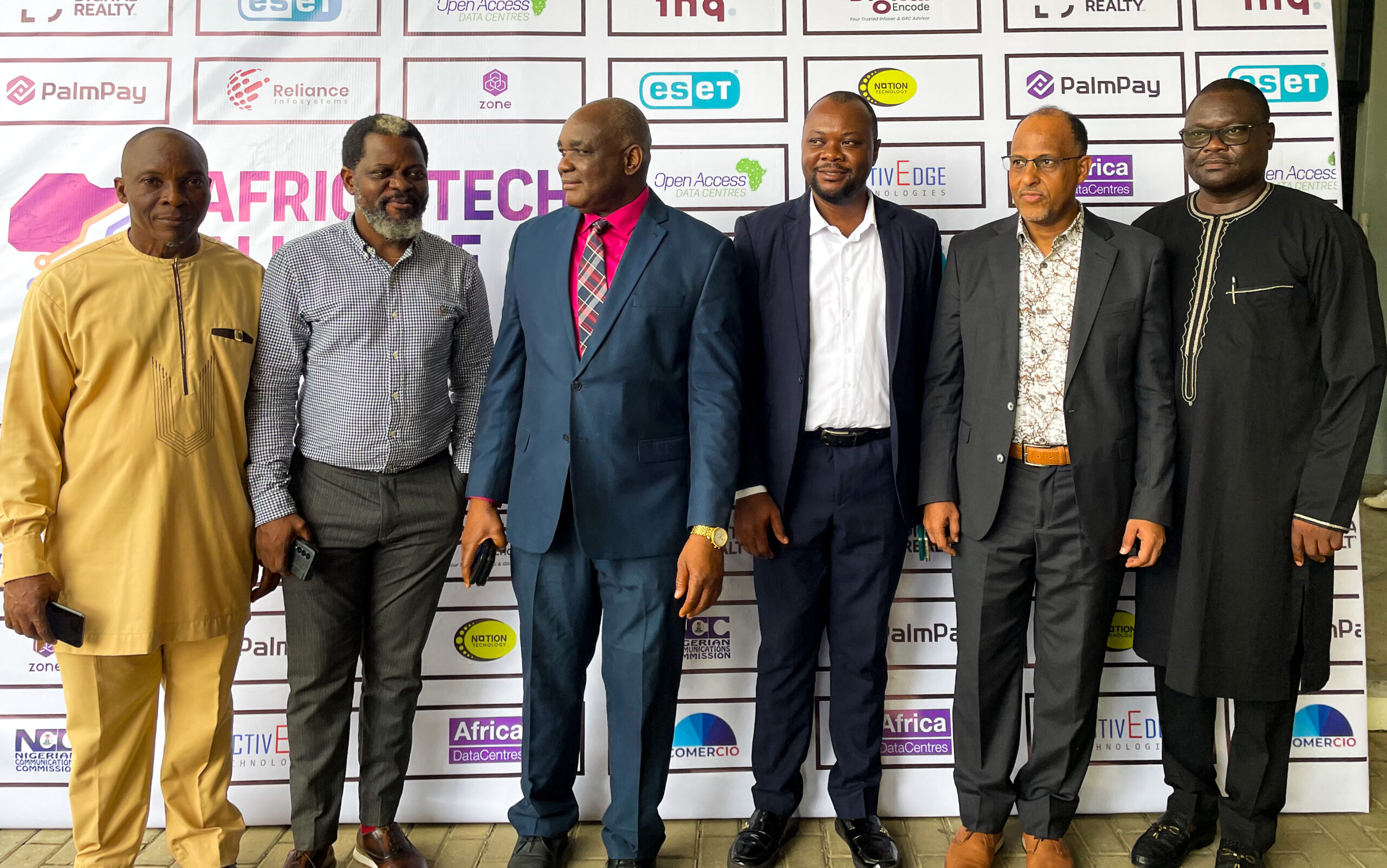
L-r: Chike Onwuegbuchi, Chairman, NITRA and Co-Convener, Africa Tech Alliance Forum (AfriTECH); Temitayo Oduwole, Head of IT and Payments at PalmPay; Reuben Muoka, Director of Public Affairs at Nigerian Communications Commission (NCC); Peter Oluka, Editor, Techeconomy and Co-Convener, AfriTECH; Muhammad Rudman, CEO, Internet Exchange Point of Nigeria (IXPN), and Gbolahan Awonuga, Head of Operations, Association of Licensed Telecoms Operators of Nigeria (ALTON), at AfriTECH 3.0 and ATAEx Awards 2023 held at The Providence Hotel, Ikeja Lagos, November 08, 2023.
He said the emergence of Technology-as-a-Service (TaaS) stands as a beacon of innovation, providing businesses with the tools to adapt, grow, and thrive in the ever-evolving dynamic environment.
Maida, who described this convergence as a paradigm that not only fosters innovation and growth but also democratizes access to cutting-edge solutions for businesses of all sizes, implored service providers to embrace this transformative concept.
Speaking while presenting his keynote address at the Africa Tech Alliance Forum (AfriTECH 3.0) held at the Providence Hotel, Ikeja GRA on Wednesday, Maida stressed the need for service providers to leverage infrastructure deployment to drive Technology-as-a-Service, which will propel the country into a future where technological barriers are minimized, and possibilities are limitless.
Represented by Mr. Reuben Muoka, Director, Public Affairs at the NCC, Maida said that through infrastructure deployment within the TaaS model, businesses have the power to access and utilize cutting-edge technology, catering to their needs without the shackles of long-term commitments or heavy investments.
“At the heart of the five pillars of the Strategic Blueprint of the Ministry of Communications, Innovation and Digital Economy is Infrastructure. The role of critical infrastructure in enabling TaaS cannot be overemphasized; it is thus the goal of the Commission to boost Nigeria’s broadband penetration rate to 70% by the end of 2023 through the laying of 95,000 kilometres of fibre optic cables across the country.
“In a similar vein, and in line with the vision of the Ministry, we are targeting the provision of coverage for at least 80% of the country’s population, especially the underserved and unserved populations by the end of 2027,” Maida said.
The EVC, who stated that the deployment of infrastructure forms the backbone of TaaS, noted that by leveraging scalable and efficient infrastructure, organisations can harness cloud solutions, edge computing, and other advanced technologies, adding that the dynamic nature of infrastructure deployment ensures that businesses have the right tools at the right time without the constraints of physical infrastructure.
He stressed that the cornerstone of TaaS lies in its ability to revolutionise how technology deployment is approached, emphasising that traditionally, organisations would grapple with the complexities of infrastructure ownership and management, which is often a costly and inflexible endeavour.

“However, through infrastructure deployment within the TaaS framework, there is a paradigm shift where the burden of infrastructure ownership is alleviated, and the focus is shifted to accessibility, scalability, and service-oriented solutions.
While noting that the significance of TaaS is underpinned by infrastructure deployment, the NCC helmsman remarked that this marks a fundamental change in how businesses consume technology.
“It enables on-demand access to a vast array of technological resources and services, providing the flexibility to scale resources according to immediate needs, without the constraints of traditional ownership models. It is about unlocking the power of technology without being encumbered by the weight of infrastructure maintenance and management.
“This innovative approach carries with it a multitude of benefits. Firstly, it diminishes the financial burden by transforming capital expenditures into operational costs. This allows businesses to redirect resources to innovation and growth rather than fixed infrastructure expenses.
“Secondly, it offers unparalleled agility, enabling organisations to pivot, expand, or contract rapidly in response to market demands. Moreover, Infrastructure Deployment within TaaS ensures that the latest technologies and updates are readily available, eliminating the overhead of constant maintenance and upgrades,” Maida stated.



Grey, a cross-border payments provider, has rolled out USD business accounts, bulk payments, and USDC stablecoin integration on one platform to streamline international transactions for emerging market firms.

Grey
The upgrade lets businesses open USD corporate accounts, collect from global clients, and execute payouts to 170+ countries—including bulk transfers—in minutes, slashing World Bank-noted 6-7% fees, multi-day delays, hidden charges, and forex opacity.
Idorenyin Obong, Co-founder and CEO of Grey said: “Global banking access lags for high-growth markets; we’re bridging that with faster, transparent money movement regardless of client location.”
COO Joseph Femi Aghedo added: “Unpredictable payments stall growth—Grey cuts friction for payroll, suppliers, and partners, now with USD and stablecoins for broader reach.”
Launched in Africa in 2020 with US, UK, Europe presence and recent Latin America/Southeast Asia expansion, Grey offers multi-currency accounts, cheap transfers, virtual USD cards, expense tools, and strong security.

The GSMA yesterday announced the global launch of a new Innovation Fund offering grants of £100,000 to £200,000 to support small and growing enterprises using mobile and digital technologies to accelerate the green transition in low- and middle-income countries (LMICs).

The GSMA Innovation Fund for Green Transition for Mobile (the Innovation Fund), a GSMA-funded initiative supported by its members, builds on the GSMA’s commitment to advance inclusive and sustainable connectivity, and the mobile industry’s ambition to achieve net zero emissions.
The Innovation Fund will support commercially viable innovations that expand access to clean energy and promote circularity in mobile devices – including renewable energy solutions, smart metering, refurbishment models and responsible e-waste management – to advance digital inclusion and industry climate action.
The initiative aligns with the United Nations Sustainable Development Goals, recognising the critical role of mobile technology in enabling inclusive, sustainable development.
Targeting enterprises operating across Africa, Central and South America, and South and Southeast Asia, the Innovation Fund will focus on solutions that strengthen digital inclusion, affordability and socio-economic empowerment, while delivering environmental impact.
Philippe Bellordre, Acting Head of Mobile for Development, GSMA, said: “Through this Innovation Fund, we are investing directly in enterprises that are using mobile and digital technology to advance digital inclusion and enable a clean energy transition – while also scaling practical, circular solutions that extend the life of mobile devices and make connectivity more affordable for underserved communities.”
Driving circularity and improving handset affordability
Another core focus for the Innovation Fund is extending the lifespan of mobile devices through circular economy approaches, including repair, refurbishment and reuse, reducing e-waste while increasing access to affordable handsets for underserved populations.
The Innovation Fund will support solutions such as take-back and trade-in schemes, leasing models, refurbished device marketplaces, traceability tools, and responsible e-waste collection and recycling. By keeping devices in circulation for longer, these initiatives lower environmental impact while reducing the cost of ownership and expanding connectivity for low-income communities.
Building evidence for industry climate action
Beyond supporting individual enterprises, the Innovation Fund is designed to generate practical insights and lessons that contribute to the mobile industry’s wider climate and ESG priorities. This includes evidence that supports enabling environments for clean energy and circular economy solutions, informs policy discussions, and helps scale sustainable business models across emerging markets.
Who the Innovation Fund is for:
The Innovation Fund is open to for-profit small and growing enterprises with up to 250 employees that are:
- Operating in LMICs across Africa, Central and South America, or South and Southeast Asia
- Using mobile or digital technology as a core part of their solution
- Demonstrating commercial revenue and active users
- Able to contribute at least 25% matching funding
What the Innovation Fund provides:
Selected enterprises will receive:
- Grants of £100,000 to £200,000 over 15-18 months
- Technical assistance
- Support to connect with investors and build partnerships with mobile network operators
- Monitoring, evaluation and learning support
- Visibility through GSMA platforms, publications and industry engagement
Telecom
Prof. Adeyanju is Strengthening Nigeria’s Digital Backbone for a Connected Future in Two Years of Purposeful Leadership


Two years ago, the President of the Federal Republic of Nigeria, Asiwaju Bola Ahmed Tinubu (GCFR), appointed a new Executive Management Team at Galaxy Backbone Limited (GBB) and this marked a defining moment in Nigeria’s digital evolution.

Today, as the organisation marks the second anniversary of the appointment of four distinguished Nigerians; Prof. Ibrahim A. Adeyanju, as Managing Director/Chief Executive Officer, Honourable Olusegun Olulade, Executive Director Customer Centricity and Marketing, Muhammed Sani Ibrahim; Executive Director, Finance and Corporate Services and Olumbe Akinkugbe, Executive Director, Digital Exploration and Technical Services to Galaxy Backbone Limited, the story is not one of rhetoric, but of infrastructure strengthened, partnerships deepened, and national capability measurably advanced.
From the onset, the mandate was clear: to anchor Nigeria’s digital transformation on secure, sovereign infrastructure while improving service delivery across Ministries, Departments, and Agencies.
The Executive team immediately aligned execution with strategy through the launch of the Integrated Digital Transformation Strategy (IDTS) 2023 to 2028. The focus evolved from simply providing connectivity to leading a digital ecosystem that integrates infrastructure, platforms, policy alignment, value creation, and people.
Within two years, Galaxy Backbone significantly expanded national digital access. Broadband connectivity was delivered to nine underserved Local Government Areas under Project 774, extending inclusion to communities previously beyond reliable access.
Fibre-to-Hostel projects were completed at the University of Lagos, University of Abuja, and University of Jos, strengthening academic research and digital learning environments. Connectivity to strategic national assets, including the Nnamdi Azikiwe International Airport and key Federal Secretariats, was enhanced to improve operational efficiency and service reliability.
In a major step toward long-term resilience, GBB executed strategic business partnership with one of Africa’s leading provider of inter-connected carrier scale digital Infrastructure Companies, West Indian Ocean Cable Company (WIOCC), reinforcing Nigeria’s national fibre backbone, improving redundancy, and enabling scalable broadband expansion across more states and underserved communities.
This strategic move significantly strengthened the country’s digital resilience architecture.
Beyond infrastructure expansion, the leadership deepened Nigeria’s sovereign digital capabilities. The 1Government Cloud platform was optimized and expanded to support more MDAs with operational efficiency, secure hosting and shared services.
GovMail, a locally developed email solution by GBB, for Federal Government Public and Civil Servants was birthed and today is enhancing trusted government communication for over 100,000 professionals currently on the platform. Cybersecurity posture was reinforced through 24/7 monitoring and strengthened controls, while colocation services and data centre operations were upgraded for greater resilience. Under this leadership, GBB’s Service desk now operates 24/7, 365 days a year.
The deployment of Government as a Platform (GaaP) framework, improvements to the Government Service Portal, ISO recertification milestones and the implementation of an Integrated Management System (IMS) further institutionalized governance, accountability, and operational excellence.
The journey has not been without challenges. Fiscal constraints, legacy systems, increasing cyber threats, and rising expectations for digital public services required decisive leadership.
Through disciplined financial management, strategic partnerships, stronger stakeholder engagement, and operational reforms, the Executive Management stabilised systems, improved service quality, and positioned Galaxy Backbone as a trusted enabler of public sector transformation.
Support from the Honourable Minister of Communications, Innovation and Digital Economy, Dr. Bosun Tijani, the Secretary to the Government of the Federation, Senator Dr. George Akume who chairs the GBB Board, and the Head of the Civil Service of the Federation, Mrs. Didi Esther Walson Jack and other top Government leaders across the arms of Government, have all been instrumental in aligning policy direction with execution momentum, ensuring that national priorities translate into tangible digital outcomes.
Over the past two years, Galaxy Backbone has earned over 20 reputable recognitions, including the NET5.5G Pioneer Award, the inaugural Artificial Intelligence Award, the Overall Winner award at the Nigeria @ 65 Independence Kitty, the BPSR Website Performance Award, and Best ICT Provider Company of the Year at the International Standard Excellence Awards and so on. GBB’s MD/CEO, Prof. Adeyanju has also been named as one of the top 100 leading Personalities in the Telecoms Industry in Nigeria.
These honours reflect not just institutional visibility, but measurable transformation in governance standards, infrastructure resilience, and service delivery impact.
Two years on, Galaxy Backbone stands stronger — not merely as an infrastructure provider, but as a strategic custodian of Nigeria’s sovereign digital backbone.
With clarity of vision, disciplined execution, and sustained collaboration across government, the organisation continues to deepen connectivity, strengthen cybersecurity, expand cloud sovereignty, and build a resilient digital foundation for national development.
The progress achieved affirms a simple truth: purposeful leadership, aligned with national vision and supported by strategic partnerships, can translate ambition into enduring capability. Galaxy Backbone remains committed to powering a secure, connected, and digitally enabled Nigeria for generations to come.

SERAP Says Phone Tapping Law Violates Human Rights, Calls for Withdrawal

MultiChoice Suspends Yearly DStv Price Hike as Canal+ Pushes Growth

Microplastics Found in 90 Percent of Prostate Cancer Samples

Lotus Bank, REA Seal N100Bn Deal to Power Rural Nigeria

DG NITDA Reaffirms FG Commitment to Responsible, Inclusive AI
Nigeria’s 9 Top FinTech Firms Valued at $10.6Bn in January 2026

CBN Upgrades Licences of Opay, Moniepoint, Kuda, Palmpay, Paga to National Status

NITDA, NBC Explore Strategic Collaboration on Digital Transformation, Media Regulation

Kaspersky Launches OT Calculator to Align Cybersecurity Investments with Business Goals

Why the Future of PR Depends on Healthier Client–Agency Partnerships




 General News3 days ago
Zinox Technologies and TD Africa Forge Strategic Partnership to Revolutionize African Tech Ecosystem

 Telecom3 days ago
Uwaje Pays Tribute to Leo Stan Ekeh @70

 Telecom3 days ago
Cyber Immunity Emerges as Shield for Nigerians Amid Rising Scams

 E-Financial3 days ago
$214Bn Missing, Institutions Silent: Is Accountability Dead in Nigeria?

 E-Business3 days ago
Interswitch Partners Abia to Digitise Public Hospitals

 General News3 days ago
NITDA, Abia Partner on Enterprise Architecture Reform

 E-Business3 days ago
WIEG 2026 Summit Shifts to April 22-23 for Maximum Impact

 News2 days ago
NITDA Urges Stronger State Partnerships as Key to Digital Economy Goals @ South-South Stakeholders Forum