

General News
Air Freight Slowdown Continues, Several Regions Witness Decline

The International Air Transport Association (IATA) released data for global air freight markets showing a slowdown in growth for air cargo demand in June.
Air freight volumes measured in freight tonne kilometers (FTK) rose just 1.2% compared to a year ago. This is consistent with falling trade activity and weaker than expected global growth.
Regional performance varied widely. Asia-Pacific, North American and Latin American carriers reported year-on-year declines (-0.3%, -3.3%, and -1.6% respectively) while European carriers reported that markets were flat. This was offset by the strong performance of Middle Eastern (+15.3%) and African (+6.7%) carriers to keep growth in positive territory.
The general trend of a weaker 2015 compared to 2014 can be seen in the half-year data. Air freight markets expanded by 5.8% in 2014; however year-to-date growth for 2015 stands at 3.5%.
“The half-year report for air cargo is not encouraging. With growth of just 1.2% over June last year, markets are basically stagnating. Some carriers are doing better than others at picking up the business that is out there. But overall it has been a disappointing first half of 2015, especially considering the strong finish to 2014.
“The remainder of the year holds mixed signals. The general expectation is for an acceleration of economic growth, but business confidence and export orders look weak. Air cargo and the global economy will all benefit if governments can successfully focus on stabilizing growth and stimulating trade by removing barriers,” said Tony Tyler, IATA’s Director General and CEO.
Regional Analysis In Detail
Asia-Pacific carriers saw a fall in FTKs of 0.3% in June compared to June 2014, and capacity expanded 4.0%.
The region has experienced a notable slowdown in imports and exports over recent months, and latest data shows emerging Asia trade activity down 8%. Growth for the year-to-date was 5.4%. In addition to generally weak trade growth, the region is the most exposed to the China market where government policies are more focused on stimulating domestic markets.
European carriers reported flat demand in June (0.0%), compared to a year ago and capacity rose 2.2%.
Improvements in Eurozone business confidence have not led to increased air freight demand, and consumer confidence has been hit by the Greek crisis. Growth for the year-to-date was -0.6%.
North American airlines experienced a decline of 3.3% year-on-year and capacity grew 2.8%.
The positive impact of a modal shift to air as a result of the West Coast ports strike has faded and economic performance, despite some improvement in the second quarter, is subdued. Growth for the first six months of the year was -0.4%.
Middle Eastern carriers saw the strongest growth with demand expanding by 15.3%, and capacity rose 19.2%.
Airlines in the region have pursued a successful hub strategy connecting both long- and short-haul markets.
Although some major economies in the region have seen slowdowns in non-oil sectors, economic growth remains generally robust, which is also helping to sustain demand for air freight. Growth for the year-to-date is running at 14%.
Latin American airlines reported a fall in demand of 1.6% year-on-year, and capacity expanded 3.7%. Regional trade activity has grown in the first half of 2015, despite continuing weakness in Brazil and Argentina.
Unfortunately this has not translated into stronger demand for air freight. Growth for the year-to-date was -6.9%.
African carriers experienced growth in demand of 6.7%, and capacity rose by the same amount.
The Nigerian and South African economies have underperformed for much of the year so far, however regional trade has held up. Demand growth for the first six months was 4.8%.



Federal government has signed a concession agreement for the deployment of a contactless biometric passenger verification system across Nigeria’s domestic airports.

The initiative, known as VPASS, is designed to strengthen aviation security, improve data integrity and boost revenue generation.
Festus Keyamo, minister of Aviation and Aerospace Development, said the agreement followed the concurrence of the Infrastructure Concession Regulatory Commission, the Attorney-General of the Federation and approval by the Federal Executive Council.
Keyamo said the system will eliminate discrepancies in passenger records, curb unauthorized boarding and ensure all domestic air travellers are properly identified, closing existing gaps in standard identification procedures.

Association of Licensed Set-Top Box Manufacturers of Nigeria (STBMAN) has waxed worriedly over the National Broadcasting Commission’s (NBC) repeated violations of due process in managing the country’s Digital Switch Over (DSO) project.

In a statement released in Abuja, Sir Godfrey Ohuabunwa, chairman, STBMAN, stated that the NBC’s actions are slowing down Nigeria’s transition from analogue to digital broadcasting and discouraging local investors who have committed resources to the project.
Ohuabunwa noted that Nigeria began serious discussions on DSO in 2008, yet 17 years later, the country has made little progress, while nations that once sought Nigeria’s assistance have completed their own transitions.
“STBMAN has repeatedly called for the protection of local manufacturers, strict compliance with the federal government’s White Paper on DSO, and full respect for the rule of law, but these calls have been ignored,” Ohuabunwa said.
The NBC’s alleged plan to import hybrid set-top boxes from China has been criticized by STBMAN, which says this move disregards the heavy investments already made by licensed Nigerian manufacturers and contradicts the President’s directive to prioritize locally made products.
“The manufacturers have invested in equipment, technology upgrades, and workforce training, expecting government support and policy stability,”he added.

By Blaise Udunze
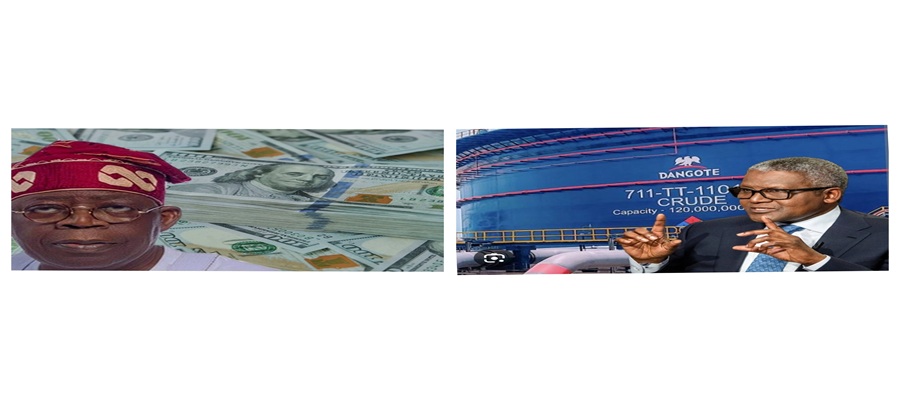
For months, Nigerians have argued in circles. Aliko Dangote has been blamed by default. They have accused his refinery of monopoly power, of greed, of manipulation. They have pointed out the rising price of petrol and demanded a villain.

When examined closely, the truth is uncomfortable, layered, and deeply geopolitical because the real story is not at the fuel pump and this is what Nigerians have been missing unknowingly. The truth is that the real story is happening behind closed doors, across continents, inside financial systems most citizens never see and the actors will prefer that the people are kept in the dark. And once you see it, the outrage shifts. The questions deepen. The implications expand far beyond Nigeria.
In October 2024, it was obvious and clear that the world would have noticed that Nigeria made a move that should have dominated global headlines, but didn’t. Clearly, this was when the government of President Bola Tinubu introduced a quiet but radical policy, which is the Naira-for-Crude. The idea was simple and revolutionary. Nigeria, Africa’s largest oil producer, would allow domestic refineries to purchase crude oil in naira instead of U.S. dollars. On the surface, it looked like economic reform. In reality, it was something far more consequential. It was a challenge to the global financial order.
For decades, oil has been traded almost exclusively in dollars, reinforcing the dominance of the United States in global finance. By attempting to refine its own oil using its own currency, Nigeria was not just making a policy adjustment. It was testing the boundaries of economic sovereignty. And in today’s world, sovereignty, especially when it touches money, debt, and energy, comes with consequences.
What followed was not loud. There were no emergency broadcasts or dramatic policy reversals. Instead, the response was quiet, bureaucratic, and devastatingly effective just to undermine the processes. Nigeria produces over 1.5 million barrels of crude oil per day, though pushing for 3 million by 20230, yet when the Dangote Refinery requested 15 cargoes of crude for September 2024 what it received was only six from the Nigerian National Petroleum Company Ltd (NNPC), which means its yield for a refinery with such capacity will be low if nothing is done. Come to think of it, between January and August 2025, Nigerian refineries collectively requested 123 million barrels of domestic crude but received just 67 million, which by all indications showed a huge gap. It is a contradiction and at the same time, laughable that an oil-producing nation could not supply its own refinery with its own oil.
So where was the crude going? The answer exposes a deeper, more uncomfortable truth about Nigeria’s economic reality. The crude was being sold on the international market for dollars. Those dollars were then used, almost immediately, to service Nigeria’s growing mountain of external debt. Loans owed to the same institutions, like the International Monetary Fund (IMF) and the World Bank had to be paid, which are the same institutions applauding this government. Nigeria was not prioritizing domestic industrialization; it was prioritizing debt repayment.
And the scale of that debt is no longer abstract. Nigeria’s total debt stock is now projected to rise from N155.1 trillion to N200 trillion, following an additional $6 billion loan request by President Tinubu, hurriedly approved by the Senate. At an exchange rate of N1,400 to the dollar, that single loan adds N8.4 trillion to a debt stock that already stood at N146.69 trillion at the end of 2025. This is not just a fiscal statistic. It is the central pressure shaping every major economic decision in the country.
On paper, the government can point to rising revenue, improving foreign exchange inflows, and stronger fiscal discipline as witnessed when the governor of the Central Bank of Nigeria, Olayemi Cardoso, always touted the foreign reserves growth. But a closer review of those numbers reveals a harsher reality. Nigeria is exporting its most valuable resource, converting it into dollars, and sending those dollars straight back out to creditors. The crude leaves. The dollars come in. The dollars leave again. And the cycle repeats.
This is not growth. This is a treadmill powered by debt. Let us not forget that in the middle of that treadmill sits a $20 billion refinery, built to solve Nigeria’s energy dependence, now trapped within the very system it was meant to escape.
By 2025, the contradiction had become impossible to ignore, which is a fact. This is because how can this be explained that the Dangote Refinery, designed to reduce reliance on imports, was increasingly dependent on them. The narrative is that in 2024, Nigeria imported 15 million barrels of crude from America, which is disheartening to mention the least. More troubling is that by 2025, that number surged to 41 million barrels, a 161 percent increase. By mid-2025, approximately 60 percent of the refinery’s feedstock was coming from American crude. As of early 2026, Nigerian crude accounted for only about 30 to 35 percent, which was actually confirmed by Aliko Dangote.
The visible contradiction in this situation is that the refinery built to free Nigeria from dollar dependence was running largely on dollar-denominated imports. Not because the oil did not exist locally, but because the system, shaped by debt obligations and global financial structures, made it more practical to export crude for dollars than to refine it domestically, which leads us to several other covert concerns.
Faced with this troubling reality, there is one major issue that still needs to be answered. This is why Dangote pushed back by filing a N100 billion lawsuit against the NNPC and major oil marketers. He further accused the parties involved of failing to prioritize domestic refining. For a brief moment, one will think that the confrontation, as it appeared, was underway is one that could redefine the balance between state control and private industrial ambition, but these expectations never saw the light of day.
Yes, it never saw the light of day because on July 28, 2025, the lawsuit was quietly withdrawn. No press conferences. No public explanation. No confirmed settlement. Just silence.
There are only a few plausible or credible explanations. As a practice and well-known in the country, institutional pressure may have made continued confrontation untenable. A strategic compromise may have been reached behind closed doors. Or the realities of the system itself may have made victory impossible, regardless of the merits of the case. None of these scenarios suggests a system operating with full autonomy or aligned national interest. All of them point to constraints, political, economic, or structural, that extend far beyond a single company.
Then came the shock that changed everything.
On February 28, 2026, Iran closed the Strait of Hormuz, disrupting a channel through which roughly 20 percent of the world’s oil supply flows. Prices surged past $100 per barrel. Global markets entered crisis mode. Supply chains are fractured. Countries dependent on Middle Eastern fuel suddenly had nowhere to turn.
And they turned to Nigeria. Nations like South Africa, Ghana, and Kenya began seeking fuel supplies from the Dangote Refinery. The same refinery that had been starved of crude, forced into dollar-denominated imports, and entangled in domestic disputes suddenly became the most strategically important energy asset on the African continent.
Nigeria did not plan for this. It did not negotiate for this. With this development, the world had no choice but simply run out of options, and Lagos became the fallback.
And then, almost immediately, attention shifted. This swiftly prompted in early 2026, a United States congressional report to recommend applying pressure on Nigeria’s trade relationships within Africa. Shortly after, on March 16, 2026, the United States launched a Section 301 trade investigation into multiple economies, including Nigeria. This is not a sanction, but it is the legal foundation for one. At the same time, the African Growth and Opportunity Act, which had provided duty-free access to U.S. markets for decades, was allowed to expire in 2025 without renewal.
The sequence is difficult to ignore. As Nigeria’s strategic importance rose, so did external scrutiny. As its potential for regional energy leadership increased, so did the instruments of economic pressure.
To understand why, you must look at the system itself. The global economy runs on the U.S. dollar, which the Iranian government tried to scuttle by implementing a policy that requires oil cargo tankers being transported via the Strait of Hormuz to be made in Yuan. Most countries need dollars to trade, to import essential goods, to access global markets. The infrastructure that enforces this is the SWIFT financial network, which connects banks across the world. Control over this system confers enormous power. Countries that step too far outside it risk exclusion, and exclusion, in modern terms, means economic paralysis.
Nigeria’s attempt to trade crude in naira was not just a policy experiment. It was a subtle deviation from a system that rewards compliance and punishes independence. The response was not military. It did not need to be. It was structural. Limit domestic supply. Reinforce dollar dependence. Ensure that even attempts at independence remain tethered to the existing order.
And all the while, the debt clock continues to tick. N155.1 trillion.
That number is not just a fiscal burden. It is leverage. It shapes policy. It influences decisions and it also determines priorities, which tells you that when a nation is deeply indebted, its room to maneuver shrinks. In all of this, one thing that must be understood is that choices that might favor long-term sovereignty are often sacrificed for short-term stability. Debt does not just demand repayment. It demands alignment.
Back home, Nigerians remain focused on the most visible symptom, which is fuel prices. Unbeknownst to most Nigerians, they argue, protest, and assign blame while the forces shaping those prices include global currency systems, sovereign debt obligations, trade pressures, and geopolitical realignments. The price at the pump is not the cause. It is the consequence.
Nigeria now stands at an intersection defined not by scarcity, but by contradiction. What is more alarming is that it produces vast amounts of crude oil, yet struggles to supply its own refinery. It earns more in dollar terms, yet its citizens feel poorer. It builds infrastructure meant to ensure independence, yet operates within constraints that reinforce dependence. This is not a failure of resources and this is because there is a conflict or tension between what Nigeria wants, which reflects its ambition and structure, and between sovereignty and obligation.
And so the questions remain, growing louder with each passing month and might force Nigerians, when pushed to the wall, to begin demanding answers. If Nigeria has the oil, why is it importing crude? Further to this dismay, more questions arise, such as, why is the refinery paying in dollars if Naira-for-crude exists? One will also be forced to ask if the lawsuit had merit, why was it withdrawn without explanation? If revenues are rising, why is hardship deepening? And if Nigeria is merely a developing economy with limited influence, why is it attracting this level of global attention?
These are not abstract questions. They are the pressure points of a system that extends far beyond Nigeria’s borders.
Because this story is no longer just about one country. The reality is that perhaps unbeknownst to many, it is about the future of African economic independence. It is about the structure of global energy markets, the dominance of the dollar and the role of debt in shaping national destiny. Honestly, the question that comes to bear is that if Nigeria, with all its resources and scale, cannot fully align its production with its domestic needs, what does that imply for the rest of the continent?
The next time the conversation turns to petrol prices, something must shift. Because the number on the pump is not where this battle is being fought. It is being fought in allocation decisions, in debt negotiations, in regulatory frameworks, in international financial systems, and in quiet policy moves that rarely make headlines.
The Dangote Refinery is not just an industrial project. It is a test case. A test of whether a nation can truly control its own resources in a world where power is rarely exercised loudly, but always effectively. And right now, that test is still unfolding.
Blaise, a journalist and PR professional, writes from Lagos and can be reached via: [email protected]

FG to Gift Nigerians over 100 Free TV Channels from May 15

FG New Approves Biometric Passenger Verification System for Airports Security

STBMAN, NBC Bicker over Alleged Due Process Breaches

CBN Dismisses Polaris Bank Liquidation Claim

AfDB Okays $200m for Nigeria’s Digital Backbone, Others

Spotify’s Loud & Clear Report Reveals Over ₦60Bn Revenue for Nigerian Artists in 2025

Kuda MFB Increases Kuda for Her Business Grants to ₦10 Million

Why JustMarkets Is a Strong Choice for Gold Trading

Canal+ to Cut Jobs as Part Sweeping Restructuring

Nigeria tops global rankings for USDT, USDC ownership




 E-Financial3 days ago
How Sterling Bank Is Empowering 1m Women with ₦500Bn

 E-Financial3 days ago
See Key Changes in BVN Rule from May 1 by CBN

 E-Financial3 days ago
Paga Group Rejigs Leadership as Oviosu, Founder Becomes Group CEO

 Broadcasting3 days ago
INEC Warns Broadcasters against Misinformation ahead of 2027 Polls

 E-Financial3 days ago
Reputation: The Real Currency Powering Fintechs

 E-Business3 days ago
Jumia Expands Nationwide Footprint, Deepens Reach Across Underserved Nigerian Cities

 Telecom3 days ago
Meta Unveils Muse Spark: MSL’s Groundbreaking People-First AI Model

 News3 days ago
Google, UpSkill Universe Relaunch Hustle Academy to Bring Free AI Skills to Africans