

General News
Analyst Decries Nigerians low Appreciation of Life Insurance

Spending in the Life insurance sector has dropped significantly in the last two year. This according to experts is not unconnected with the general decline in the economy which cannot be detached from the insurance industry. According to an analyst and consultant on insurance and pension, Barrister Sylvester Oyatun, Nigerians hre yet to embrace life insurance and the obvious gains from it as it is done in the developed economies. He stated that the drop in life insurance premium base, though low but warned that it could have had a greater toll on the industry but for the group life insurance under the reformed pension Act which has reduced the anticipated impact. Corroborating the drop along the line of general economic downturn, Business Monitor International (BMI), an international research agency, Nigerians unlike the developed nations ,do not use insurance to provide for their long term income needs, a situation that makes insurance unable to meet the needs of the people over the years. "Most products do not provide protection against inflation, which has traditionally been a problem in Nigeria with the result that lapse rates are extremely high," the report added. Oyatun had noted that the bane of life insurance premium growth, had been partly due to the fact that some life insurance policy holders had to cancel their policy due to their inability to meet premium payment demand. It would be recalled that out of the total insurance industry premium of N200.6 billion generated by member companies of the Nigerian Insurers Association in 2009, life business contributed only N39.2 billion with the chunk of the remaining N161.4 billion coming from non-life business. This, he noted is contrary to the dictates in the developed economies where life insurance contributes a higher premium than the general insurance category. He stated that spending on insurance is on the least of priority list for most Nigerians, especially as its benefits are largely not immediate. With this finding, it is obvious that some life insurance policyholders who could not meet their premium payments decided to withdraw or cancel some of their policies, while others who sought loans but were unable to access same opted to sell off their life policies for cash. The result is a significant drop in many insurers’ premium income. It will also be recalled that, Mr.Akin Laguda, chairman, Continental Reinsurance plc, while recently explained that there was a drop in the company’s life insurance premium. The premium, he noted dropped by 27 percent from N1.2 billion in 2008 to N901 million in 2009, stating that the company was notified of “a substantial policy cancellations relating to previous years on individual and group life assurances." While calling for caution in the area of large volume transaction due to this ugly situation, the analyst said "most products do not provide protection against inflation, which has traditionally been a problem in Nigeria with the result that lapse rates are extremely high," they add. Oyatun therefore call on insurance companies to brace the storm by adopting innovative new products formulation that are people friendly and could stand the test of time. Industry analysts therefore suggest that insurers must not underestimate the importance of product feature and strategy, even as they pursue their distribution network. But especially significant, they add, is the need to innovate as conditions change and service goes unmet.


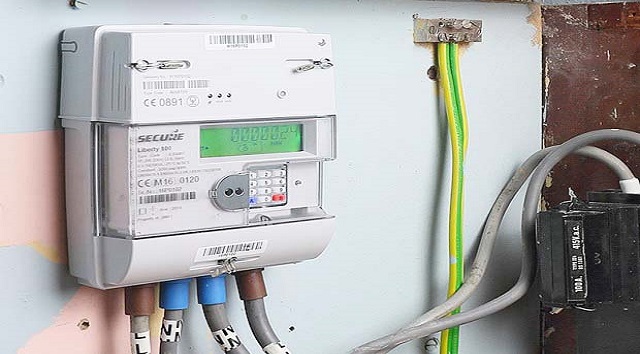
MOJEC International Limited has revealed that it deployed over 400,000 smart meters nationwide in 2025, representing a significant year-on-year growth for the indigenous smart meter manufacturer.

This performance reflected a 33.3 percent increase over the 300,000 meters deployed in 2024, highlighting the scale and acceleration of MOJEC’s metering operations.
Chantelle Abdul, group managing director, attributed the sustained impact to deliberate investments in infrastructure, people, and technology.
“MOJEC operates two state-of-the-art meter production facilities with a combined installed capacity of up to five million meters annually. This scale enables us not just to meet current demand, but to support Nigeria’s long-term metering and energy efficiency goals,” she said.
She further noted that MOJEC’s expansive installer ecosystem, comprising over 5,000 trained professionals nationwide, remains a critical enabler of its delivery advantage, ensuring speed, quality, and compliance across diverse terrains and markets.
The company stated that the deployment surge reflected growing confidence by Distribution Companies (DisCos) and sector stakeholders in MOJEC’s technical capacity, delivery speed, and end-to-end metering solutions.
According to Monday Ubogu, MOJEC’s head of installation, the scale and consistency of delivery set the company apart.
“Within the first three quarters of the year, MOJEC completed about 300,000 installations, accounting for roughly 40 percent of total installations nationwide during that period.
“The momentum continued into the final quarter with an additional 150,000 meters deployed, highlighting our operational depth and nationwide reach,” he said.
Ubogu added that MOJEC’s performance builds on decades of sector engagement, spanning key national metering initiatives including CAPMI, MAF, Vendor Financing, MAP Phases I & II, and NMMP 0, with the company having deployed nearly four million meters since the privatisation of NESI.
According to the company, a substantial portion of the deployment was driven by MOJEC Meter Asset Management Company (M3AC), the Group’s asset management subsidiary, which accounted for about 350,000 installations.
In its bid to contribute its quota to the consolidation of security in Nigeria’s commercial capital, Lagos, telecommunications giant, Globacom, has thrown its weight behind the Lagos State Security Trust Fund (LSSTF) with a donation of ₦1 billion.

The generous donation was announced at a Private Sector Breakfast Meeting with CEOs, convened at the instance of the Executive Governor of Lagos State, Mr Babajide Sanwo-Olu, on Friday, January 30, 2026 and shows the company’s commitment to fostering public safety which would in turn, culminate in enhanced prosperity and social re-engineering in the state.
The donation, which is the biggest private-sector intervention from the telecommunications sector to the Fund in recent years, again shows that Globacom is a responsible, responsive and people-oriented corporate citizen.
Globacom disclosed that the intervention emphasized deeper collaboration between government and the state’s business community especially in relation to security, innovation and economic resilience—an agenda which the digital solutions company has unabashedly supported through sustained social investments.
The Executive Secretary/CEO of the Fund, Dr. Ayo Ogunsan, in his display of appreciation described Globacom’s largesse as “a powerful demonstration of corporate citizenship and a strategic investment in the stability of Lagos State,” saying since LSSTF was established to bridge funding gaps in security infrastructure, it desired voluntary contributions from corporate bodies and well-meaning collaborators.
Dr. Ogunsan promised that the ₦1 billion donation will significantly enhance the Fund’s capacity to address critical priorities for 2026, including multipurpose security helicopters and drones, Armoured Personnel Carriers (APCs), water cannons, digital communication equipment and Smart CCTV systems. These assets, he added, were germane to proactive policing, rapid response and intelligence-led operations across the state.
He therefore encouraged Lagosians to support businesses that invest in the safety and development of the state, saying, “When companies step forward to secure our environment, residents should reciprocate by patronizing them. Their support directly impacts the protection of lives, property and economic activity.”
A statement from Globacom explained that the donation was an expression of the company’s staunch belief in Nigeria’s future. “At Globacom, we see security not as a government burden alone, but as a shared responsibility. When people feel safe, enterprise grows, creativity flourishes and hope becomes practical. Our support for the LSSTF is about protecting the everyday dreams of millions of Lagosians,” he noted.
With this donation to the LSSTF, Globacom has furthered its tradition of investing directly in the conditions like safety, confidence and stability which help commerce to thrive. Consequent on the support, LSSTF is gingered to raise the bar of security thereby concretizing Lagos State’s position as Nigeria’s safest and most vibrant commercial hub.
This recent financial intervention from Globacom is in tandem with its avowed commitment to social responsibility that is practical, timely, scalable and aligned with national priorities.
The company’s interventions in the past decades have spanned relief efforts for flood-affected communities, support for displaced persons, advanced youth skills through structured training programmes, and investments in education, culture and digital inclusion.

World International Economic Group (WIEG) Nigeria has announced plans to host its inaugural International Investment Summit on Feb. 25 and 26 at the Four Points by Sheraton Hotel, Oniru, Victoria Island, Lagos.

WIEG
The summit, themed “Nigeria’s Next Frontier: Unlocking Sustainable Investments for Economic Transformation,” is aimed at connecting investment-ready Nigerian enterprises with global capital while addressing long-standing challenges facing micro, small and medium enterprises (MSMEs), cooperatives and women-led businesses.
Speaking at a pre-summit press conference on Friday at Compact Communications Ltd., GRA Ikeja, Lagos, Mr. Bassey Essien, WIEG’s Project & Event Consultant said the summit would serve as a structured platform linking policy, finance and enterprise growth.
Essien identified limited access to structured funding, poor investment readiness and weak documentation as major barriers confronting Nigerian businesses, despite the availability of domestic and international capital.
“Enterprises that succeed understand the importance of preparation. Some invest as much as N200 million in professional feasibility studies to meet the standards of banks and institutions such as the African Development Bank. That level of preparation enables access to collateral-free funding,” he said.
According to him, weak policy continuity, inadequate post-intervention monitoring and fragmented regulatory frameworks have continued to undermine business growth in the country.
“Policies often change with governments, and there is little tracking after interventions. More importantly, many businesses are not prepared in ways financiers require,” Essien noted.
He explained that the summit would convene policymakers, investors, development finance institutions and pre-screened MSMEs and SMEs operating in priority sectors, including the creative industry, agriculture, energy transition, finance and aviation.
Essien described the creative sector as a major contributor to Nigeria’s economy, accounting for about 2.5 per cent of the Gross Domestic Product, but said weak financing structures, piracy and poor intellectual property (IP) protection had limited its growth.
Highlighting the summit programme, he said Day One would feature conferences on macroeconomic issues, policy reforms and enterprise growth, while Day Two would focus on sector-specific deal-making roundtables.
“These deal rooms will be organised by sector — from aviation maintenance, repair and overhaul (MRO) to renewable energy — with lawyers, financiers and policymakers present to fast-track transactions,” he said.
Essien added that the Nigerian Investment Promotion Commission (NIPC) would be present to ensure post-event monitoring and tracking of investment deals concluded during the summit.
He disclosed that the creative economy segment would be supported through partnerships with the Association of Movie Producers of Nigeria (AMP) and financial institutions to fund viable projects in Nollywood, music and fashion.
“Intellectual property regularisation is critical. Once ideas are properly documented and protected, investors gain confidence,” he said.
On energy and aviation, Essien said the summit would spotlight renewable energy solutions to reduce dependence on generators and promote the establishment of commercial MRO facilities to curb the high cost of aircraft maintenance abroad.
He also announced the participation of B Lab Africa, a U.S.-certified organisation focused on environmental, social and governance (ESG), diversity, equity and inclusivity standards, noting that the initiative would help small businesses improve governance and access global funding.
Essien revealed that investment commitments estimated at about 500 million dollars were expected to emerge from the summit.
“This is a private-sector-led, non-partisan initiative that places no financial burden on government. It is focused on job creation, empowering women-owned enterprises and improving investor confidence through transparent and secure processes,” he said.
He urged Nigerian entrepreneurs and SMEs to prioritise proper documentation, professional advisory services and IP protection to position themselves for sustainable growth.
“We are creating a structured pathway from policy to capital to enterprise growth,” Essien added.

EFInA Unveils Research Fellowship Programme to Deepen Financial Inclusion Impact

Indigenous Firm Deploys 400,000 Smart Electricity Meters in 2025

CBN Expresses Concern Over Foreign Investments in Nigeria Fintechs

UBA’s Easy and Instant Account Opening Thrills Returnee

NCC Committed to Regional Digital Integration – Maida

Firm Detected a Fivefold Surge in QR Code Phishing Attacks in the Second Half of 2025

US invests $115m in counter-drone tech for World Cup security

Nigerian Terra Industries Secures $11.8m for Expansion

Firm Detected a Scam Exploiting OpenAI’s Teamwork Features

Nigeria Targeted with 4,622 Cyber-attacks Per Week in December 2025




 General News3 days ago
Globacom Donates ₦1Bn to Lagos State Security Trust Fund

 Telecom3 days ago
Airtel Nigeria Commits to Upgrade of its Network Infrastructure for Improved Quality of Service

 E-Business3 days ago
PwC Reveals AI Scaling Gap Slows Africa’s Digital Transformation

 E-Financial3 days ago
Ecobank Profit Jumps 29 Percent to N950Bn

 News3 days ago
CIoD, NIPSS Partner to Deepen Governance, Leadership Standards

 News3 days ago
NRS Chairman Outlines Ways Nigeria can Move from Potential to Economic Prosperity

 General News3 days ago
WIEG to host Nigeria’s first International Investment Summit in Lagos

 News3 days ago
Orya, Ex-NEXIM MD Jailed 490 Years for N2.4Bn Fraud