

News
Anambra can alter Nigeria’s destiny – Ekeh, Zinox boss

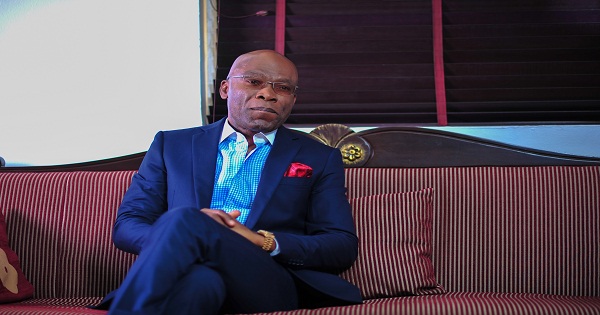
Chairman, Zinox Group, Leo Stan Ekeh has described Anambra as a state with global capacity to influence and positively alter Nigeria’s destiny.
Ekeh affirmed that the state has all it takes to make this a reality. Further, he noted that the wealth, energy and knowledge per square meter in Anambra does not exist in any other part of Africa.
Nevertheless, the Zinox boss urged the state government to open its eyes to the immense opportunities lying within the state with which it can re-configure the narrative for good.
Ekeh made this call at the 2019 Anambra Business and Investment Roundtable on Monday, November 25th, 2019. He spoke on the topic: Doing Business in the 21st Century.
The summit, with the theme – Beyond Infrastructure: Rethinking the Future – was held at the Anambra Governor’s Lodge, Amawbia, Awka.
In attendance at the event was the Anambra State Governor, Willie Obiano; the Deputy Governor, Nkem Okeke; Speaker of the Anambra State House of Assembly, Uche Okafor; the Obi of Onitsha, Nnayelugo Alfred Nnaemeka Achebe; former Governor of the Central Bank of Nigeria (CBN), Prof. Chukwuma Soludo and other members of the Anambra state political set-up. Also in attendance were corporate egg-heads and entrepreneurs drawn from various spheres of the economy.
‘I am an Igbo man from Imo State but here I am in Anambra and delighted to be here as well. Why? Anambra state has the global capacity to alter Nigeria’s destiny. You have it all in Anambra State but you have to certify it in the 21st century for it to be rewarding. You have credible human capital, brilliant minds and the right investment climate to make it happen,’ Ekeh noted.
Nevertheless, Ekeh who was the keynote speaker at the event, sounded a note of caution.
The serial digital entrepreneur warned that the state must wake up to the fast-evolving dynamics of the technology-mediated 21st Century.
Urging the Anambra State governor, Willie Obiano to invest in education and upgrade human capital in the state, Ekeh disclosed that this is the surest route to helping Anambra achieve its considerable potential.
‘I must commend the governor for what he is doing in the state. However, the 21st Century requires us to anticipate the future. If you look at the current Zinox Future Visions emblem of a man in deep thought, you will see it speaks to our mindset as a corporate with an eye on the future. This has been my story throughout the over 30 years I have spent in business.
‘You must invest in the next generation, especially the children of the poor because these are the ones with a mindset of disruption.
‘There is analogue knowledge and there is digital knowledge. Our generation relied on 80 per cent common sense and 20 per cent knowledge. But our children have global exposure and the benefit of better education, so they mainly use 80 per cent knowledge and 20 per cent common sense.’
Continuing, Ekeh noted that: ‘The Anambra state government must launch a Knowledge or Digital city in Awka with smart facilities and certified knowledge workers to re-train teachers across platforms and equip them to prepare our children for the digital age.
“In addition, the government should consider setting up and attaching a finishing school to the knowledge capital so that candidates are prepared as global citizens.
‘There is a fundamental problem with the quality of graduates we are currently churning out. Many of them are not fit for the 21st Century work-place. You must invest in these kids to make them relevant in the global marketplace and the multiplier effect will transform the fortunes of Anambra state for good.
‘You must build and equip many young graduates with skills in emerging technologies such as Artificial Intelligence, Robotics, Machine Learning, Cloud Computing and Big Data, among others.
‘I embarked on a similar intervention in Imo State after encountering the child of a widow who aced WAEC with straight A’s but regularly fell short in JAMB. It turned out that many of these students had never seen a computer in their lives but had to use a computer in sitting for the JAMB examinations. So, I spoke with the Commissioner of Technology in Imo State and set up a digital training centre where over 5,400 students are currently being exposed to computer appreciation and other digital skills. I am also paying these students to attend the classes. A week to the exam, there will also be a refresher session to ensure they are brought up to speed ahead of the examination.’
According to Ekeh, the second quarter of the 21st Century will delete many of the known names in business if they fail to rise up to the evolving era of change.
‘Our children will achieve within a few years what many of us struggled to build in 30 years. That is the age we are in. It is an era of miracle wealth. An age in which you do not need a Godfather to succeed. An E-commerce business like Konga, for instance, which is managed by my son and his colleagues has over 187,000 merchants trading on its platform. It can reach customers nationwide and deliver to them without stress. Even on Sundays when some of you are in church, business is on-going on the platform,’ he enthused.
Urging the Anambra state government to rally well-meaning sons and daughters of the state as well as the private sector to partner with it in its mission to transform the state, Ekeh counselled that this move is paramount in view of its long-reaching implications for the state.
‘The state government will never have enough money to handle everything alone. Therefore, you must reach out to Anambra indigenes and other investors to come to the aid of the state. If you invest N5bn in a digital centre, the returns will be massive.
‘But you must set a system to ensure it is properly managed. That way, investors such as myself will be encouraged to come in and invest and then reap some profit from their investment. However, politicians must not be allowed to hijack the system. Every beneficiary nominated must be screened and passed through the process to ensure they are selected on merit,’ he counselled.
Furthermore, Ekeh advised Anambra parents to leverage on their assets and empower their children. He disclosed that it is a reasonable risk to invest in one’s children while stating that human beings have been classified into three in this century – employers, employees and fools.
‘Don’t allow you kids to be rated as fools while you have billions siting in different asset classes,’ Ekeh warned.
Also speaking at the event, Gov. Obiano expressed delight and confidence that the summit will yield immense benefits for the state.
‘…The insights from today’s deliberations will set us firmly on the path to building a more socially prosperous state not only from the riches that lie beneath the soil, but essentially from the infinite possibilities that lie between our ears.’
The well-attended event featured panel sessions on Education and Health, ICT and the Creative Industry, Tourism and Hospitality as well as Housing and Infrastructure.


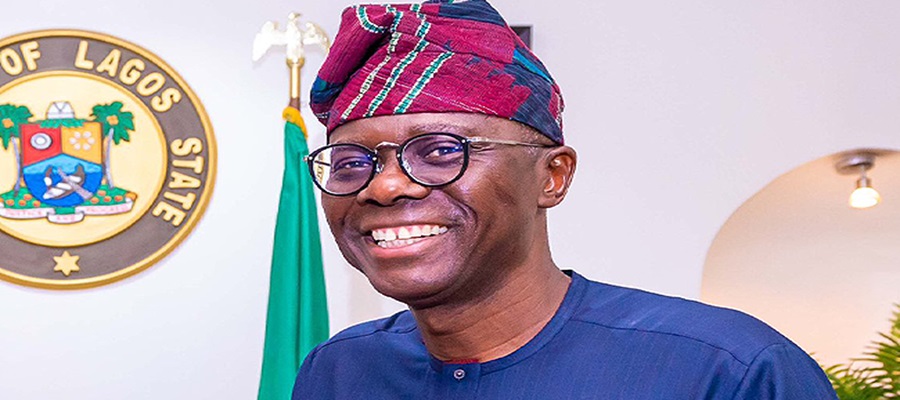
Lagos State Government has intensified efforts to strengthen its social protection framework with a fresh push to update the state’s Single Social Register.

Babajide Sanwo-Olu, Governor, Lagos
This was contained in a press statement on the government’s Facebook page on Wednesday.
The initiative, led by the Lagos State Ministry of Economic Planning and Budget, formed the focus of a strategic engagement held on Monday with Community-Based Targeting teams, local government coordinators and field enumerators across the state’s 57 Local Government Areas and Local Council Development Areas.
The meeting, themed “Closing the Gap: Accelerating Lagos State Single Social Register Update,” took place at the Radio Lagos Multipurpose Hall in Agidingbi, Ikeja.
Officials said the exercise is aimed at improving the accuracy and reach of the register, which serves as a critical tool for planning and delivering targeted social interventions, including financial support, healthcare and education services.
Speaking at the session, Ope George, commissioner for Economic Planning and Budget, commended field workers for their commitment while urging them to scale up their efforts.
He called on participants to be “more intentional by intensifying their commitment,” reaffirming the government’s resolve to “continuously strengthen and refine the Register to reflect evolving realities.”
Also speaking, Olayinka Ojo, permanent secretary in the ministry, described the register as central to effective governance and service delivery.
She said “it remains a cornerstone for effective planning and delivery of social intervention programmes,” adding that the ongoing update is designed to “further enhance data reliability, coordination, and service delivery outcomes.”
Ojo noted that sensitisation efforts would be expanded across all councils to ensure wider inclusion of residents, stating that “the advocacy and sensitisation will scale throughout the 57 LGAs and LCDA to give more to Lagos residents.”
According to the government, the updated register is expected to expand access to social protection programmes and improve the targeting of interventions for the most vulnerable populations.
The engagement also provided a platform for stakeholders to strengthen collaboration, improve data quality and reinforce transparency in grassroots data collection.
The state government reiterated its commitment to leveraging accurate data and partnerships to drive inclusive development, reduce vulnerability and improve living standards across Lagos.


A new study by Bayero University, Kano, has found that 38 per cent of women in Northern Nigeria do not have access to financial services.

The study, carried out by the Aminu Kano Centre for Democratic Studies of the university, was supported by the Gates Foundation. It examined how social norms and behavioural factors influence financial inclusion across the 19 Northern states.
The report, titled “Understanding Influence and Behaviour in Northern Nigeria” and unveiled in Abuja on Wednesday, stated that while 52 per cent of women are financially served, only 45 per cent access formal financial services through deposit money banks, merchant banks, interest-free banks and microfinance institutions.
It stated that “38 per cent of women across the region lack access to financial services. “52 per cent of women are financially served, while 45 per cent access formal financial services through Deposit Money Banks, merchant banks, interest-free banks and microfinance institutions. An additional seven per cent utilise other formal non-bank financial products, including insurance services. ”
Speaking at the unveiling, the Director of Academic Planning at Bayero University, Prof. Yusuf Garba, who represented the Vice Chancellor, Prof. Haurna Musa said the research was designed to uncover why the region lags in financial access.
“This study, which started in 2024, aims to examine how social norms influence attitudes and behaviour of various groups across Northern Nigeria, particularly to find out why states in the region fall behind in access and use of financial services,” he said.
Garba explained that the research, conducted over 18 months, produced two volumes detailing how influence structures, trust hierarchies, gender norms, and religious considerations shape decisions around finance, health and education.
He added, “The report is structured into volumes to provide a unified explanation of how social norms, authority structure, and trust shape financial behaviour across Northern Nigeria.”
On the findings, the Principal Investigator, Prof. Ismael Zango, said the data aligns with figures from the National Bureau of Statistics, particularly on poverty and unemployment.
According to him, “unemployment in the region stands at about 37 per cent,” while “poverty levels average about 80 per cent across Northern Nigeria, with Sokoto State recording the highest rate at over 80 per cent.”
Zango stressed that addressing financial exclusion requires more than temporary interventions.
“Economic empowerment must go beyond token financial support,” he said, adding that “sustainable development requires equipping women and youths with relevant, market-driven skills.”
He cited women-led initiatives such as groundnut processing groups in Kebbi State and the Women in Agriculture programme in Kano State as practical models.
“These initiatives should be scaled up to bring more people into productive economic activities and reduce poverty,” he said.
In her remarks, the Chief Executive Officer of Enhancing Financial Inclusion and Advancement, Mrs. Foyinsolami Akinjayeju, described financial inclusion as both an ethical and economic imperative.
Akinjayeju called for stronger collaboration among stakeholders, including government, financial institutions and development partners, as well as policy reforms to address existing gaps.
“Everyone has a role to play, but commitment must come from the top,” she said.
The findings come amid growing concerns over low financial inclusion rates in Northern Nigeria, driven by poverty, unemployment, and entrenched social norms that limit women’s economic participation.

Citizens Initiative for Safety Awareness (CISA), advocacy group focused on security, data protection, and counter-terrorism, has urged the Nigeria Data Protection Commission (NDPC) to provide an update on a petition alleging a cybersecurity breach and unlawful access to private communications involving officials of the National Institute for Policy and Strategic Studies (NIPSS).

Mr Chidi Omeje, national coordinator, in a letter dated April 10, 2026, observed no response from the commission so far.
Filed on July 1, 2025, by Mr Yushau A. Shuaib, the petition claims unauthorised access, interception, and use of private digital correspondence belonging to him and PRNigeria, his company.
The complaint named Barrister Nima Salman Mann, Rear Admiral Abubakar Abdullahi Mustapha, and Professor Elias Wahab concerning the alleged breach. Such incidents are outlined in the Nigeria Data Protection Act (NDPA) 2023, regarding data privacy, cybersecurity safeguards, and the protection of sensitive information.
CISA said if confirmed, the alleged actions contravene Nigeria’s data protection framework, with implications for data governance, safety of confidential media sources, and public trust in institutions.
It requests the NDPC to clarify the status of the probe, disclose any interim findings, and cite measures to prevent similar breaches.
The organisation believes the matter has evolved beyond an individual complaint, describing it as a test of the government’s commitment to enforcing its data protection laws, especially within ministries, departments, and agencies.
CISA also appealed to Tunji Disu, inspector general of Police, to order an investigation into the alleged cybercrime.
In a statement, Omeje criticised the “prolonged delay” by the Force Criminal Investigation Department (FCID) in acting on a petition submitted since June 2025.
The group said, despite “credible evidence,” the police had yet to invite or question the individuals mentioned. Pointing out that two of the officials share membership in the National Institute (mni) with the former DIG at the FCID, CISA raised concerns about a possible conflict of interest.
Omeje clarified that the petition was different from the civil suit at the Federal High Court over Mr Shuaib’s withdrawal from the NIPSS programme.
“An elementary legal principle holds that a civil suit cannot be a bar to criminal investigation or prosecution,” he noted.
CISA called on the police to act in accordance with due process, advising the authorities to uphold the rule of law and restore public confidence.
It contends that failure to act decisively could erode trust in law enforcement and reinforce perceptions of a two-tier justice system.

Lagos Targets Vulnerable Residents in Expanded Social Register

CBN Proposes 30-Member Mediation Panel for Loan Disputes

CAC Urges Users to Secure Accounts after Cyberattack Scare

NCDC Predicts Cholera Outbreak in 10 States as Heavy Rains Loom

NDIC Seeks Court Nods to Liquidate 89 Failed Banks

Kuda MFB Increases Kuda for Her Business Grants to ₦10 Million

Canal+ to Cut Jobs as Part Sweeping Restructuring

Nigeria tops global rankings for USDT, USDC ownership

NBC Boss Urges Content Ceators to Participate in DSO

NITDA Takes Over National Digital Architecture System




 E-Financial3 days ago
Fidelity Surges Ahead in Recapitalisation Drive with ₦564bn Capital

 General News2 days ago
Guinness Nigeria Surpasses ₦1Trillion Market Capitalisation, Signalling Strong Investor Confidence and Sustained Value Creation

 Telecom3 days ago
AfDB Grants Project BRIDGE $200m Facility for Nationwide Internet Access

 Telecom3 days ago
Qualcomm Unveils Startup Selection for Qualcomm Make in Africa 2026

 E-Financial3 days ago
Digital “Pickpockets” Compromise Over a Million Banking Accounts – Kaspersky

 Telecom3 days ago
Nigeria Seeks Stronger Digital Sovereignty, National Software Infrastructure

 E-Financial3 days ago
EFCC Warns Banks against Loans without Credible Collateral

 E-Business3 days ago
Nigeria Needs Some 480,000 Local DPOs for Data Protection