

/home/kenneth/web/nigeriacommunicationsweek.com.ng/public_html/wp-content/themes/zox-news/parts/post-single.php on line 153
">
Warning: Undefined array key 0 in /home/kenneth/web/nigeriacommunicationsweek.com.ng/public_html/wp-content/themes/zox-news/parts/post-single.php on line 153
Warning: Attempt to read property "cat_name" on null in /home/kenneth/web/nigeriacommunicationsweek.com.ng/public_html/wp-content/themes/zox-news/parts/post-single.php on line 153
Anco Becomes Part of Spac

Shippers Protection Advisory Committee (Spac) of the Nigerian Shippers’ Council (NSC) has been reconstituted to accommodate a representative of Association of Nigeria Courier Operators (Anco).
According to Mr. Toyin Olufade, the president of Anco, the association has chosen Mr. Siyambola Oladapo, its general secretary, to represent Anco in Spac.
Mr. Olufade, said that the reconstituted committee which will have its first sitting on March 10, 2010, will ensure adequacy of shipping services, shipping cost, frequency of sailing, pooling arrangement for shipping and perennial problems affecting shippers and the shipping business, as well as movement of goods by road, air, sea among others.
He also said that the reconstituted Spac, will look into the problem of infrastructure and other common complaints by shippers and other matters that would be referred to it by the stakeholders


Warning: Undefined array key 0 in /home/kenneth/web/nigeriacommunicationsweek.com.ng/public_html/wp-content/themes/zox-news/parts/post-single.php on line 493
Warning: Attempt to read property "cat_ID" on null in /home/kenneth/web/nigeriacommunicationsweek.com.ng/public_html/wp-content/themes/zox-news/parts/post-single.php on line 493

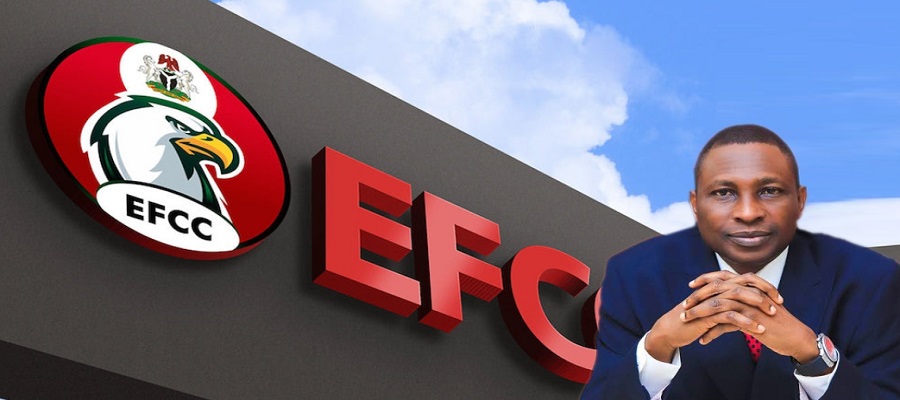
Ola Olukoyede, chairman, Economic and Financial Crimes Commission (EFCC), has raised concerns over the growing threat of cryptocurrency-related crimes in the country.

Olukoyede made this known at the inauguration of the United Nations Office on Drugs and Crime (UNODC) Country Programme for Nigeria 2026–2030, on Friday in Abuja.
The EFCC boss revealed that the world lost more than 160 billion dollars to illicit transactions involving digital currencies in 2025.
Olukoyede highlighted the risks posed by cryptocurrencies such as Bitcoin.
He noted that criminal networks were increasingly exploiting technological advancements, global financial systems, and governance gaps to facilitate illicit activities.
“Last year, the world lost over 160 billion dollars to illicit transactions in cryptocurrencies.
”Tackling these challenges requires coordinated national responses, strong institutions and sustained intelligence-driven strategies,” he said.
He said that the UNODC programme came at a time when Nigeria and the global community were grappling with evolving threats from transnational organised crime, financial crimes, illicit financial flows, and cyber-enabled offences.
Olukoyede said the programme represented a strategic foundation for collective efforts to strengthen the rule of law.
This, he said, included enhancing the criminal justice system and protecting institutions and communities from violence, crime, and financial corruption.
He noted that the programme’s focus on combating corruption and illicit financial flows was particularly significant to the EFCC, given the enormous economic and social costs of such crimes on Nigeria.
“The imperative of sustained action to turn the tide cannot be overstated,” he said.
The EFCC chairman expressed pride in the commission’s longstanding partnership with UNODC, stating that the collaboration had strengthened institutional capacity and improved Nigeria’s response to economic and financial crimes.
He said the partnership had supported reforms and operational frameworks that enhanced the agency’s effectiveness in tackling corruption and related offences.
Olukoyede expressed optimism that the programme would further improve national security and safeguard the future of Nigerians through strengthened collaboration and shared operational experiences.
He stressed the need to continuously refine frameworks and ensure that Nigeria’s institutions and citizens remain at the centre of all collaborative efforts.
The EFCC boss commended UNODC for initiating the programme and reaffirmed the commission’s commitment to supporting its implementation to achieve measurable outcomes for Nigeria and the wider region.
Dr Musa Aliyu, SAN, chairman, Independent Corrupt Practices and Other Related Offences Commission (ICPC), in his remarks, called for stronger collaboration among institutions to address Nigeria’s growing security and corruption challenges.
Aliyu said Nigerian society was currently grappling with multiple social ills, stressing that no single agency could effectively tackle the challenges alone.
According to him, the country faces complex and interconnected threats, including violent extremism, organised crime, illicit financial flows, smuggling, and other serious offences.
“There is a common point of truth, Nigerian society is entangled with many ills, and no agency can fight them alone,” he said.
The ICPC boss noted that these challenges also posed significant threats to the nation’s criminal justice system, warning that no society could remain secure under such conditions.
He, however, expressed optimism that through strategic partnerships and collective efforts, Nigeria could overcome the challenges.
Aliyu described the UNODC Country Programme as timely and appropriate, given the scale and urgency of the issues confronting the nation.
He emphasised the importance of international support, noting that Nigeria’s progress in tackling crime and corruption had been strengthened by its collaboration with global partners, particularly the United Nations.
The ICPC chairman said the partnership between the commission and UNODC had been beneficial to Nigerian society, contributing to efforts aimed at strengthening institutions and improving governance.
He congratulated UNODC on what he described as a significant milestone and a “grand stride” in supporting Nigeria’s fight against crime and corruption.
Aliyu reaffirmed ICPC’s commitment to continued collaboration, assuring stakeholders of the commission’s readiness to work with UNODC and other partners toward national development.
“I assure you of our continued support and willingness to work together for the growth and betterment of Nigeria,” he said.

Nigeria has taken a major step toward strengthening its digital governance framework as the National Information Technology Development Agency (NITDA) officially assumes control of the Nigeria Government Enterprise Architecture (NGEA) infrastructure.

The handover ceremony held in Abuja, marks the culmination of a high-level partnership with the Korea International Cooperation Agency (KOICA).
This transition signals a shift from fragmented IT projects to a unified, disciplined approach to national digital investment.
The NGEA initiative forms a core part of the e-Government Masterplan 2.0 (Ne-GMP 2.0), aimed at establishing a unified and structured approach to managing government IT investments and digital resources.
The framework is designed to ensure that technology deployment across public institutions aligns with national priorities while improving efficiency and accountability.
With the system now operational, government agencies are expected to adopt more integrated digital processes, allowing seamless data sharing and interoperability.
This is anticipated to reduce duplication, strengthen risk management, and translate policy objectives into measurable digital outcomes.
Over the past two and a half years, Nigerian technical experts worked closely with their Korean counterparts to develop the architecture framework, create reference models, and execute pilot programmes in key institutions.
These include the National Identity Management Commission, Nigeria Customs Service, Nigeria Immigration Service, and NITDA.
Officials say the NGEA represents a shift from fragmented digital efforts to a more coordinated, citizen-focused system.
The infrastructure is hosted by Galaxy Backbone Limited, providing a secure and reliable platform for nationwide deployment.
Looking ahead, NITDA is expected to work with government stakeholders to expand and sustain the system, while the Federal Ministry of Communications, Innovation and Digital Economy will provide policy guidance to ensure its adoption across the country.

Nigeria Deposit Insurance Corporation (NDIC) has reaffirmed its commitment to protecting depositors and sustaining confidence in the nation’s banking system, declaring that its insurance framework currently safeguards about 99 per cent of customers across Nigerian banks.

Speaking during the NDIC Special Day at the 37th Enugu International Trade Fair, Thompson Oludare, managing director and chief executive, highlighted the Corporation’s role as a critical stabiliser in the financial sector, particularly in times of economic uncertainty.
Addressing participants on the theme, “Empowering MSMEs for global competitiveness”, Oludare said the NDIC remains a dependable backbone for small businesses by protecting their funds against bank failures.
He disclosed that the Corporation reviewed and increased its insurance coverage in 2024 in line with prevailing economic realities. Under the revised structure, depositors in Deposit Money Banks (DMBs), Mobile Money Operators, and Non-Interest Banks are insured up to ₦5,000,000, while those in Microfinance Banks and Primary Mortgage Institutions are covered up to ₦2,000,000.
Explaining the operational mechanism behind depositor protection, Oludare noted that the NDIC does not depend on government funding to reimburse customers of failed banks.
Rather, it draws from the Deposit Insurance Fund (DIF), which is financed through premiums contributed by licensed financial institutions.
He described the process as efficient and sustainable, enabling the Corporation to meet its obligations promptly without placing pressure on public finances.
Highlighting recent technological advancements, the NDIC boss revealed that the use of the Bank Verification Number (BVN) has significantly improved the speed of payments to affected depositors.
According to him, the BVN system allows the Corporation to trace alternative bank accounts of customers and process reimbursements within days of a bank’s closure, eliminating the delays previously associated with manual claims.
For depositors with balances above the insured limits, Oludare reassured that recovery efforts remain ongoing through liquidation processes.
“This is a continuous process,” he stated. “Additional dividend payments are made in tranches as more funds are recovered. We have demonstrated this successfully with the liquidation of Union Homes, Aso Savings and Loans, and the more recent Heritage Bank Limited, where multiple tranches of dividends have already been disbursed.”
He also cautioned Nigerians against falling victim to fraudulent financial schemes, popularly known as “wonder banks”, urging them to verify the credibility of financial institutions before investing.
On his part, Nnanyelugo Onyemelukwe, president of the Enugu Chamber of Commerce, Industry, Mines and Agriculture (ECCIMA), described the Corporation as a dependable safeguard for depositors.
According to him, the NDIC remains “a beacon of hope for depositors”, providing a “great confidence backup” in situations where banks fail due to mismanagement or distress.
Onyemelukwe also called for stronger regulatory oversight by the Central Bank of Nigeria (CBN) to further reduce the risk of bank failures and sustain public trust in the financial system.

Anti Graft Agencies Raise Alarm over Rising Crypto-Linked Financial Crimes

NITDA Takes Over National Digital Architecture System

NDIC Insures 99 Percent of Bank Customers

FG Shifting Focus to “Meaningful Connectivity” to Drive Inclusion – Minister

CBN Bars Chronic Loan Defaulters from Accessing Loans

Kaspersky Discovers New Phishing Campaign Exploiting Google Tasks Notifications to Steal Corporate Credentials

Spotify’s Loud & Clear Report Reveals Over ₦60Bn Revenue for Nigerian Artists in 2025

Madonna University Taps Tech Guru Adote for Strategic Board Role

China Threatens to Shut Nigeria’s Satellite Over $11.44m Unpaid Debt

MTN Nigeria Posts Record N1.70 Trillion Pre‑Tax Profit, Declares N20 Dividend for 2025




 News3 days ago
EU Pumps €290m into Nigeria’s Digital, Health, Agri Sectors

 Telecom3 days ago
US Jury Finds Meta, Google Liable in Landmark Social Media Addiction Case

 News3 days ago
Firm Shares Tips for Updating Your Digital Habits for an AI-driven World

 E-Business3 days ago
5 Wealth-Building Strategies for Nigerian Women-led Businesses

 E-Business3 days ago
Nigeria, Finland Sign Cybersecurity Pact

 Telecom3 days ago
Mobile Money Transactions Accounted for $2 trillion in 2025

 General News2 days ago
NCC to Curb SIM Fraud, Strengthen Digital Security with New Platform

 General News2 days ago
Kidnappers Now Use Banks to Collect Ransoms — Expert