

News
Atiku to Launch Aaron’s Book: Nigeria Drivers of Digital Prosperity


Nigeria’s former Vice President Alhaji Atiku Abubakar (Waziri Adamawa), will this Thursday, 7th July 2022 lead a pack of eminent Nigerians to the Oriental Hotel, Lekki, Lagos for the launch and public presentation of the book: Nigeria DRIVERS OF DIGITAL PROSPERITY, The Trajectories Of The Digital Evolution, Sector Analysis And Players’ Contributions, authored by Aaron Ukodie, Nigeria’s pioneer ICT and Technology Journalist.

The 472-page page hardcover book, printed in glossy colours, is an experiential chronicle of Nigeria’s sojourn through the backwaters of IT and Telecoms to the revolution which inspires the present global reference of its institutions, corporate entities/brands, and the individual skills sets. Other high-profile techies expected to grace the occasion among others include Dr. Emmanuel Ekuwem, the Secretary to the Akwa Ibom State Government and a former President of the Association of Telecommunications Companies of Nigeria (ATCON) who has been a dogged advocate of ubiquitous broadband connectivity across the length and breadth of Nigeria.
The book’s public presentation will be preceded by the eWorld Forum 2022 themed: 4G, 5G Broadband connectivity and the Economy. The paper presentation session by the current Executive Vice Chairman/Chief Executive Officer, Nigerian Communications Commission (NCC), Professor Umar Danbatta would be chaired by Dr. Ernest Ndukwe, Chairman MTN Nigeria who was the EVC/CEO of NCC when Nigeria recorded the landmark success with the award of the GSM licenses.
Atiku who is the Presidential flag bearer of Nigeria’s main opposition party, the People’s Democratic Party (PDP), was the head of the nation’s Economy management team during the two-term regime of former President Olusegun Obasanjo from 1999 to 2007 and he supervised the telecom deregulation and liberalisation process. It was the regime that birthed the celebrated accolades recorded with the Digital Mobile Licensing (DML) which introduced the Global System for Mobile communications (GSM) technology to the nation’s telephone network.
As recorded in the book, for the posterity’s sake, Atiku also played a key role in subverting the surreptitious plot by high-ranking government officials who attempted to throw spanners in the works in order to scuttle the GSM auction processes when President Obasanjo was out of the country. Details of the plot that could have denied Nigeria the globally acclaimed integrity and epoch-making mobile revolution and how Atiku filled the leadership gap in the absence of his boss have been intricately narrated in the book.
The veteran journalists also gave incisive details of how and why it took Nigeria about a decade to successfully issue globally benchmark GSM licenses. Details of the interests of the late military Head of State, General Sani Abacha, and the connections of the Chagouri family were also lucidly narrated in the new book.
Also profiled in the book are the contributions of the celebrated and unsung Nigerians and corporate entities who sacrificed sweat and blood to endure the uncharted pathways to Nigeria’s noble contributions to the national and global IT, Telecoms and computing ecospheres. The role of the Surulere, the sprawling Lagos Mainland community in computerised Nigeria is also revisited in the new book.
The book segmented into five sections avails Nigerians of the tricks and trials that the pioneer players in the Technology, Telecoms, and Computing business environment endured translating to the powerful statements in the fintech, Creative Hubs, telecoms, technology, robotics, and other generational expertise and milestones that Nigeria is now showcasing to the world.
The book, the first of its kind to articulate Nigeria’s roadmap from the pre-independence analogue era to the present-day digital connectivity will be useful not only to industry enthusiasts, scholars, academia, researchers, and students; avid readers will also find it very interesting as a worthy collection.



Mobile phones used by food vendors may be a hidden source of harmful microorganisms that can contaminate food, a recent study has revealed.

Published in the 2026 edition of the International Journal of Pathogen Research, the research analysed 20 phones from ready-to-eat food vendors, 10 smartphones and 10 button phones, collected between January and June 2025.
Laboratory tests detected a range of bacteria, including Bacillus, Staphylococcus, Klebsiella, Pseudomonas, Streptococcus, Escherichia, and Corynebact.
Bacillus and Staphylococcus were most common on button phones, each making up 25.6% of isolates, while Staphylococcus dominated smartphones at 37%.
Fungal organisms were also found, including Aspergillus, Candida, Mucor, and Rhizopus species.
Mucor was most prevalent on button phones, whereas Aspergillus and Rhizopus were more common on smartphones.
The study showed that button phones carried a higher microbial load than smartphones, and some of the microorganisms exhibited resistance to certain antibiotics, underscoring their public health significance.
Researchers said contamination is likely linked to frequent phone use after handling food or touching surfaces without proper hand hygiene.
They warned that mobile phones can act as fomites, objects that carry and transmit infectious agents, allowing microbes to transfer from hands to food.
The study urges food vendors to adopt safer practices, including regular handwashing, disinfecting phones, and avoiding mobile phone use while preparing or serving food.
Experts say the findings highlight the need for public awareness and hygiene education, noting that everyday devices like mobile phones may play a larger role in spreading infections than previously recognised, particularly in food service settings.


Easybuy, Africa’s leading smartphone and electronics financing provider and a pioneer in the continent’s Buy Now Pay Later (BNPL) sector, has announced plans to recruit up to 10,000 new business developers across Nigeria in a bold expansion move expected to accelerate job creation and deepen financial inclusion.

Operating through thousands of partner stores in Nigeria, Ghana, Ivory Coast, Senegal, and Tanzania, the company enables millions of customers to access mobile phones and home appliances through flexible ‘pay small small’ installment financing.
Set to run throughout 2026, the Easybuy Sales Talent Program is a revolving initiative designed to unlock income opportunities for thousands of talented Nigerians from sales professionals and young graduates to stay-at-home mothers, POS operators, and SIM registration agents. The program offers participants a structured monthly base pay alongside the potential to earn hundreds of thousands, and even a Million Naira in commissions, while working from the comfort of their mobile phones.
“This win-win partnership with Nigerians, on whose support we’ve come this far, reflects our continuous investment in people. Selected applicants of the Easybuy Sales Talent Program would be empowered with training and the opportunity to become financially independent,” said Jessica Ugwuoke, Chief Executive Officer, Newedge Finance Limited. “Like everything we do at Easybuy, this Sales Talent Program is driven by our vision of equal financial access for an easier life for everyone.”
The Easybuy Sales Talent Program is positioned as a strategic response to Nigeria’s unemployment challenge, targeting the country’s young, vibrant population.
According to the National Bureau of Statistics (NBS), youth unemployment stood at 6.5% among Nigerians aged 15–24 in Q2 2024, a figure analysts expect to remain a pressing concern into 2026. By creating structured earning pathways, Easybuy is aligning commercial expansion with measurable social impact, thereby setting a new benchmark for corporate social responsibility in emerging markets.
Beyond creating income opportunities for Nigerians, the Easybuy Sales Talent Program is structured to drive measurable economic impact, boosting household earnings, expanding consumer spending, and strengthening micro-entrepreneurship nationwide. As Nigeria’s unemployment rate is forecasted by Trading Economics to hover between 4.8% and 5.0% through 2027–2028, the initiative positions Easybuy not just as a market leader, but as a catalyst for sustainable economic growth.
Built on a powerful partnership with millions of its users, Easybuy has emerged as a leading BNPL provider in Africa. Since launching its Lagos operations in 2019, the company has helped drive rapid sector growth, with the BNPL market projected to expand from $1.42 billion in 2024 to more than $2.61 billion by 2030, according to the 2025 State of Enterprise Report. Backed by a nationwide network of over 2,000 sales agents and over 4500 partner stores, Easybuy is strategically positioned to accelerate market expansion and capture significant share in the years ahead.
As part of its sustained investment in human capital, Easybuy will equip participants with structured sales training, digital tools, and clear income pathways designed to accelerate financial independence. Anchored on the company’s vision of expanding equal access to finance across Africa, the Sales Talent Program reinforces Easybuy’s long-term growth strategy, building a pipeline of high-performing sales professionals while scaling inclusive economic opportunity nationwide via serving more underserved customers and communities.
Interested applicants can submit their CVs via the careers section of the Easybuy website, or create a TikTok video explaining why they are the ideal fit for the Program, using hashtags #EasybuySalesTalent and #MillionNairaChallenge, and upload the video link at https://easybuy.global/ng/careers/sales-talent-program.
Also, the creators of the weekly top 10 most-viewed videos will qualify for offer discussions. Easybuy welcomes applicants from diverse backgrounds and locations who are ready to build high-growth careers in sales.
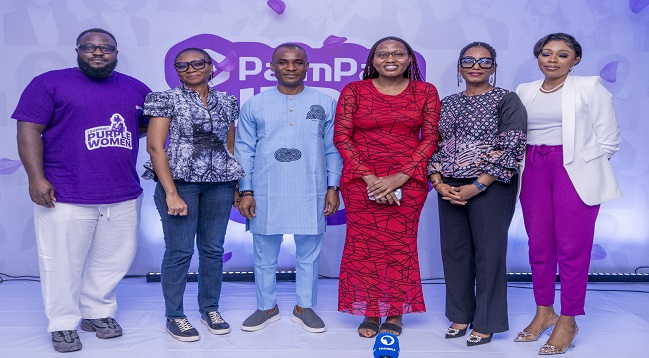
PalmPay Nigeria has expressed commitment to increasing women’s participation in the financial technology sector through its Purple Woman initiative designed to equip young women with digital and professional skills.

Speaking at the event, Chika Nwosu, managing director of PalmPay Nigeria, said the initiative was launched to address the low representation of women in fintech and the broader technology ecosystem.
“This initiative is because we noticed that there are not so many women in fintech and in the tech industry, and we intend to bridge that gap. We want to see a whole lot of women in leadership positions in fintech,” Nwosu said.
The programme, organised in collaboration with the Global Women’s International Campaign Nigeria to commemorate International Women’s Day, forms part of PalmPay’s broader effort to create an inclusive digital economy and empower women with technology-driven skills.
According to Nwosu, empowering women produces long-term social and economic impact. “A money in the hand of a man feeds a family, but money in the hand of a woman feeds generations,” he said, noting that women’s financial empowerment often translates to better education and opportunities for children and stronger households.
Although the programme is hosted in Lagos, he explained that participation is open to women across Nigeria through an online registration platform. “Our head office is in Lagos, but we invite women from all over Nigeria. They register through a link for Purple Woman. It is not only for people in Lagos; it is for all Nigerians,” he said.
At the end of the masterclass, 10 participants were selected for a six month internship programme at PalmPay where they will receive practical experience across different departments.
Explaining the selection process, Anthony Iwuala, head of human resources at PalmPay, said the company used a merit-based system to identify the most qualified candidates. “For us at PalmPay, we believe in equity and equality and following the right process. As a company, we believe in people who have skills and talent, so we ensure that we select people who are qualified,” Iwuala said.
According to him, participants were assessed through the classes and written tests conducted during the programme. “Participants went through the classes and wrote tests for every class. A lot of people passed, but we still had to rank them and select only the top ten,” he said.
Iwuala added that the selected interns will be deployed across departments such as marketing, human resources, administration, product development, sales and business intelligence where they will receive mentorship and hands-on training. “We assign mentors to them, and these mentors will provide on the job training for six months,” he said.
He stressed that the programme is designed not only to train participants but also to create employment opportunities. “We are not just taking them to train them; we train them to employ them,” he said.
He noted that previous editions have already produced tangible results. The Purple Women 2.0 programme saw the ten women we trained offered full employment at PalmPay, and they are still working with us currently, Iwuala said. “These ones will not be different.”
In her presentation, Nneka Okekearu, director of the enterprise development centre at Pan-Atlantic University, delivered a masterclass focused on self-worth, confidence and self awareness for women.
Okekearu explained that many women grow up with unconscious biases that affect their confidence and career choices. “A lot of women have grown up being told they cannot do certain things. Unlike their male counterparts, they are sometimes discouraged from pursuing opportunities,” she said.
According to her, the session focused on helping women recognise their abilities and build confidence. “A lot of women have so much to give, but they are shackled by unconscious bias. The session focused on self-awareness, building confidence and realising that we know it and should own it,” she added.
She acknowledged that progress has been made in female leadership in Nigeria’s corporate sector. “Today we have more than 30 percent of commercial banks with female CEOs. We now have women serving as bank chairpersons and more women on corporate boards,” she posited.
However, she highlighted what she described as the missing middle, where many women leave the workforce at critical career stages. “When women enter the workforce, by the time they get married and have children, many leave. We need systems that allow them to return without losing their career progress,” Okekearu said.

Court Freezes Bank Accounts of Petrocam, Founder over Alleged N9Bn Zenith Bank Debt

FCCPC Says Telcos, Energy Firms Lead Consumer Complaints in Nigeria

Microsoft Expands Africa AI Push while DeepSeek Gains Users

Mobile Phones Used by Food Vendors Could Spread Infections- Experts

Easybuy Sales Talent Program to Empower 10,000 Nigerians to Become Millionaires

Dr. Cairo Ojougboh Foundation Bolsters Nigeria’s Education Drive with ₦2.7m Student Support

Kaspersky Brings more Transparency to Threat Detection with New Hunt Hub

Kaspersky Discovers New Phishing Campaign Exploiting Google Tasks Notifications to Steal Corporate Credentials

esentry 2025 Report Shows Healthcare, Financial Services and Telecoms as Staging Grounds for Increased Cyberattacks in Africa

AfDB, UNDP Launch $10Bn AI Initiative for Africa




 Telecom2 days ago
US Court Dismisses All Claims Against Binance in Major Anti-Terrorism Lawsuit Victory

 Telecom2 days ago
China Threatens to Shut Nigeria’s Satellite Over $11.44m Unpaid Debt

 Telecom2 days ago
TikTok Pumps $200k into AI Media Literacy for Sub-Saharan Africa at Nairobi Summit

 News3 days ago
Africa Startups Raised $272m in Funding in February

 General News2 days ago
More Nigerians Emerge Millionaires in Week 9 of NIVEA’s Consumer Campaign

 E-Business2 days ago
NITDA, Nkenne AI Seek to Localise AI for Nigerians

 Telecom2 days ago
NCC Orders Telcos to Report Cyberattacks Within 4 Hours from 2027

 E-Business1 day ago
FG Moves to Strengthen Children’s Online Safety